“What is the question?”: Rafael Jodar snaps back at journalist after shock US Open defeat
ATPThursday, 03 September 2026 at 08:53
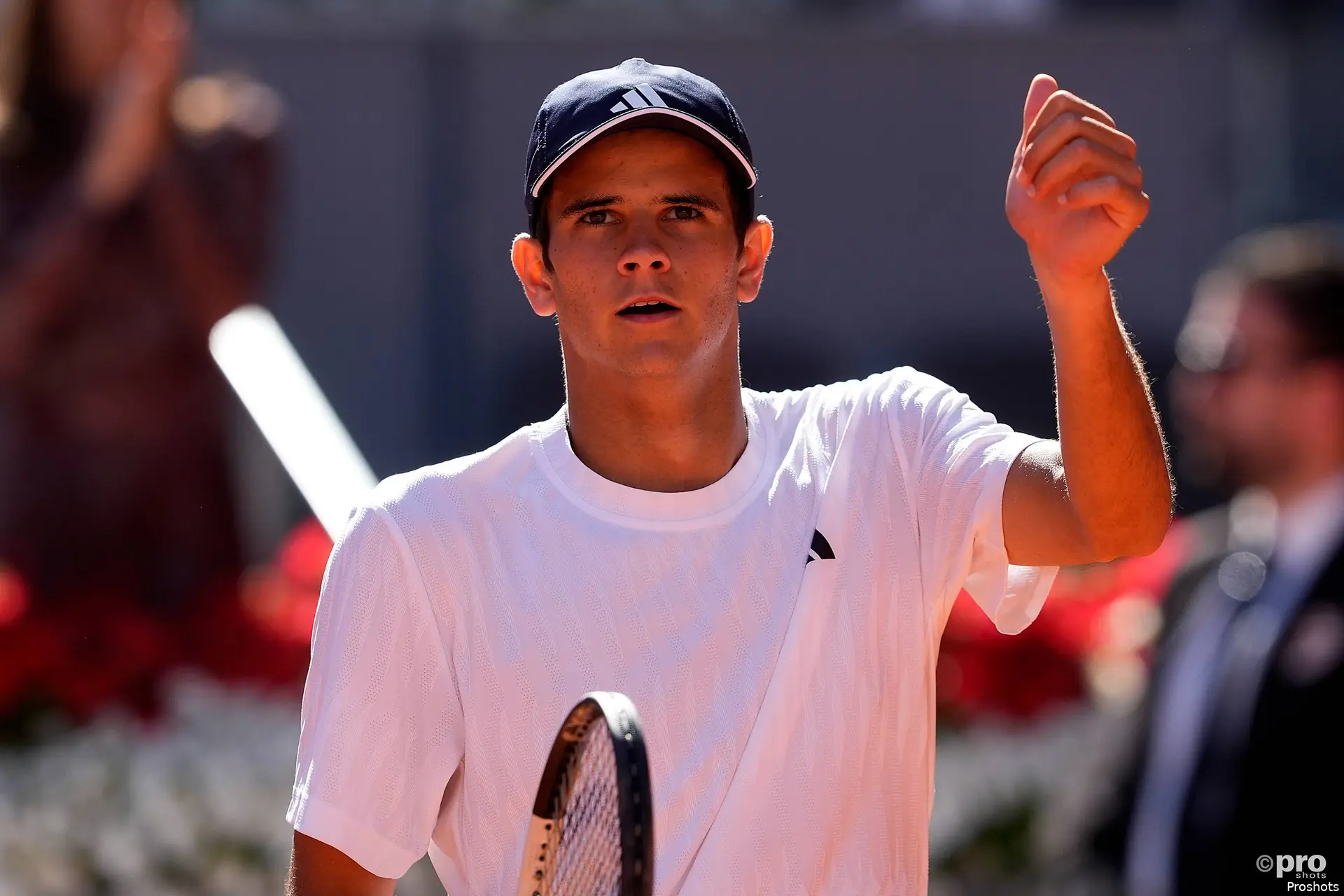
Rafael Jodar had spent the past several months making the extraordinary look increasingly normal. On Wednesday, however, the Spanish teenager suffered the kind of defeat that had been almost impossible to imagine given the trajectory of his breakthrough season, losing 6-2, 6-1, 6-1 to lucky loser Yunchaokete Bu in the first round of the US Open.
Jodar arrived in New York as the No. 12 seed for his professional main-draw debut at the tournament, two years after winning the US Open boys' title. He had also established himself as one of the fastest-rising players on the ATP Tour, going from outside the Top 100 earlier this season to competing regularly against the world's best.
None of that was visible against Bu. The Chinese qualifier, who had never previously won a Grand Slam main-draw match, controlled the contest from the opening games and never allowed Jodar to generate a break-point opportunity. The Spaniard eventually won only four games in his heaviest defeat of the season.
The match was also interrupted by rain, with Jodar already trailing 6-2, 6-1, 4-1 when play was suspended. But when he faced the media afterward, he was unwilling to point toward the delay, the wait to play or the accumulation of matches as reasons for what had happened.
Read also
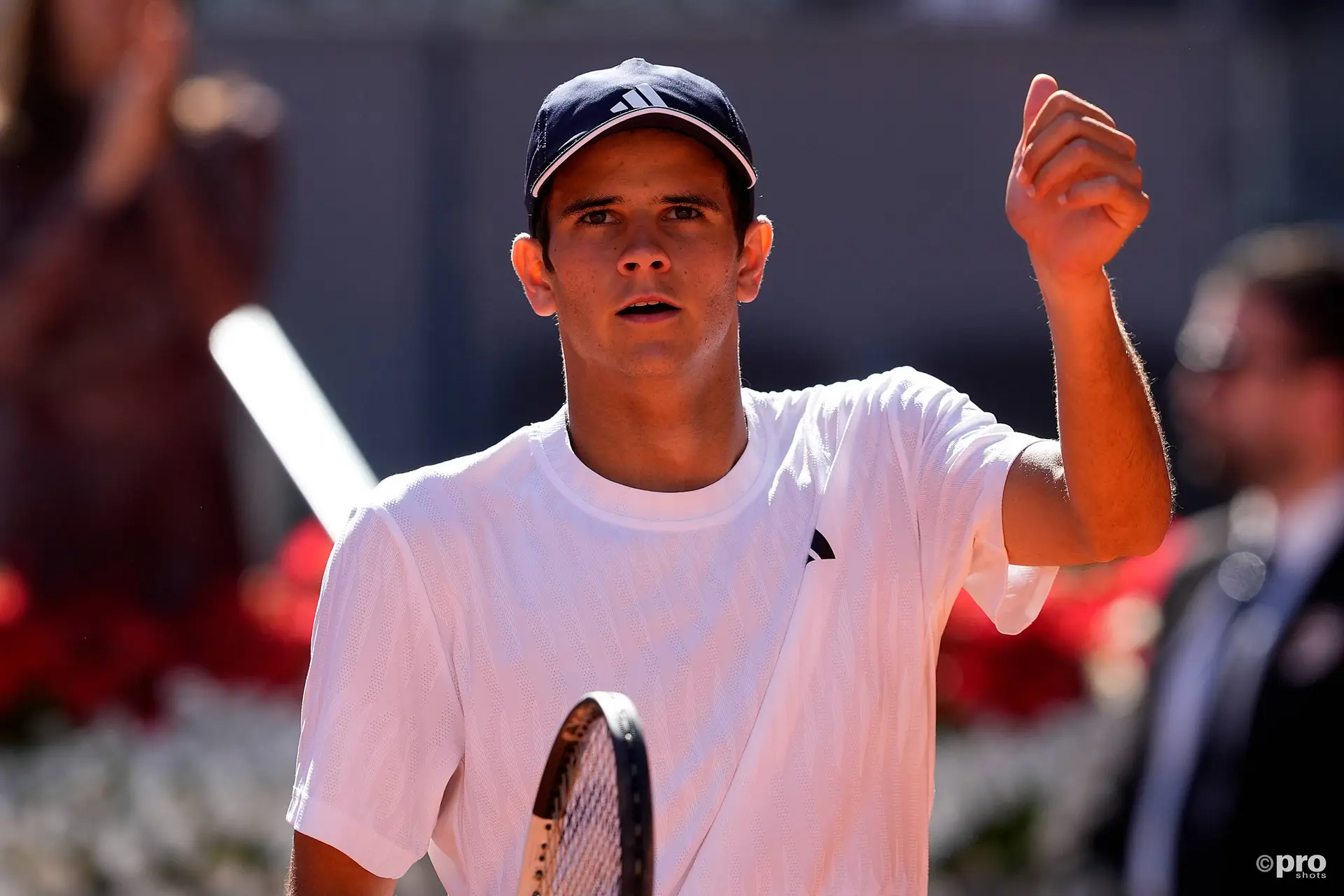
“He played better than me”
Jodar's explanation was remarkably straightforward. There was no injury, no physical complaint and no attempt to blame the difficult conditions that had forced him to wait two days before completing his Grand Slam debut.
“He played better than me, and that's the reason why he won today,” Jodar said. “I felt physically good, and that's it. That's how the match went. He played better than me, so he deserved to win today.”

The answer came after he was asked whether, despite Bu playing well, Jodar himself had felt significantly worse than usual in terms of his timing and feel for the ball.
“Well, that's secondary. I mean, I tried to give my best today. It wasn't meant to be today,” he said. “So, yeah, I had a good season overall. So, yeah, it's going to be some time to recover and to think about this tournament and what I can learn from it.”
That made the defeat particularly difficult to explain. Jodar had spent much of 2026 proving that he could handle increasingly demanding situations, including a run to the Wimbledon fourth round and a first Masters 1000 semifinal in Montreal. His rise had been built on repeatedly stepping up against better opposition rather than being overwhelmed by the occasion.
Fatigue was therefore an obvious theory given the volume of tennis he has played, but Jodar dismissed it just as clearly.
“No, no, it's not getting tiring for me,” he said when asked whether the accumulation of deep tournament runs was beginning to weigh on him.
The rain delay was another possible explanation. Jodar had already waited through Tuesday's postponement before finally taking the court Wednesday, only for the match itself to be interrupted. Again, he refused to use it as an excuse.
“Just the best way possible. I knew it wasn't going to be easy because I was waiting a lot yesterday and today as well, but it is what it is. We cannot control the rain, so it's for both players.”

Jodar’s press conference takes an awkward turn
The most awkward moment of Jodar's press conference came when a journalist tried to connect the rain delays with the attention his physical issues — particularly his shoelaces breaking during matches — have received online this season.
Jodar was clearly unsure where the question was going. “What’s the question?” he asked.
After the journalist explained that he was asking whether Jodar was now more conscious of how comments about his physical condition could be perceived as excuses, the Spaniard was still unconvinced. “So the question... okay. What is the question? I don't know. I don't know the question.”
Rafa Jodar was asked about people online discussing his shoelaces breaking during matches and if he’s more aware now of how he might be perceived online
— The Tennis Letter (@TheTennisLetter) September 2, 2026
“Tough one. I'm sure you've probably seen online throughout the year some people talking about how your shoelaces break and… pic.twitter.com/jp87erA4KE
When the journalist tried to clarify once more, Jodar ended the exchange. “That doesn't make sense," the Spaniard said. "We can go to the next question.”
It was a surprisingly tense moment in an otherwise measured press conference, particularly because Jodar had been unwilling to offer any excuses for the defeat. He had already rejected fatigue as a factor, insisted he felt physically fine and repeatedly credited Bu for simply playing the better tennis.
Asked how he would process such a surprising result after the best season of his young career, Jodar admitted that he needed time before he could properly understand what had gone wrong.
“The match has just finished, so I don't really know yet what I can improve or what I should do differently next time,” he said. “But I'm new on the Tour, and there are going to be things like this. I'm just going to try to learn from it so it doesn't happen again. The first time can happen to anyone. We're human.”
Read also
And Jodar already knows what would make the defeat more concerning. “The second time, it would be bad if I haven't learned from this one.”
After months of rapid progress, Jodar now has his first major setback to process. Rather than searching for an explanation in fatigue, the rain or the circumstances around the match, he left himself with a simpler task: understand what went wrong and make sure it does not happen twice.

Cristhián AvilaTennis Journalist
Cristhián Ávila is a tennis journalist based in Santiago, Chile, and has been part of the TennisUpToDate team since early 2023. He covers the ATP and WTA Tours as well as all four Grand Slams, producing breaking news, match reports, analysis, and regular liveblogs from major tournaments.
His reporting combines statistical analysis with clear explanation, helping readers understand tactical developments, player form, and broader storylines across the tour. Working fluently in both Spanish and English, Cristhián collaborates with an international editorial team and contributes to comprehensive global coverage. As part of his work, he has conducted interviews and media interactions with leading figures in the sport, including Caroline Wozniacki and John McEnroe.
In his journalism, Cristhián places strong emphasis on careful sourcing, editorial accuracy, and updating articles promptly when new, verified information becomes available. His coverage is grounded in research, context, and direct engagement with professional tennis.
claps 0visitors 0
Just In

Popular News
Latest Comments
- The main difference for bigger names like Alcaraz, Sinner, Zverez, etc. is that they usually make it to the later stages of tournaments while 99% of the other players win a round or two and then move on to the next tournament. The bigger names are playing more, playing longer and therefore more injury issues. The money is great but it all comes with a price!DaveyWavey03-09-2026
- I really like Jodar. He’s got a special game. Bad day at the office. Next.DaveyWavey03-09-2026
- Wow! Parry had to endure the biggest attitudes (currently active) in the WTA: Vekic, Tauson and Parks.
 mandoist02-09-2026
 - ‘Fils arrived just eight days after winning his maiden Masters 1000 title in Cincinnati, where he beat Carlos Alcaraz in the final, and entered the US Open as one of the players expected to make a deep run.’ Fils defeated Tiafoe in the final not Carlos Alcaraz.DaveyWavey01-09-2026
- Great article!!
 AceOfBase31-08-2026
 - Snorting hard drugs is not an "accident" nor a "mistake". That is a Choice.mandoist28-08-2026
- No... athletes retire and that's it. No 'giftng' Wildcards -- QUALIFY LIKE EVERYONE ELSE NOT RANKED HIGH ENOUGH or stay home and cherish yourselves in the mirrors all over your houses!. This shitshow needs to be stopped... the "Look At Me" nonsense has gone on far too long.mandoist28-08-2026
- Great article! I began cheering for the “real” doubles specialists at the beginning but once they all lost their respective matches I really didn’t care who actually won the whole tournament. I liked the last four teams in the semifinals and would have enjoyed seeing any of them win the trophy! Not sure it really feels like a TRUE Grand Slam win however (and I know history will say it is!). Happy for Muchova/Mensik. Karolina is now a Grand Slam winner.DaveyWavey27-08-2026
- …and Foseca ;)DaveyWavey25-08-2026
- All the men dropping like flies. Something’s gotta be done with the tournament calendar or many more players will be on the sidelines in the near future. Surprised Carlos is back as soon as he is. Get well soon Sinner, Draper, Fokina, Rune, etc. etc. etc……DaveyWavey25-08-2026

Loading