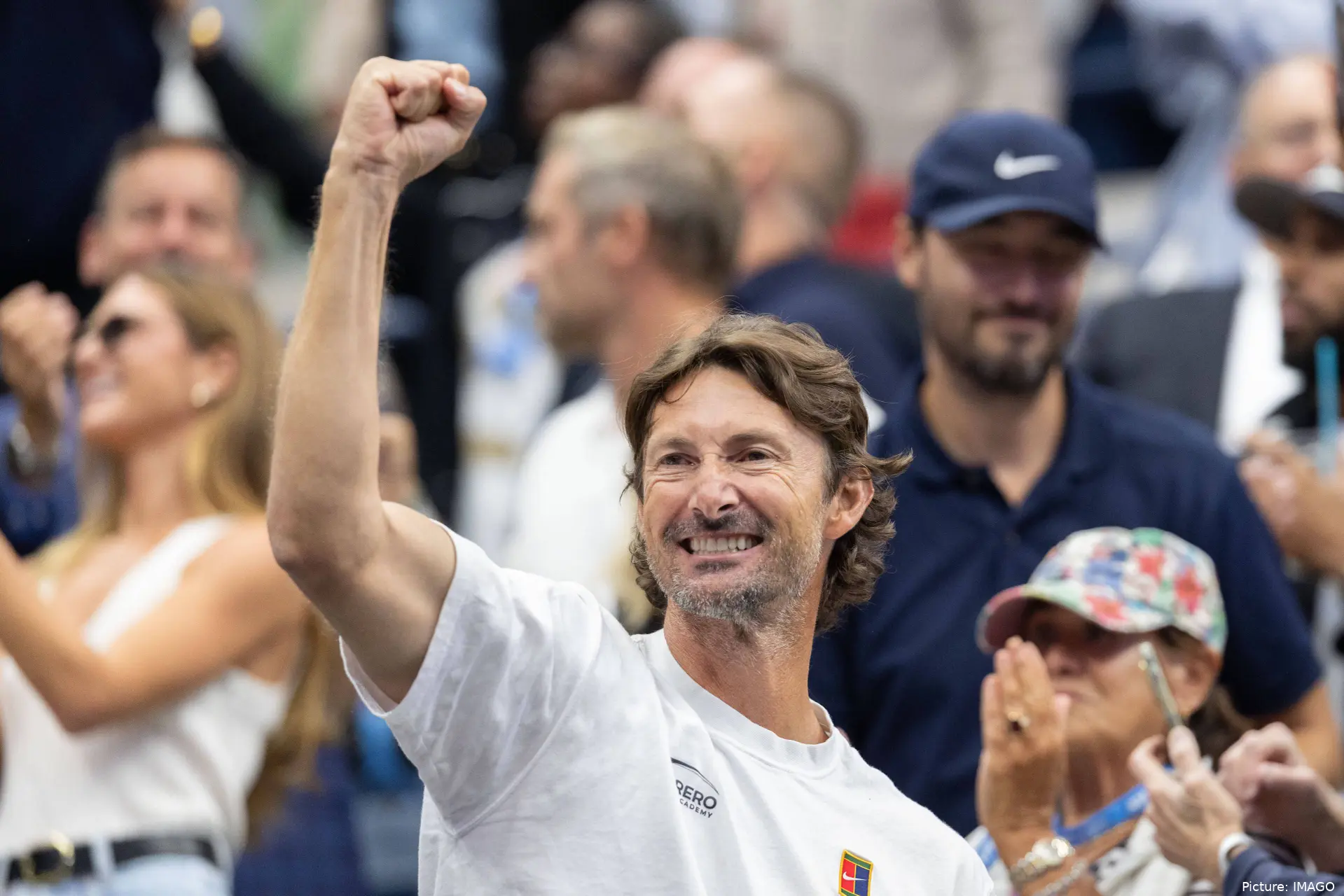
Juan Carlos Ferrero, former coach of Carlos Alcaraz, said he would be open to coaching Jannik Sinner in the future, should the Italian ever seek him out to strengthen his team. The Spanish coach has been away from the ATP Tour coaching circuit for several months following his separation from Alcaraz, while the young Spaniard is currently recovering from a wrist injury that has kept him out of competition in recent months.
Ferrero was a key figure in Alcaraz’s development, working with the seven-time major champion from his junior stages through his rise to world No. 1. Under his guidance, Alcaraz won six Grand Slam titles before their split at the beginning of 2026 during the off-season.
However, only months after that separation, Alcaraz — who is now working exclusively with Samuel López as his main coach — suffered a right wrist injury that has ruled him out of action, further consolidating Sinner’s position at the top of the rankings.
The biggest surprise, however, came from Sinner’s early defeat at Roland Garros, which opened up the draw in a tournament where he was considered one of the favourites in the absence of Alcaraz. Ferrero himself compared the current era with previous generations, noting how dominant players often end up shaping the evolution of their rivals, who continuously adjust their game styles in an attempt to close the gap.
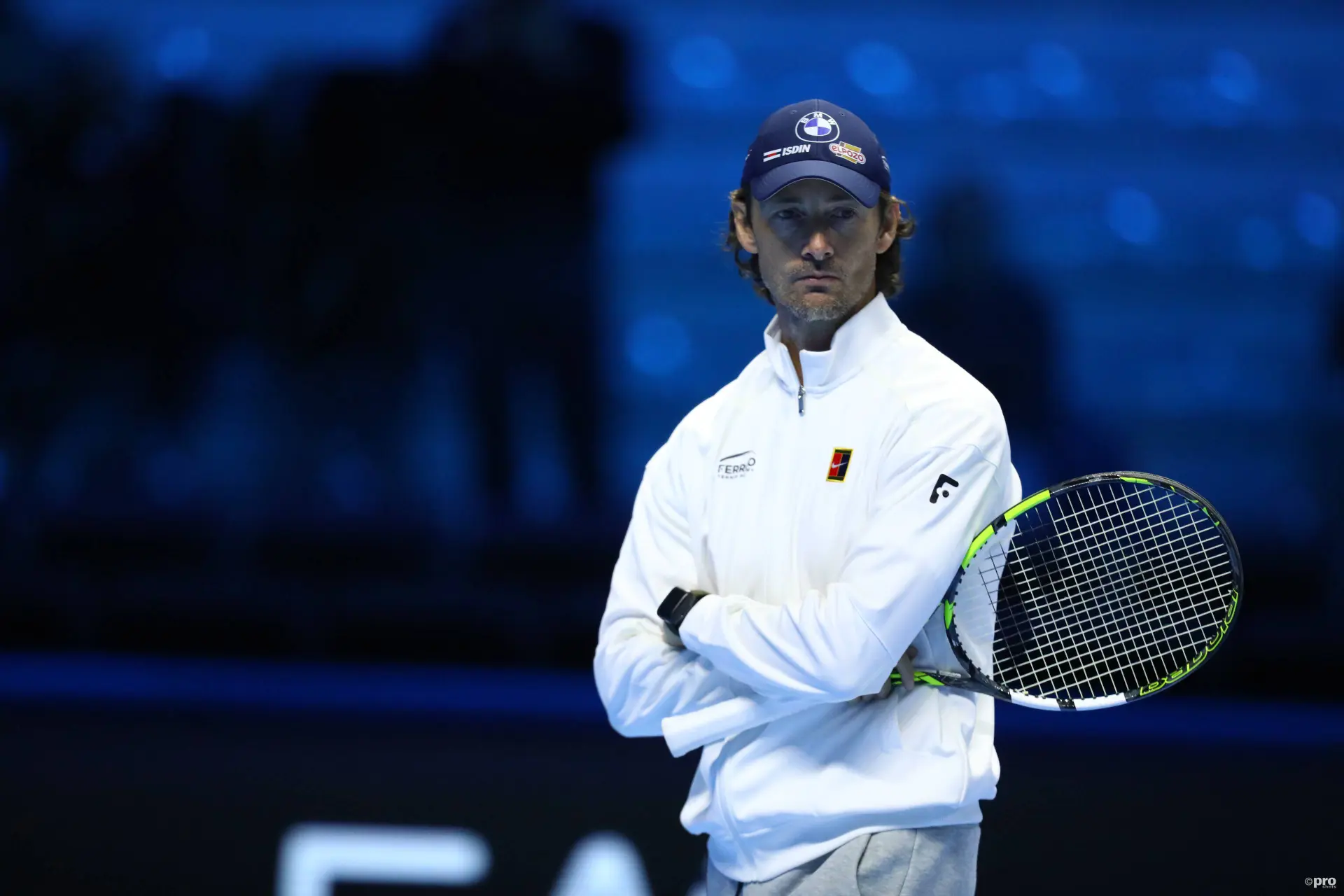
Alcaraz built around Sinner and openness to coaching him
Ferrero linked Carlos Alcaraz’s development directly to Jannik Sinner, framing the Italian as the central tactical reference point behind key improvements made during his coaching period with the Spaniard.
He also addressed, more directly than before, the possibility of working with Sinner in the future after stepping away from Alcaraz’s team. “It is a situation I know well: for years I trained Carlos with the aim of beating Jannik,” he said in an interview with Corriero della Sera. “In other words, the improvements were adapted specifically to Sinner.”

Carlos Alcaraz and Juan Carlos Ferrero.
On his future role in the sport, Ferrero was explicit that his position has changed since leaving Alcaraz’s setup, and that he would now be open to a potential collaboration with Sinner depending on circumstances.
“A few months ago I would have said no: the break with Carlos was recent and I was not ready. But now that I feel stronger, I say: why not? Sinner loves hard work and is willing to do whatever it takes to stay world number one. I like his attitude. It would be wonderful to coach him.”
Roland Garros disruption and competitive reset
Ferrero framed Roland Garros as a turning point defined less by individual results and more by how quickly expectations inside the draw shifted once the usual late-stage hierarchy was disrupted. He pointed to the early exits and absences of expected dominance as the trigger for a wider recalibration among competitors.
“Strange things are happening. Alcaraz, who would have been the favourite on clay, is not there, and Sinner lost immediately. For everyone else, it was a wake-up call: they opened their eyes and realised this is the opportunity of their lives.”

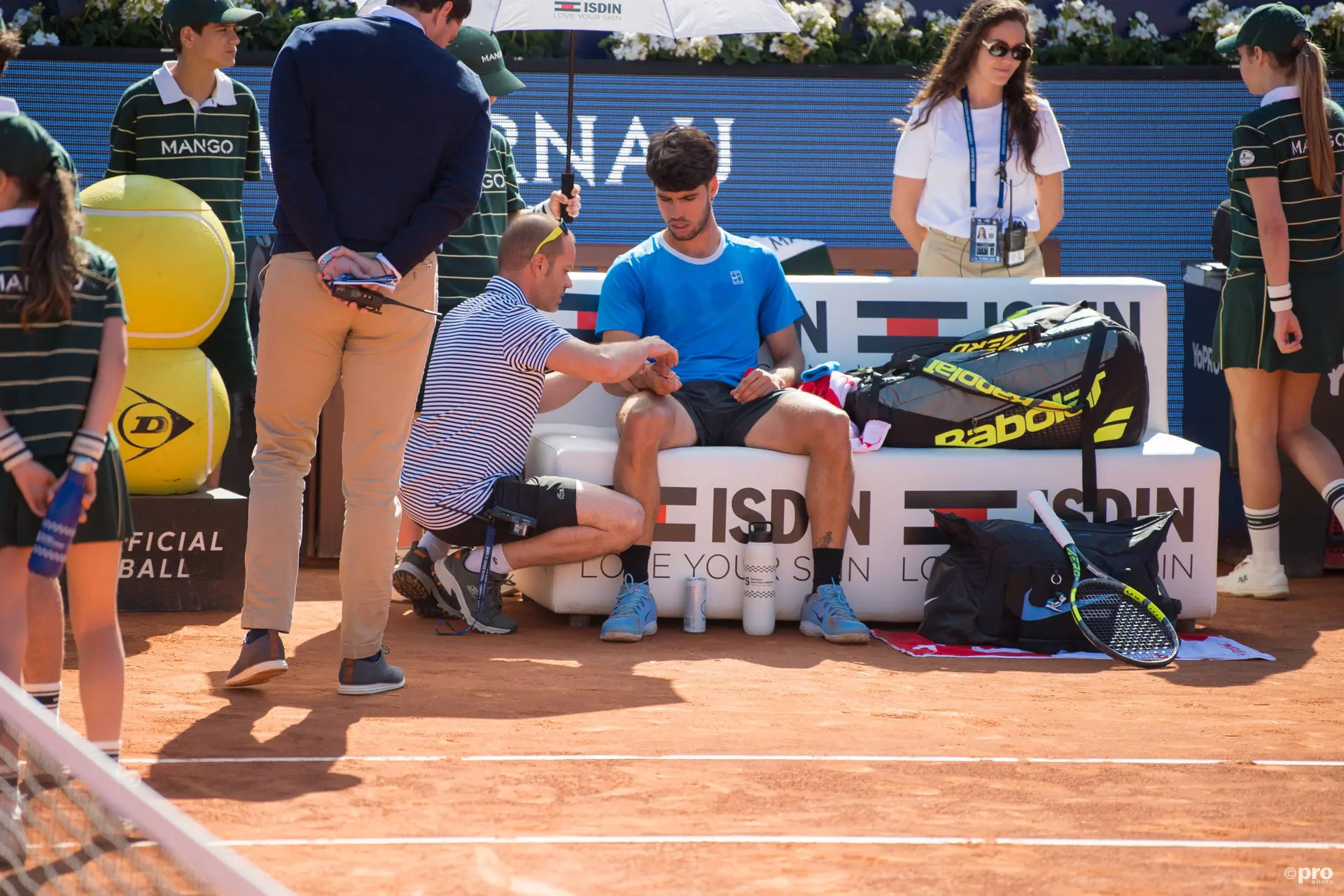
Juan Carlos Ferrero during 2025 US Open final
He argued that the impact goes beyond a single tournament, suggesting that the perception of vulnerability at the top alters how the entire field approaches Grand Slam competition in the short and medium term. “Looking ahead, it is an interesting shift: for at least a couple of years those two will maintain their superiority, but Paris 2026 marks a change of rhythm for the challengers, who have realised that Sinner is not invincible.”
The former world No. 1 added that this recalibration is already translating into motivation across the tour, affecting both established players and lower-ranked challengers who now see clearer entry points into the latter stages of majors. “It will be motivation for everyone: those at the top and those chasing.”
Rivalry development and coaching perspective
Ferrero expanded on how the Alcaraz–Sinner rivalry has shaped training environments and tactical evolution, arguing that modern development at the top level is increasingly opponent-specific rather than abstract.
He compared the current structure of men’s tennis with previous eras, suggesting that greater depth historically produced more unpredictable Slam outcomes and a broader competitive base. “There is no doubt. When I played, there were eight or ten players capable of winning a Grand Slam. Two create a nice rivalry, but it is too few.”
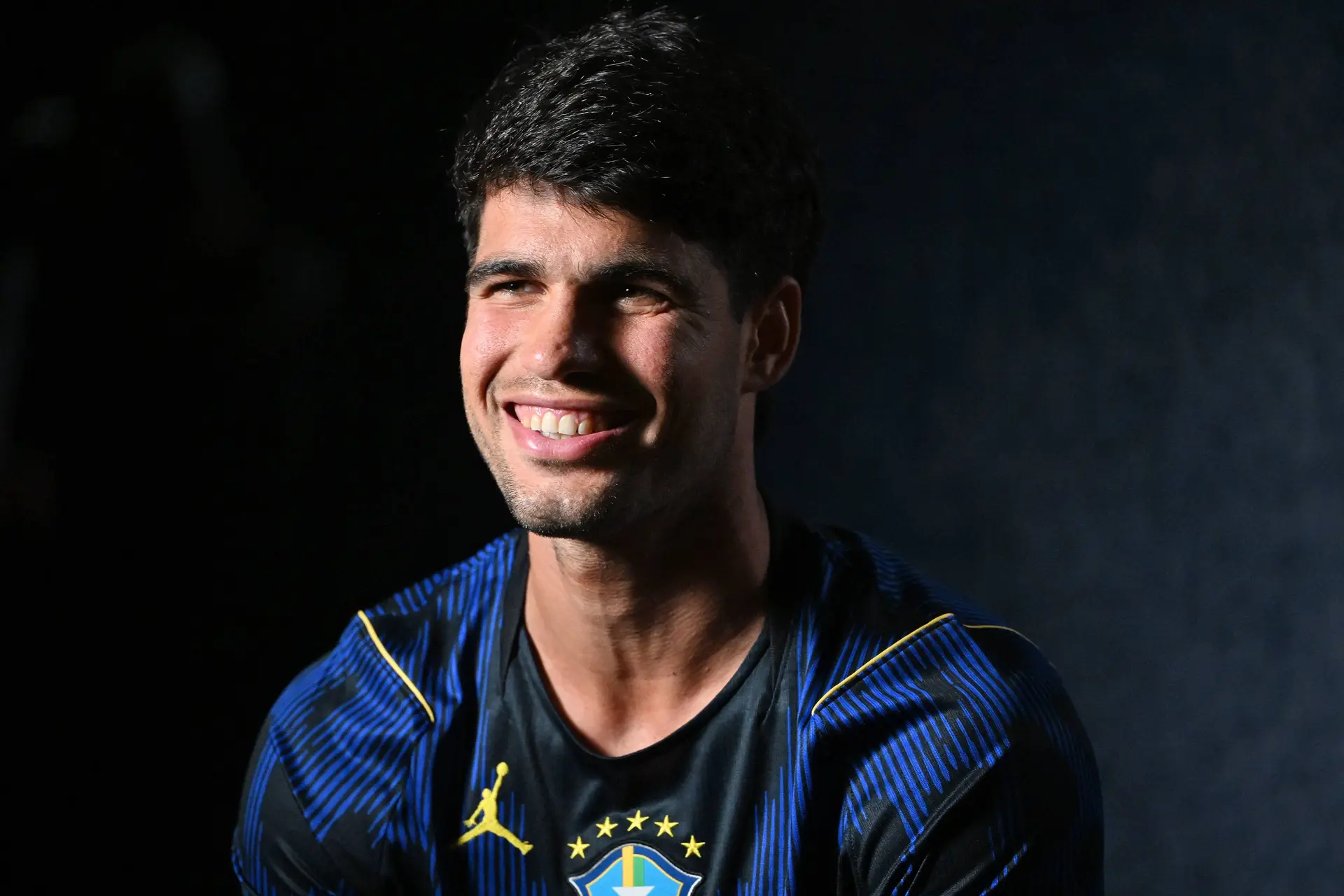
Ferrero also reflected on Sinner’s early development, highlighting the scale of his transformation since his first encounters with Alcaraz, and pointing to rapid cognitive and technical evolution as key characteristics of his game.
He described how Sinner’s current level differs significantly from his early ATP profile, emphasising the speed of adaptation as a defining trait in his progression. “Back then, Jannik only played cross-court: no down-the-line shots, no volleys, no drop shots… nothing like the player he is today. He is very solid mentally and absorbs everything like a sponge: he learns fast.”

Cristhián AvilaTennis Journalist
Cristhián Ávila is a tennis journalist based in Santiago, Chile, and has been part of the TennisUpToDate team since early 2023. He covers the ATP and WTA Tours as well as all four Grand Slams, producing breaking news, match reports, analysis, and regular liveblogs from major tournaments.
His reporting combines statistical analysis with clear explanation, helping readers understand tactical developments, player form, and broader storylines across the tour. Working fluently in both Spanish and English, Cristhián collaborates with an international editorial team and contributes to comprehensive global coverage. As part of his work, he has conducted interviews and media interactions with leading figures in the sport, including Caroline Wozniacki and John McEnroe.
In his journalism, Cristhián places strong emphasis on careful sourcing, editorial accuracy, and updating articles promptly when new, verified information becomes available. His coverage is grounded in research, context, and direct engagement with professional tennis.
claps 0visitors 0
Just In


Popular News

Latest Comments
- Lena... Takin' care of business
 mandoist25-10-2026
 - Can you please stop publishing this nonsense? Stick to Tennis.mandoist25-10-2026
- Does Sinner need that 4.5 mil? I doubt it. He can make that with three modelling gigs!😅🤣Rapunzel21-10-2026
- Did "People Magazine" purchase this website? This nonstop storyline is bullshit.mandoist21-10-2026
- Listen... this is of no concern to anyone but these two. Deal with your own issues -- most of us have our own. Thanks, media, for these insignificant follow-ups which are meaningless.mandoist21-10-2026
- This is so very very sad, for all three of them. I truly thought they had an unbreakable bond, but life throws up so many differing challenges. Having your homeland suffering in such a terrible way, makes happiness lose out to guilt as well. Our thoughts are with them. X💔bjsexton20-10-2026
- I have lost all respect for Svitolina! Could she not have waited until he had played at the Paris Masters!!! She is selfish and don't give a damn about Gael. That is NOT how love is demonstrated Elina!!Rapunzel19-10-2026
- Perhaps convenient tennis tour sex is not a strong enough experience in which to base a marriage?mandoist19-10-2026
- Fight the Good Fight... Tennis (sports in general) need more Humans such as yourself.mandoist18-10-2026
- When is WTA going to mandate Genetic Testing (DNA) ???mandoist18-10-2026

Loading