Another Russian-born player changes nationality as Roland Garros junior champion joins Czech Republic
WTA
Russia has lost another rising tennis talent after Alisa Okťabreva changed her sporting nationality to represent the Czech Republic. The 17-year-old became the Roland Garros girls’ singles champion earlier this year and is now eligible to compete under the Czech flag after obtaining citizenship, adding another highly regarded prospect to a country that has increasingly attracted Russian-born players.
Okťabreva was born in Russia but moved to the Czech Republic when she was two years old. Her tennis development has also been closely connected to the country, as she began training and competing for TK Sparta Praha from the age of four. She announced that she would represent the Czech Republic from the middle of the month after obtaining Czech citizenship.
The timing of the switch comes after the biggest junior achievement of Okťabreva’s career. She captured the Roland Garros girls’ singles title this season, building on an earlier breakthrough at the same tournament. At just 14, she had already reached the 2023 junior semifinals in Paris before losing to eventual champion Alina Korneeva.
Okťabreva has also begun making progress in the professional rankings despite still being at the early stages of her senior career. She currently sits at No. 411 in the WTA rankings, having reached a career-high No. 280. She has not yet established herself on the main WTA Tour, but her junior Grand Slam title and ranking trajectory have positioned her as one of the Czech Republic’s emerging prospects.
Okťabreva joins Czech Republic after Roland Garros breakthrough
The nationality change formalizes a relationship with Czech tennis that has existed for most of Okťabreva’s life. She has lived in the country since she was two and has trained at TK Sparta Praha since she was four, meaning the Czech system has played a central role in her development long before she became eligible to represent the country internationally.
Her Roland Garros victory provided the biggest indication yet of her potential. Okťabreva returned to Paris three years after reaching the junior semifinals and this time completed the tournament by winning the title. The result came at 17, giving her another significant milestone before making the full transition to professional tennis.
Her current ranking also shows that her progress is not limited to the junior circuit. Okťabreva has reached No. 280 in the world and currently occupies No. 411, although she remains in the early stages of building a professional schedule and has yet to make the jump into the established WTA Tour field.
For the Czech Republic, the move adds another young player with the potential to develop into a significant future presence on the international circuit. Okťabreva joins a tennis environment that has already produced several prominent players and now has another Roland Garros junior champion within its system.
The change is therefore less a case of Okťabreva moving her tennis base than changing the country attached to her results. Having spent almost her entire life in the Czech Republic, she will now compete under the Czech flag as she begins the next phase of her career.
Okťabreva follows growing list of Russian-born players changing nationality
The 17-year-old is the latest Russian-born player to change nationality in recent years, adding to a growing list of tennis players who now represent other countries. One of the most prominent examples is Daria Kasatkina, who has openly criticized the Kremlin and Russia’s policies and now represents Australia.
Varvara Gracheva switched from Russia to France three years ago, while several other younger players have also changed their sporting allegiance. Elina Avanesyan and Alina Charaeva have moved to represent Armenia, while Anastasia Potapova recently became an Austrian representative.
Other Russian-born players to make nationality changes include Kamilla Rakhimova, Polina Kudermetova and Maria Timofeeva, who switched to Uzbekistan. Oksana Selekhmeteva has also recently changed nationality and now represents Spain.
Okťabreva’s situation has a distinctive element because of the length of her connection with the Czech Republic. Unlike players who relocate their training environment after establishing themselves professionally, she has lived and developed in the country since early childhood. Her switch therefore comes after more than a decade of residence and training in Czech tennis.
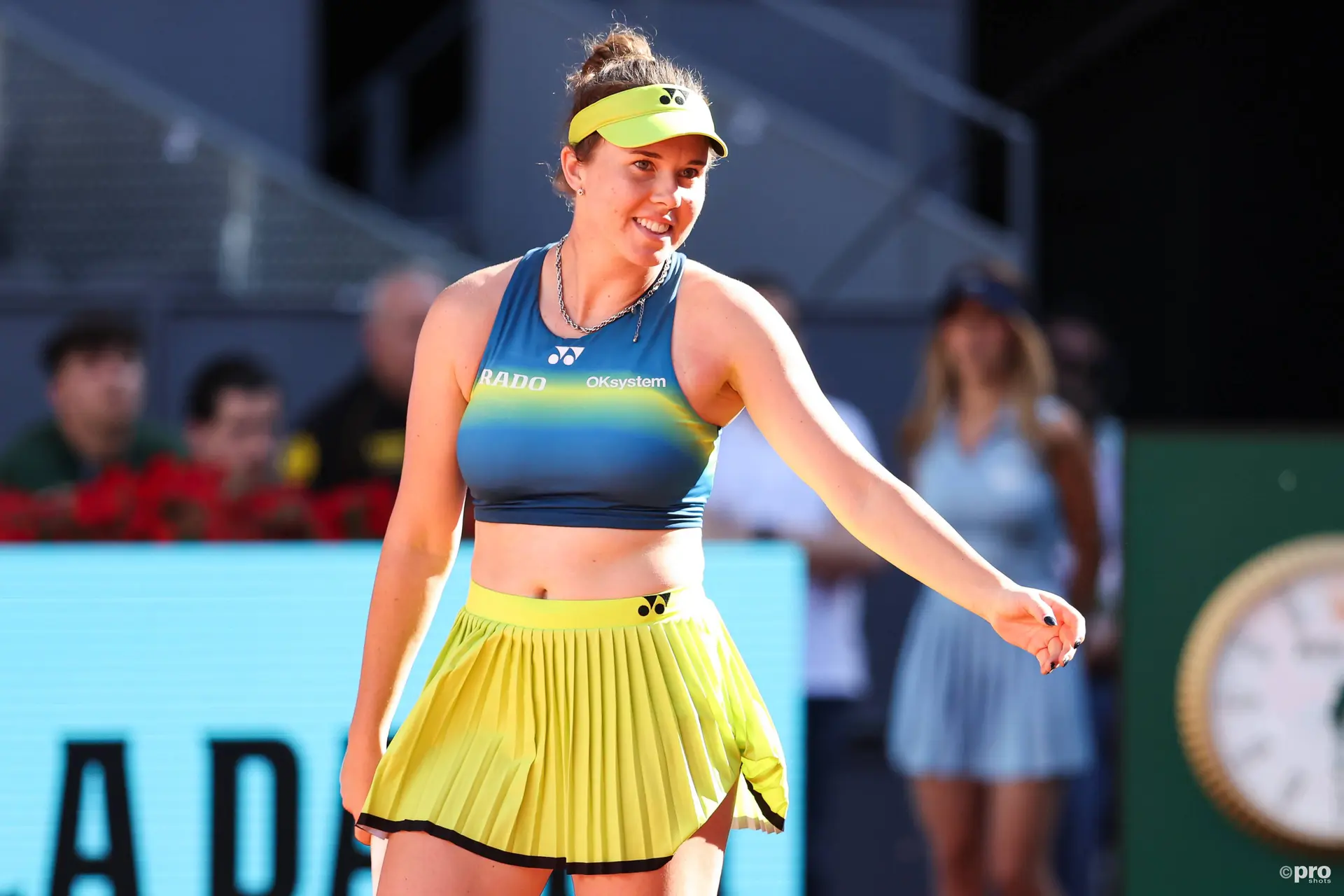
Her arrival also gives the Czech Republic another young player with a major junior title to build around. Okťabreva will now attempt to translate her Roland Garros success and career-high No. 280 ranking into consistent results at the professional level.
At 17, that transition remains ahead of her, but the trajectory is already clear. Russia has lost another emerging tennis talent, while the Czech Republic has added a Roland Garros junior champion to its growing pool of future prospects.

Cristhián AvilaTennis Journalist
Cristhián Ávila is a tennis journalist based in Santiago, Chile, and has been part of the TennisUpToDate team since early 2023. He covers the ATP and WTA Tours as well as all four Grand Slams, producing breaking news, match reports, analysis, and regular liveblogs from major tournaments.
His reporting combines statistical analysis with clear explanation, helping readers understand tactical developments, player form, and broader storylines across the tour. Working fluently in both Spanish and English, Cristhián collaborates with an international editorial team and contributes to comprehensive global coverage. As part of his work, he has conducted interviews and media interactions with leading figures in the sport, including Caroline Wozniacki and John McEnroe.
In his journalism, Cristhián places strong emphasis on careful sourcing, editorial accuracy, and updating articles promptly when new, verified information becomes available. His coverage is grounded in research, context, and direct engagement with professional tennis.
claps 0visitors 0
Just In

Popular News
Latest Comments
- Where is it written that athletes, entertainers... People in general... are mandated to keep looking at -- or even using [anti]Social Media? Public & private figures consistently complain and reveal their concerns about negativity and violence thrown at them -- yet they insist on participating. Avoid it, don't use it, don't read it. It's okay to occasionally look up at the World instead beating your eyes & thumbs to death on The Inventions out there.
 mandoist11-10-2026
 - great articlestennisseserver07-10-2026
- Medvedev was leading Djokovic 7-5, 3-5 when an attempted return..' NO you ignorants, Djokovic was leading .weiss05-10-2026
- No more bullshit "Wildcards" to these two. Qualify like everyone else -- there will be cameras there, too. Time to scream... WTF ????!!!!mandoist29-09-2026
- Let's not BS the general public -- Sabalenka started showing cracks in her game last season. Her losses and near-losses started at about the same time she began being distracted by Fame (constant Selfies, making TV commercials, magazine shoots, endless Social Media nonsense, etc., etc.) One would think even Saba could recognize the parallels with others who failed before her -- Raducanu, Giorgi, Bouchard to name a few.mandoist25-09-2026
- Gross!! Hey Raducanu, Giorgi, and Bouchard -- reserve a seat at your Social Media Selfie table for Saba + Naomi. They're heading in your direction soon enough.mandoist24-09-2026
- And then these same players will complain about how lengthy their season’s were and need more time-off. I’m all for more tennis but the amount of tennis we get now is actually kind of crazy! We all need a break, especially the players.DaveyWavey23-09-2026
- You should do a comparison article for "different kinds of justice" the courts decide for tennis players. I can think of at least three players who received very small bans of a few months, however Tara Moore has been fighting for her literal survival the past few years. It seems odd considering she is not a "name" player, unlike the other cases.DaveyWavey22-09-2026
- PRIZE MONEY & POINTS Winner - $185,500 Finalist - $114,500 Semi-Finalist - $66,003 Quarter-Finalist - $35,000 Round of 16 - $18,045 Round of 32 - $13,005 Winner - 500 Finalist - 325 Semi-Finalist - 195 Quarter-Finalist - 108 Round of 16 - 60 Round of 32 - 1DaveyWavey20-09-2026
- Pegula withdrew from this Singapore event
 tennishappens19-09-2026

Loading