Carson Branstine uses humour to outline improvements needed in tennis: "I’m okay with taking some backlash if it helps other players who are too afraid to speak up"
WTA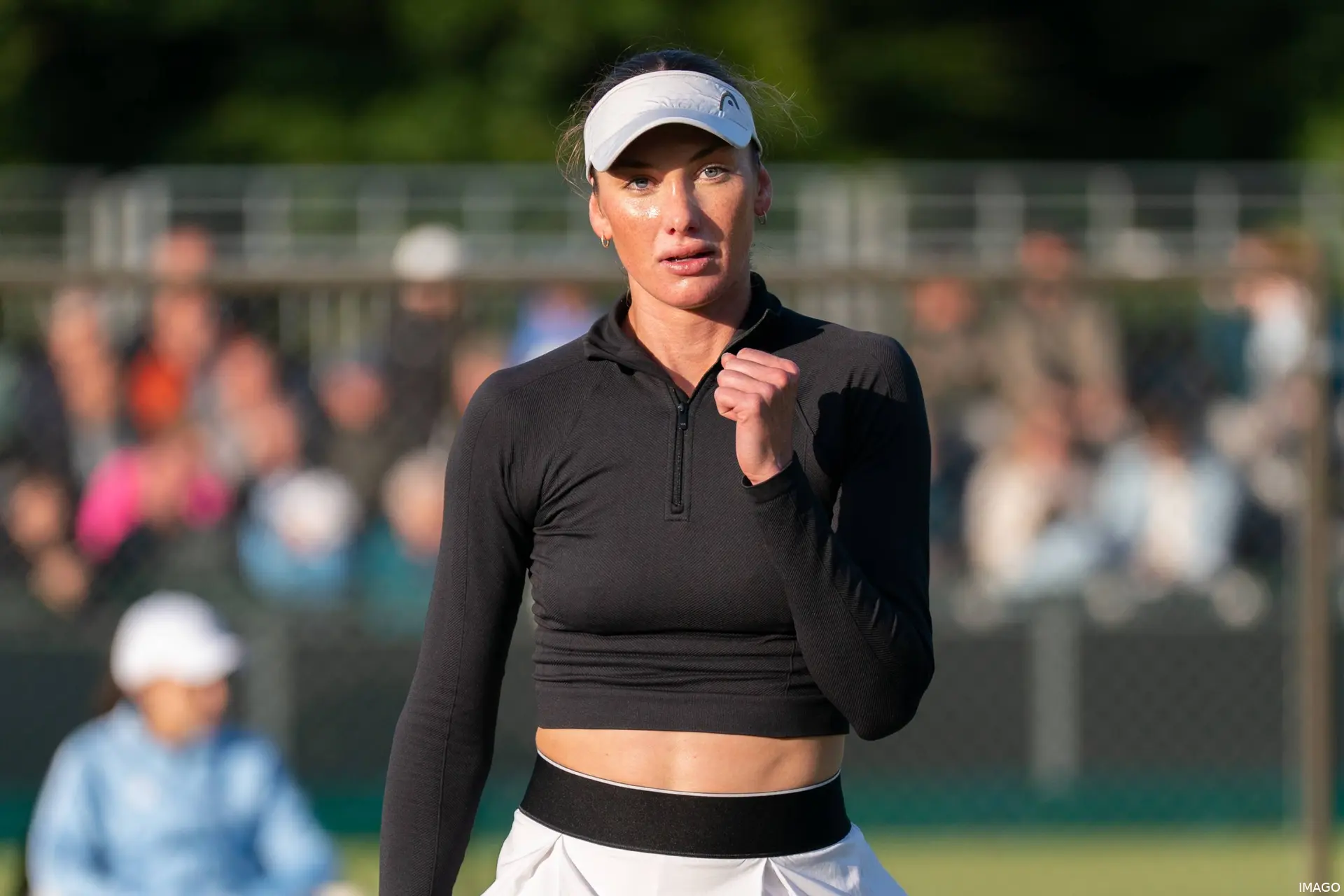
Tennis can be a brutal sport. Much of what fans see are the top players in the world competing in the biggest tournaments on offer and making a comfortable living. That is a small proportion of very fortunate players. For many, this reality is way-off, struggling in the lower levels while the players at the top thrive.
Carson Branstine is one of many struggling to make a living while competing in the sport, desperately trying to compete at the top level but consistently being stunted in the process. She went to social media, specifically TikTok, to share what it is like to be a tennis player. She explained all of this on Love All Podcast with Kim Clijsters.
Battling her problems with humour
Ranked 319 in the world, she climbed to a high of world number 172 in October last year. She qualified for Wimbledon in 2025, that being her only Grand Slam appearance. The Canadian uses humour to get over her troubles. "My best friends are tennis players, and a lot of the closest people in my life are involved in tennis," she said. "We almost bond over those kinds of struggles, and I think that’s beautiful in itself. Not a lot of people can really relate to us unless they’re inside the sport. Tennis has amazing fans, but unless you live it, it’s hard to understand those feelings.
"Tennis is a very emotional sport. You can do everything right during a week, but maybe you’re not feeling good, maybe the balls feel strange, maybe you don’t love the courts — and suddenly you lose first round to someone you didn’t think you should lose to. That’s just how tennis works.
"I love that about tennis. I studied philosophy in college, so for me I’m like, “Oh great, I get to talk about feelings and things that aren’t tangible. Awesome — give me more.” So that was definitely part of it."
There are no days off at this level in truth with so much work being put in to perfecting their craft and travelling around the world. "Of course, when you do humour — like comedians do — things are exaggerated a little bit. Like the joke about not getting a day off. Technically there is a mandatory day-off rule, but is it really a day off when you’re getting on a 6 a.m. flight and still practising and going to the gym? We all know it’s not really a true day off."
Even when asking for later start times it does not always go her way. "I even joke that I never ask for late starts because I always say, 'Oh, I’m fine.' Then the one time I finally asked for a late start, I didn’t get it — so now I’m like, 'Right, never doing that again.'"
This video got a lot of attention from many other tennis, commenting and engaging with it. "Players relate to those experiences. I’ve had maybe 40 players reach out to me — probably more now — from all different rankings, including ATP and WTA players inside the top 100, all saying, “Carson, that was hilarious.”
The video being taken out of context
Not all the reactions were pleasant. "People online can think whatever they want," she said. "Everyone’s entitled to their opinion. I knew the video might provoke reactions, but I didn’t expect some of the things people said. A lot of it was taken completely out of context.
"At the end of the day, though, the video really wasn’t about me specifically. It was about experiences that players go through. And I think conversations around player welfare and the realities of the tour still need to happen. People have talked about these issues before, but nothing really changes because things blow over and everyone is so busy competing."

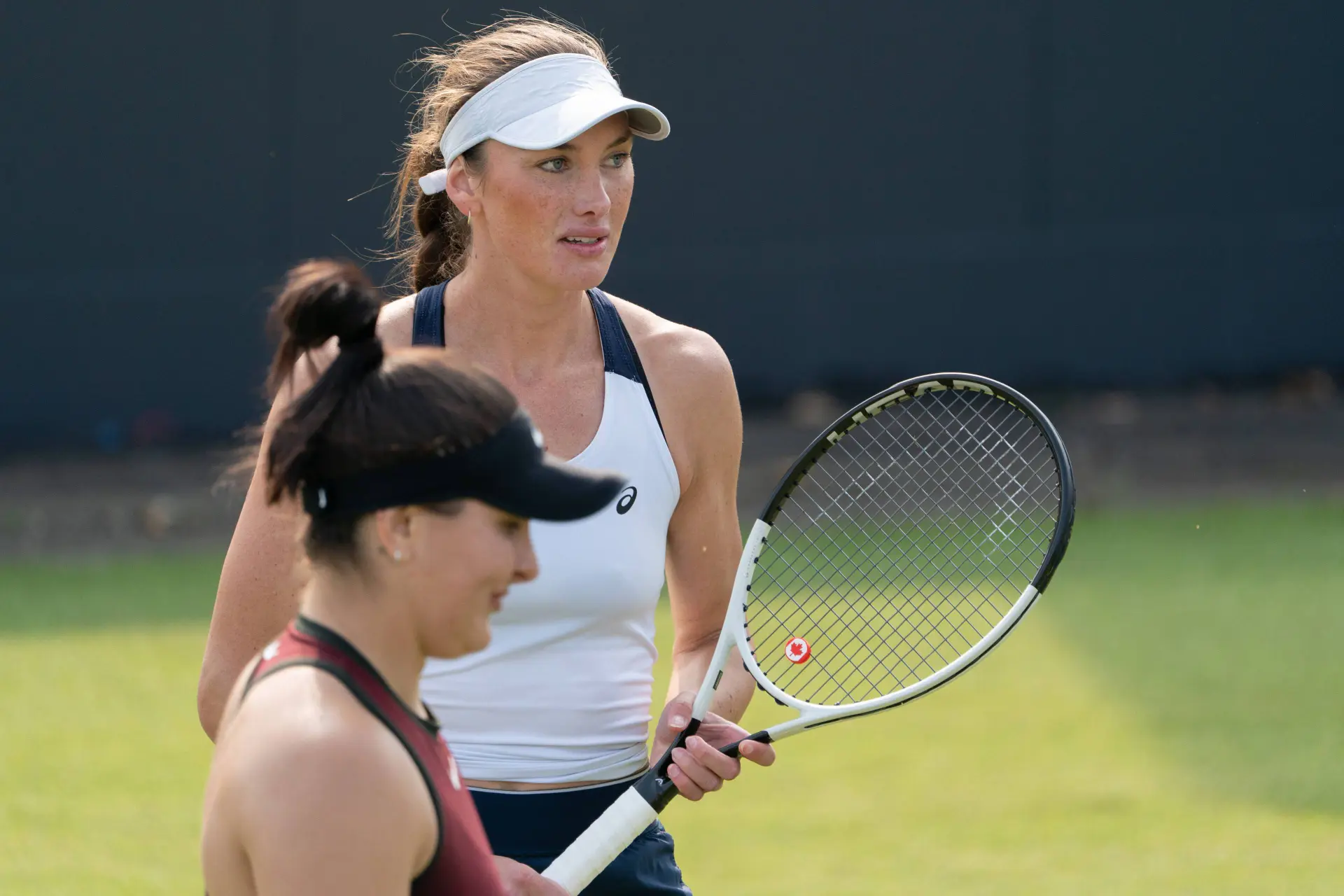
Carson Branstine competing in doubles with former Grand Slam champion Bianca Andreescu
While not shown on TV, players ranked around the same level as Branstine are making strides in the sport. One big run at a Grand Slam of top ATP or WTA event could be life changing, propelling you up the rankings and opening loads of doors. A lot of work is put into this, but a lot of it will go unnoticed.
"The level in tennis is incredibly deep now," she acknowledged. "There’s a reason players ranked around where I’m ranked are suddenly getting huge wins — we’re putting in the same hours and playing the same number of weeks as the top players. The difference is you just don’t always see us on TV."
Financial aspect
She compared the situation to baseball, a smaller sport than tennis around the world, but the financial situation is worse in tennis lower down. Many players are spending their earnings on their tennis career, whether that is travelling, coaches, equipment, accommodation, and so on. Many athletes have already addressed this situation.
"My cousin plays for the Dodgers, and when I compare tennis to other sports, I see how differently athletes are supported. I know baseball is different — it’s a team sport, unionised, all under one league — but when I look at the revenue tennis generates, I think: why wouldn’t we want to make the sport better for players?"
She firmly believed that more revenue should be pumped into the lower levels. "Tennis is the third most-watched sport in the world. I think we’ve earned the right for things to improve. And if raising awareness is my way of contributing to that conversation, then I’m okay with taking some backlash if it helps other players who are too afraid to speak up."
Clijsters has her say
Four-time Grand Slam champion Clijsters agreed with many of the points Branstine outlined. "Some of the points you made are absolutely valid," she stated. "These are issues players have dealt with for years. When I was on the WTA board in the early 2000s, we were already discussing things like the length of the season and scheduling, and honestly, not much has changed."
While there is work going on to improve it, not enough has happened. "The WTA has created task forces to try to improve things, but these conversations have been happening for over 20 years now. At some point, it probably requires players collectively putting their foot down and demanding change.

Kim Clijsters was a former world number one
"When you compare tennis to other sports, it’s striking. There are second-division footballers in Belgium making a stable living with expenses covered, while tennis players are paying for coaches, hotels, flights and everything else themselves."
She emphasised how much of it was invested back into their tennis career. "People see prize money and red carpets, but they don’t see how much of that money disappears into taxes, travel and investing back into your career."
The overall reality of being a tennis player may not be for everyone. "That’s why your story is so interesting — working jobs like Uber Eats to help fund your tennis career while also trying to recover from injury and compete professionally. A lot of players receive support from federations, sponsors or academies, but your experience was much more grounded in normal working life.
"That balance — trying to survive financially while pursuing tennis — is really difficult, especially around your ranking level while trying to find sponsorship and support."
In conclusion, Clijsters was happy that Branstine drew up this light-hearted TikTok which emphasised an important point. "So even if parts of the TikTok were jokes, there were still a lot of valid points behind them and important conversations worth having."
Lucas MichaelTennis Journalist
Lucas Michael is a tennis journalist based in Cambridge, UK, specializing in comprehensive coverage of the ATP and WTA tours. For the past 1.5 years, he has been a core contributor to TennisUpToDate, where he has authored more than 3,000 data-driven match reports, deep-dive analysis pieces, and engaging liveblogs.
Lucas pairs real-time statistical analysis with on-the-ground reporting, frequently traveling to tournaments to cover the action firsthand from the press box and player press conferences. This blend of advanced metrics and direct access allows him to provide sharp context regarding player form, tactical trends, and breaking tour developments.
He holds a BA (Hons) in Sports Journalism. Grounded in core journalistic ethics, Lucas places a strict emphasis on meticulous sourcing, editorial accuracy, and a commitment to updating live content swiftly as verified information emerges.
claps 1visitors 1
Just In


Popular News
Latest Comments
- great articlestennisseserver07-10-2026
- Medvedev was leading Djokovic 7-5, 3-5 when an attempted return..' NO you ignorants, Djokovic was leading .weiss05-10-2026
- No more bullshit "Wildcards" to these two. Qualify like everyone else -- there will be cameras there, too. Time to scream... WTF ????!!!!
 mandoist29-09-2026
 - Let's not BS the general public -- Sabalenka started showing cracks in her game last season. Her losses and near-losses started at about the same time she began being distracted by Fame (constant Selfies, making TV commercials, magazine shoots, endless Social Media nonsense, etc., etc.) One would think even Saba could recognize the parallels with others who failed before her -- Raducanu, Giorgi, Bouchard to name a few.mandoist25-09-2026
- Gross!! Hey Raducanu, Giorgi, and Bouchard -- reserve a seat at your Social Media Selfie table for Saba + Naomi. They're heading in your direction soon enough.mandoist24-09-2026
- And then these same players will complain about how lengthy their season’s were and need more time-off. I’m all for more tennis but the amount of tennis we get now is actually kind of crazy! We all need a break, especially the players.DaveyWavey23-09-2026
- You should do a comparison article for "different kinds of justice" the courts decide for tennis players. I can think of at least three players who received very small bans of a few months, however Tara Moore has been fighting for her literal survival the past few years. It seems odd considering she is not a "name" player, unlike the other cases.DaveyWavey22-09-2026
- PRIZE MONEY & POINTS Winner - $185,500 Finalist - $114,500 Semi-Finalist - $66,003 Quarter-Finalist - $35,000 Round of 16 - $18,045 Round of 32 - $13,005 Winner - 500 Finalist - 325 Semi-Finalist - 195 Quarter-Finalist - 108 Round of 16 - 60 Round of 32 - 1DaveyWavey20-09-2026
- Pegula withdrew from this Singapore event
 tennishappens19-09-2026
 - Serena Williams chose her tournaments. It's not such a bad idea.MuswellHillbilly17-09-2026

Loading