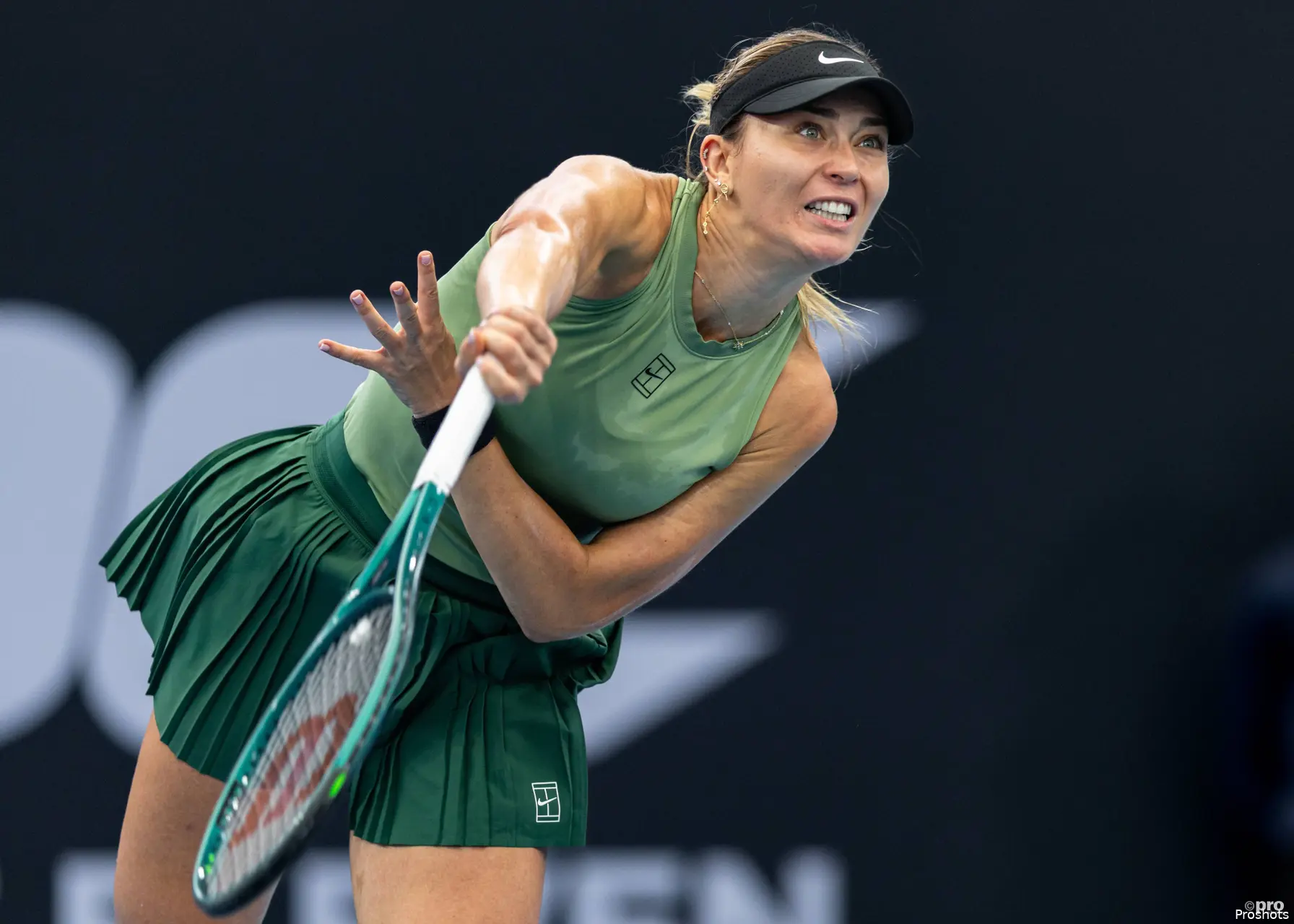
Paula Badosa continues to position her career around a clear objective: returning to the top of the sport and competing for Grand Slam titles. Despite her current ranking outside the top 100, the former World No. 2 maintains that her long-term ambition remains intact, framing her current struggles as part of a broader process rather than a shift in expectations.
That belief stands in contrast with her recent results. Badosa holds a 7–8 record so far in the 2026 season, with her only consistent run coming at the WTA 125 Austin Open, where she secured three consecutive wins to reach the semi-finals before falling to Bianca Andreescu. Outside of that stretch, she has been unable to build sustained momentum.
Her early exit at the Miami Open, where she lost in the second round to Iva Jovic, further reflected that instability. The result leaves her ranked No. 100, with a projected drop to No. 113, a position shaped not only by results but by limited continuity in her schedule and performance across consecutive events.
The broader context of her career explains that fluctuation. After reaching World No. 2 in 2022, Badosa dropped to No. 140 in 2024 before rebuilding into the top 10 in 2025. However, a stress fracture in her back diagnosed in 2023, combined with recurring physical issues—including a recent thigh problem in Miami—has prevented her from sustaining long runs, forcing multiple withdrawals throughout her career.

Mental battle outweighs external competition
Badosa’s own analysis of her situation places the emphasis on internal conflict rather than external opposition. While she continues to recognise the level of her rivals, she described her current phase as defined primarily by a mental struggle, closely tied to the uncertainty surrounding her physical condition.
Those doubts, she explained, are not abstract but directly connected to her recent injury history and the possibility of relapse after extended training periods. The accumulation of those thoughts has begun to affect her during matches, where decision-making and execution become more fragile.
“I have a lot of respect for my rivals, but I think I’m fighting more with myself, for internal things," Badosa said in an interview with El Larguero. "Fears, thoughts like ‘what if I don’t achieve this?’ or ‘what if I never get back to where I wanted to be?’ or ‘what if I get injured again?’ There are many thoughts going through my mind, even during competition, when they shouldn’t be there.”
She also acknowledged that this internal dynamic is currently unbalanced, with negative patterns becoming more dominant despite ongoing work with her team. “It’s complicated. Right now, the negative voice is winning more often than I’d like. It’s a constant battle between those two internal voices. I’m working on it daily with specialists and with my team, but a lot depends on me.”
Read also
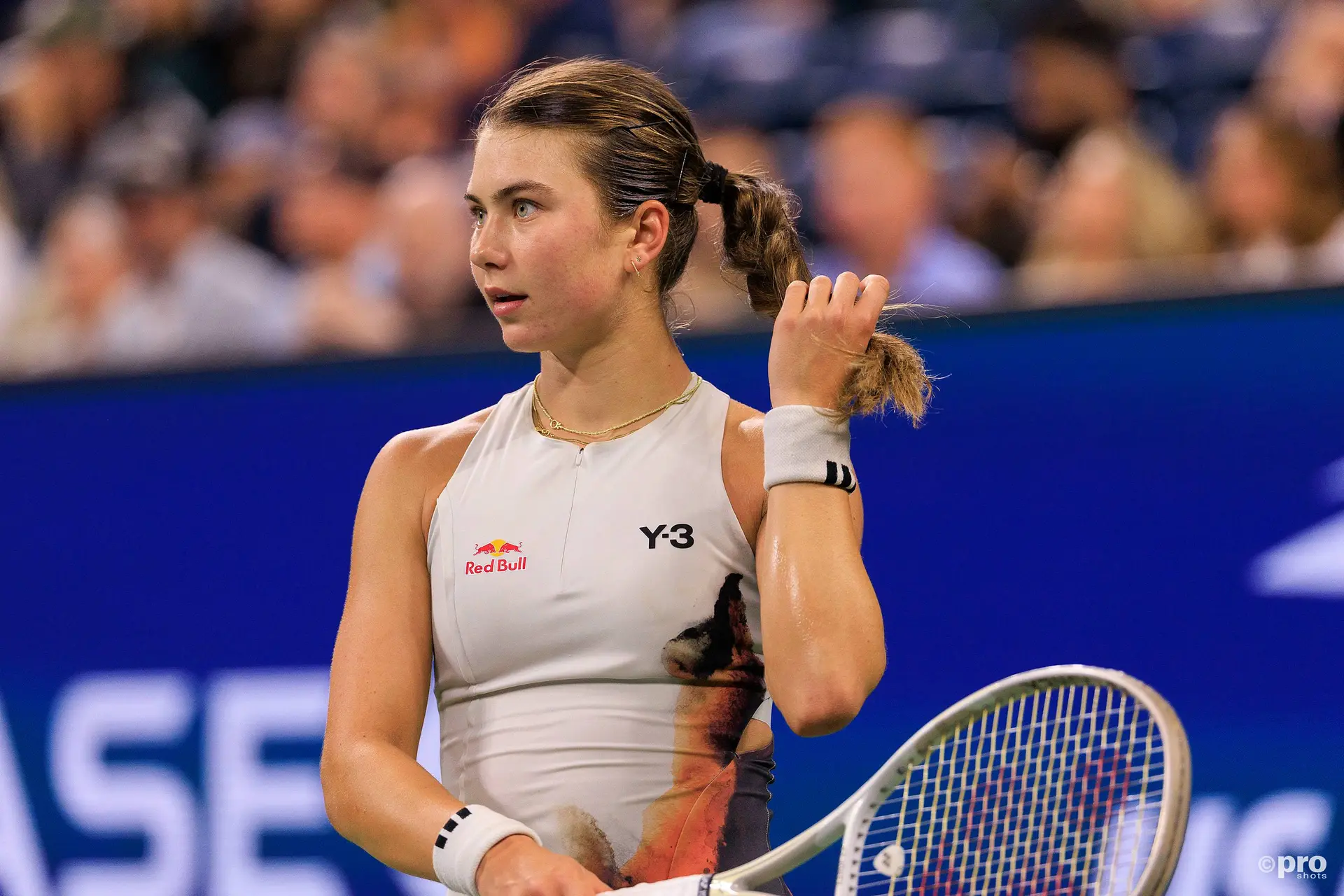
Performance disconnect between training and matches
A central issue in Badosa’s current phase is the gap between her level in practice and her performance in competition. According to her own evaluation, her tennis remains at a high level in training environments, but that standard has been difficult to reproduce under match pressure.
This disconnect has translated into inconsistent results, particularly in situations that require sustained mental clarity. The consequence has been a reduced ability to string together wins, directly impacting her ranking and limiting access to higher-tier events.
“When I’m mentally well, everything flows. But when I enter that negative dynamic, my tennis is half as good—more errors, more tension, slower movement. I feel like I see everything later," the former world No. 2 said. “When I’m in that dynamic, my tennis drops a lot. More mistakes, more tension. What affects me the most is that I move much slower. I feel like I see everything much later.”
At the same time, Badosa pointed out that her training level reinforces the sense that the issue is not purely technical, which adds another layer of frustration when results do not reflect that work. “In training, the level is very different. Very, very different. And that frustrates me more, because I see that and then I see myself competing, and that’s when I enter a complicated mental battle.”
Grand Slam ambition remains central to her outlook
Despite the current phase, Badosa continues to frame her career around competing at the highest level, with the pursuit of major titles still acting as a central reference point. Having already experienced life near the top of the rankings, her expectations remain aligned with returning to that position.
Read also
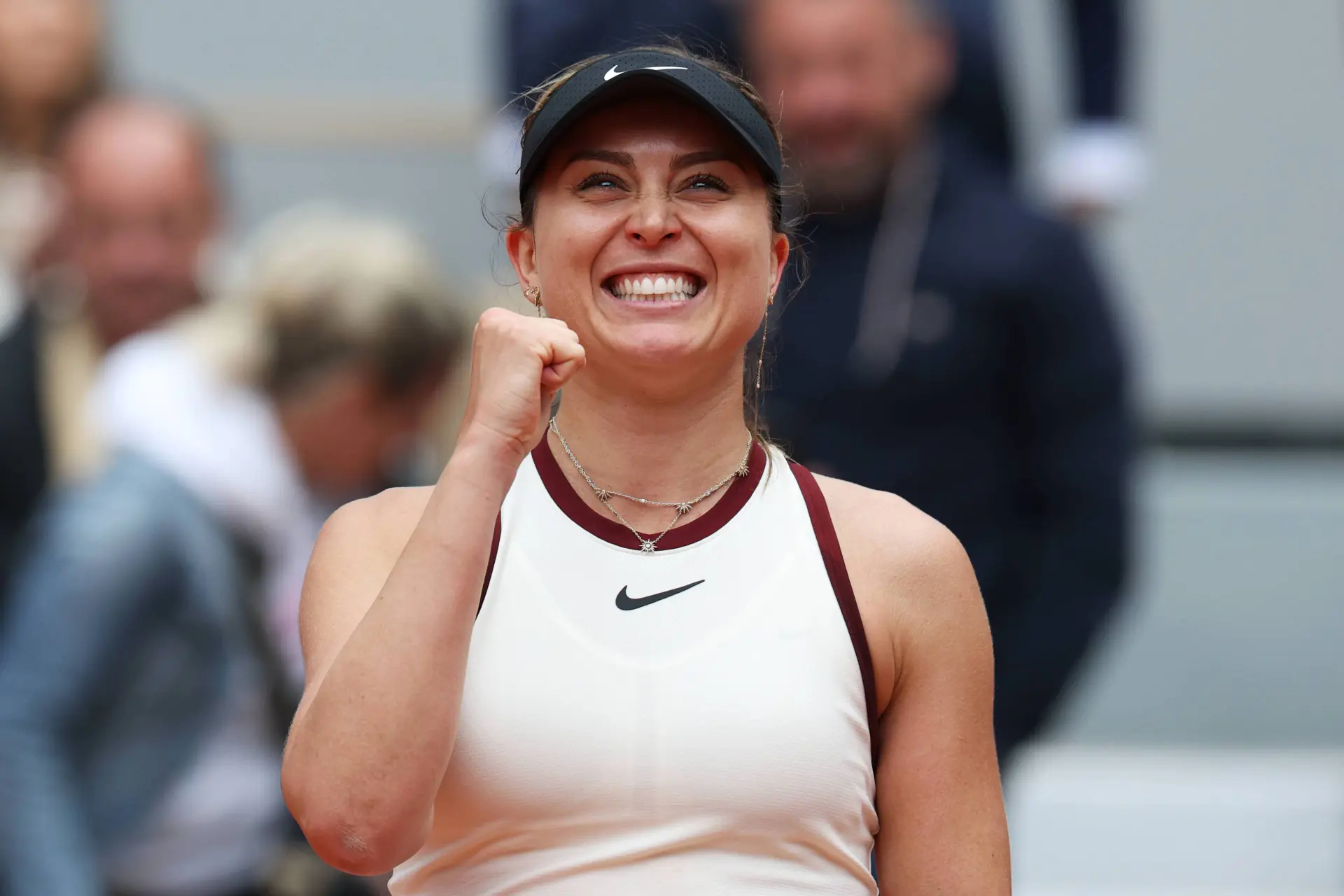
Her motivation, she explained, is directly tied to competing in the biggest tournaments and testing herself against the best players in the world, rather than simply participating on tour. “I still have that belief inside me that it can happen,” the former Indian Wells champion said. “I still have the belief that I can get back to where I was, competing with the best in the world. That’s what makes me happy.”
She also acknowledged that her current emotional state is closely linked to that competitive context, where being outside those stages has an impact beyond results alone. “I’m not in my best emotional moment right now, because being where I am doesn’t make me happy. I love tennis, but what I enjoy most is competing in the biggest tournaments, against the best players.”
Looking ahead, the clay court season presents the next opportunity to regain confidence and physical stability. Her upcoming commitments include the qualifying rounds of the Charleston Open, as well as the Rouen Open (where she received a wild card).

Cristhián AvilaTennis Journalist
Cristhián Ávila is a tennis journalist based in Santiago, Chile, and has been part of the TennisUpToDate team since early 2023. He covers the ATP and WTA Tours as well as all four Grand Slams, producing breaking news, match reports, analysis, and regular liveblogs from major tournaments.
His reporting combines statistical analysis with clear explanation, helping readers understand tactical developments, player form, and broader storylines across the tour. Working fluently in both Spanish and English, Cristhián collaborates with an international editorial team and contributes to comprehensive global coverage. As part of his work, he has conducted interviews and media interactions with leading figures in the sport, including Caroline Wozniacki and John McEnroe.
In his journalism, Cristhián places strong emphasis on careful sourcing, editorial accuracy, and updating articles promptly when new, verified information becomes available. His coverage is grounded in research, context, and direct engagement with professional tennis.
claps 0visitors 0
Just In

Popular News
Latest Comments
- Two Things: 1. Stop allowing these Spoiled Trust-Fund Elitists to behave badly. Your little hand-slaps do not deter them. 2. STOP the incessantly annoying "towel wiping" nonsense!!!!
 mandoist15-10-2026
 - A healthy Qinwen may be hard to stop next season. She was already scaring her opponents before her medical leave(s). Unfortunately, Zheng insisted on singing again. On the positive side -- Mirra did not sing!! ;~}mandoist11-10-2026
- Where is it written that athletes, entertainers... People in general... are mandated to keep looking at -- or even using [anti]Social Media? Public & private figures consistently complain and reveal their concerns about negativity and violence thrown at them -- yet they insist on participating. Avoid it, don't use it, don't read it. It's okay to occasionally look up at the World instead beating your eyes & thumbs to death on The Inventions out there.mandoist11-10-2026
- great articlestennisseserver07-10-2026
- Medvedev was leading Djokovic 7-5, 3-5 when an attempted return..' NO you ignorants, Djokovic was leading .weiss05-10-2026
- No more bullshit "Wildcards" to these two. Qualify like everyone else -- there will be cameras there, too. Time to scream... WTF ????!!!!mandoist29-09-2026
- Let's not BS the general public -- Sabalenka started showing cracks in her game last season. Her losses and near-losses started at about the same time she began being distracted by Fame (constant Selfies, making TV commercials, magazine shoots, endless Social Media nonsense, etc., etc.) One would think even Saba could recognize the parallels with others who failed before her -- Raducanu, Giorgi, Bouchard to name a few.mandoist25-09-2026
- Gross!! Hey Raducanu, Giorgi, and Bouchard -- reserve a seat at your Social Media Selfie table for Saba + Naomi. They're heading in your direction soon enough.mandoist24-09-2026
- And then these same players will complain about how lengthy their season’s were and need more time-off. I’m all for more tennis but the amount of tennis we get now is actually kind of crazy! We all need a break, especially the players.DaveyWavey23-09-2026
- You should do a comparison article for "different kinds of justice" the courts decide for tennis players. I can think of at least three players who received very small bans of a few months, however Tara Moore has been fighting for her literal survival the past few years. It seems odd considering she is not a "name" player, unlike the other cases.DaveyWavey22-09-2026

Loading