“I knew deep down I was supposed to be at those ITFs”: Bianca Andreescu on rebuilding her career step by step
WTA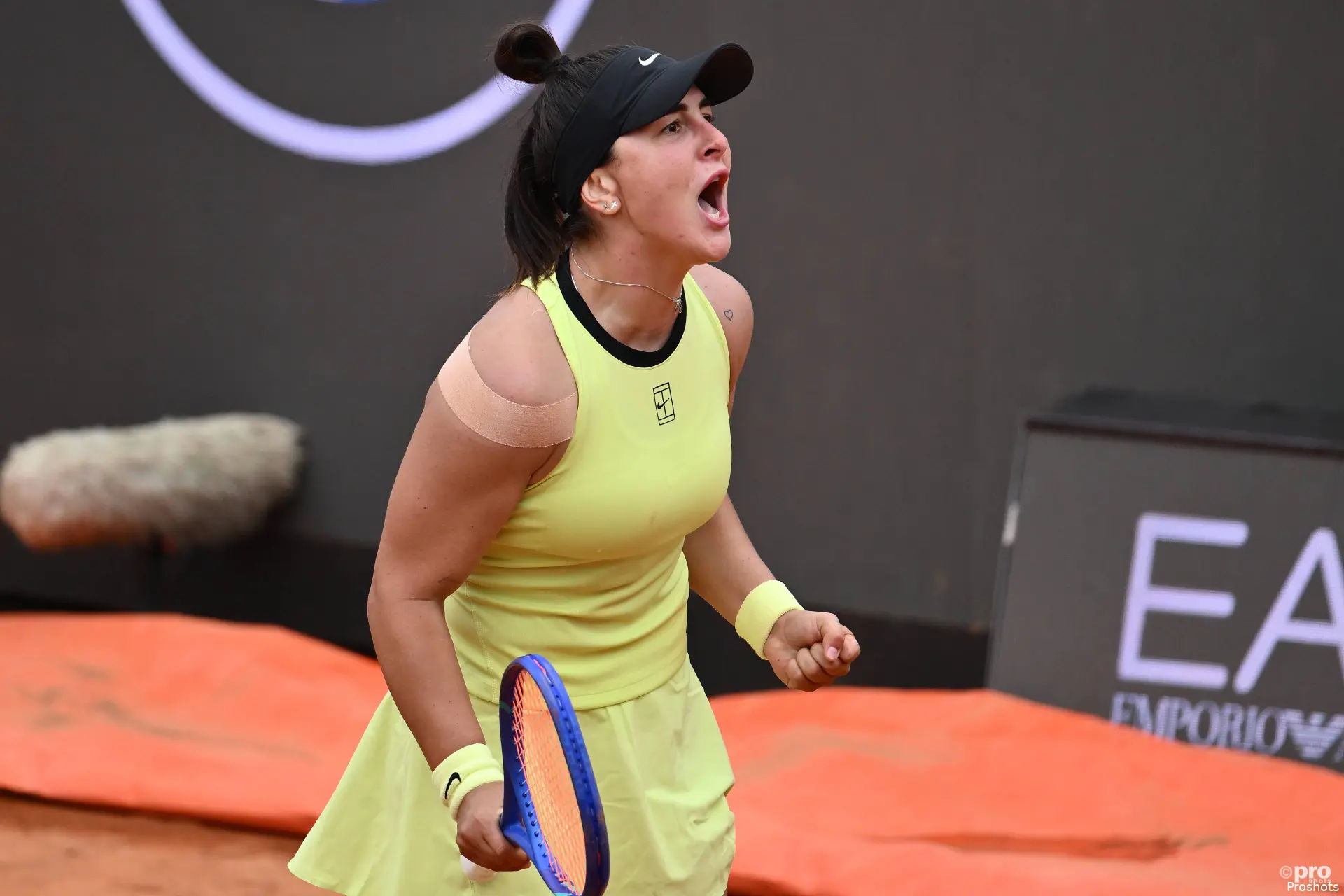
Bianca Andreescu has outlined the reasoning behind her decision to step away from the WTA main draw circuit in the opening months of the season and commit instead to ITF-level competition, a move that has reshaped her 2025 campaign.
The former US Open champion entered Roland-Garros qualifying ranked No.159, following a stretch of results built primarily on lower-tier events designed to restore match rhythm and physical continuity. She defeated 17-year-old French wildcard Daphnée Mpetshi Perricard, sister of Giovanni Mpetshi Perricard, 6-3, 6-2 in her opening qualifying match.
Andreescu did not feature in the Australian Open main draw or qualifying rounds earlier this year, opting instead to begin her season in Florida at ITF level. That decision marked a significant shift for a player who had operated for years within the top tier of the tour, but she described it as a necessary reset after previous approaches failed to deliver consistency.
The strategy has produced tangible outcomes. Andreescu captured titles at W35 Bradenton and the WTA 125 event in Austin, while also reaching the semifinals in Weston. “I was definitely watching and paying attention and obviously wishing I could be there,” Andreescu said to RolandGarros.com "But I knew deep down I was supposed to be at those ITFs and hopefully it makes for a good comeback story.”
“My ego definitely got in the way”: acceptance of a full competitive reset
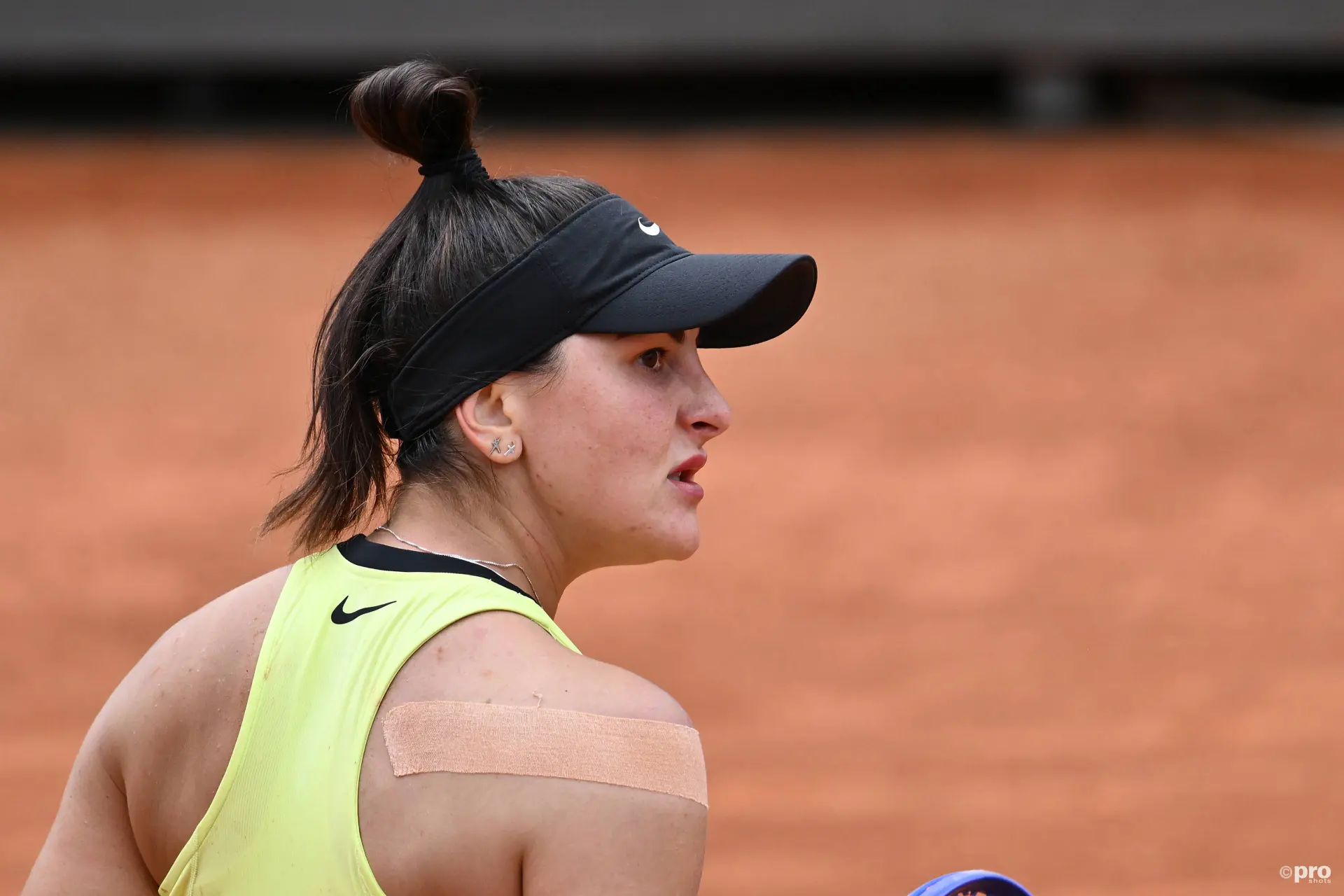
Andreescu acknowledged that the decision to drop down to ITF events was not immediate, nor purely technical. She admitted that similar opportunities had been considered in previous seasons but rejected, partly due to perception and status concerns associated with leaving the WTA main tour structure.
“We had options of doing that last year and even the year before, but my ego definitely got in the way of that,” she explained “I mean, I basically had to put that to the side because whatever I was doing maybe it wasn’t working, so I was like, ‘OK, what’s the next avenue?’” she said, framing the move as a practical correction rather than a strategic downgrade.

That adjustment led to a heavy match-load period on the ITF circuit, where Andreescu played approximately 14 to 15 matches in a three-week span. The objective, she noted, was not immediate progression in ranking terms but restoring match conditioning and competitive sharpness.
“I committed to that and obviously it wasn’t the easiest decision, but I mean the level is tough. I don’t want people to think that ITFs are like Mickey Mouse or whatnot. The level is super, super tough. I had some very close matches and I’m just super happy that I was able to play match after match. I played like 15, 14 matches in like three weeks and I felt great. So that was the goal, to just play, play, play.”
Read also
“Before I identified myself too much with wins and losses”: new framework behind her return
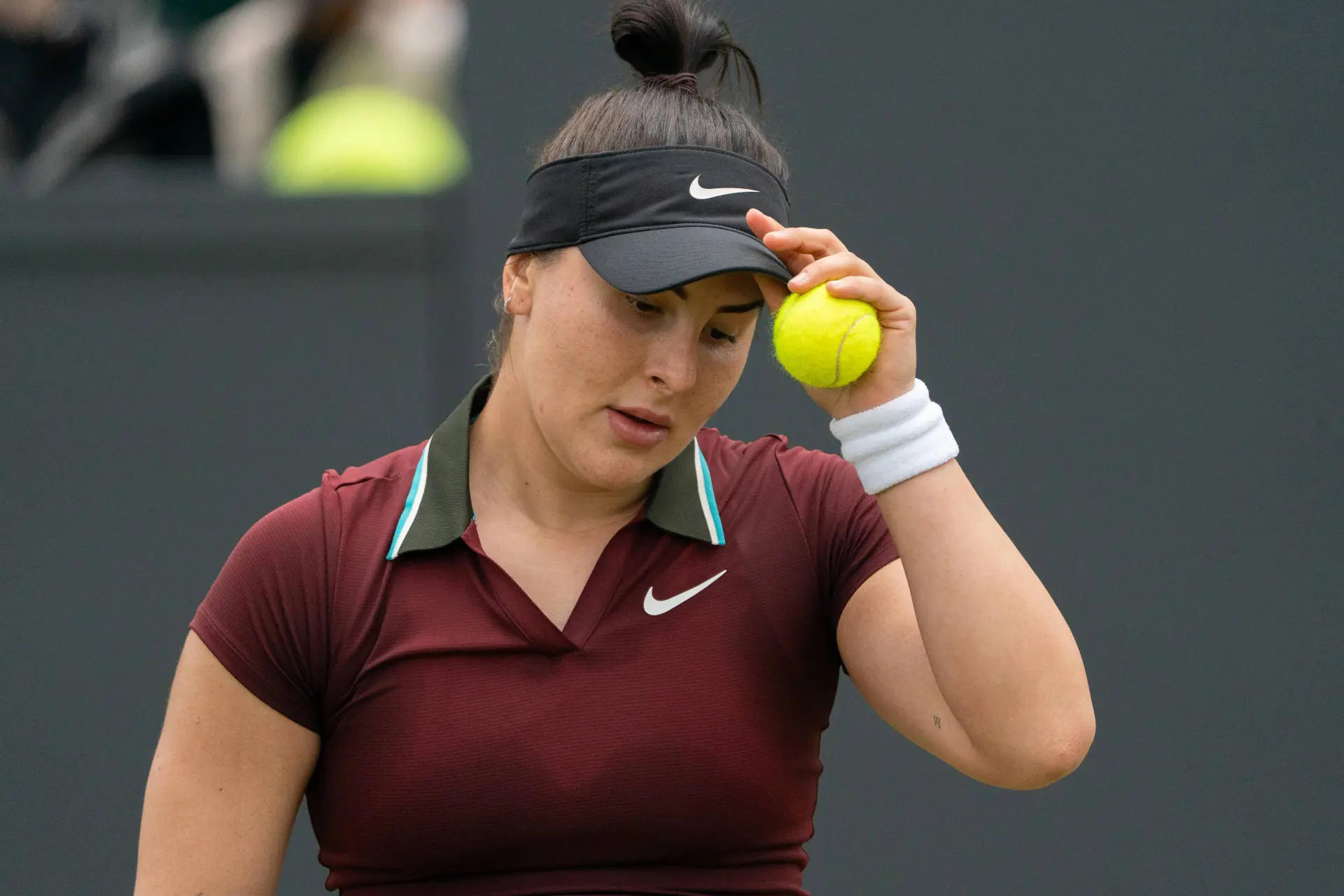
Beyond the structural decision to rebuild through ITF events, Andreescu has also described a broader change in how she evaluates performance. Once defined by rapid ascent after her 2019 US Open title, she now frames success through process metrics rather than results alone, particularly after injury interruptions and ranking drops.
“Before I would identify myself too much with the wins, the losses, and now I’m focusing more on, ‘How did I show up on the court?’” she said, outlining a shift away from outcome-based evaluation toward execution and intention during matches.
Read also
Andreescu has also worked closely with coach Dusan Vemic on tactical adjustments, using the ITF and lower-tier events as a platform to implement technical and strategic changes under match conditions. That process, she said, has required greater patience, particularly in constructing points rather than relying on early winners.
“I feel like I can get all up in my head. Before I didn’t really care about anything. I was just doing my job, having fun… I feel like my patience has definitely improved,” she said, describing the psychological evolution of her game since her breakthrough season.
“I mean there are moments obviously where I would love to just hit a winner but gotta take a deep breath and, you know, just make her work basically and it’s been good.”
Andreescu now continues her Roland-Garros qualifying campaign against Viktoria Hruncakova, with a potential third-round clash that could determine whether her ITF-led rebuild translates into a return to consistent Grand Slam main draw participation.

Cristhián AvilaTennis Journalist
Cristhián Ávila is a tennis journalist based in Santiago, Chile, and has been part of the TennisUpToDate team since early 2023. He covers the ATP and WTA Tours as well as all four Grand Slams, producing breaking news, match reports, analysis, and regular liveblogs from major tournaments.
His reporting combines statistical analysis with clear explanation, helping readers understand tactical developments, player form, and broader storylines across the tour. Working fluently in both Spanish and English, Cristhián collaborates with an international editorial team and contributes to comprehensive global coverage. As part of his work, he has conducted interviews and media interactions with leading figures in the sport, including Caroline Wozniacki and John McEnroe.
In his journalism, Cristhián places strong emphasis on careful sourcing, editorial accuracy, and updating articles promptly when new, verified information becomes available. His coverage is grounded in research, context, and direct engagement with professional tennis.
claps 0visitors 0
Just In

Popular News
Latest Comments
- A healthy Qinwen may be hard to stop next season. She was already scaring her opponents before her medical leave(s). Unfortunately, Zheng insisted on singing again. On the positive side -- Mirra did not sing!! ;~}
 mandoist11-10-2026
 - Where is it written that athletes, entertainers... People in general... are mandated to keep looking at -- or even using [anti]Social Media? Public & private figures consistently complain and reveal their concerns about negativity and violence thrown at them -- yet they insist on participating. Avoid it, don't use it, don't read it. It's okay to occasionally look up at the World instead beating your eyes & thumbs to death on The Inventions out there.mandoist11-10-2026
- great articlestennisseserver07-10-2026
- Medvedev was leading Djokovic 7-5, 3-5 when an attempted return..' NO you ignorants, Djokovic was leading .weiss05-10-2026
- No more bullshit "Wildcards" to these two. Qualify like everyone else -- there will be cameras there, too. Time to scream... WTF ????!!!!mandoist29-09-2026
- Let's not BS the general public -- Sabalenka started showing cracks in her game last season. Her losses and near-losses started at about the same time she began being distracted by Fame (constant Selfies, making TV commercials, magazine shoots, endless Social Media nonsense, etc., etc.) One would think even Saba could recognize the parallels with others who failed before her -- Raducanu, Giorgi, Bouchard to name a few.mandoist25-09-2026
- Gross!! Hey Raducanu, Giorgi, and Bouchard -- reserve a seat at your Social Media Selfie table for Saba + Naomi. They're heading in your direction soon enough.mandoist24-09-2026
- And then these same players will complain about how lengthy their season’s were and need more time-off. I’m all for more tennis but the amount of tennis we get now is actually kind of crazy! We all need a break, especially the players.DaveyWavey23-09-2026
- You should do a comparison article for "different kinds of justice" the courts decide for tennis players. I can think of at least three players who received very small bans of a few months, however Tara Moore has been fighting for her literal survival the past few years. It seems odd considering she is not a "name" player, unlike the other cases.DaveyWavey22-09-2026
- PRIZE MONEY & POINTS Winner - $185,500 Finalist - $114,500 Semi-Finalist - $66,003 Quarter-Finalist - $35,000 Round of 16 - $18,045 Round of 32 - $13,005 Winner - 500 Finalist - 325 Semi-Finalist - 195 Quarter-Finalist - 108 Round of 16 - 60 Round of 32 - 1DaveyWavey20-09-2026

Loading