“I still cannot believe I’m a Grand Slam champion”: Mirra Andreeva reacts to first Slam title in Roland-Garros
WTASunday, 07 June 2026 at 04:30
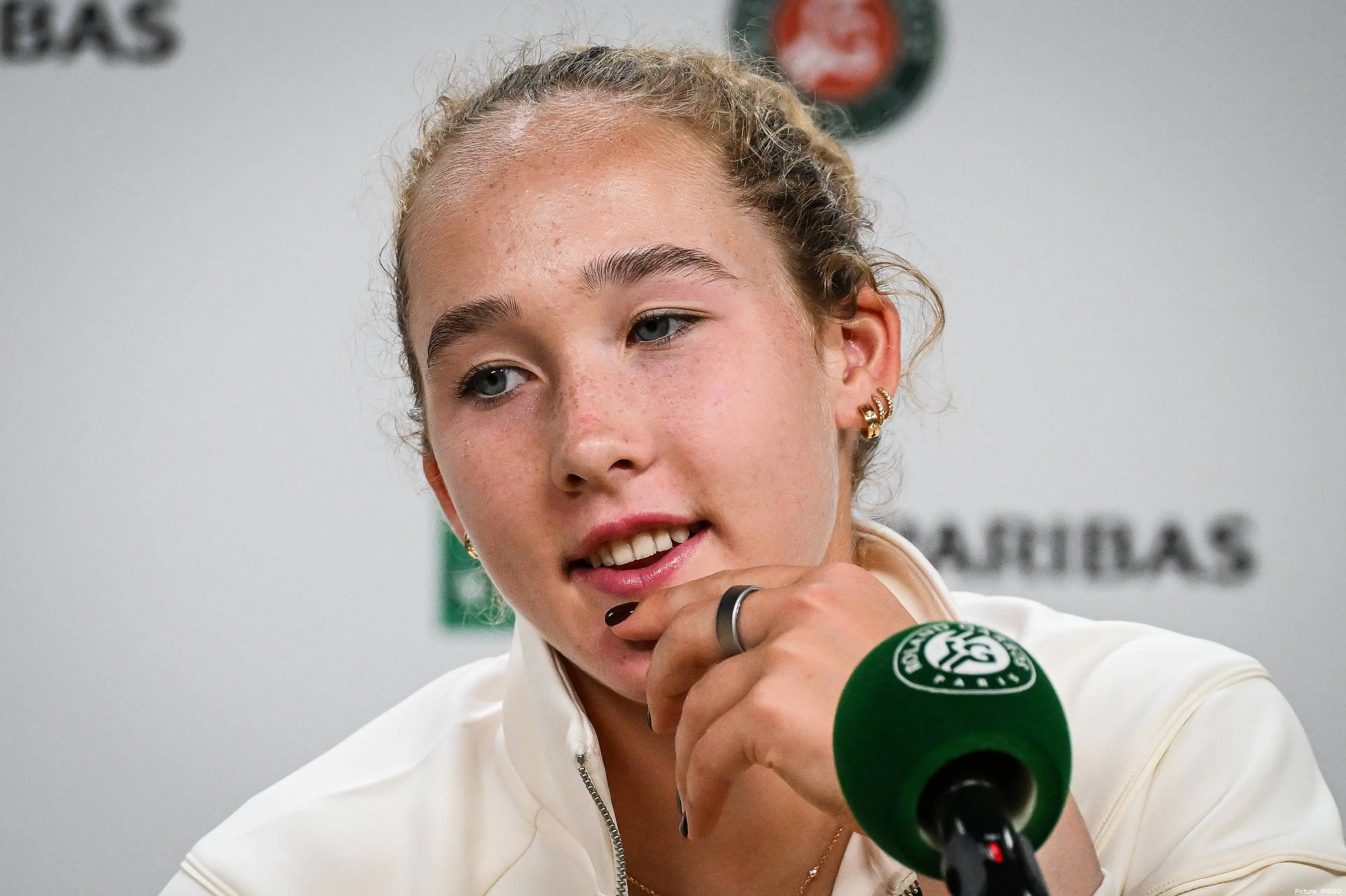
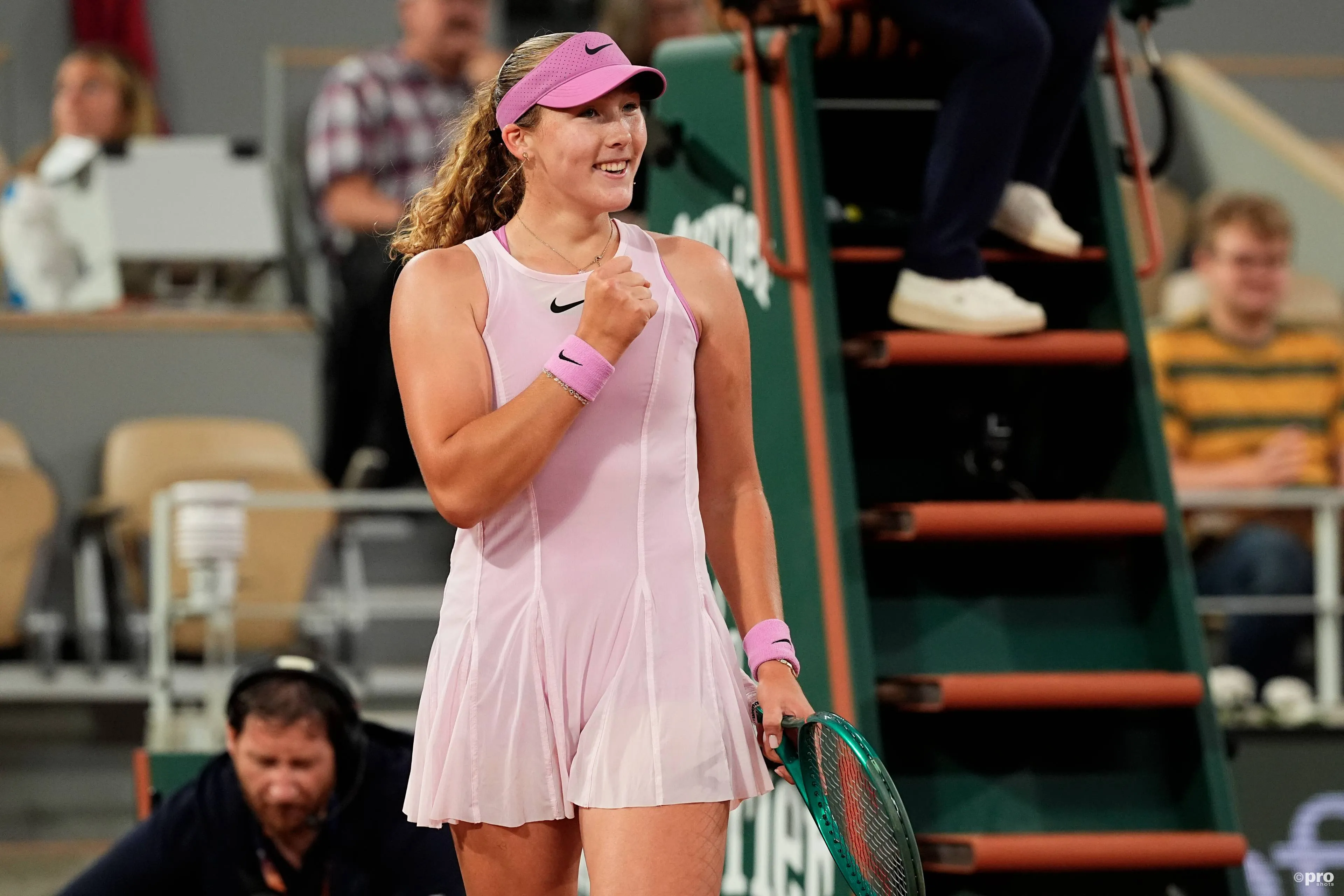
Mirra Andreeva won the Roland-Garros women’s title with a straight-sets victory over Maja Chwalińska, closing out the final 6-3, 6-2 in a match defined by control, adaptation, and composure under windy conditions on Court Philippe-Chatrier. The Russian, already established inside the top 10 and a multiple WTA 1000 champion, added a first Grand Slam title to her résumé in Paris.
The final reflected a gap in experience at this stage, with Chwalińska completing an unexpected run through qualifying and into the championship match. Andreeva, however, handled the conditions more efficiently, particularly as the wind repeatedly shifted direction and disrupted timing for both players.
The victory places Andreeva in a historically significant bracket, becoming one of the youngest Grand Slam champions of the 21st century. Speaking at the post-match press conference, Andreeva framed the moment as both emotional and difficult to fully process immediately after lifting the trophy.
“I still cannot believe that I’m doing a press conference with a Grand Slam trophy by my side," she said at her press conference. "It’s been one of my biggest dreams in life, and I’m super happy I was able to give my best, win the match and win this tournament.”
“I handled my nerves a little bit better” – mental preparation behind the first major
A central theme of Andreeva’s press conference was her psychological preparation during the fortnight in Paris, particularly her work with her psychologist ahead of the semifinal and final. She explicitly linked improved emotional regulation to structured mental training before the biggest matches of her career.
She acknowledged that the start of the tournament was unstable, with emotional matches and fluctuating intensity levels. However, she stated that targeted preparation helped her remain competitive under pressure, especially in the final stages of the event.

“I feel like I did handle my nerves a little bit better these two weeks,” she said in press conference. “The beginning of the tournament was very tricky, I’m not gonna lie. I’ve had some emotional matches and some emotional moments on the court as well, but I actually talked to my psychologist before a semi-final match and before a final match because I thought it would help me be in the right set of mind for these most important matches of my life.”
Andreeva added that her psychologist provided practical tools and match-specific techniques designed to stabilise her thinking on court. She credited that support as a decisive factor in managing pressure moments during the tournament’s final stages.
“And she gave me a lot of advice and a lot of techniques that I could try and use on the court to help myself experience all of these things a little bit better and easier. That’s why I think she deserves a lot of credit for this.”
“I chose to be a fighter” – tactics, conditions, and adapting to a new opponent
The final itself was defined by unpredictability, particularly due to strong and shifting wind conditions that affected shot control on both sides. Andreeva described the environment as one of the most challenging she has faced in a Grand Slam final.
She also faced an unfamiliar opponent, a qualifier who had not been part of the main draw regular circuit profile and had produced a sustained run through Roland-Garros.
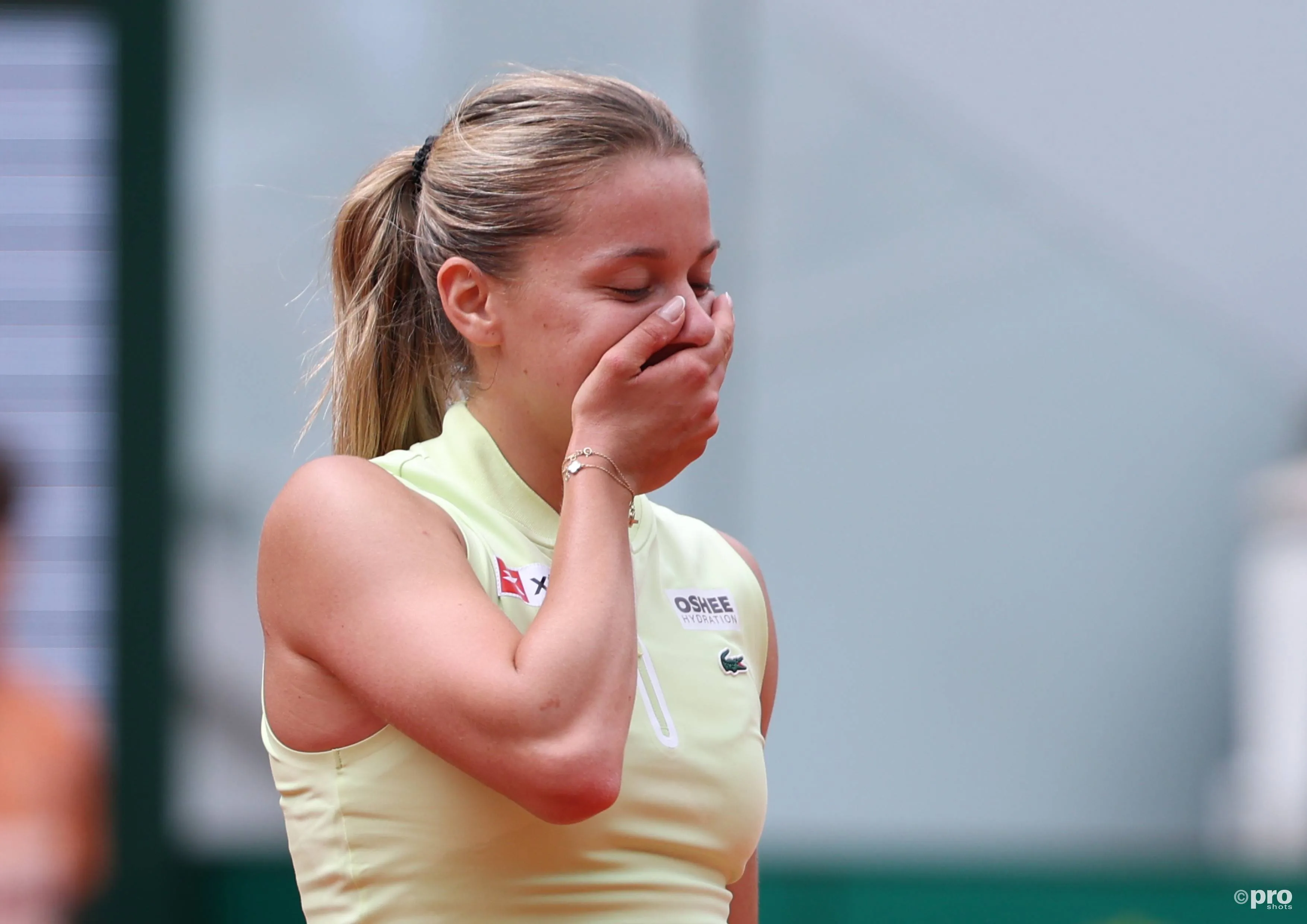
“I actually didn’t talk to Diana (Shnaider) because I felt that if I were in her place, I would be very proud but at the same time very disappointed that I lost, so I didn’t really want to bother her,” the world No. 6 said. “Maja has been playing amazing for three weeks. It’s very hard to come through qualies and go all the way to the final playing at a very high level. I was very nervous because I’ve never played against her before.”
She also highlighted the tactical uncertainty created by weather conditions, particularly wind direction changes that disrupted timing and ball control. According to Andreeva, adaptation speed became a key competitive separator in the match.
“The conditions today were very hard, very tricky, a lot of wind blowing in both directions. I couldn’t understand at some point which way the wind was going. I’m just happy that I dealt with these conditions and adjusted a little bit faster than she did.”
“I can call myself a Grand Slam champion” – significance of Paris and outlook after victory
Andreeva framed the victory as both emotional and developmental, describing the experience as something she had repeatedly visualised but still struggled to fully process in reality. She emphasised that the feeling of winning surpassed any prior expectation or mental rehearsal.
She also pointed to her long-term relationship with clay courts and familiarity with Roland-Garros conditions as factors that made Paris a natural breakthrough setting. “I’ve done a lot of visualisations before, not just this tournament. I’ve had dreams and thoughts about how it’s going to happen, if it’s going to happen, when it’s going to happen, where it’s going to happen."
“The feeling in real life is so much better than in your dreams. It feels amazing looking at this trophy and realising that this is actually true and I can call myself a Grand Slam champion.”
Looking ahead, Andreeva immediately shifted focus to the grass-court season, signalling an intent to build on the momentum of her first major title rather than pause on the achievement.
“Now I’m already thinking of how I’m going to prepare for the grass season and how I’m going to play grass tournaments," the 19-year-old player stated. "I feel like this thing is a little bit addicting and I really want to do my best to experience all of this for the second time.”

claps 0visitors 0
Just In
Popular News
Latest Comments
- Lightenup Cornet, it was a joke
 AceOfBase07-06-2026
 - Fun opening of her speech 😁AceOfBase07-06-2026
- Come on Sascha. You got this!AceOfBase07-06-2026
- Not too difficult for Mira. Still wonder what happened to Sabalenka suddenly. She should have been in the finalAceOfBase07-06-2026
- Hope he doesSakkariFan2305-06-2026
- Well I think you're wrong 6-0, 6-1 MajaSakkariFan2305-06-2026
- Mensik v Arnaldi pleaseSakkariFan2305-06-2026
- This is Zverev's chance to finally win a Grand Slam. He will not get too many chances. Better not mess it up Sascha!! :-)AceOfBase05-06-2026
- I seriously love this. Serena is back. Hopefully she wins a few for usAceOfBase05-06-2026
- That will be a boring final. Easy win for AndreevaAceOfBase05-06-2026

Loading