"I don’t pray for winning matches, I just prayed for a normal elbow": Zheng Qinwen laments constant injury struggles amid stop start return to tennis
WTA
Zheng Qinwen returned to competitive tennis this Monday, February 9, 2026, with a hard-fought 4-6, 6-1, 6-2 victory over Sofia Kenin at the Qatar Open. The 23-year-old Chinese star has been sidelined since Wimbledon 2025 due to a persistent elbow injury that required surgery.
After retiring in the third round of the China Open later that year and postponing multiple planned returns, Monday marked her first full match on the WTA tour since her operation. Her current ranking is No. 26, rising to 23 in the live ranking.
Zheng’s return was cautious and meticulously planned. After the China Open retirement, she focused entirely on rehabilitation, ensuring her elbow would sustain competitive play. Her victory over Kenin reflects not just physical recovery but the confidence that comes from months of careful preparation and progressive training. Doha represents a critical step in regaining rhythm and match fitness, with Zheng now aiming to reestablish herself in the top tier of women’s tennis.
Physical recovery
Physically, Zheng is optimistic but realistic about her comeback. She stressed that returning from injury is rarely a linear process, and that each day can bring ups and downs. “I think when you come back from an injury, you’re never completely pain-free,” commented the Paris 2024 Olympic gold medalist in a press conference. “There’s always up and down portions. Sometimes, when you wake up, you feel better. Sometimes, you wake up and feel worse.”
The mental adjustment of coping with prior uncertainty and rebuilding trust in her elbow has been as demanding as the rehabilitation itself. Zheng also discussed the challenges of long periods without match play. Training alone offers no immediate feedback, and progress can feel abstract compared to the clarity of a tournament. Watching top players across the tour helped her stay engaged, providing insight into competitive standards while she recovered.
“When you see how much time has passed, it starts to get difficult because you’re used to training but now you’re not getting feedback. When you play a tournament, at least you get feedback from winning or losing, you know where you need to improve. You don’t get feedback from continuing to train.”
“During the Australian Open, I could only serve 140-150 km/hr with my elbow. If I said that I wasn’t worried, that’s a lie. I was very worried in that moment. But I can only keep myself calm. I can’t do anything. But somehow, I’m very lucky that my elbow started to feel better. I’m really glad. I just wish my elbow could keep going at this stage and let’s keep fighting.”
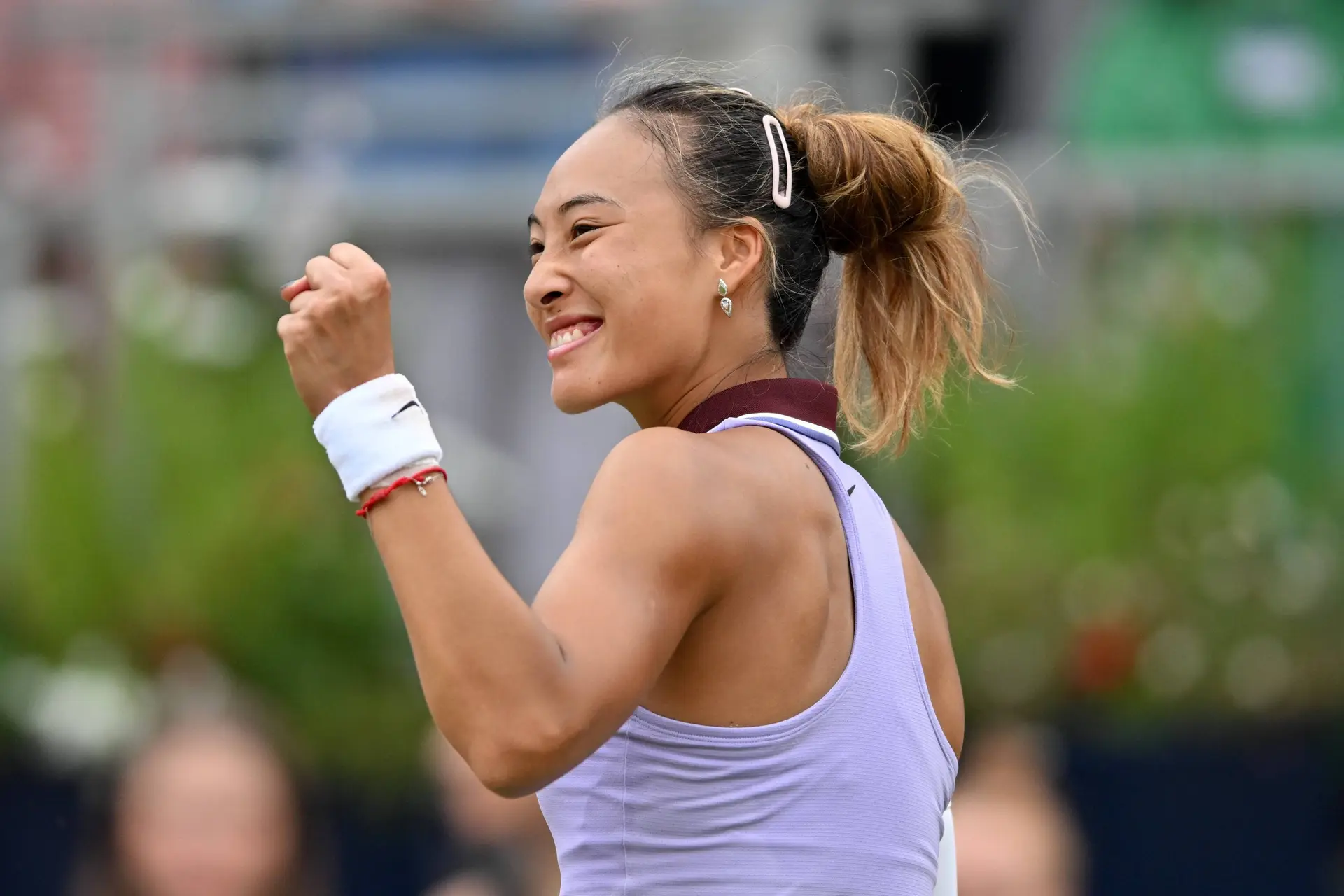
“I was praying… I just wanted my elbow to get back to normal”
Her confidence in her physical condition was evident in Doha, where she maintained serve and movement throughout a three-set match. Zheng explained that she could now sustain high intensity for hours, a level of durability that had been absent during her prior injury setbacks.
“I would say my elbow right now is really at a good stage and I could have kept going for another two hours serving like this!”aseguró la former world No. 4. “I wanted to come back really strong. I’m glad I could do that in the first match because tennis, you need to be consistent, not only one round. I would say, just stay calm and let’s go for the next round.”
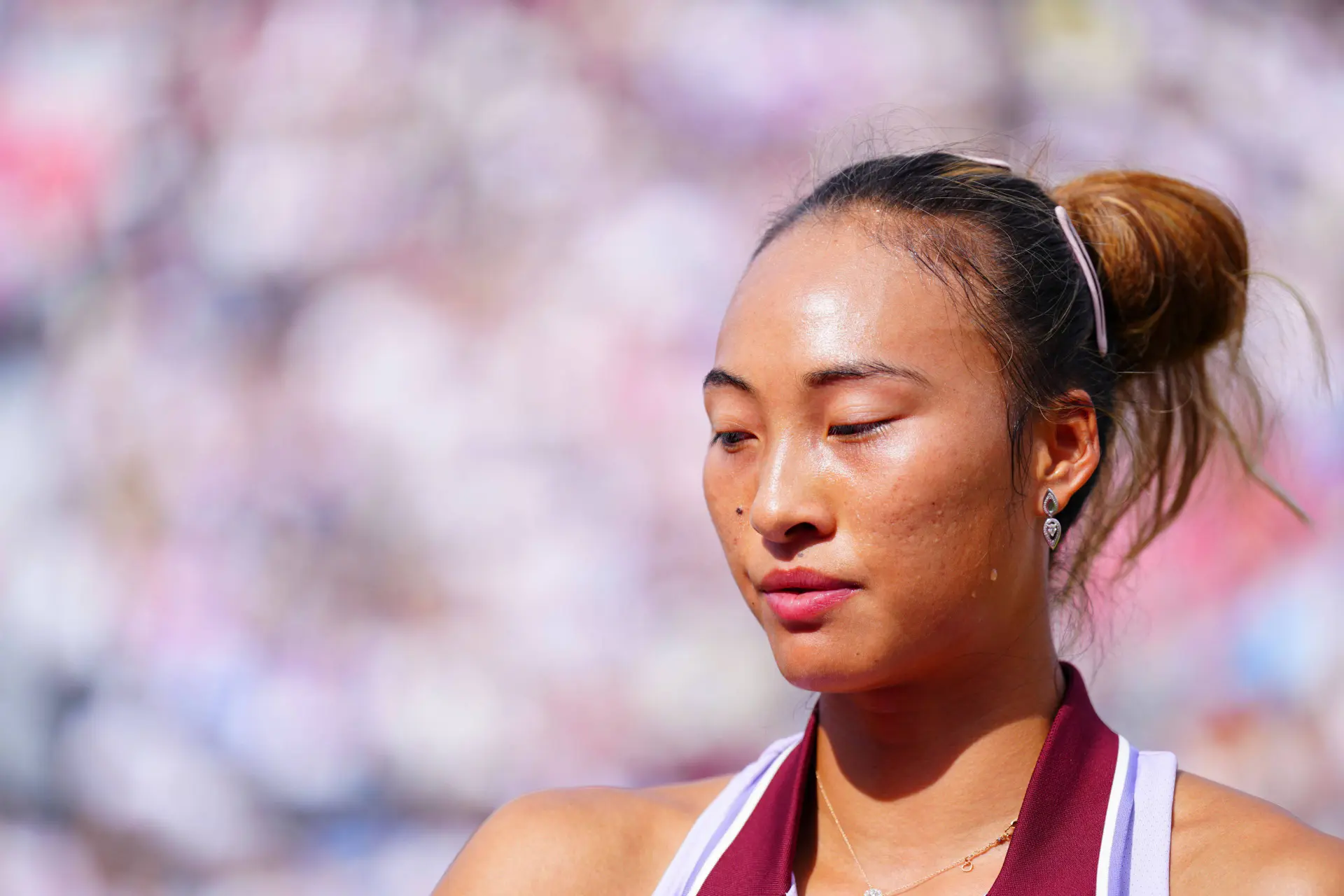
During her absence, Zheng reflected on the precarious nature of her recovery. At the China Open, her elbow lacked full extension and flexion, leaving her uncertain if she would ever regain full function. “When I was at the China Open, my elbow still didn’t have full extension or the flexion. At one moment, I thought my elbow would stay like this forever, that I would never be able to bend my right arm like I can bend my left.
She revealed that during this period she focused on recovery rather than immediate match results, even praying simply for normal movement rather than victories. “I was praying, I don’t know if it was to God or something else, but I just wanted my elbow to get back to normal. I don’t pray for winning matches I just prayed for a normal elbow.”
“Sabalenka, Sinner, Djokovic… I put a bit screen for Australian Open”
Zheng also kept in touch with the sport from afar, following major tournaments and top players iwhich helped maintain her competitive instincts. “When I was playing, I don’t watch too much tennis, but when I was off tennis for six months, I put up a big screen for the Australian Open and a smaller screen next to play men’s and women’s matches at the same time.” “I was able to follow the most interesting players: Sabalenka, Sinner, Djokovic, Alcaraz, Rybakina. I’ve been watching all those matches and it felt fun to just watch tennis on the screen as a fan.”
Finally, Zheng expressed readiness for challenges ahead, including the possibility of five-set matches - after Craig Tiley, Australian Open chief proposes best-of-5 set women's matches from quarterfinals onward - a format she has long been curious to experience. “I’m not afraid of five sets. I would say I’d benefit from it, and I’ve always wondered the feeling of playing five sets, so maybe one day I’ll have a chance to try.”
Zheng will return to the court this Tuesday for the second round against qualifier Alycia Parks, who enters confident after defeating 15th seed Diana Shnaider in the first round. The head-to-head stands at 1-1, though their last encounter dates back to 2023, and they have never met on hard courts.

Cristhián AvilaTennis Journalist
Cristhián Ávila is a tennis journalist based in Santiago, Chile, and has been part of the TennisUpToDate team since early 2023. He covers the ATP and WTA Tours as well as all four Grand Slams, producing breaking news, match reports, analysis, and regular liveblogs from major tournaments.
His reporting combines statistical analysis with clear explanation, helping readers understand tactical developments, player form, and broader storylines across the tour. Working fluently in both Spanish and English, Cristhián collaborates with an international editorial team and contributes to comprehensive global coverage. As part of his work, he has conducted interviews and media interactions with leading figures in the sport, including Caroline Wozniacki and John McEnroe.
In his journalism, Cristhián places strong emphasis on careful sourcing, editorial accuracy, and updating articles promptly when new, verified information becomes available. His coverage is grounded in research, context, and direct engagement with professional tennis.
claps 0visitors 0
Just In

Popular News
Latest Comments
- A healthy Qinwen may be hard to stop next season. She was already scaring her opponents before her medical leave(s). Unfortunately, Zheng insisted on singing again. On the positive side -- Mirra did not sing!! ;~}
 mandoist11-10-2026
 - Where is it written that athletes, entertainers... People in general... are mandated to keep looking at -- or even using [anti]Social Media? Public & private figures consistently complain and reveal their concerns about negativity and violence thrown at them -- yet they insist on participating. Avoid it, don't use it, don't read it. It's okay to occasionally look up at the World instead beating your eyes & thumbs to death on The Inventions out there.mandoist11-10-2026
- great articlestennisseserver07-10-2026
- Medvedev was leading Djokovic 7-5, 3-5 when an attempted return..' NO you ignorants, Djokovic was leading .weiss05-10-2026
- No more bullshit "Wildcards" to these two. Qualify like everyone else -- there will be cameras there, too. Time to scream... WTF ????!!!!mandoist29-09-2026
- Let's not BS the general public -- Sabalenka started showing cracks in her game last season. Her losses and near-losses started at about the same time she began being distracted by Fame (constant Selfies, making TV commercials, magazine shoots, endless Social Media nonsense, etc., etc.) One would think even Saba could recognize the parallels with others who failed before her -- Raducanu, Giorgi, Bouchard to name a few.mandoist25-09-2026
- Gross!! Hey Raducanu, Giorgi, and Bouchard -- reserve a seat at your Social Media Selfie table for Saba + Naomi. They're heading in your direction soon enough.mandoist24-09-2026
- And then these same players will complain about how lengthy their season’s were and need more time-off. I’m all for more tennis but the amount of tennis we get now is actually kind of crazy! We all need a break, especially the players.DaveyWavey23-09-2026
- You should do a comparison article for "different kinds of justice" the courts decide for tennis players. I can think of at least three players who received very small bans of a few months, however Tara Moore has been fighting for her literal survival the past few years. It seems odd considering she is not a "name" player, unlike the other cases.DaveyWavey22-09-2026
- PRIZE MONEY & POINTS Winner - $185,500 Finalist - $114,500 Semi-Finalist - $66,003 Quarter-Finalist - $35,000 Round of 16 - $18,045 Round of 32 - $13,005 Winner - 500 Finalist - 325 Semi-Finalist - 195 Quarter-Finalist - 108 Round of 16 - 60 Round of 32 - 1DaveyWavey20-09-2026

Loading