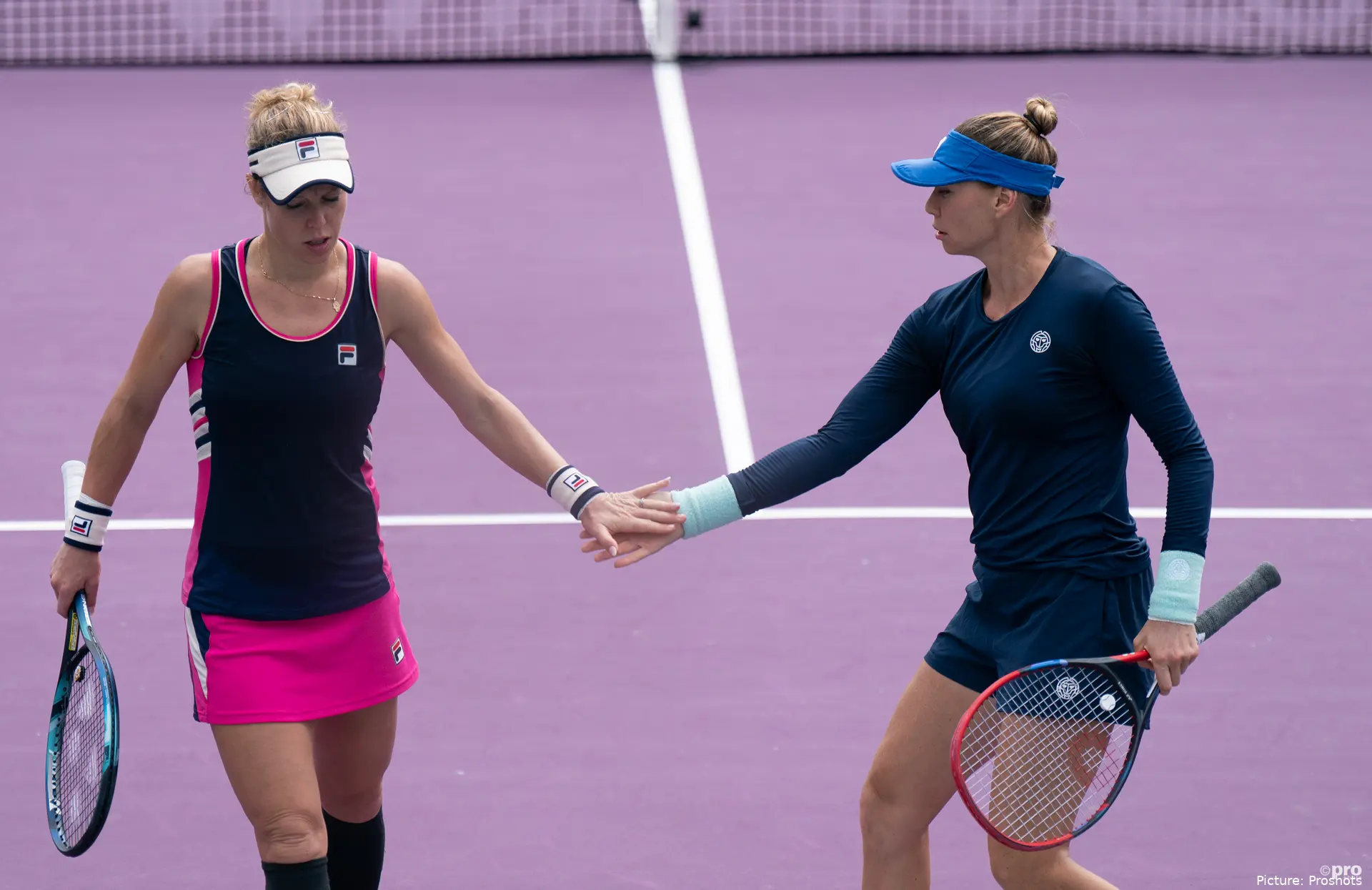
Seven years after lifting one of the biggest trophies of her career in the California desert, Vera Zvonareva is back at Indian Wells — this time at 41, navigating a comeback shaped by patience rather than urgency.
The former world No. 2 returns to Tennis Paradise after an 18-month absence from the tour, a break prompted by a recurring shoulder injury that ultimately required two surgeries. Rather than rushing her recovery, Zvonareva chose to step away completely, unsure whether a return to competition would even follow.
Her reappearance late last season signaled a gradual shift. The Russian reached the Australian Open doubles semifinals and secured her first main-draw singles victory since October 2023 at the Qatar Open, coming through qualifying and defeating Peyton Stearns in the first round — evidence that her competitive instincts remain intact.
Now she arrives in Indian Wells — the site of her 2009 title — carrying a different perspective and boosted by the confirmation of a wildcard from the tournament organizers. The goals are no longer rankings or milestones, but sustainability and enjoyment, taken “one day at a time.”
Read also
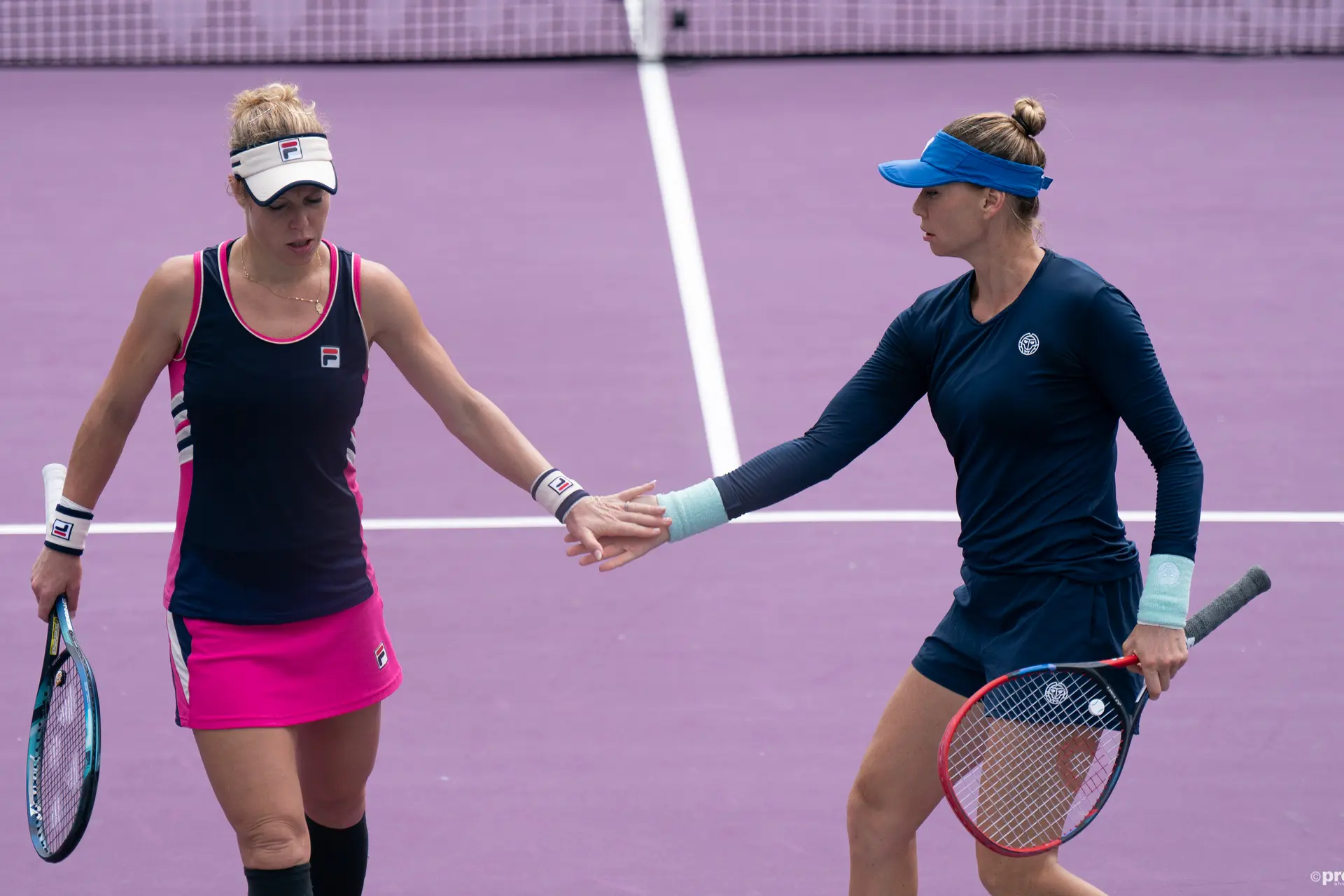
From surgery to second act
Zvonareva’s comeback was not premeditated. After undergoing a second shoulder operation, she admitted there was no immediate roadmap back to the WTA Tour. “I had a second shoulder surgery and, to be honest, I wasn’t in a rush to come back,” the Russian said in an interview with Tennis.com. “I took my time, I enjoyed spending time with family. As soon as I felt physically okay, I decided to try and see how it goes.”
Her decision to test herself competitively came gradually. Coaching junior players, spending time on court without structured pressure, and maintaining fitness without a defined objective eventually led to clarity. “I was not actually sure I would come back. It wasn’t something I was 100% working towards. I was just taking my time, doing all these different things, and then I realized, ‘Ok, I’m quite fit. My shoulder is better. I’ve done my rehab.’ Let me try and see how it goes.”
The result has been measured but promising. In Doha, she earned a main-draw singles win, navigating a difficult start to prevail through experience rather than physical dominance. “Look, I didn’t start the match well, but I felt like she was playing a different game from my previous opponents. But I tried my best and knew I could fight through this match, that I could challenge her more."
"In the end, it worked out my way. I’ve been playing many years on tour and I know that, as long as I’m trying my best on the court, I can always give myself a chance.”
Balancing singles, doubles and longevity
Over the last decade, Zvonareva’s most consistent success has come in doubles, including major titles earned after becoming a mother. Singles had taken a secondary role before her hiatus, but the comeback has reopened that door.
“You know, I played so many matches in my career, so I don’t really think about it in that way,” the 2-time Grand Slam finalist added. “I’ve been putting a lot of efforts into doubles in the past few years, so especially with the success of my doubles before I took a break, I’d put singles on the side. Now I’ve come back and I still want to play doubles because I enjoy it, but whenever I get a chance, I want to play singles, as well. I’m enjoying the moment of playing at a big tournament. That’s always nice.”
Longevity in tennis once seemed improbable. When Zvonareva turned professional in the early 2000s, many players retired in their mid-20s. Now, extended careers are increasingly common. “I was always amazed by how well Martina Navratilova was playing at the very start of my career. I was so young, and she in her late-40s, still playing so well in doubles towards the end of her career.”
I saw what Martina Hingis was able to do, as well, coming back to play doubles. Those players are maybe my inspirations. I never really thought I would be playing at this age when I started my career, for sure. But I enjoyed playing on tour, playing a lot of matches, tough matches. As long as I feel I can still do it, I would continue.”

Adapting to a faster game
Returning at 41 means adjusting to a tour that has evolved physically and tactically. Zvonareva acknowledges the shift clearly. “I think the game is a bit faster now, definitely. Serve and return, the first shots are becoming more important. Everyone is physically much fitter now, because everyone is working much harder off the court, physically. The speed and precision are a little bit at a higher level. You have to be able to play this game.”
For her, however, the motivation is no longer external validation. It is the internal satisfaction of competition. “I think just playing the game and staying competitive. I wouldn’t say I enjoy the travel too much. I don’t like flying back and forth, packing bags every week. But what I enjoy the most is playing the game and enjoying the competitiveness and playing myself. Even watching matches, I’m enjoying all of it.”
At Indian Wells — where swirling desert winds once framed the biggest victory of her career — Zvonareva returns not chasing history, but extending it, one measured step at a time.

Cristhián AvilaTennis Journalist
Cristhián Ávila is a tennis journalist based in Santiago, Chile, and has been part of the TennisUpToDate team since early 2023. He covers the ATP and WTA Tours as well as all four Grand Slams, producing breaking news, match reports, analysis, and regular liveblogs from major tournaments.
His reporting combines statistical analysis with clear explanation, helping readers understand tactical developments, player form, and broader storylines across the tour. Working fluently in both Spanish and English, Cristhián collaborates with an international editorial team and contributes to comprehensive global coverage. As part of his work, he has conducted interviews and media interactions with leading figures in the sport, including Caroline Wozniacki and John McEnroe.
In his journalism, Cristhián places strong emphasis on careful sourcing, editorial accuracy, and updating articles promptly when new, verified information becomes available. His coverage is grounded in research, context, and direct engagement with professional tennis.
claps 0visitors 0
Just In

Popular News
Latest Comments
- A healthy Qinwen may be hard to stop next season. She was already scaring her opponents before her medical leave(s). Unfortunately, Zheng insisted on singing again. On the positive side -- Mirra did not sing!! ;~}
 mandoist11-10-2026
 - Where is it written that athletes, entertainers... People in general... are mandated to keep looking at -- or even using [anti]Social Media? Public & private figures consistently complain and reveal their concerns about negativity and violence thrown at them -- yet they insist on participating. Avoid it, don't use it, don't read it. It's okay to occasionally look up at the World instead beating your eyes & thumbs to death on The Inventions out there.mandoist11-10-2026
- great articlestennisseserver07-10-2026
- Medvedev was leading Djokovic 7-5, 3-5 when an attempted return..' NO you ignorants, Djokovic was leading .weiss05-10-2026
- No more bullshit "Wildcards" to these two. Qualify like everyone else -- there will be cameras there, too. Time to scream... WTF ????!!!!mandoist29-09-2026
- Let's not BS the general public -- Sabalenka started showing cracks in her game last season. Her losses and near-losses started at about the same time she began being distracted by Fame (constant Selfies, making TV commercials, magazine shoots, endless Social Media nonsense, etc., etc.) One would think even Saba could recognize the parallels with others who failed before her -- Raducanu, Giorgi, Bouchard to name a few.mandoist25-09-2026
- Gross!! Hey Raducanu, Giorgi, and Bouchard -- reserve a seat at your Social Media Selfie table for Saba + Naomi. They're heading in your direction soon enough.mandoist24-09-2026
- And then these same players will complain about how lengthy their season’s were and need more time-off. I’m all for more tennis but the amount of tennis we get now is actually kind of crazy! We all need a break, especially the players.DaveyWavey23-09-2026
- You should do a comparison article for "different kinds of justice" the courts decide for tennis players. I can think of at least three players who received very small bans of a few months, however Tara Moore has been fighting for her literal survival the past few years. It seems odd considering she is not a "name" player, unlike the other cases.DaveyWavey22-09-2026
- PRIZE MONEY & POINTS Winner - $185,500 Finalist - $114,500 Semi-Finalist - $66,003 Quarter-Finalist - $35,000 Round of 16 - $18,045 Round of 32 - $13,005 Winner - 500 Finalist - 325 Semi-Finalist - 195 Quarter-Finalist - 108 Round of 16 - 60 Round of 32 - 1DaveyWavey20-09-2026

Loading