"I'm not one to judge": Iga Swiatek's coach rejects claims of suffering foot injury during US Open mixed doubles
WTA
World number two Iga Swiatek’s coach Wim Fissette believes
the Polish tennis star’s foot injury had nothing to do her participation in the
US Open mixed doubles event. Swiatek recently featured in the fourth and the
final Grand Slam of the year where she was knocked out after losing in the quarterfinal
to America’s Amanda Anisimova in straight sets with a score of 6-4, 6-3.
It was later reported that Swiatek was not fit during the
contest and was carrying a foot injury. There were suggestions that Swiatek picked up that injury while playing in the mixed doubles event at the US Open, which was played just a few days before the start of the main round. In that competition, Swiatek partnered with Norway’s Casper Ruud, and the pair ended up playing in the final, where they lost to the pair of Sara Errani and Andrea Vavassori.
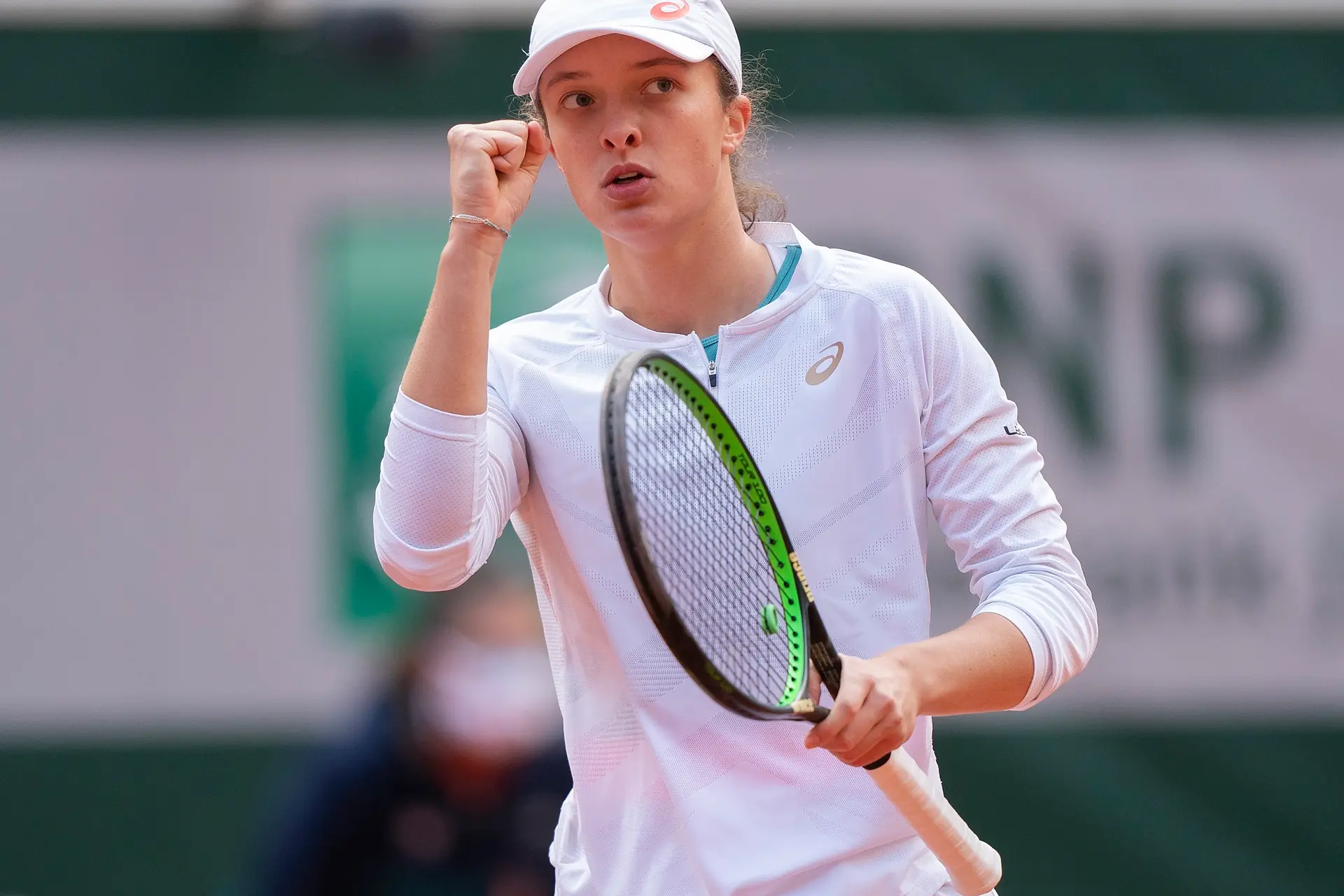
Swiatek’s coach, Fissette, has recently had a detailed interview with Sport.pl, where he was asked about the root cause of the six-time Grand Slam winner and whether the US Open mixed doubles was responsible for that. In response to that, Fissette rejected the claim that the US Open was responsible
for that and instead suggested Swiatek’s injury happened because of playing in
excessive heat at the Cincinnati Open.
“I'm not one to judge whether the mixed doubles made
things worse,” said Fiessette. “I talked to Maciej [Ryszczuk - ed.] about it. I
asked him if it was something we shouldn't have done, looking back. He didn't
think it made much difference. The root of the problem turned out to be the
tournament in Cincinnati, where it was really hot, which in Iga's case, with
her sliding and intense movement, is even more important. I think it was just
bad luck. There are always problems, and every time you look back, you think. Okay,
maybe this could have been changed a bit But I think things just happen. We
have to accept it. Of course, we're trying to learn from it and see how we can
do things better. Maybe we should tap more often when it's really hot, when
there's a higher risk of blisters, maybe we should change our socks or shoes
more often. We've talked about how to avoid this in the future and hopefully it
won't happen again.”
Big challenges moving forward
Fissette was then asked about what is his point of view
about the reaching the quarterfinal of the US Open. In response to that, Fissette
stated that for him, it was a great achievement because at one stage he was not
sure that Swiatek will be able to take the court and play against some of the
best players in the world.
“For me, definitely [a great result playing in the
quarterfinal of the US Open],” said Fissette. “There was a moment when I
thought, 'Maybe she won't be able to play.' And that's also a difficult
situation for a player. Iga isn't one of those players who has a lot of
injuries; she's usually in great shape and feels good. It's a situation where
you never know how a player will cope mentally. Playing with a numb foot means
you approach matches with much more thought than a normal match, which was a
big challenge. I'm proud of Iga for how she handled it, and I think we can be
happy with this quarterfinal."
Read also
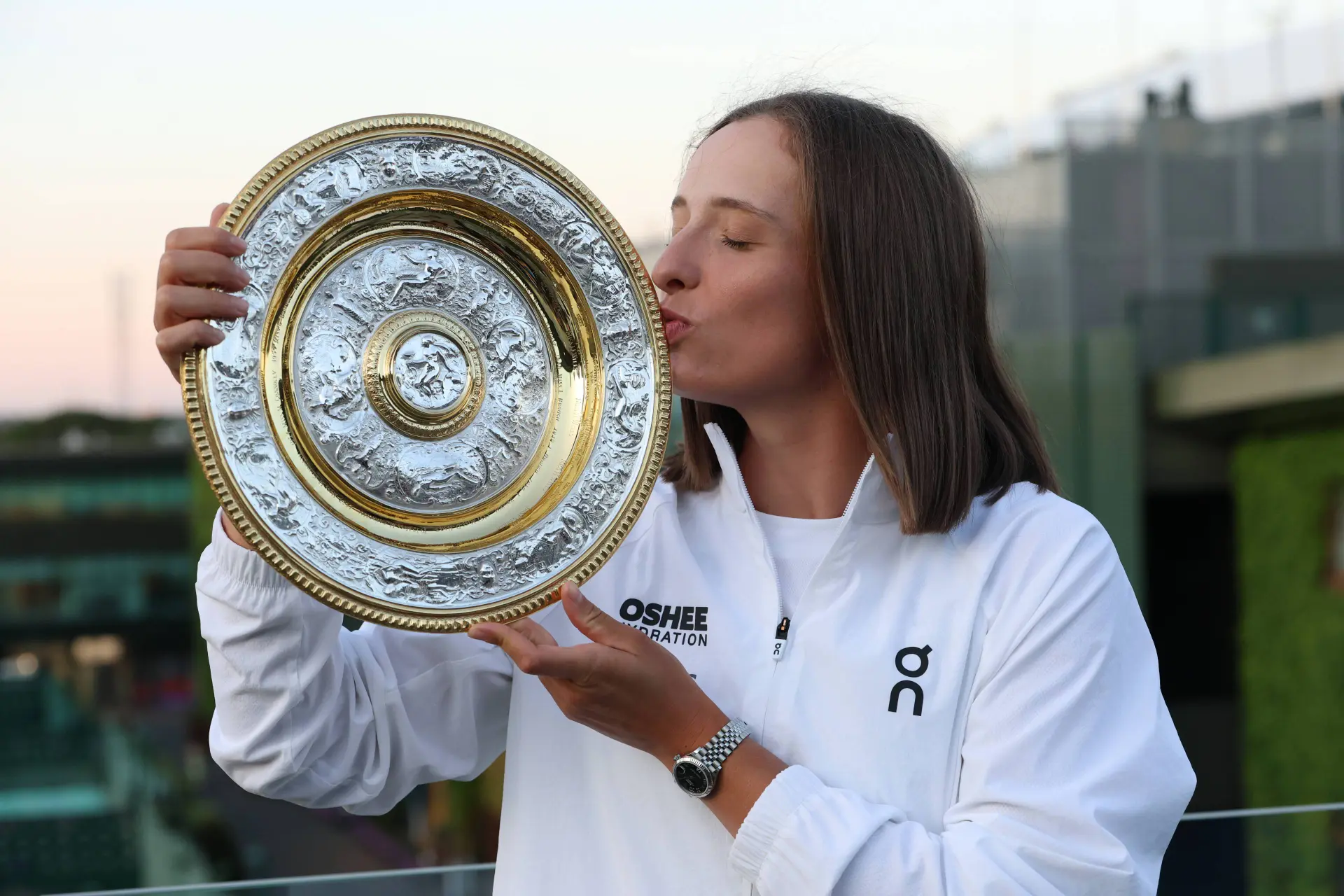
Service remains a problem for Swiatek, especially in the
match where she ended up losing against some of the top players in the world.
Fissette was asked about whether there is acknowledgement in the Swiatek’s team
about the issue and he responded by stating that people in the think tank acknowledge
the importance of improving the serve in the future.
"I agree with these observations [of serving poorly
in big matches,” said Fissette. “I think Wimbledon was very good in this
regard. And then the tournament in Cincinnati, when Iga served really well in
most matches. At the US Open, the main problem was that we couldn't practice.
During matches, when there's more pressure, we focus on the result, of course.
Sometimes it happens that, especially serving technique, deteriorates a bit,
and we have to deal with it. That's what the days between matches are for, when
you can improve your technique, and we clearly missed out on those training days.
I think if we could use those days and practice, Iga would have served better
against Amanda."
Azeem Siddiqui is a seasoned sports journalist and data analyst with a strong background in both digital media and live sports production.
He began his journalism career working with partners of The New York Times and has since contributed to several leading international sports publications, including Fox Sports Asia, Calciomercato, and GiveMeSport. Since 2023, Azeem has been part of the TennisUpToDate team, where he has played a key role in sustaining the platform’s growth and ensuring tennis fans receive timely and reliable coverage of the sport’s biggest stories.
In addition to his editorial work, Azeem has extensive experience as a data analyst in live sports broadcasting—particularly in cricket—where he combines analytical precision with creative storytelling. He has collaborated with multiple production companies and cricket boards worldwide, delivering real-time insights and data-driven narratives during live match coverage.
claps 0visitors 0
Just In

Popular News
Latest Comments
- A healthy Qinwen may be hard to stop next season. She was already scaring her opponents before her medical leave(s). Unfortunately, Zheng insisted on singing again. On the positive side -- Mirra did not sing!! ;~}
 mandoist11-10-2026
 - Where is it written that athletes, entertainers... People in general... are mandated to keep looking at -- or even using [anti]Social Media? Public & private figures consistently complain and reveal their concerns about negativity and violence thrown at them -- yet they insist on participating. Avoid it, don't use it, don't read it. It's okay to occasionally look up at the World instead beating your eyes & thumbs to death on The Inventions out there.mandoist11-10-2026
- great articlestennisseserver07-10-2026
- Medvedev was leading Djokovic 7-5, 3-5 when an attempted return..' NO you ignorants, Djokovic was leading .weiss05-10-2026
- No more bullshit "Wildcards" to these two. Qualify like everyone else -- there will be cameras there, too. Time to scream... WTF ????!!!!mandoist29-09-2026
- Let's not BS the general public -- Sabalenka started showing cracks in her game last season. Her losses and near-losses started at about the same time she began being distracted by Fame (constant Selfies, making TV commercials, magazine shoots, endless Social Media nonsense, etc., etc.) One would think even Saba could recognize the parallels with others who failed before her -- Raducanu, Giorgi, Bouchard to name a few.mandoist25-09-2026
- Gross!! Hey Raducanu, Giorgi, and Bouchard -- reserve a seat at your Social Media Selfie table for Saba + Naomi. They're heading in your direction soon enough.mandoist24-09-2026
- And then these same players will complain about how lengthy their season’s were and need more time-off. I’m all for more tennis but the amount of tennis we get now is actually kind of crazy! We all need a break, especially the players.DaveyWavey23-09-2026
- You should do a comparison article for "different kinds of justice" the courts decide for tennis players. I can think of at least three players who received very small bans of a few months, however Tara Moore has been fighting for her literal survival the past few years. It seems odd considering she is not a "name" player, unlike the other cases.DaveyWavey22-09-2026
- PRIZE MONEY & POINTS Winner - $185,500 Finalist - $114,500 Semi-Finalist - $66,003 Quarter-Finalist - $35,000 Round of 16 - $18,045 Round of 32 - $13,005 Winner - 500 Finalist - 325 Semi-Finalist - 195 Quarter-Finalist - 108 Round of 16 - 60 Round of 32 - 1DaveyWavey20-09-2026

Loading