"In life there are things we can’t control—birth, love, loss": Emotional Aryna Sabalenka turned losing father at 21 into strength and resilience
WTA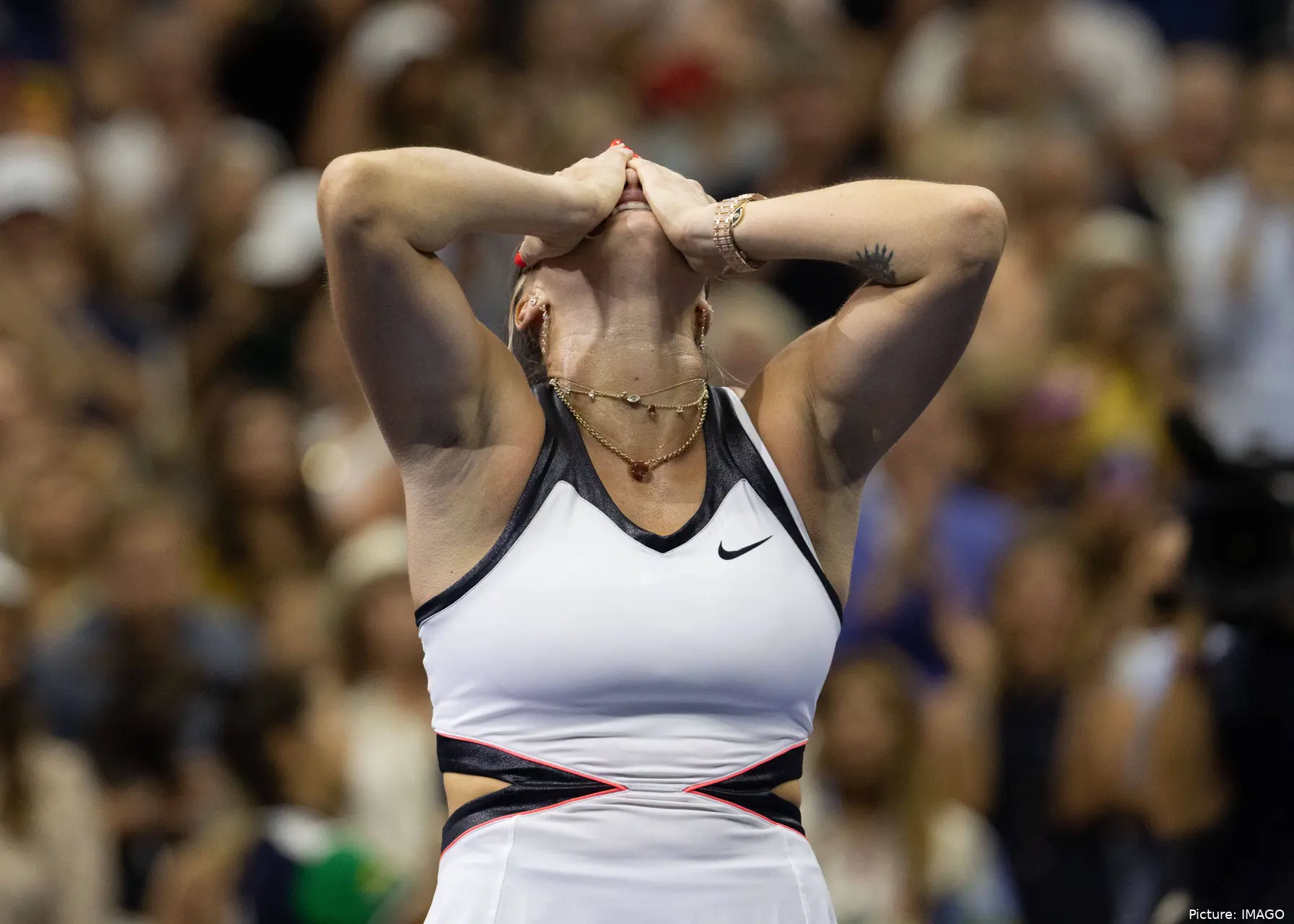
Aryna Sabalenka is now a four-time Grand Slam champion and a true figurehead for the sport of tennis but amid all of the glitz, glamour and fierceness she brings to the sport is also a side of resilience and strength.
Sabalenka won the US Open defeating Amanda Anisimova in the final and immediately joined The Jay Shetty Podcast earlier this week. Asked how her personal life impacts her career, Sabalenka reflected on the importance of balance. The Belarusian though polarising at times is a bit of an antithesis to the usual top players in the sport. Always looking the part and showcasing her personality, it becomes an infectious part of a player who brings passion to the court and fun off it.
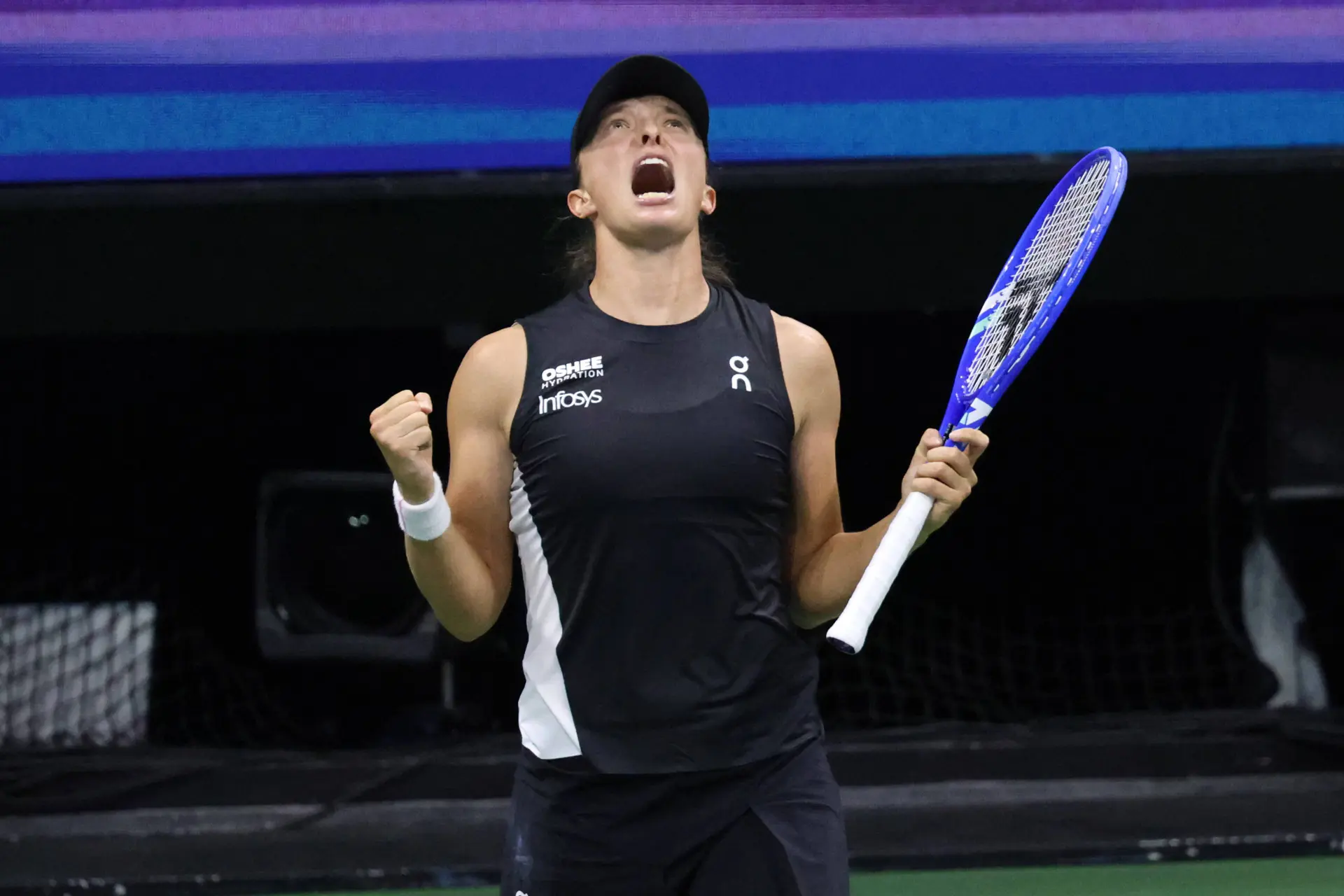
In a separate interview this week where Sabalenka was brought up, Anna Kalinskaya herself admitted that despite having the photoshoots and magazine front covers herself that she cannot do what Sabalenka does in regards to using it as fuel. Iga Swiatek was also cited as an example as she is also a commercial juggernaut but doesn't revel in the other parts of the game. The World No.1 does and said it's a reward for the hard work she puts in and the zest she has for life.
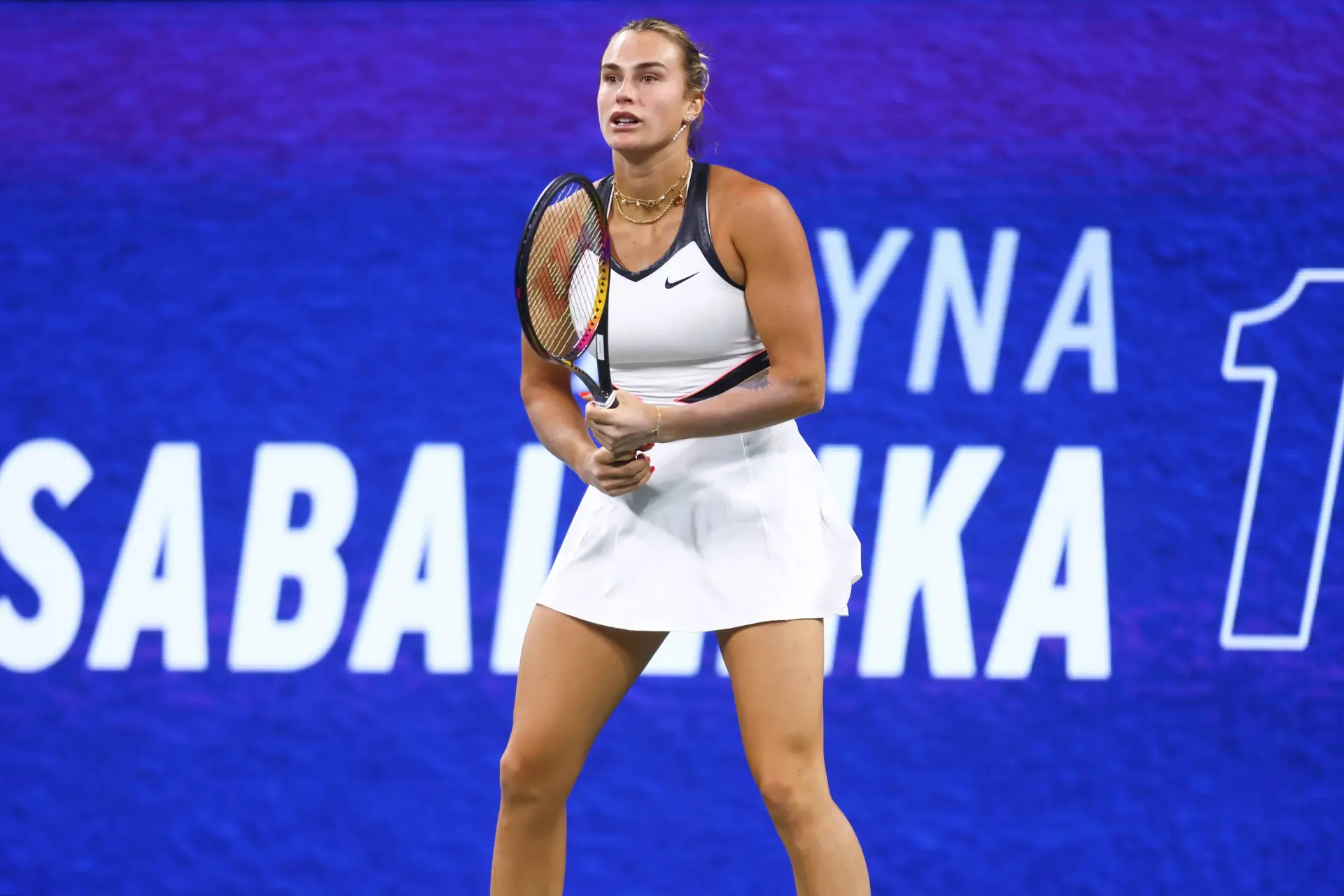
“Everything kind of works together. It’s all about balancing your off-the-court and on-the-court life. On the court I’m really aggressive, really focused, just chasing my dreams," she said.
People who don’t know me might think I’m crazy and aggressive all the time, but that’s not who I am. Off the court I’m more fun, I love to enjoy life. You have to work hard, but you also have to do things that bring you joy. When you feel balanced, you can go out there, fight, and be fully focused.”
Fighting for equality
Shetty turned the conversation toward gender equality in tennis, asking whether Sabalenka has felt the divide between men’s and women’s sports. The Belarusian said that she thinks that women's tennis should be on par with men's tennis prize money wise.
While noting that the issue remains that they don't play the same amount of sets and physical ability, they work just as hard as men with also the deficiency of not being as naturally strong as the men.
“I try not to focus on it. I just want to represent women’s sport the best way possible. Of course, we’ve all been fighting for equal prize money, but at the end of the day it’s about who brings the show and who brings people into the sport.
"Now things are getting closer and closer between men and women. The prize money is equal at a lot of events, which I love. That’s what women athletes have been fighting for. Thank you to Billie Jean King for everything she did for us. We deserve to be paid the same. The level might be different because of physical abilities, but the work we put in is just as much as the men. That’s life—men are naturally stronger, but the effort is equal.”
Sabalenka also noted how the appeal of women’s tennis is growing: “You can’t focus on too many things. You just focus on yourself and bring the best of you, while continuing to fight for equality. Lately, women’s tennis has become so exciting to watch—more fans are attending, more people are talking about it. Maybe it’s also fashion-related, because tennis is such a fashionable sport right now. I feel like we’re getting very close to men in terms of attention and respect.”
Losing her father
The conversation then turned deeply personal, as Shetty asked Sabalenka to reflect on the loss of her father, who passed away unexpectedly when she was 21. “I hope I’m not going to start crying, but it was unexpected. It just happened. It was tough because I was so close to him. We had similar personalities and really understood each other. He always knew what to say when I was struggling. I could just call him and he’d say a couple of things that made everything clear.
"Losing him was incredibly hard. But instead of going into depression, I decided to take it as him being here with me—in my heart, in my memory. He raised me in the best way, and I feel like I’m the champion I am today because of him. I know he supports me, takes care of me, protects me. I took it as motivation to put our family name in history.”
When asked how she grieved, Sabalenka admitted that she felt a responsibility to stay strong for her mother: “It was really tough for her to lose her husband at such a young age, so I had to be strong and not show my emotions. But I cried a lot when no one saw me. The best way for me to cope was to go on court and train. During practice, I could finally stop thinking about everything. The moment it ended, the memories would come back and I’d cry again. But practice gave me space to breathe.”
She explained that the court became her sanctuary: “I don’t even know how I managed to focus, but once I started hitting balls, it was just repetition and focus. That was the moment I wasn’t thinking about the loss. I trained a lot, channeling all my emotions into tennis, letting it go because there was nothing I could do to change it.
"In life there are things we can’t control—birth, love, loss. It was his journey. I’m grateful I got 21 years with him, and I know he’s still protecting me.”

Samuel GillEditor-in-Chief
Samuel Gill is the Chief Content Officer (CCO) of TennisUpToDate.com, a role he has held since 2020. He is responsible for editorial governance across the platform, including setting content standards, overseeing accuracy and consistency, and guiding long-term editorial strategy. Since joining, he has contributed more than 10,000 articles and editorial pieces across the TennisUpToDate network, playing a central role in the daily operation and development of the site.
Based in Leicester, Samuel has a broad background in tennis media. In his current role, he works closely with editors and writers to ensure coverage meets clear journalistic standards, with particular attention to verification, consistency, and timely updates when new information becomes available.
claps 0visitors 0
Just In

Popular News
Latest Comments
- A healthy Qinwen may be hard to stop next season. She was already scaring her opponents before her medical leave(s). Unfortunately, Zheng insisted on singing again. On the positive side -- Mirra did not sing!! ;~}
 mandoist11-10-2026
 - Where is it written that athletes, entertainers... People in general... are mandated to keep looking at -- or even using [anti]Social Media? Public & private figures consistently complain and reveal their concerns about negativity and violence thrown at them -- yet they insist on participating. Avoid it, don't use it, don't read it. It's okay to occasionally look up at the World instead beating your eyes & thumbs to death on The Inventions out there.mandoist11-10-2026
- great articlestennisseserver07-10-2026
- Medvedev was leading Djokovic 7-5, 3-5 when an attempted return..' NO you ignorants, Djokovic was leading .weiss05-10-2026
- No more bullshit "Wildcards" to these two. Qualify like everyone else -- there will be cameras there, too. Time to scream... WTF ????!!!!mandoist29-09-2026
- Let's not BS the general public -- Sabalenka started showing cracks in her game last season. Her losses and near-losses started at about the same time she began being distracted by Fame (constant Selfies, making TV commercials, magazine shoots, endless Social Media nonsense, etc., etc.) One would think even Saba could recognize the parallels with others who failed before her -- Raducanu, Giorgi, Bouchard to name a few.mandoist25-09-2026
- Gross!! Hey Raducanu, Giorgi, and Bouchard -- reserve a seat at your Social Media Selfie table for Saba + Naomi. They're heading in your direction soon enough.mandoist24-09-2026
- And then these same players will complain about how lengthy their season’s were and need more time-off. I’m all for more tennis but the amount of tennis we get now is actually kind of crazy! We all need a break, especially the players.DaveyWavey23-09-2026
- You should do a comparison article for "different kinds of justice" the courts decide for tennis players. I can think of at least three players who received very small bans of a few months, however Tara Moore has been fighting for her literal survival the past few years. It seems odd considering she is not a "name" player, unlike the other cases.DaveyWavey22-09-2026
- PRIZE MONEY & POINTS Winner - $185,500 Finalist - $114,500 Semi-Finalist - $66,003 Quarter-Finalist - $35,000 Round of 16 - $18,045 Round of 32 - $13,005 Winner - 500 Finalist - 325 Semi-Finalist - 195 Quarter-Finalist - 108 Round of 16 - 60 Round of 32 - 1DaveyWavey20-09-2026

Loading