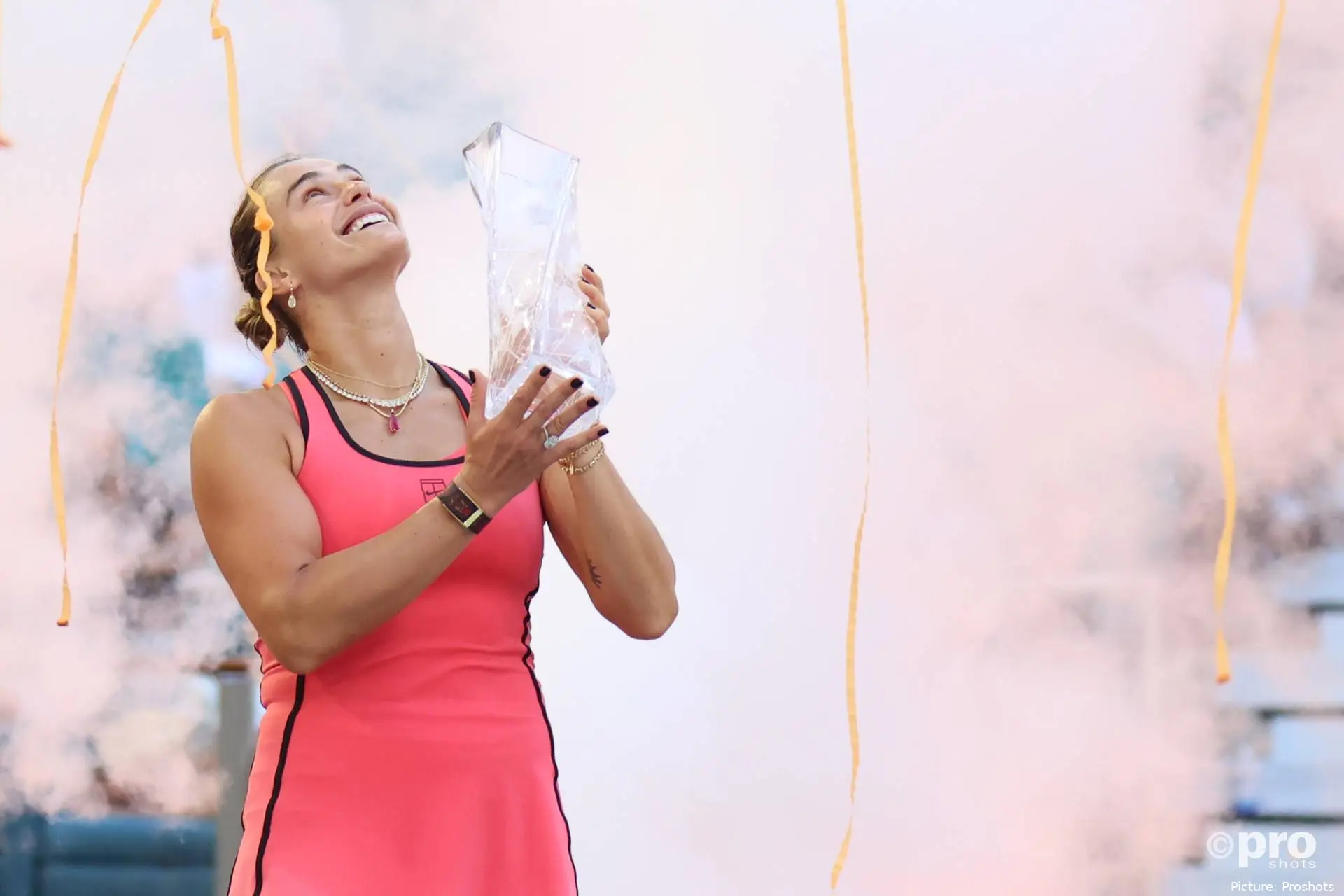
World No. 1 Aryna Sabalenka arrives at the clay swing off the back of one of the strongest starts to a season on the WTA Tour, having completed the Sunshine Double with titles at Indian Wells and Miami. The Belarusian has reinforced her lead at the top of the rankings, opting to withdraw from Stuttgart as she manages her schedule ahead of a demanding stretch on clay.
Her focus now shifts to a surface where she carries significant pressure. Sabalenka is defending points from her 2025 Roland Garros final and a deep run in Madrid, making consistency across the clay swing a priority if she is to maintain her position at No. 1 over the coming months.
The context is different from previous seasons. Sabalenka is no longer chasing the top ranking — she is protecting it — and doing so while refining a game that has evolved beyond pure aggression into something more controlled, particularly in key моменts.
“I’m always going to be me," the 4-time Grand Slam champion said to Esquire. "But there is a line where you become a terrible person that you cannot cross.”
That balance has become central to her current phase. Sabalenka is still one of the most aggressive players on tour, but with clearer boundaries in how she manages эмоtion, both during matches and in the immediate aftermath of key moments.
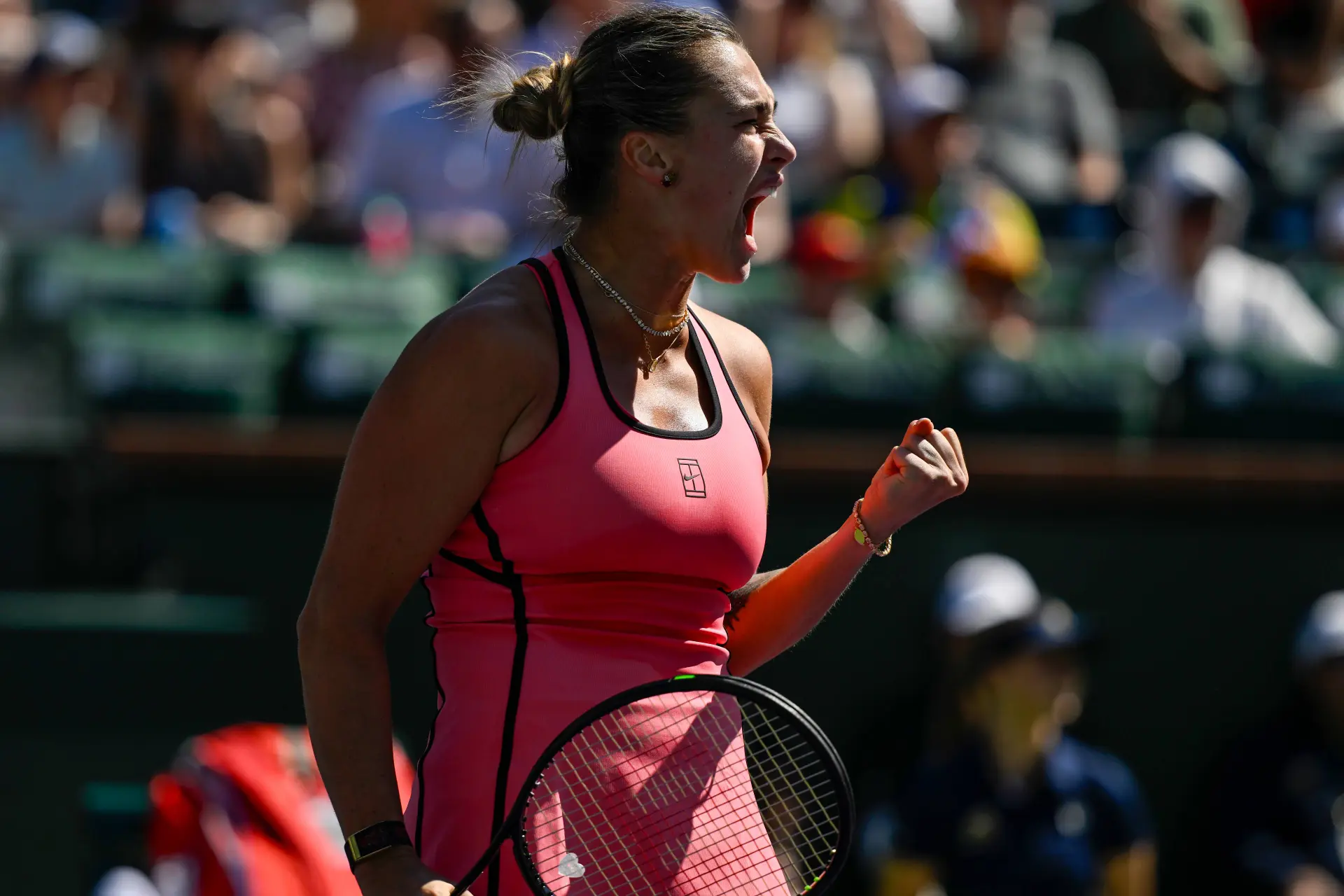
From serve collapse to structural clarity in key moments
Sabalenka’s current level is closely tied to what she describes as the most difficult period of her career — the serve crisis that disrupted her 2022 season. The issue was not technical alone, but mental, affecting her ability to execute one of the most fundamental shots in tennis.
Rather than attempting a complete overhaul, Sabalenka simplified her approach. She now focuses on rhythm, relaxation and a small number of cues, avoiding the overthinking that previously created tension and inconsistency on serve.
Read also
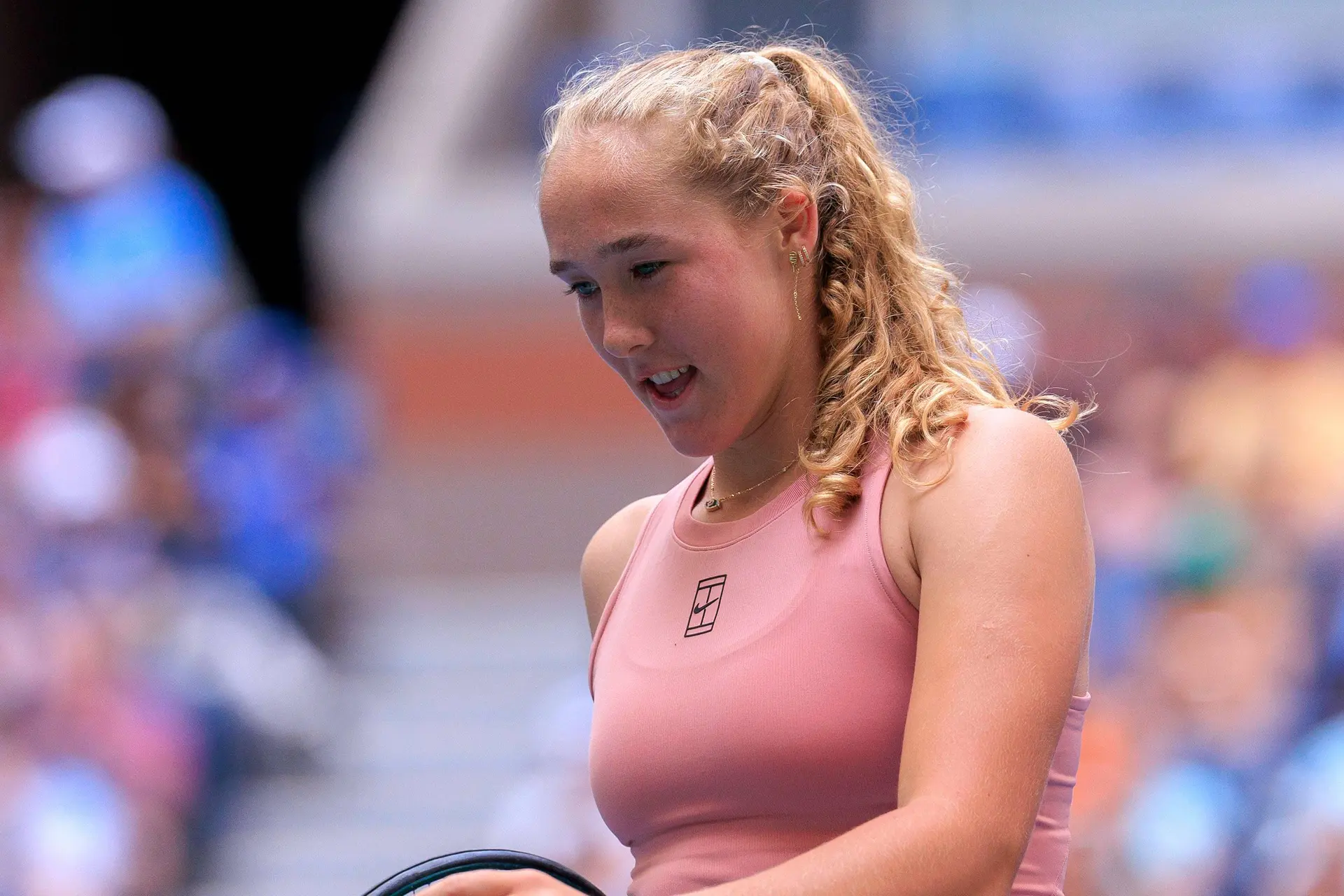
“It is a nightmare. I would never wish it to my enemy. Imagine you’re doing something your whole life, and then suddenly you cannot serve. You struggle, you get to the point of giving up. But it made me so strong. Now, even if my serve is not going well, I can still fight and try to win.”
The impact of that period is still visible in how she competes. Sabalenka is less зависима on her serve as a single weapon and more capable of navigating matches when things are not working perfectly, a shift that has underpinned her consistency at the highest level.
Accountability, controversy and learning to pause
Sabalenka’s evolution is also evident in how she handles defeat. Her reaction after the 2025 Roland Garros final loss to Coco Gauff became a defining момент, prompting reflection on how эмоtion can affect public messaging.
She now approaches those situations differently, prioritising distance and clarity before speaking, particularly after losses where immediate reactions can distort perspective. “I have to take my time after the match before I go to the press conference when I lose. In that moment, I didn’t know what I was talking about. Then I went through the stats, talked to my team, and I got to a different conclusion. I messaged Coco saying, ‘Listen, I’m so sorry.’”
That adjustment fits within a broader approach to balance. Sabalenka does not operate under extremes, instead allowing space for recovery and enjoyment while maintaining discipline during competition phases.
“When I’m in the preseason or during a tournament, I’m not drinking at all. But when it’s a big win, of course I party. It’s important to balance it. To cut everything out is not healthy. At some point you can lose it and go crazy in different directions.”
At World No. 1, Sabalenka’s game remains built on power, but her edge now lies in control. The aggression is still there, but it is no longer unchecked — and that distinction is increasingly defining her results.

Cristhián AvilaTennis Journalist
Cristhián Ávila is a tennis journalist based in Santiago, Chile, and has been part of the TennisUpToDate team since early 2023. He covers the ATP and WTA Tours as well as all four Grand Slams, producing breaking news, match reports, analysis, and regular liveblogs from major tournaments.
His reporting combines statistical analysis with clear explanation, helping readers understand tactical developments, player form, and broader storylines across the tour. Working fluently in both Spanish and English, Cristhián collaborates with an international editorial team and contributes to comprehensive global coverage. As part of his work, he has conducted interviews and media interactions with leading figures in the sport, including Caroline Wozniacki and John McEnroe.
In his journalism, Cristhián places strong emphasis on careful sourcing, editorial accuracy, and updating articles promptly when new, verified information becomes available. His coverage is grounded in research, context, and direct engagement with professional tennis.
claps 0visitors 0
Just In

Popular News
Latest Comments
- Fight the Good Fight... Tennis (sports in general) need more Humans such as yourself.
 mandoist18-10-2026
 - When is WTA going to mandate Genetic Testing (DNA) ???mandoist18-10-2026
- Hey, Dan... you just wake up from a coma? Regardless -- Thanks for the comedy this morning!mandoist18-10-2026
- Two Things: 1. Stop allowing these Spoiled Trust-Fund Elitists to behave badly. Your little hand-slaps do not deter them. 2. STOP the incessantly annoying "towel wiping" nonsense!!!!mandoist15-10-2026
- A healthy Qinwen may be hard to stop next season. She was already scaring her opponents before her medical leave(s). Unfortunately, Zheng insisted on singing again. On the positive side -- Mirra did not sing!! ;~}mandoist11-10-2026
- Where is it written that athletes, entertainers... People in general... are mandated to keep looking at -- or even using [anti]Social Media? Public & private figures consistently complain and reveal their concerns about negativity and violence thrown at them -- yet they insist on participating. Avoid it, don't use it, don't read it. It's okay to occasionally look up at the World instead beating your eyes & thumbs to death on The Inventions out there.mandoist11-10-2026
- great articlestennisseserver07-10-2026
- Medvedev was leading Djokovic 7-5, 3-5 when an attempted return..' NO you ignorants, Djokovic was leading .weiss05-10-2026
- No more bullshit "Wildcards" to these two. Qualify like everyone else -- there will be cameras there, too. Time to scream... WTF ????!!!!mandoist29-09-2026
- Let's not BS the general public -- Sabalenka started showing cracks in her game last season. Her losses and near-losses started at about the same time she began being distracted by Fame (constant Selfies, making TV commercials, magazine shoots, endless Social Media nonsense, etc., etc.) One would think even Saba could recognize the parallels with others who failed before her -- Raducanu, Giorgi, Bouchard to name a few.mandoist25-09-2026

Loading