“It’s a good preparation for the second week”: Aryna Sabalenka stays perfect at Roland-Garros without dropping a set
WTASunday, 31 May 2026 at 04:30
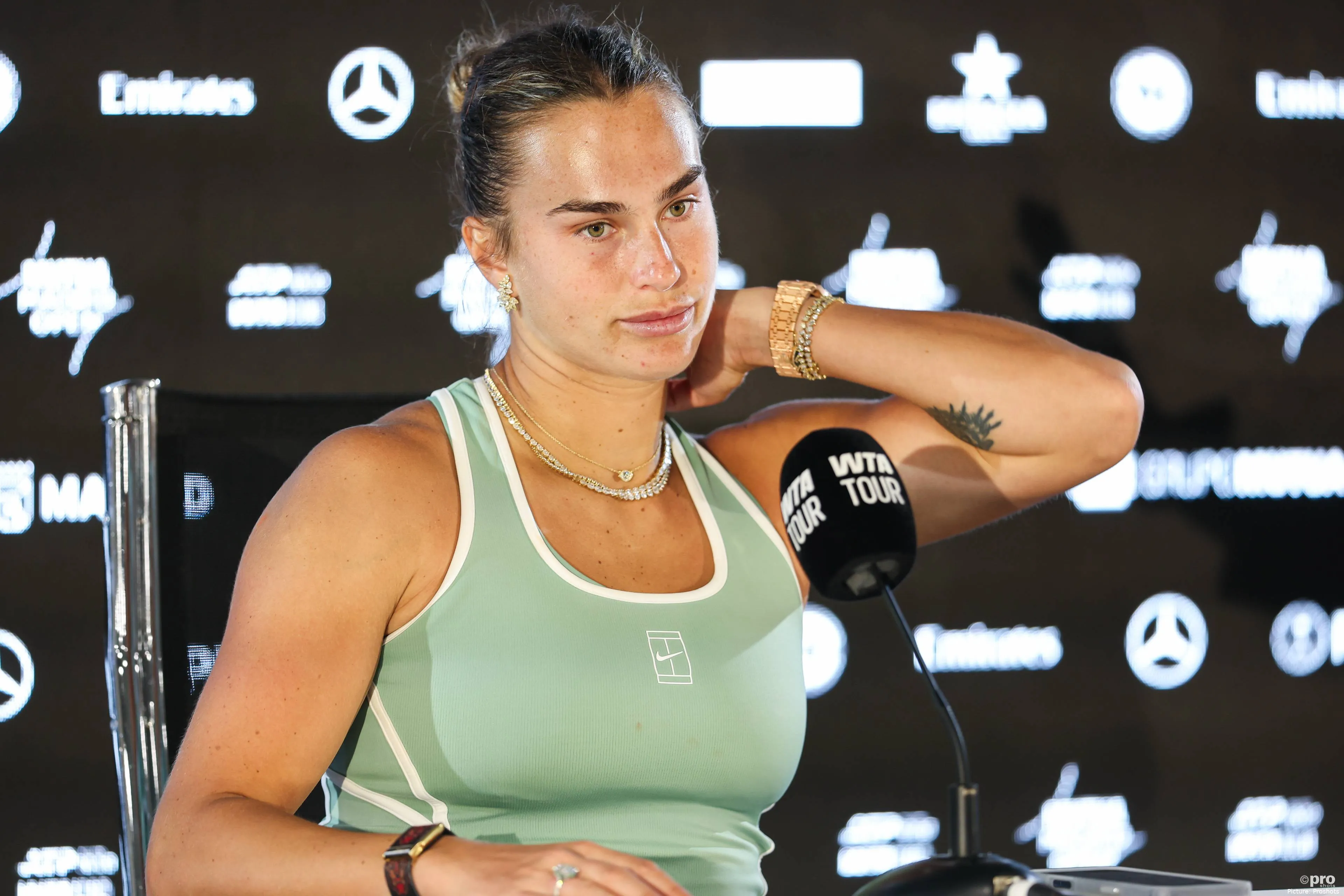
Aryna Sabalenka continued her controlled progression through Roland Garros with another straight-sets win, extending her run in Paris without dropping a set. The world No.1 has maintained a consistent level across the opening rounds, managing matches without allowing sustained momentum shifts from her opponents.
Her latest performance followed a familiar pattern, with early control and efficient closing phases once she established command of the baseline exchanges. While brief resistance has appeared at times, Sabalenka has repeatedly prevented matches from developing into prolonged contests.
Speaking after the match, she highlighted her satisfaction with both level and execution, stressing the importance of finishing matches efficiently. “I’m super happy with the level," the 4-time Grand Slam champion said in press conference. "Happy to get the win in straight sets. She’s a tough opponent and I’m happy to close the match in two sets."
As the tournament moves into the second week, Sabalenka’s focus remains on maintaining competitive readiness rather than projecting outcomes, with her comments consistently returning to themes of pressure, intensity and adaptation.
Read also
Controlled dominance through early rounds
Sabalenka’s Roland Garros campaign has been defined by stability, particularly her ability to avoid extended sets or decisive third sets. Even in matches where opponents have briefly increased their level, she has consistently reasserted control before momentum could shift.
She described this balance between dominance and resistance as a useful part of her tournament rhythm, rather than a disruption to it. For Sabalenka, early-round pressure is not something to avoid, but something to integrate into preparation for later stages.
“I don’t know. I like it both, you know. But it’s also good to be tested, you know, like to feel the fight, to activate this fight mode and to feel the pressure a little bit. I feel like it’s a good preparation for the second week,” she explained.
Her assessment reflects a broader competitive approach in which early rounds serve as calibration rather than pure efficiency exercises. That perspective has aligned with her results, where she has consistently avoided setbacks in sets while still engaging in physically demanding exchanges.
Read also
Conditions, recovery and match management
Beyond tactical execution, Sabalenka also detailed how she manages physical conditions during the tournament, particularly in response to heat and recovery demands. She described specific strategies aimed at regulating body temperature and sustaining energy levels through long exchanges.
“On the court, I just try to stay cool. I have a bunch of ice on my face, on the legs, trying to just keep the body cool. And I feel like it doesn’t feel that bad, like moving on the court. I feel like it’s worth sitting in this heat and kind of boiling there. Playing, it’s okay,” she said.
Off court, she emphasised a structured but simple routine built around recovery and rest. “I like to spend time with my team, go for dinner, sometimes go outside and walk around, just trying to keep it easy. Or watch Netflix,” she added, also referencing recovery sessions and low-intensity downtime as part of her schedule.

Competitive mindset ahead of the second week
As the tournament progresses, Sabalenka’s framing of competition remains consistent: emphasis on intensity, adaptability and readiness for pressure rather than opponent-specific anticipation. Her focus is on sustaining competitive activation across rounds.
She repeatedly highlighted the value of being tested in early rounds, suggesting that controlled difficulty contributes directly to readiness for higher-stakes matches. “I like it both, you know. But it’s also good to be tested, you know, to feel the fight, to kind of activate this fight mode and to feel the pressure a little bit. I feel like it’s a good preparation for the second week,” she reiterated.
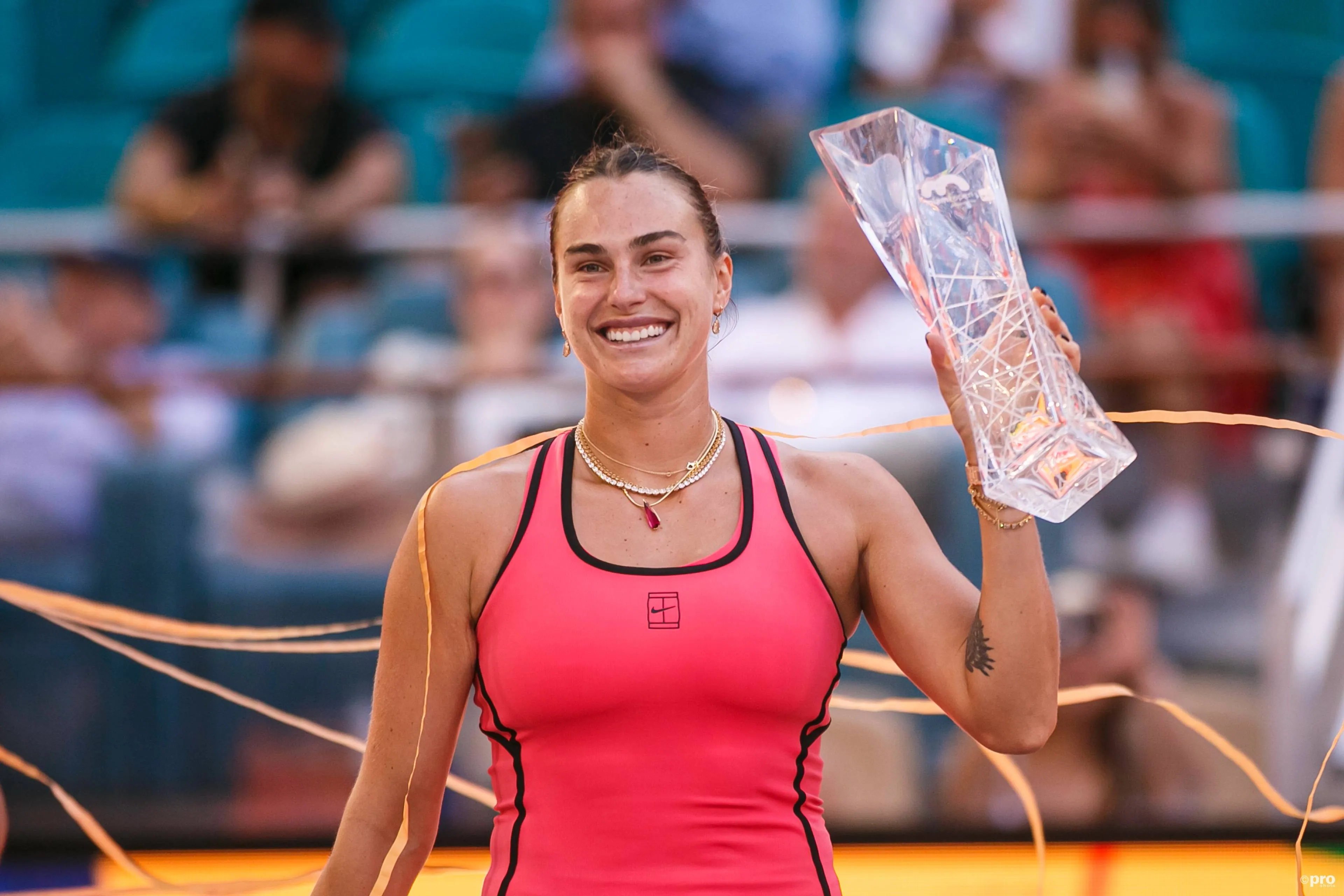
When reflecting on her general competitive outlook, she expanded further on her mindset under pressure situations, emphasising willingness to engage in physically and mentally demanding matches. “I’m just ready for the fight, you know. I’m ready to go there to fight for that match, for that win, and ready to do anything it takes to get the win,” she said.
Her comments also included acknowledgment of the type of matchups she values most, particularly against players capable of elevating their level in high-stakes environments. “I really enjoy our battles. It’s high-level matches, and I really enjoy when someone really pushes me to the limit,” she noted.

claps 0visitors 0
Just In
Popular News
Latest Comments
- "...that way I can talk through my clothes" Wow! Ironically 'mentality' is mentioned in this needless article. Geez.
 mandoist27-05-2026
 - I did the common sense thing... turned it off.mandoist27-05-2026
- Osaka seems to have 'lost the plot' some time ago. Distraction, distraction, distraction.. WTA lost The Plot quite some time ago as well.mandoist27-05-2026
- This one continues to find ways to distract herself from The Game; more than anyone since her "heroes" The Williams. Hope she's not turning into her 'unnecessarily opinionated' father.mandoist27-05-2026
- How unfortunate. Martinez stands far & above these others in effective coaching (and personality).mandoist26-05-2026
- What a Simp.mandoist26-05-2026
- I do not think it is that bad. Many countries do not have a top 10 player on the ATP Tour. The ladies' is indeed not so good since Ash Barty stopped playing suddenly.
 AceOfBase26-05-2026
 - Like Saba :-)AceOfBase26-05-2026
- Still strange that if Swiatek wins Roland Garros, it is a surprise :-)AceOfBase26-05-2026
- Nice article!AceOfBase26-05-2026

Loading