"It’s cruel, it’s hard, and it doesn’t exist in any other sport ": Amanda Anisimova praised by Andy Roddick for dealing with odd speech ritual
WTAThursday, 01 January 2026 at 17:10
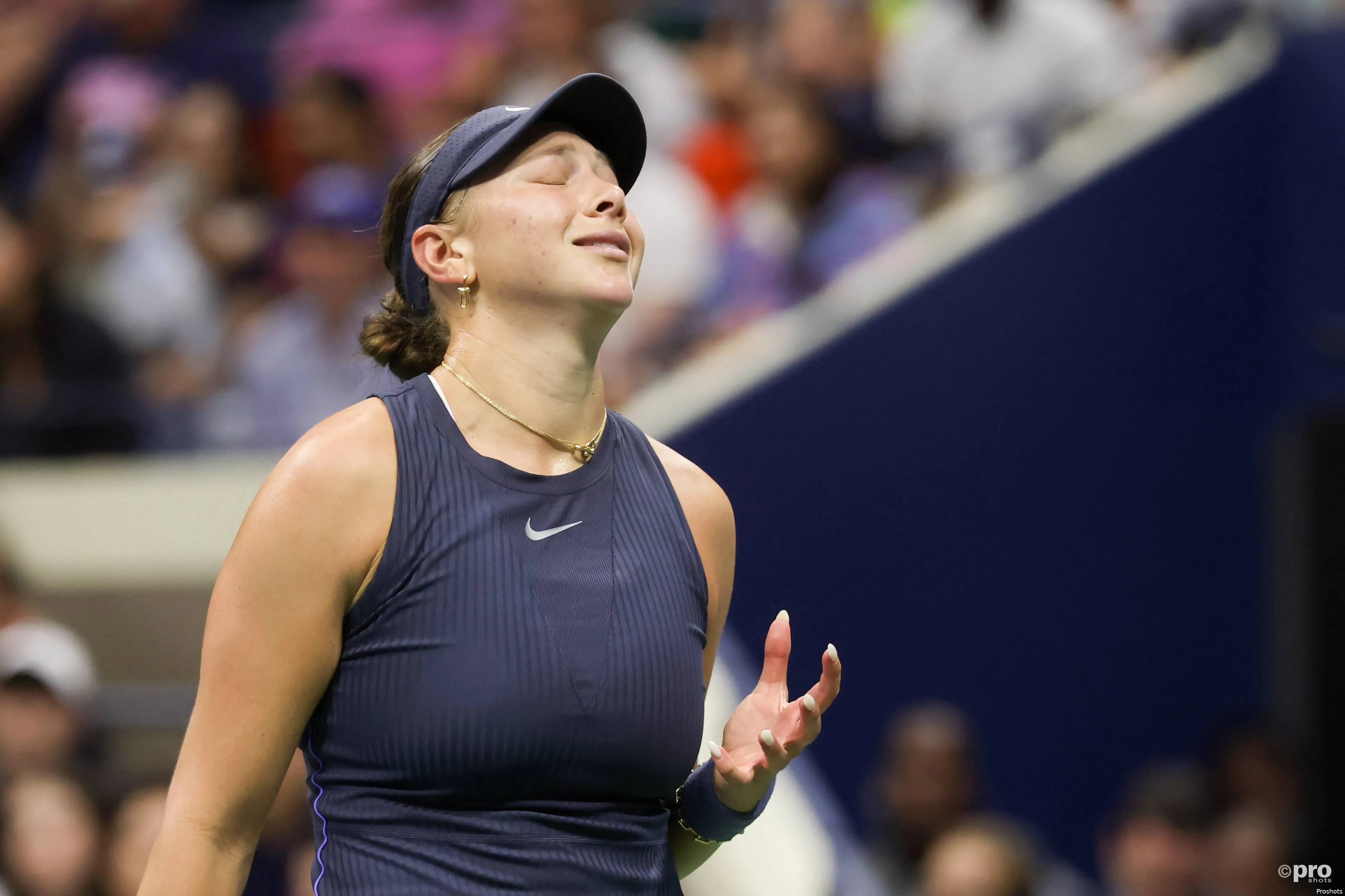
Amanda Anisimova had one of the best years of any WTA player this year and in reality was very much unlucky not to seal the top WTA Player of the Year gong which went the way of Aryna Sabalenka.
Going through their run down of the top 20 players on the WTA Tour and where they sit and lie prior to the new year, Jon Wertheim and Andy Roddick for Served discussed Anisimova and how she bounced back from one of the cruelest losses at Wimbledon to force her way through the door again.
She did so at the US Open also reaching the final before having a superb run also at the WTA Finals reaching the semi-finals to book end a year where she not only put herself first but she also put her form on the table.
As Wertheim also duly noted to begin the chat that she is only 24 and has spent time off the tour as well as being a teen prodigy so she will get that time back in the coming years that others perhaps won't. So when it is said that she is 24, in reality she is a lot younger when it comes to her actual tennis age and she will hope to prove that again over the coming year.

Time on the side of Anisimova
"First major final, great story — and then she loses by the most humiliating, ignominious scoreline you can have in this sport. There’s nothing she can do about that result. You’re not going to change the scoreline. You’re not going to go back in the records and suddenly see that you won a game," said Wertheim on Served.
"But you know what you can do? You can get back on your horse. You can beat the same player who beat you at the very next major. You can get back to a major final — and suddenly, we’re not talking about a love-and-love Wimbledon final anymore.
"She’s a realist. She knows there’s no sugarcoating a love-and-love defeat in a major final. But she basically said, “What do I have to do to make this go away?” Well, here’s one thing that can chip away at it: go out, beat the player in a rematch, and get back to the last match of a major.
"So I just think there’s so much here. There’s so much game. Those groundstrokes — we talked about Lindsay Davenport and about who hits a cleaner ball — the groundstrokes she hits are as good as anyone’s, and she’s 24 years old. We also talked about the sabbatical she took, the time away from the sport. She’ll get that time back. She said, “It’s the best decision I’ve ever made.” She gave herself a physical rest, she gave herself a mental rest, and she’ll get that six-month block of time back on the back end of her career.
"So she’s 24, but she’s really not. She’s really younger. There’s just so much to like here. She didn’t win a major — unlike four other players, but this was one of the real stories of the year on the WTA."
Roddick slams post match speeches
Andy Roddick praised her but also took time out to chime with a tradition that he wants axing from the game in post match speeches while they are upset and having gone through an arduous battle that in reality they don't have to go through.
Especially in Anisimova's case when she had been smashed 6-0, 6-0 by Swiatek at Wimbledon and had to do what in reality she shouldn't have to in explain it in both press and also on court. "People are going to go, “Whoa — 24 is 24.” But the difference is, when you’re mentally heading toward burnout, you’re hoping it’s not a blow-up. You hope it’s not, “I can’t actually put the pieces back together," said the former World No.1.
"She basically insured herself. She said, “Okay, I’m going to have a career that lasts a certain amount of time,” versus risking her career blowing up and being too broken to fix — for many reasons, some off-court, some on-court, this crazy mixture of life meeting what you have to do.
"I think that’s what we’re saying. And I fully agree with you, JW, I think that’s a great point. The other thing is, I think it’s dumb that tennis players always have to talk immediately after losing. We don’t interview the losing Super Bowl team seconds after they lose. And yet we do it in tennis. I hate it.
"I had someone mansplain a press conference to me via text after I made that point. I was like, “Are you f***ing kidding? Really? Please tell me more about sports.” I don’t think people should have to do it. It’s cruel, it’s hard, and it doesn’t exist in any other sport where you’re forced to talk immediately afterward and come up with some kind of speech. It also doesn’t feel authentic, they’re just saying BS half the time.
Roddick went on to praise her maturity and that she handled what was a poor situation really well and should be praised and credited as such for doing so.
"Everyone’s holding the microphone, tears in their eyes, saying, “You were wonderful, you’re so great.” I’ve been in those moments where my only goal was to get through it without having a breakdown because once the tears start, you can’t put the toothpaste back in the tube.
"So two things: I don’t like that people have to do it, but also, you can win a lot of fans by doing it the right way which is what I think Amanda did this year.
"I think she made lemonade out of that post-match moment and showed real maturity. It wasn’t as if all gratitude went out the door just because the result and scoreline were so uncomfortable.
"It sucks. But when you outperform in a s***y situation, you deserve the credit, and Amanda Anisimova deserves it, not just for that moment, but for the entire year."

claps 0visitors 0
Just In


Popular News
Latest Comments
- Illness? Sure, sick over the fact she's run out of legit coaches. Also, perhaps another bout of allergies to 'work' and instruction.
- Two major problems with sports (and Life) in today's world... 1. Self-imposed "experts" like Gilbert, Clijsters, and Stubbs can't keep their nasty opinions and rumors to themselves. They feel a need to talk about things they have no relation to, nor a clue. 2. People & anti-Social Media.
- Anyone else notice how general mental & physical fatigue is a major issue now, given WTA's ignorant refusal to consider the stress of their idiotic scheduling and additional demands??
- What a load of bullshit. Artur Szostaczko failed to mention that he didn't get hired!!
- Almost condescending. BTW: That was another anti-climactic Final compared to several of the excellent pre-Final matches.
- Sounds like maybe a mental health break? Miss her on the tour. My favorite American female player. Hurry back Emma!
- Why are microphones even allowed in front of the coaching boxes??? In this age of hi-tech, whatever is heard (strategy or otherwise) can instantly be relayed to any given opponent. How and why did WTA decide to slip this past everyone? Also, these strategic placements of mic's is obvious stupidity initiating a commentator's personal decision to expound upon -- and apologize for -- foul language, etc., when a player or team member curses, etc. Then media pounces upon every off-color phrase or word in their sensationalistic "news coverage". This practice of literally -- and openly -- eavesdropping needs to stop!!
- So she actually CAN think clearly! If she wants to play tennis, make it a priority. Learn from Life choices (like having a kid with her rapper ex). Today's game is a grueling exercise in Humility if one is not fully dedicated; or does not have the time to do The Work. Raducanu is a shining example of someone with the talent but lacks the drive, attitude, and/or devotion it takes to maintain 100% capacity of everything the Tour demands.
- It's as if troubled 'Condescending Collins' is competing with The Williams' for the daily spotlight. Some just do not know when to quit. Go fix yourselves and stop informing the public of your personal problems. The general public has their own issues in Life.
- Coach Macci and Martina Navratilova are seemingly the only reasonable voices coming out of the tennis circuit in regards to Iga at the moment. People like Stubbs, Gilbert, and anti-Social Media dwellers have very little or nothing to offer. What they are indeed is... predictable. Why certain media think their input is of value is a mystery. Perhaps easy filler for their publications? Media, in general, could/should consider their poor choices and lazy habits of running to the Loudest Mouths for "expert advice". Certain Internet 'news sources' might do their own research and STOP COPYING & PASTING the first articles to hit the web with little-to-no editing or true journalism. As for Iga (and any athlete) they are not robots. They are Human Beings and Humans, as we all know, are not infallable. Leave the expert criticisms and "solutions" to these athletes and their teams. Disgruntled bettors and so-called "experts" are not a solution!


Loading