Queen’s Club Championships WTA Day One Round-up | Zheng Qinwen falls early, Pliskova through as Boulter–Fernandez halted
WTA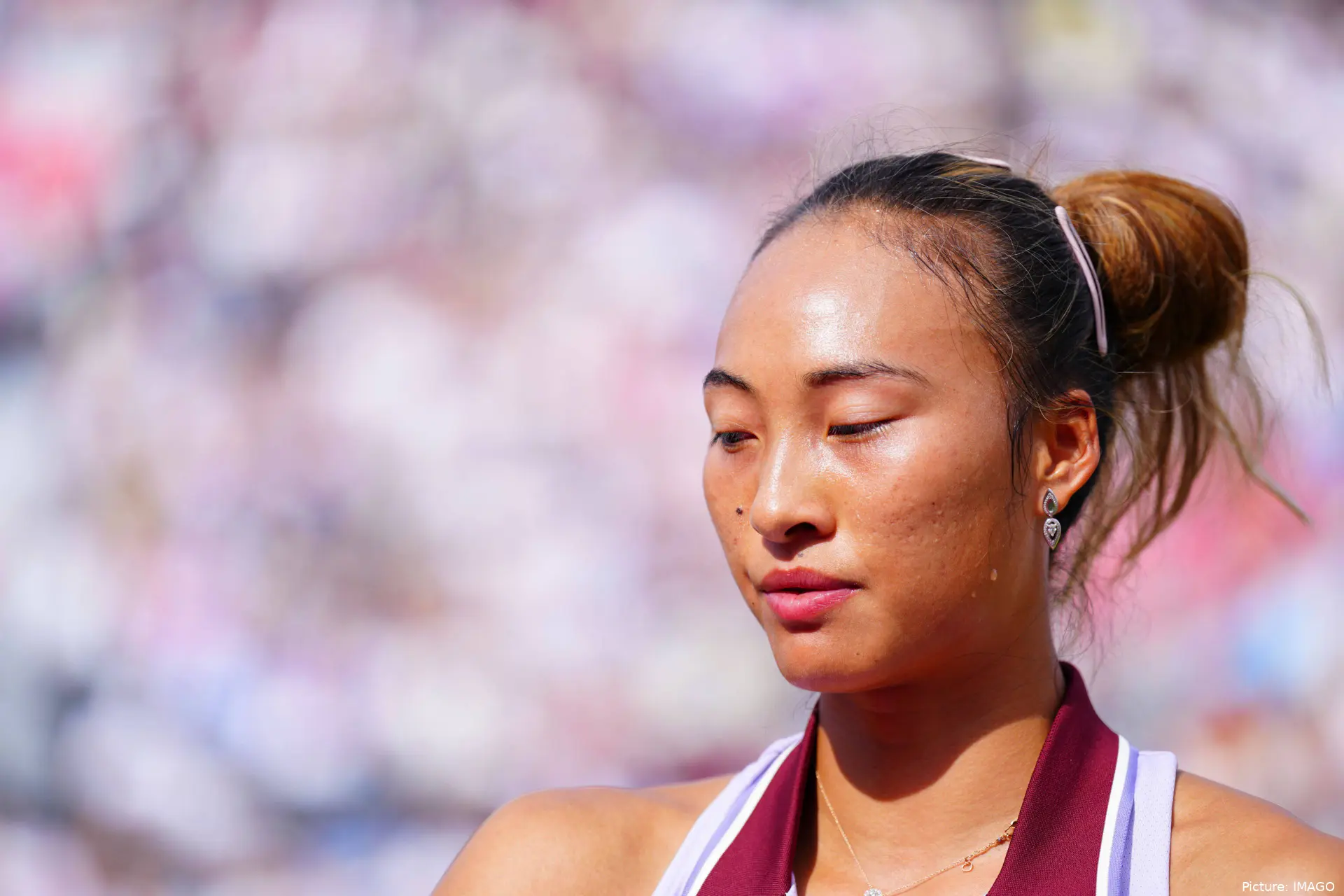
he Queen’s Club Championships WTA 500 opening round was shaped by disrupted scheduling and fragmented match rhythms due to rain and fading light. Jaqueline Cristian’s straight-sets win over Zheng Qinwen stood out as the key upset, while Karolína Plíšková and Harriet Dart both produced comeback victories across demanding three-set contests.
Across the opening day at Queen’s, early-round dynamics reflected instability among seeded players, with momentum repeatedly shifting due to interruptions and evolving court conditions. Several matches were decided by mid-match tactical adjustments, particularly in return positioning and second-serve pressure, as players adapted to a stop-start competitive environment.
Zheng loses control in straight-sets defeat
Jaqueline Cristian def. Zheng Qinwen 6-4, 7-6(1)
Cristian progressed past Zheng Qinwen in a tightly contested opening-round match where both players initially relied on secure service holds. Zheng established early structure through consistent serving patterns, while Cristian focused on depth control to remain within range during baseline exchanges. The opening phase remained balanced, with few clear separation moments on return.
Read also
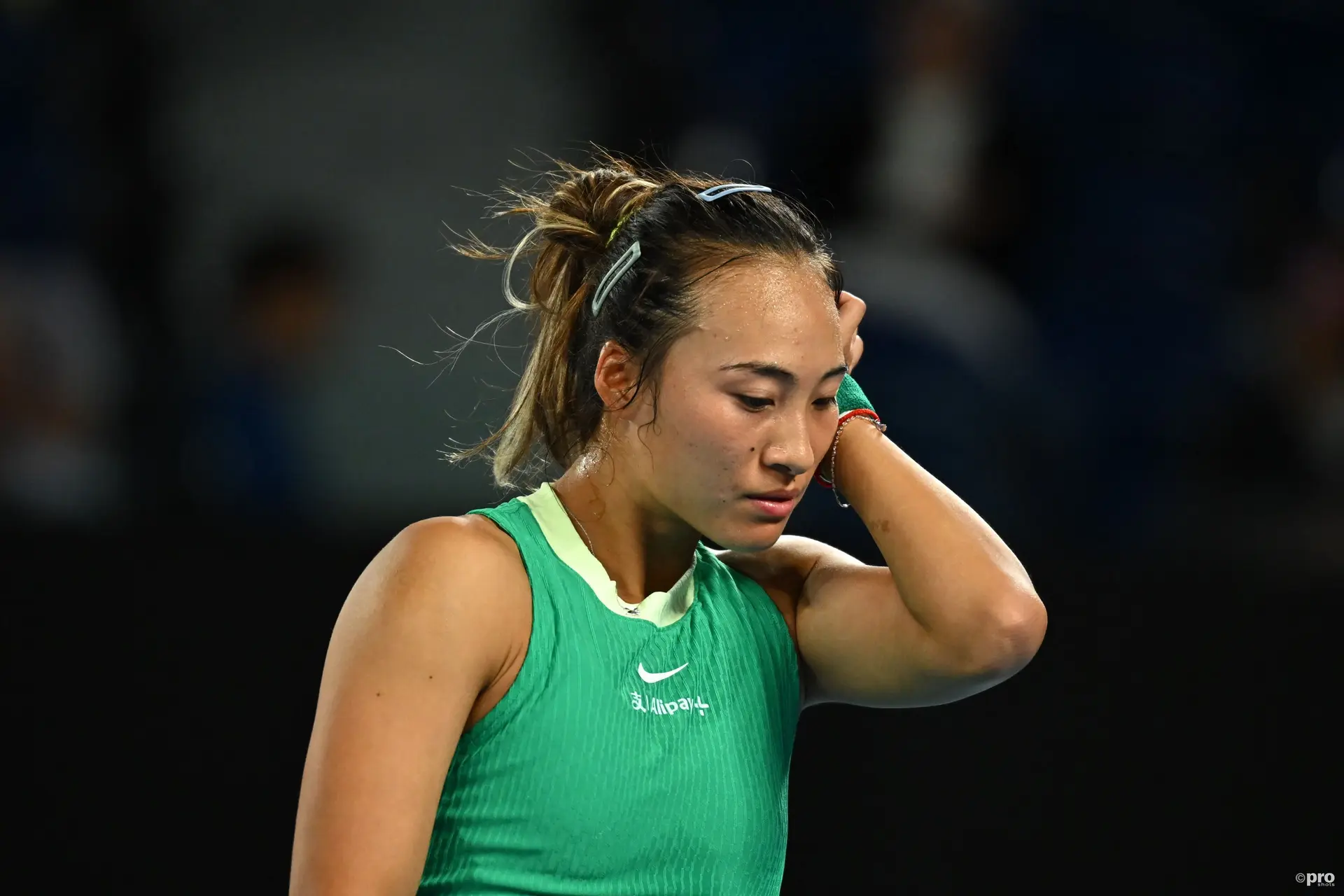
The match shifted when Cristian increased pressure on Zheng’s second serve and extended rally length, gradually reducing Zheng’s ability to dictate early points. Zheng briefly positioned herself to extend the contest after moving to 5-4 in the second set, but Cristian responded with improved timing in baseline exchanges and greater stability under pressure in the tie-break.
Cristian’s victory was defined by superior execution in high-pressure points, particularly in the tie-break where she limited unforced errors and increased return efficiency on second-serve looks. The win sends her into the next round at Queen’s, removing a former top-5 player from her section of the draw.

Zheng Qinwen competing at Queens
Plíšková fights back to defeat Kessler
Karolína Plíšková def. McCartney Kessler 6-7(1), 6-3, 6-4
Kessler edged the opening set in a tightly balanced contest dominated by service holds, where neither player consistently managed to break through on return. Plíšková created early pressure in return games and occasionally forced Kessler into defensive positions, but her inability to convert break-point opportunities allowed the set to remain on serve deep into the tie-break, where margins became decisive.
The tie-break marked the key separation point, with Kessler raising her first-serve impact and tightening her error count in longer baseline exchanges. Plíšková’s return quality dipped at critical moments, particularly on second-serve returns, which limited her capacity to build sustained scoreboard pressure and allowed Kessler to control the decisive points.
The match turned once Plíšková adjusted her return positioning and increased aggression against Kessler’s second serve, extending rallies and gradually reducing the effectiveness of Kessler’s first-strike patterns. That tactical shift carried into the second set and decider, where Plíšková stabilised her service games, improved break-point conversion, and progressively took control of the match structure to complete the comeback at Queen’s.

Dart advances after strong finish against Samsonova
Harriet Dart def. Liudmila Samsonova 5-7, 6-4, 6-3
Samsonova edged a tightly balanced opening set in a pattern dominated by service holds, where both players struggled to generate sustained return pressure for long stretches. Dart remained consistently engaged through neutral baseline exchanges, but Samsonova’s ability to raise first-serve impact in the closing games of the set allowed her to create the only meaningful separation in an otherwise evenly contested opener.
The match shifted gradually rather than abruptly, with Dart increasing the depth and weight of her returns, particularly on second-serve points where she began to take more aggressive court positioning. That adjustment extended rally length and reduced Samsonova’s capacity to dictate early-contact patterns, forcing her into more neutral exchanges that required extra construction rather than immediate control.
As the match progressed, Dart’s improved return consistency translated into more frequent break-point opportunities, and her conversion rate in those moments became the key structural difference between the players. With Samsonova’s serve losing some of its initial authority under sustained pressure, Dart was able to stabilise her own service games and progressively tilt the physical and tactical balance of the match in her favour across the final two sets.
Dart completed the turnaround by maintaining higher rally tolerance in the decider and continuing to target second-serve patterns, which ultimately suppressed Samsonova’s first-strike effectiveness. She advances at Queen’s after converting sustained return pressure into a three-set victory defined more by accumulation of tactical advantages than by any single decisive moment.

Fernandez leads before Boulter suspension
Leylah Fernandez vs Katie Boulter 6-3, 3-3 (suspended)
Fernandez took the opening set after breaking late, using consistent return depth to disrupt Boulter’s service rhythm during baseline exchanges. The first set featured controlled patterns from Fernandez, who created separation in the closing stages of the opener.
Boulter responded in the second set with improved first-serve placement and more stable service holds, creating a more balanced exchange on serve. The match developed into a tighter contest before conditions deteriorated and play was suspended at 3-3.
Fernandez had established early advantage through return pressure, while Boulter’s adjustments on serve restored parity in the second set. The match remains finely balanced at Queen’s, with the outcome fully open upon resumption.



Lucas MichaelTennis Journalist
Lucas Michael is a tennis journalist based in Cambridge, UK, specializing in comprehensive coverage of the ATP and WTA tours. For the past 1.5 years, he has been a core contributor to TennisUpToDate, where he has authored more than 3,000 data-driven match reports, deep-dive analysis pieces, and engaging liveblogs.
Lucas pairs real-time statistical analysis with on-the-ground reporting, frequently traveling to tournaments to cover the action firsthand from the press box and player press conferences. This blend of advanced metrics and direct access allows him to provide sharp context regarding player form, tactical trends, and breaking tour developments.
He holds a BA (Hons) in Sports Journalism. Grounded in core journalistic ethics, Lucas places a strict emphasis on meticulous sourcing, editorial accuracy, and a commitment to updating live content swiftly as verified information emerges.
claps 0visitors 0
Just In


Popular News

Latest Comments
- A healthy Qinwen may be hard to stop next season. She was already scaring her opponents before her medical leave(s). Unfortunately, Zheng insisted on singing again. On the positive side -- Mirra did not sing!! ;~}
 mandoist11-10-2026
 - Where is it written that athletes, entertainers... People in general... are mandated to keep looking at -- or even using [anti]Social Media? Public & private figures consistently complain and reveal their concerns about negativity and violence thrown at them -- yet they insist on participating. Avoid it, don't use it, don't read it. It's okay to occasionally look up at the World instead beating your eyes & thumbs to death on The Inventions out there.mandoist11-10-2026
- great articlestennisseserver07-10-2026
- Medvedev was leading Djokovic 7-5, 3-5 when an attempted return..' NO you ignorants, Djokovic was leading .weiss05-10-2026
- No more bullshit "Wildcards" to these two. Qualify like everyone else -- there will be cameras there, too. Time to scream... WTF ????!!!!mandoist29-09-2026
- Let's not BS the general public -- Sabalenka started showing cracks in her game last season. Her losses and near-losses started at about the same time she began being distracted by Fame (constant Selfies, making TV commercials, magazine shoots, endless Social Media nonsense, etc., etc.) One would think even Saba could recognize the parallels with others who failed before her -- Raducanu, Giorgi, Bouchard to name a few.mandoist25-09-2026
- Gross!! Hey Raducanu, Giorgi, and Bouchard -- reserve a seat at your Social Media Selfie table for Saba + Naomi. They're heading in your direction soon enough.mandoist24-09-2026
- And then these same players will complain about how lengthy their season’s were and need more time-off. I’m all for more tennis but the amount of tennis we get now is actually kind of crazy! We all need a break, especially the players.DaveyWavey23-09-2026
- You should do a comparison article for "different kinds of justice" the courts decide for tennis players. I can think of at least three players who received very small bans of a few months, however Tara Moore has been fighting for her literal survival the past few years. It seems odd considering she is not a "name" player, unlike the other cases.DaveyWavey22-09-2026
- PRIZE MONEY & POINTS Winner - $185,500 Finalist - $114,500 Semi-Finalist - $66,003 Quarter-Finalist - $35,000 Round of 16 - $18,045 Round of 32 - $13,005 Winner - 500 Finalist - 325 Semi-Finalist - 195 Quarter-Finalist - 108 Round of 16 - 60 Round of 32 - 1DaveyWavey20-09-2026

Loading