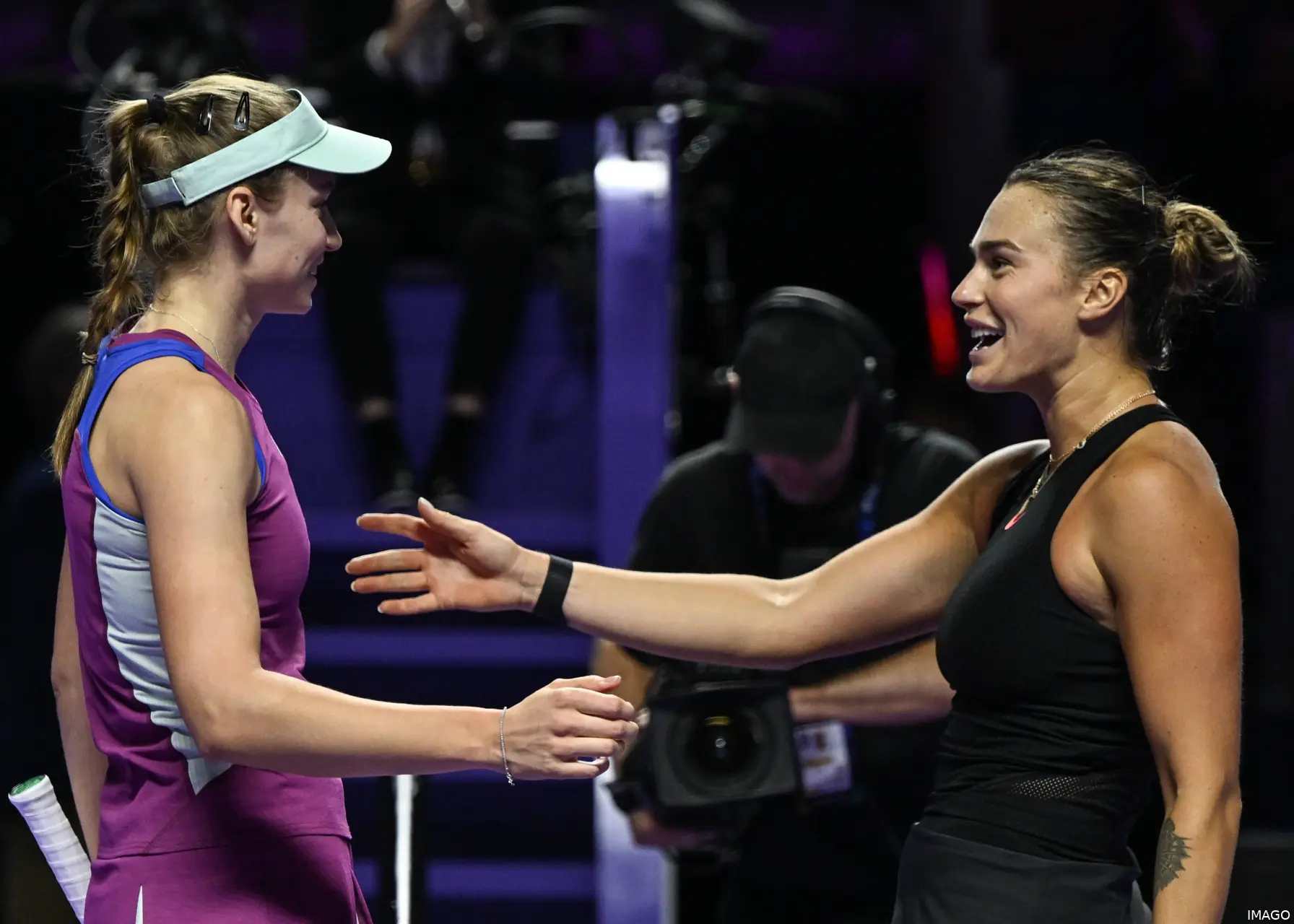
Aryna Sabalenka described Elena Rybakina as “the kindest one on tour” after defeating the Kazakh in a dramatic 2026 BNP Paribas Open final, highlighting the respect between the two players despite one of the most intense rivalries currently shaping the WTA Tour.
The World No. 1 rallied from a set down and saved championship point to defeat Rybakina 3-6, 6-3, 7-6(6), securing her first Indian Wells title and the 23rd WTA trophy of her career. The victory also marked Sabalenka’s 10th WTA 1000 title and her second championship of the 2026 season after Brisbane in January.
Sunday’s contest was another significant chapter in the growing rivalry between the two players. Rybakina had won four consecutive finals between them before this match, including the 2025 WTA Finals in Riyadh and the 2026 Australian Open, making the Indian Wells final both a competitive and psychological test for Sabalenka.
Speaking in her post-match press conference, Sabalenka reflected on their long-running series of matches and explained why she values the challenge Rybakina brings, both on the court and as a personality within the locker room.
Rivalry with Rybakina shaping the WTA’s biggest matches
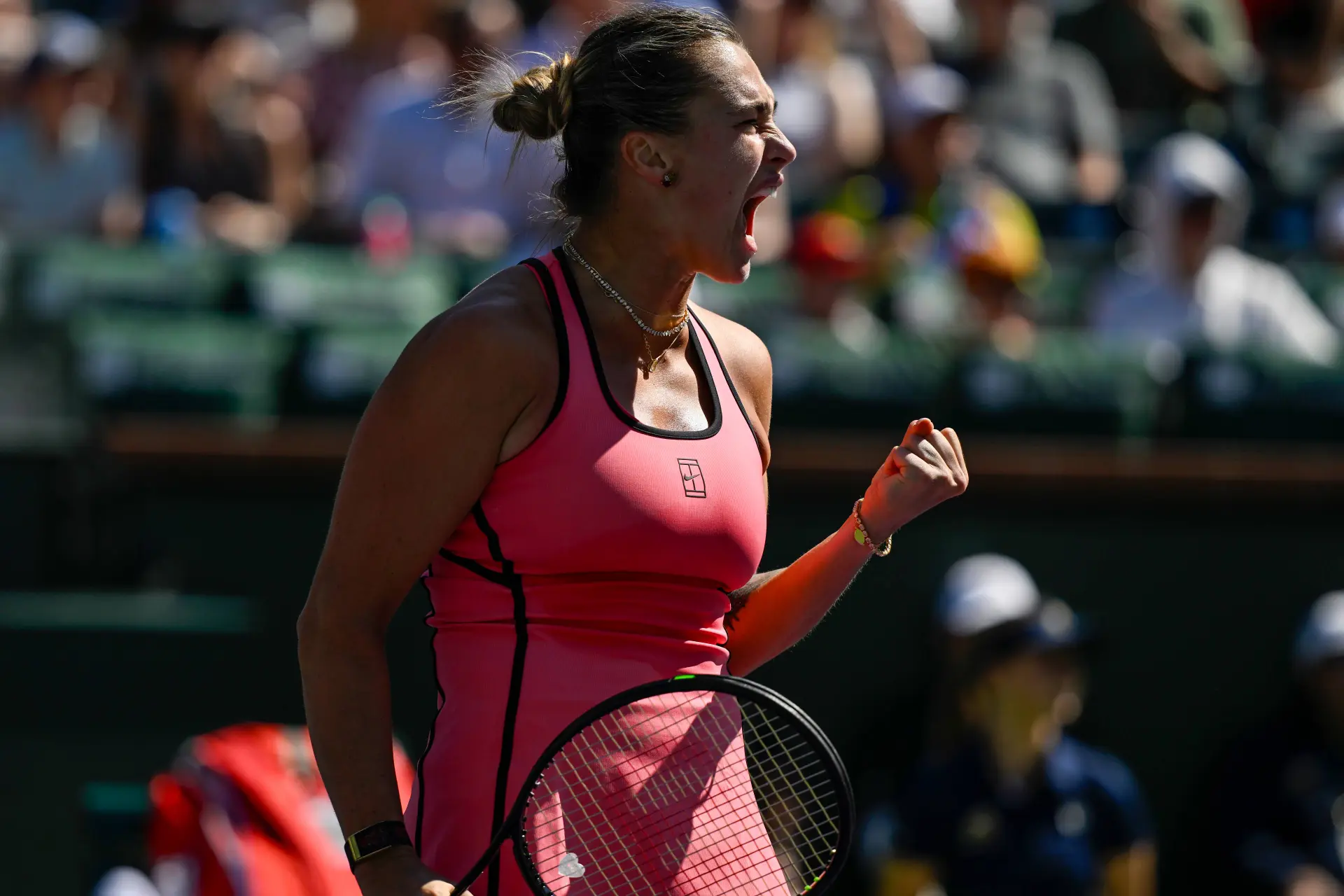
Sabalenka acknowledged that many of the most significant matches of the past two seasons have featured the same pairing. The Belarusian and the Kazakh have now faced each other 16 times across the WTA Tour, often meeting deep in tournaments and frequently competing for major titles.
While the rivalry has included painful defeats for Sabalenka, she emphasised that these battles have helped elevate her own level. According to the World No. 1, the repeated high-stakes encounters have produced some of the most competitive matches on the women’s tour. “She's a nice one. I would say that she's the kindest one on tour,” Sabalenka mentioned during her post-match press conference.
Sabalenka also described their meetings as matches that consistently deliver high-quality tennis and intense competition, making them appealing for fans as well as personally motivating. “But still I enjoy it because it means that the final is going to be a show, it's going to be great tennis, great level, and it's going to be a fight.”
The Belarusian added that she hopes to shift the balance of future meetings after several painful losses in previous finals against Rybakina.
Tactical adjustments key to Indian Wells comeback
Beyond the rivalry narrative, Sabalenka explained that the match required significant tactical adaptation after her initial plan failed during the opening stages.
After dropping the first set and struggling to find rhythm early in the second, she said multiple prepared strategies proved ineffective against Rybakina’s aggressive baseline play and strong serving. “A, B, C definitely didn’t work. So I had to just basically run there and put as much ball back at her as possible, and then when I felt more confident, I went back to my usual game, which is aggressive and dominating.”
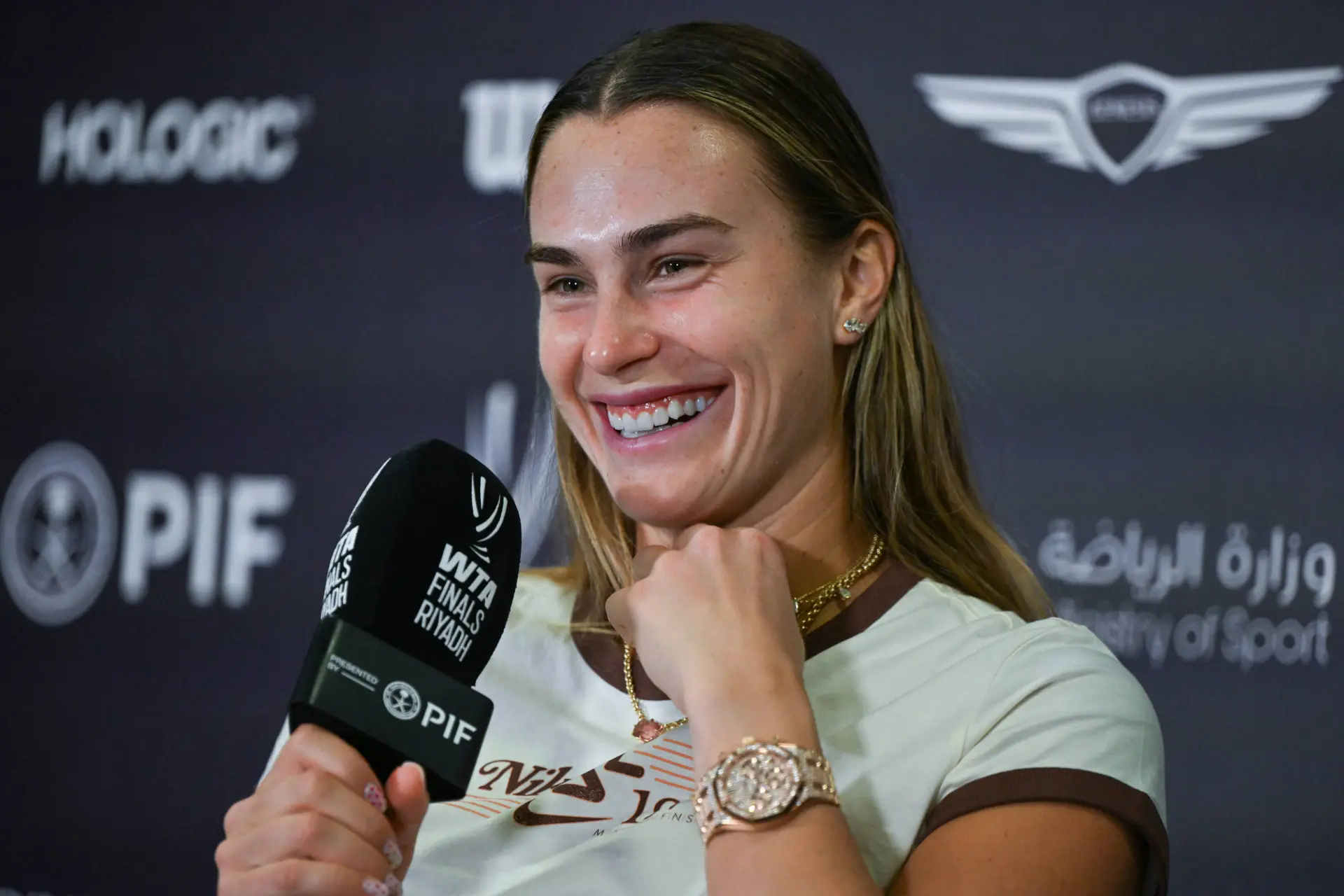
Sabalenka credited experience gained through difficult defeats in previous finals for helping her remain composed while searching for solutions during the match. “I guess it all comes with experience. With so many finals that I have lost, they also teach me a lot of things that basically the game is never done till it’s done.” The Belarusian gradually regained control of rallies as the match progressed, forcing a deciding set that ultimately culminated in a tense tiebreak.
Match point escape and extreme heat test both players
The defining moment arrived late in the third-set tiebreak when Sabalenka faced championship point on Rybakina’s serve. Drawing on familiarity from their previous meetings, she anticipated the direction of the serve and managed to keep the point alive.
“Well, probably I have seen that match point at the Australian Open that she had, I don't know how many times it was in my face,” the 4-time Grand Slam champion added. “I remember I was standing there thinking, okay, I've got to cover a wide serve, and I left T serve for her to ace it or whatever.”
“So lucky me, she served again wide serve, and I just covered that side. And doesn't matter how fast the serve is, I know that I can block it and I can return.”
After neutralising the serve, Sabalenka struck two decisive shots that shifted the momentum of the tiebreak and ultimately sealed the title. “And, yeah, I pulled out really great two shots, and I feel like that was the moment that gave me so much mental power.”
The final was also shaped by demanding physical conditions in the California desert, with both players visibly struggling in the heat during the closing stages. “I have no idea how I did it. It was super hot. I was dying there in the tiebreak, but I also saw that she was also not feeling her best. So I was trying to push myself basically to the limit.”
Sabalenka now travels to Miami as defending champion, aiming to carry momentum from her Indian Wells triumph into the second half of the Sunshine Swing.

Cristhián AvilaTennis Journalist
Cristhián Ávila is a tennis journalist based in Santiago, Chile, and has been part of the TennisUpToDate team since early 2023. He covers the ATP and WTA Tours as well as all four Grand Slams, producing breaking news, match reports, analysis, and regular liveblogs from major tournaments.
His reporting combines statistical analysis with clear explanation, helping readers understand tactical developments, player form, and broader storylines across the tour. Working fluently in both Spanish and English, Cristhián collaborates with an international editorial team and contributes to comprehensive global coverage. As part of his work, he has conducted interviews and media interactions with leading figures in the sport, including Caroline Wozniacki and John McEnroe.
In his journalism, Cristhián places strong emphasis on careful sourcing, editorial accuracy, and updating articles promptly when new, verified information becomes available. His coverage is grounded in research, context, and direct engagement with professional tennis.
claps 0visitors 0
Just In


Popular News
Latest Comments
- Lena... Takin' care of business
 mandoist25-10-2026
 - Can you please stop publishing this nonsense? Stick to Tennis.mandoist25-10-2026
- Does Sinner need that 4.5 mil? I doubt it. He can make that with three modelling gigs!😅🤣Rapunzel21-10-2026
- Did "People Magazine" purchase this website? This nonstop storyline is bullshit.mandoist21-10-2026
- Listen... this is of no concern to anyone but these two. Deal with your own issues -- most of us have our own. Thanks, media, for these insignificant follow-ups which are meaningless.mandoist21-10-2026
- This is so very very sad, for all three of them. I truly thought they had an unbreakable bond, but life throws up so many differing challenges. Having your homeland suffering in such a terrible way, makes happiness lose out to guilt as well. Our thoughts are with them. X💔bjsexton20-10-2026
- I have lost all respect for Svitolina! Could she not have waited until he had played at the Paris Masters!!! She is selfish and don't give a damn about Gael. That is NOT how love is demonstrated Elina!!Rapunzel19-10-2026
- Perhaps convenient tennis tour sex is not a strong enough experience in which to base a marriage?mandoist19-10-2026
- Fight the Good Fight... Tennis (sports in general) need more Humans such as yourself.mandoist18-10-2026
- When is WTA going to mandate Genetic Testing (DNA) ???mandoist18-10-2026

Loading