“The reality is you are just 125”: Zheng Qinwen's brutal ranking reality changed her approach at the US Open
WTA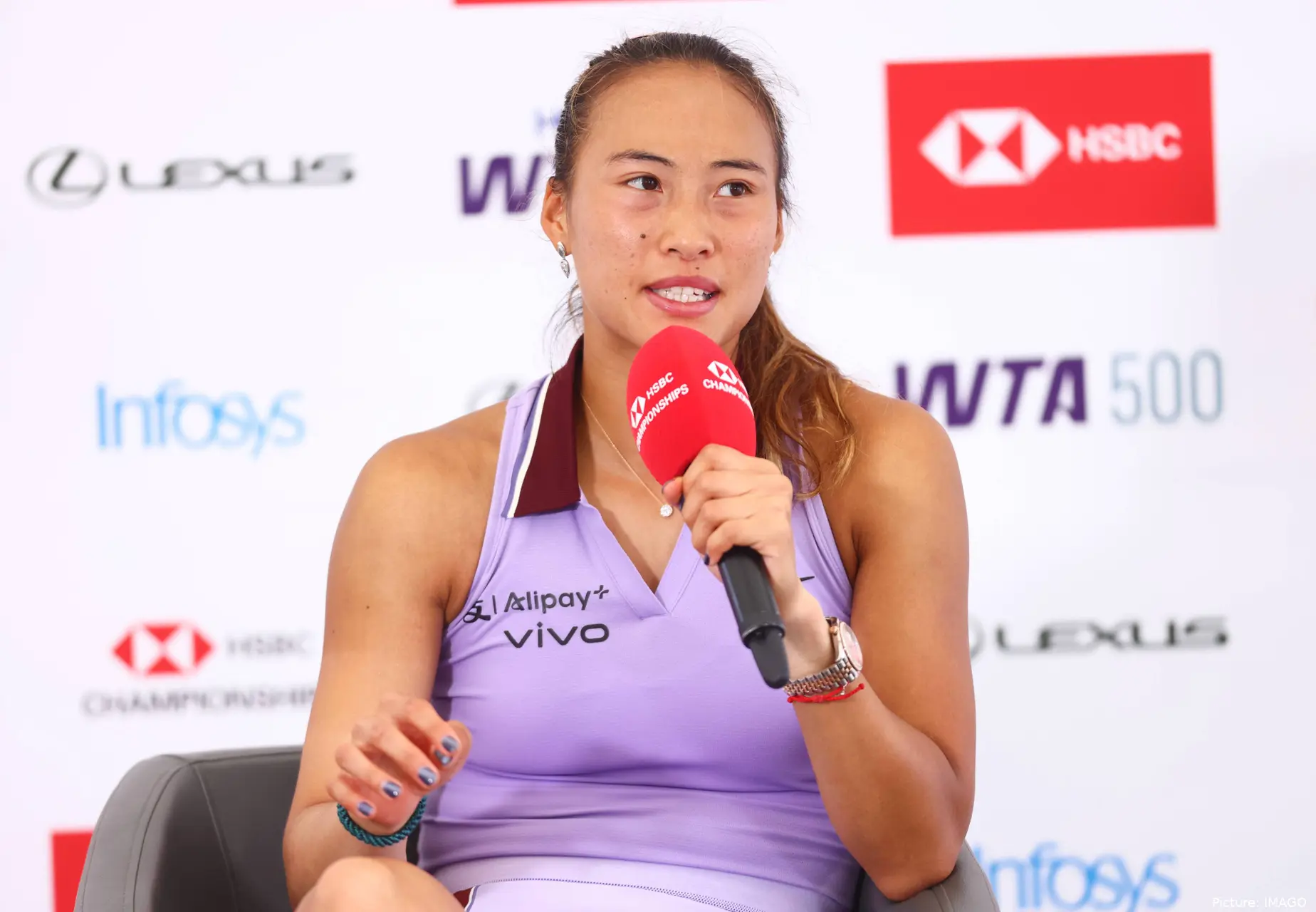
Qinwen Zheng arrived at the US Open in a position few would have expected from a former Top-5 player and Olympic champion. Her ranking had fallen all the way to No. 125 after several difficult months, forcing her to begin the tournament in qualifying rather than on the main-draw courts where she had become accustomed to playing.
That meant Zheng had to win three qualifying matches before earning a place in the main draw. She then continued her run by defeating Iga Swiatek in the fourth round, recovering from 0-5 down in the opening set before completing the victory in straight sets.
The result has transformed the story of her tournament. What began with a former Top 10 player trying to find her way through qualifying has now become a quarterfinal run against some of the biggest names left in New York.
For Zheng, however, the turnaround is about more than one result. The past few months forced her to confront a dramatic ranking fall, accept a different reality and undertake one of the toughest training blocks of her career.
From Olympic champion to No. 125
The psychological adjustment was particularly difficult for Zheng. Not long ago, she was competing as an established Top 10 player and Olympic champion. Now, she had to start from qualifying and accept that her ranking no longer reflected the player she believed she could become again.
“Psychologically, it is very difficult to accept. I mean, I used to be Top 10, Olympic champion. I played in a big stadium since the beginning, and right now, you know, my ranking dropped so much after injury," the Chinese player explained at press conference. "I couldn't perform as well the last three, four months, and I know people have a lot of doubt about me."
"It's just really hard for me. I just need to keep positive every single day, you know, telling myself, just keep working and let's see when the result is going to happen. It is a really, really tough process.”
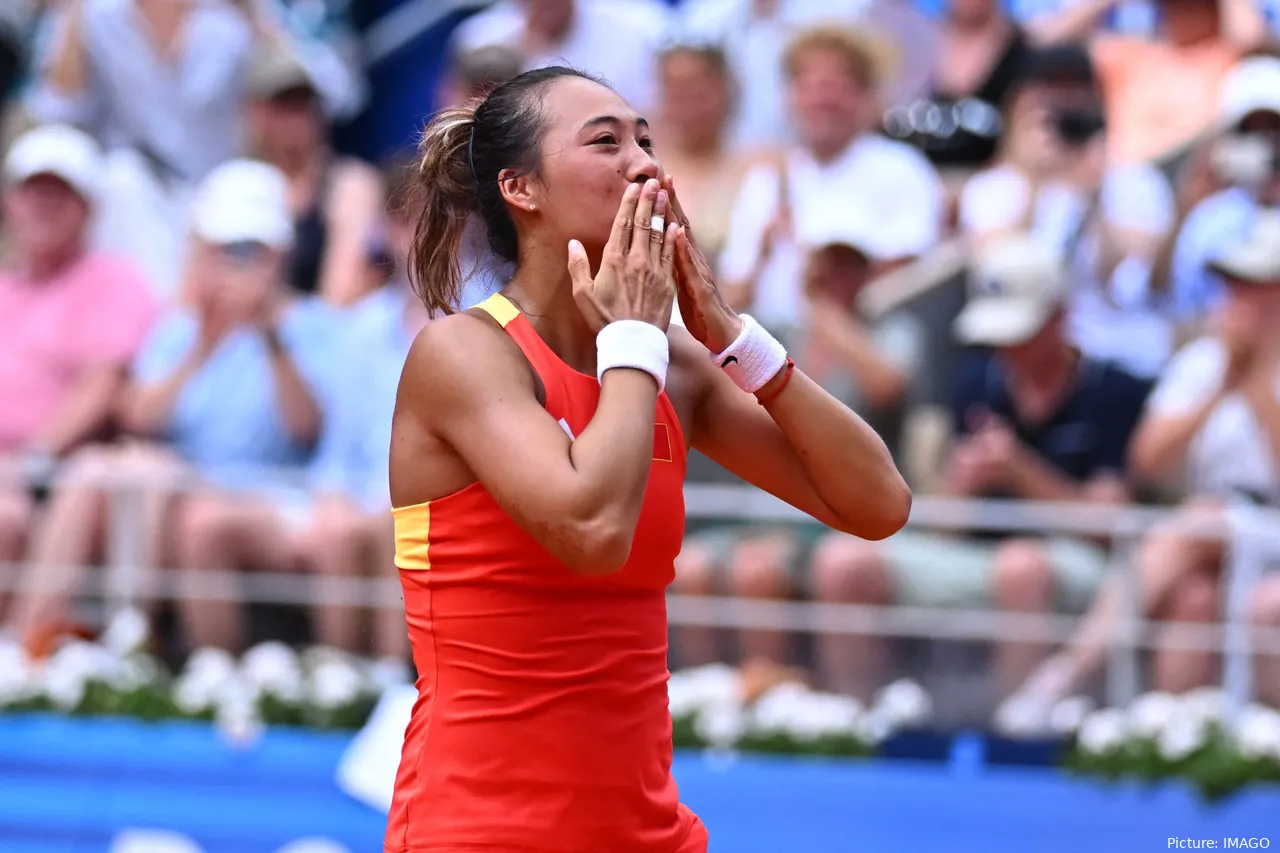
Eventually, Zheng decided that the only way forward was to stop judging herself against the player she had been and accept the ranking she actually had.
“Okay, I come from qualifying this time. So I say to myself, the reality is you are just 125. So you are not the Top 10 you were before. Don't treat yourself so high. You are here as everyone else. You start from this, the ground. So stay there and keep fighting.”
That mindset became even more important after her defeat in Toronto qualifying. Her coach believed Zheng needed to stop competing and rebuild the foundations of her game, leading to a demanding training block in Bradenton. “You can't continue playing like this. You need to have a training block and find your tennis again.”
Zheng agreed and spent weeks focused almost exclusively on tennis, training, the gym and recovery. Some days lasted from around 8 a.m. until 8:30 p.m..
“That's the toughest training I ever did with him, honestly. So we've been really dedicated all the time to tennis, tennis, tennis and training," she said. "It was really tough, but this is how sport shows. If you don't work hard, you don't have it. So I'm really happy about the work we made together, and then at the end, the effort pays off.”
The purpose of that work was not to reinvent Zheng's game, but to reconnect its different parts. “I have all the pieces in my tennis. I have all the pieces there. It's just I didn't put them together yet, or I didn't find a way to put them together. But all the pieces are there.”
The pieces are coming together in New York
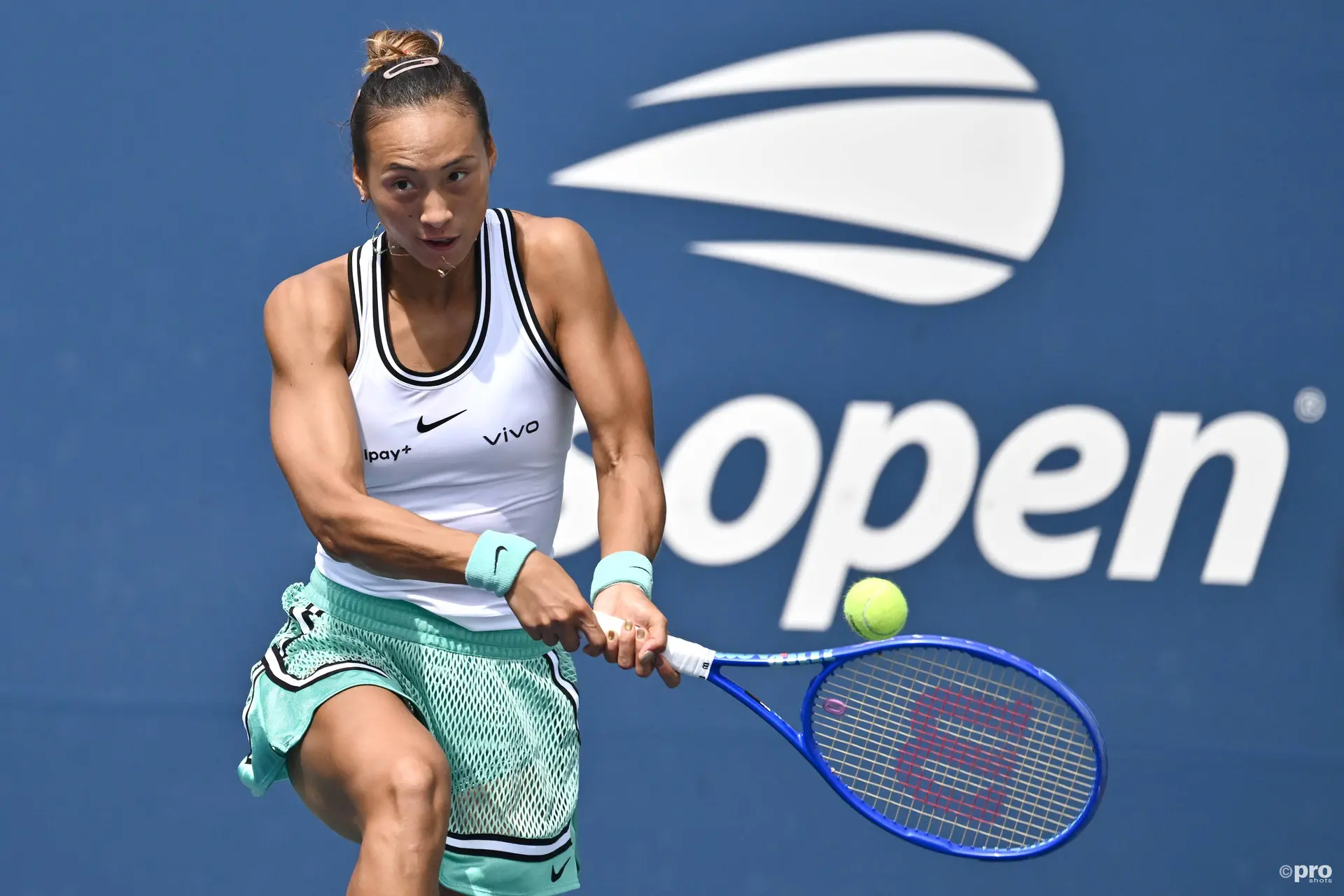
Her victory over Swiatek offered another sign that Zheng is finding her game again. After a slow start, she became increasingly focused on each individual point, to the point that she eventually lost track of the score.
“I started the match really slow. That's why she's able to lead 5-0. After that, I started to play more freely, let's say, because I think I need to try to find my rhythm, at least for the second set. But somehow I felt really comfortable on court, and in one moment I also lost the score because I was so focused on playing every single point. I think that's the key for me to come back.”

That focus produced an unusual moment when Zheng went to the towel and realized she had misremembered the score.
“At 4-5 I went to the towel because I thought it was 3-5, and I thought, ‘I need to play one more game.’ But when I saw the scoreboard, I was like, ‘4-5.’ I was so focused on every single point that I couldn't even remember the score.”
The same mentality has helped her maintain her belief through the difficult months.
“Well, my confidence is always there. Even though I've lost these three, four months, my confidence is always inside me because I always know what I'm capable of doing. It's just I need to show that.”
Read also
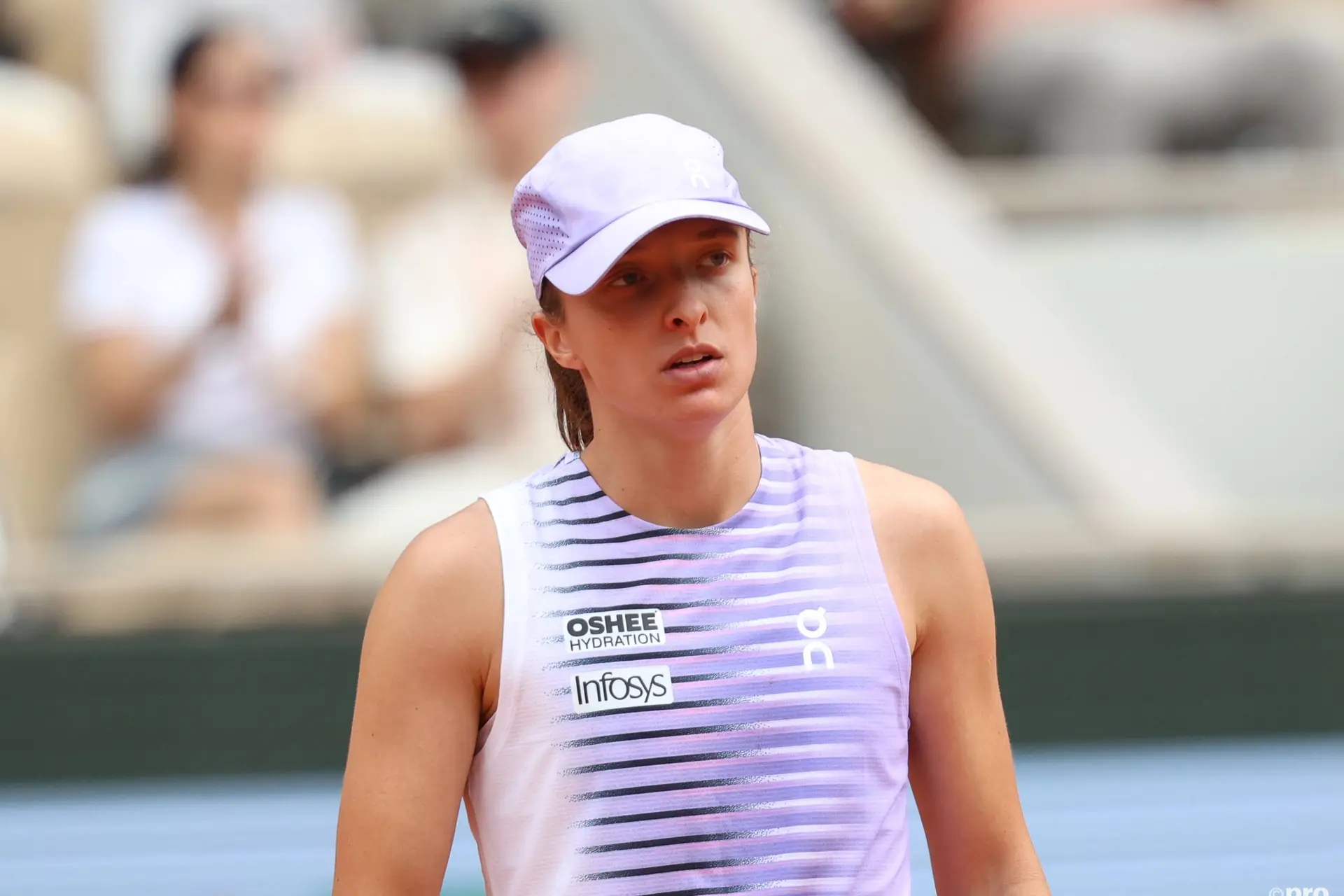
Now, another major test awaits. Zheng will face either Naomi Osaka or Elena Rybakina, with Rybakina also chasing the No. 1 ranking. The Kazakh would present a very different challenge, particularly with her serve.
“Of course, Rybakina, you know, she's leading on the aces. Her serve is like the biggest weapon of hers. And it's not easy. And, you know, she plays very flat balls. Also, this can make me not so comfortable. But I think both have their good stuff and both also have their weaknesses, like everybody here.”
After starting the tournament in qualifying, Zheng is now into the US Open quarterfinals, with the game she spent months trying to rediscover finally beginning to come together.

Cristhián AvilaTennis Journalist
Cristhián Ávila is a tennis journalist based in Santiago, Chile, and has been part of the TennisUpToDate team since early 2023. He covers the ATP and WTA Tours as well as all four Grand Slams, producing breaking news, match reports, analysis, and regular liveblogs from major tournaments.
His reporting combines statistical analysis with clear explanation, helping readers understand tactical developments, player form, and broader storylines across the tour. Working fluently in both Spanish and English, Cristhián collaborates with an international editorial team and contributes to comprehensive global coverage. As part of his work, he has conducted interviews and media interactions with leading figures in the sport, including Caroline Wozniacki and John McEnroe.
In his journalism, Cristhián places strong emphasis on careful sourcing, editorial accuracy, and updating articles promptly when new, verified information becomes available. His coverage is grounded in research, context, and direct engagement with professional tennis.
claps 0visitors 0
Just In



Popular News

Latest Comments
- Does Sinner need that 4.5 mil? I doubt it. He can make that with three modelling gigs!😅🤣Rapunzel21-10-2026
- Did "People Magazine" purchase this website? This nonstop storyline is bullshit.
 mandoist21-10-2026
 - Listen... this is of no concern to anyone but these two. Deal with your own issues -- most of us have our own. Thanks, media, for these insignificant follow-ups which are meaningless.mandoist21-10-2026
- This is so very very sad, for all three of them. I truly thought they had an unbreakable bond, but life throws up so many differing challenges. Having your homeland suffering in such a terrible way, makes happiness lose out to guilt as well. Our thoughts are with them. X💔bjsexton20-10-2026
- I have lost all respect for Svitolina! Could she not have waited until he had played at the Paris Masters!!! She is selfish and don't give a damn about Gael. That is NOT how love is demonstrated Elina!!Rapunzel19-10-2026
- Perhaps convenient tennis tour sex is not a strong enough experience in which to base a marriage?mandoist19-10-2026
- Fight the Good Fight... Tennis (sports in general) need more Humans such as yourself.mandoist18-10-2026
- When is WTA going to mandate Genetic Testing (DNA) ???mandoist18-10-2026
- Hey, Dan... you just wake up from a coma? Regardless -- Thanks for the comedy this morning!mandoist18-10-2026
- Two Things: 1. Stop allowing these Spoiled Trust-Fund Elitists to behave badly. Your little hand-slaps do not deter them. 2. STOP the incessantly annoying "towel wiping" nonsense!!!!mandoist15-10-2026

Loading