"There will be one Ukrainian in the semifinals": Elina Svitolina praises Kostyuk ahead of historic Roland-Garros quarterfinal meeting
WTA
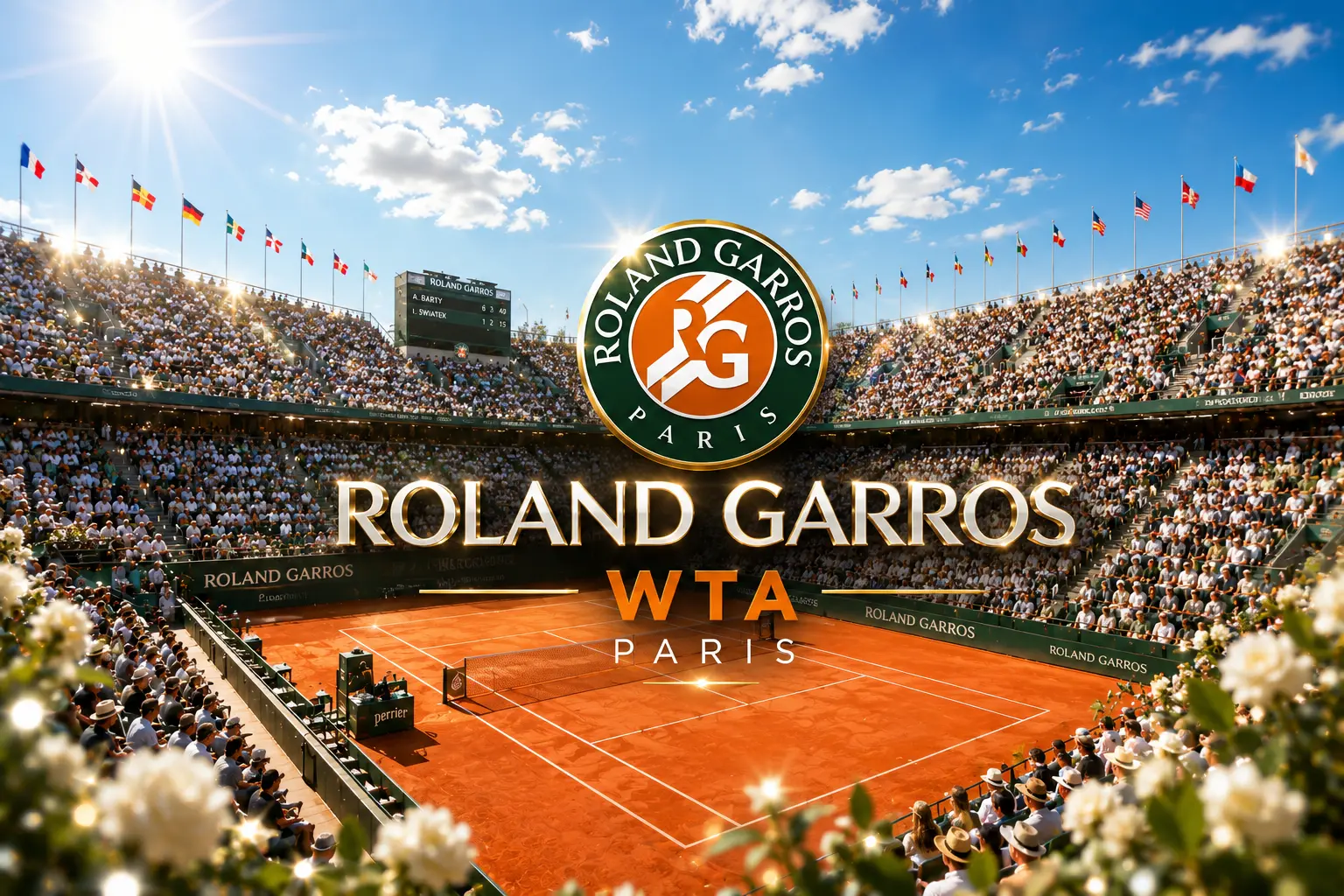
Elina Svitolina advanced to the Roland-Garros quarterfinals for the sixth time in her career after defeating Belinda Bencic 4-6, 6-4, 6-0 in a match defined by shifting momentum and a decisive final-set surge. The Ukrainian dropped the opening set but recovered to dominate the closing stages, extending her current winning streak to 10 matches across all competitions.
The result continues one of Svitolina’s most consistent seasons in recent years. The former World No. 3 has combined a deep run at the Australian Open with a title at the Rome Open, where she defeated several top-ranked opponents on her way to the trophy. Her current form has also lifted her to third place in the WTA Race behind Aryna Sabalenka and Elena Rybakina.
At Roland-Garros, Svitolina now holds a 37–12 career record, underlining her sustained performance on the Paris clay. She has reached the quarterfinal stage in three of her last four appearances at the tournament, reinforcing her status as a regular contender in the latter stages of Grand Slams.
After the win over Bencic, Svitolina repeatedly pointed to stability and internal balance as the foundation of her current level, describing her condition as “a good place mentally and physically” after a season built on sustained execution rather than isolated peaks.
Slow start, late control and momentum shift
Svitolina’s match followed a familiar pattern of early resistance and gradual tactical adjustment. Bencic controlled the opening set, capitalising on missed break opportunities from the Ukrainian, who acknowledged she failed to convert early chances to impose her rhythm on the match.
The turning point came through persistence rather than tactical overhaul. Svitolina gradually increased return pressure and stabilised baseline exchanges, forcing errors and drawing Bencic into longer, more physically demanding rallies as the match progressed.

Elina Svitolina - Anna Bondar Roland Garros 2026
“I think Belinda was playing really well in the first set," Svitolina said in press conference. "I missed my opportunity a couple of times to break her early, and then she picked up a good game. I had to really dig deep to find my game again, the way that I wanted to play. I feel like it was a good match, and I’m very happy that I could play a really solid game today to beat her.”
The second set became the decisive phase of the contest. After recovering from a period where Bencic threatened to overturn a 5-2 deficit, Svitolina re-established control and forced a decider, where she produced a clean 6-0 finish to close out the match in commanding fashion.
Mental structure, coaching resets and quarterfinal stakes
Svitolina framed her current consistency as the result of sustained mental and physical work rather than short-term improvements. She emphasised the importance of maintaining a stable competitive level against elite opposition, particularly in Grand Slam environments where momentum shifts are frequent and often decisive.
A recurring theme in her explanation was the use of brief communication with her coaching team as a tactical reset mechanism during matches. She described these exchanges as functional interventions designed to re-align decision-making rather than emotional motivation.
“Of course, lots of work—mental work, physical work, tennis work, all of that. I feel like I'm in a good place right now, mentally and physically as well. Whatever the outcome will be, I feel really proud of the effort that I've been able to put in. I feel that I've reached a really good level that I can sustain, which is really important in tennis.”
The quarterfinal will see Svitolina face Marta Kostyuk, guaranteeing a Ukrainian player a place in the last four. She described the matchup as significant in national terms, while maintaining focus on the competitive dimension of the encounter rather than its broader narrative framing.
“It’s exciting. Definitely, she’s been playing really well," the former world No. 3 claimed. "There will be one Ukrainian in the semifinals, and I think that’s really cool. I don’t think it has ever really happened before, so it’s exciting.”

Evolution, pressure background and sustained Grand Slam level
Beyond match analysis, Svitolina addressed the longer trajectory of her career, particularly the psychological shift required after returning to top-level tennis following maternity leave. She described the transition as a long process of recalibration rather than a single adaptation.
She also outlined the influence of early-career pressure shaped by her upbringing, noting a competitive environment defined by high expectations and strong external discipline. While acknowledging that this approach contributed to her development, she stressed the need to later separate from it to establish a more sustainable personal balance.
“I think it's a very difficult transition. For me, it was because I'm coming from Ukraine and from my family. There was a lot of pressure and pushing. I think it's an Eastern European mentality to really go through hell to win matches. Everyone is raised differently, but in my case, it was like that.

It's good and bad at the same time. When you're young you want to hang out with your friends, enjoy your life. But my mom was pushing me to stay focused, train a lot, and stay on track. Later you need to leave that attachment and find your own way. It took me years to find balance and beat these demons. I'm still beating them every single match that I play.”
She linked that evolution directly to her current ability to sustain performance across tournaments. The Rome title run, which included wins over players such as Iga Swiatek, Coco Gauff, and Elena Rybakina, has been followed by continued consistency in Paris and a 10-match winning streak that has kept her at the top end of the season standings.
Despite the statistical strength of her season, Svitolina resisted framing her form in absolute terms, instead returning to the concept of control through process. In her view, the key objective remains maintaining competitiveness without losing internal stability. “When you’re pushing your limits, when you’re going through these moments, you are growing and learning. It’s important that it doesn’t break you mentally. You can have bad days, but life is still good.”

Cristhián AvilaTennis Journalist
Cristhián Ávila is a tennis journalist based in Santiago, Chile, and has been part of the TennisUpToDate team since early 2023. He covers the ATP and WTA Tours as well as all four Grand Slams, producing breaking news, match reports, analysis, and regular liveblogs from major tournaments.
His reporting combines statistical analysis with clear explanation, helping readers understand tactical developments, player form, and broader storylines across the tour. Working fluently in both Spanish and English, Cristhián collaborates with an international editorial team and contributes to comprehensive global coverage. As part of his work, he has conducted interviews and media interactions with leading figures in the sport, including Caroline Wozniacki and John McEnroe.
In his journalism, Cristhián places strong emphasis on careful sourcing, editorial accuracy, and updating articles promptly when new, verified information becomes available. His coverage is grounded in research, context, and direct engagement with professional tennis.
claps 0visitors 0
Just In

Popular News

Latest Comments
- I have lost all respect for Svitolina! Could she not have waited until he had played at the Paris Masters!!! She is selfish and don't give a damn about Gael. That is NOT how love is demonstrated Elina!!Rapunzel19-10-2026
- Perhaps convenient tennis tour sex is not a strong enough experience in which to base a marriage?
 mandoist19-10-2026
 - Fight the Good Fight... Tennis (sports in general) need more Humans such as yourself.mandoist18-10-2026
- When is WTA going to mandate Genetic Testing (DNA) ???mandoist18-10-2026
- Hey, Dan... you just wake up from a coma? Regardless -- Thanks for the comedy this morning!mandoist18-10-2026
- Two Things: 1. Stop allowing these Spoiled Trust-Fund Elitists to behave badly. Your little hand-slaps do not deter them. 2. STOP the incessantly annoying "towel wiping" nonsense!!!!mandoist15-10-2026
- A healthy Qinwen may be hard to stop next season. She was already scaring her opponents before her medical leave(s). Unfortunately, Zheng insisted on singing again. On the positive side -- Mirra did not sing!! ;~}mandoist11-10-2026
- Where is it written that athletes, entertainers... People in general... are mandated to keep looking at -- or even using [anti]Social Media? Public & private figures consistently complain and reveal their concerns about negativity and violence thrown at them -- yet they insist on participating. Avoid it, don't use it, don't read it. It's okay to occasionally look up at the World instead beating your eyes & thumbs to death on The Inventions out there.mandoist11-10-2026
- great articlestennisseserver07-10-2026
- Medvedev was leading Djokovic 7-5, 3-5 when an attempted return..' NO you ignorants, Djokovic was leading .weiss05-10-2026

Loading