"What's she ever won for Russia? You won't say and I won't either so good riddance": Anastasia Potapova receives damning verdict on Austria switch
WTAFriday, 05 December 2025 at 12:45
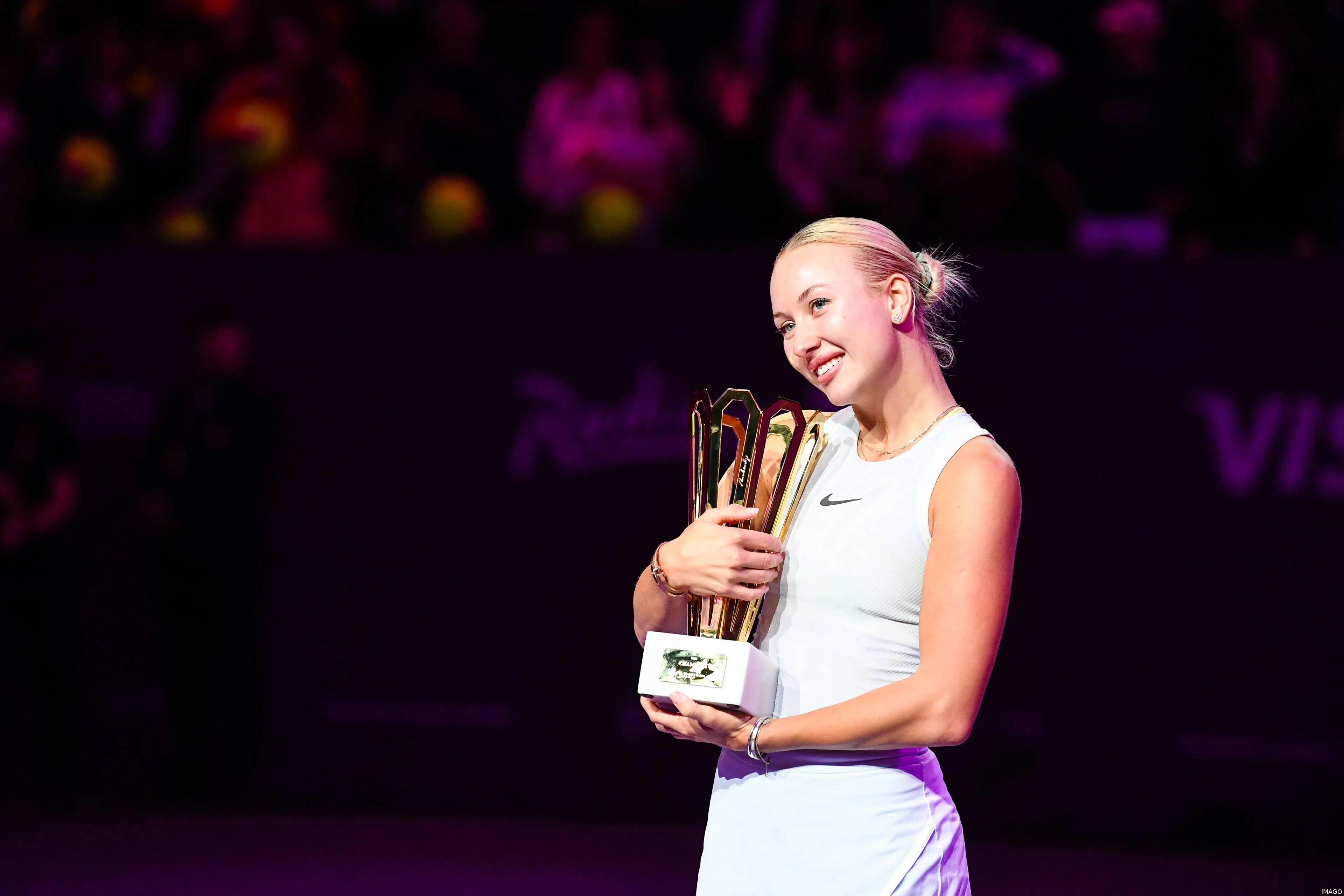
Anastasia Potapova has decided to become the latest athlete to switch to represent a new country this week joining Kamilla Rakhimova who moved to Uzbekistan.
But while Rakhimova got a more cordial reception from Shamil Tarpischev regarding her switch, the vice president of the Russian Tennis Federation acted a bit less cordial about Potapova saying simply what has she ever won for Russia and translated from Russian good riddance when it came to her switch.
Potapova will now represent Austria which is somewhat of a surprising move. The 24-year-old only appeared last week at the Russian state oil giant Gazprom's exhibition and even roped her boyfriend Tallon Griekspoor along for it who of course represents Netherlands.
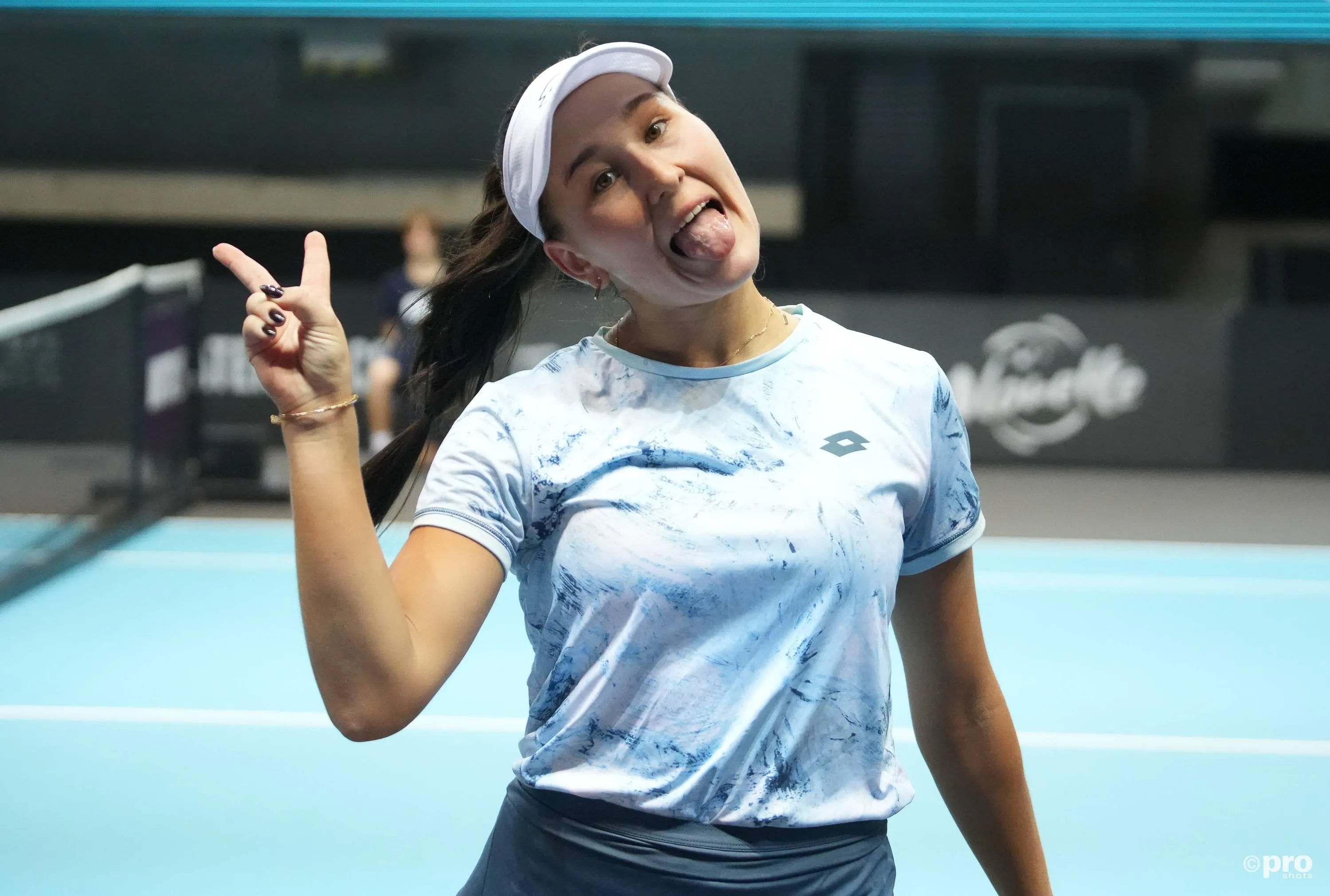
He was the only non Russian/Kazakh player on the line-up and was of course for obvious reasons, Potapova's switch to Austria given her past participation in such events was a surprise. But for former World No.1 and vice-president of the Russian Tennis Federation, Yegveny Kafelnikov it was very much shut the door on your way out.
Good riddance says Kafelnikov
“I take no pleasure in commenting on this news. Give some sort of verdict on this topic? I don’t need to. She changed [nationality], fine — what am I supposed to do now, cry about it? A strong athlete? What has she ever won for Russia? You won’t say, and I won’t either. So good riddance,” Kafelnikov told Sport-Express.
Austria is a place that holds special resonance for Potapova having won the Upper Austria Ladies Linz title in the country and now she will make it her new home.
"I am delighted to let you all know that my application for citizenship has been accepted by the Austrian Government. Austria is a place I love, is incredibly welcoming and a place where I feel totally at home," she wrote. I love being in Wien and look forward to making my second home there. As part of this I am proud to announce that starting from 2026 I will be representing my new homeland Austria in my professional tennis career from this point onwards.
So far in her career, the former World No.21 has won three singles titles and three doubles and is a former junior World No.1 and a 2016 Wimbledon girls champion.
She won the Transylvania Open earlier this year and was formerly married to Kazakh ace Alexander Shevchenko before their divorce bt she soon then got into a relationship with Tallon Griekspoor who has been seen on her social media in what could be called a soft launch of him diving into a pool and in the background of shots in the Maldives as she enjoys her off season.
Austrian Der-Standard readers deeply split over Potapova’s Austrian citizenship
Many Der Standard readers reacted with sharp criticism, focusing on what they see as blatant double standards in Austria’s citizenship rules. They argue that while “ordinary” Austrians abroad and migrants born in the country must navigate years of bureaucracy, a Russian tennis star appears to receive citizenship “on a silver platter.” The same questions surface repeatedly: Did Potapova follow a standard naturalization process? Did she renounce her Russian passport? Has she clearly distanced herself from Russia’s war in Ukraine? Her recent appearances at Gazprom-sponsored events and exhibitions in St. Petersburg further fuel distrust — with some commenters calling her a “Putin groupie” and labeling the decision a “full-blown scandal,” “ridiculous,” or simply “disgusting.” Others denounce Austria for naturalizing athletes with “zero connection” to the country while long-term residents remain excluded, describing the ruling party’s approach as “an utter disgrace.”
Still, some readers push back against the outrage. They note that naturalization for exceptional achievements in sports, culture, or science is explicitly permitted by law — “That’s how the law has always worked.” Others simply welcome the arrival of a high-level player: “Great — maybe our women’s team will finally achieve something again,” “Super! Welcome!” or “Good to have a top athlete on our side.” A few warn against assuming Kremlin loyalty just because she is Russian, arguing that people living under authoritarian regimes often stay silent to protect themselves and their families.
claps 0visitors 0
Just In

Popular News
Latest Comments
- All those whom believed they could accept the Sportswasher's money and free housing and still maintain their Freedoms -- how's that going over there at the moment? Not too good??
- Issues much? Why is this story not going away??
- Could they hear the bombing in the background? I imagine the tennis players/teams "living" in Dubai and Doha might be selling their apartments for an excellent price in the very near future... such as it is!!
- Who gives a rat's ass??
- This person has arguably always been a 'problem personality'. Rarely, if ever, has he been The Solution to any matter in sports. More often combative and accusatory via media blurbs and texts. As for his "great success" as a coach -- the planets were aligned in his favor the day The Williams Family signed on to him. The William sisters were going to succeed regardless of his, or anyone else's, input. If you want to know how other players' have been affected by his "coaching" simply study the graphics on a chart. Average results, with a degree of combativeness and animosity in every camp. His "success" is entirely attributed to the natural Williams talent(s). Not unlike Raducanu's claim to fame of winning one title.
- Quinwen learned it's better to have friends in tennis. Happy to see she has changed her attitude on the circuit.
- Remind her the racquet is in HER hand, not any coach.
- My advice to Coco is take a few months off from the tour and focus on the serve. If MacMillan is not producing the expected results, relieve him of his duties and hire someone else. To hell with the rankings and what people will say. Just take a break. Mental health is far more important than money.
- Eventually (as other sports have done) WTA will be forced to make DNA / Gender Testing mandatory in order to protect and promote fairness in competitions. End of so-called 'controversy'.
- It's sad... but Rybakina is not going to be able to endure her groomer's interference in Life and still excel to her best level. BTW: No media has reported her last sentence to the physio. They kept asking questions and she abruptly told them: "I know what it is; I'm ready to go now".


Loading