“He thinks everyone should be paid except me”: Bublik’s father opens up on fractured relationship
ATP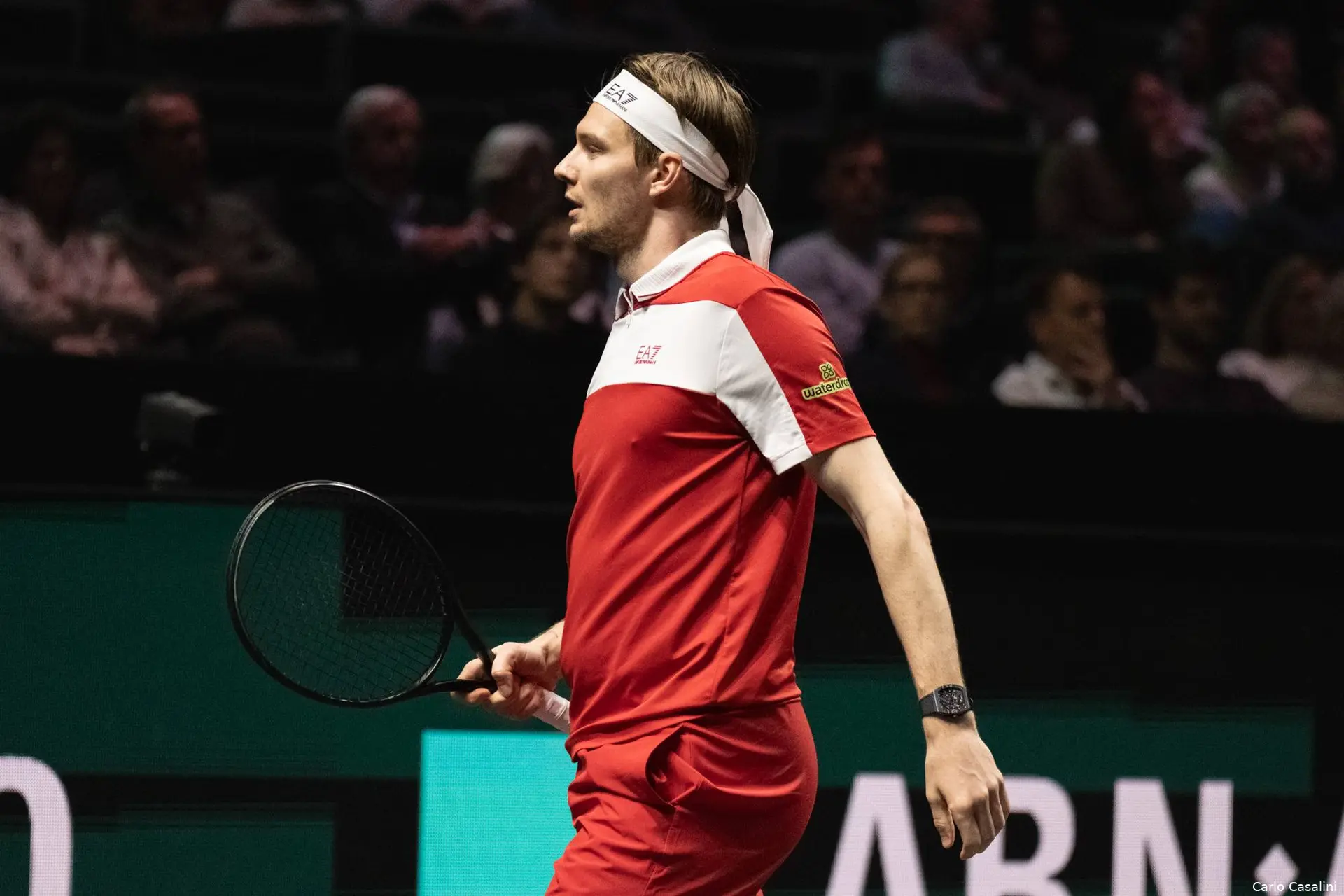
Alexander Bublik’s career has moved into a different tier over the past 12 months, but comments from his father, Stanislav Bublik, have shifted attention back to the foundations of that rise. The Kazakh reached a career-high No. 10 in January 2026 after a four-title 2025 season, establishing himself as a consistent presence at the top end of the ATP Tour.
That trajectory contrasts with the account given by Stanislav, who coached Bublik during his formative years and helped guide him into the top-50 before their split in 2019. Speaking to Sports, he described a relationship that has since broken down completely, with no regular communication and unresolved financial disagreements tied to earlier arrangements.
Bublik’s development has been well documented. His game — built around a high-risk serve, variation, and a willingness to disrupt rhythm — translated into results across surfaces in 2025.
He won titles in Halle, Gstaad, Kitzbühel and Hangzhou, reached his first Grand Slam quarter-final at Roland Garros, and finished the season just outside the top 10 before breaking through early in 2026. Against that backdrop, Stanislav’s comments are not about early-stage uncertainty but about a player now fully established.
Early development, contract dispute, and coaching role
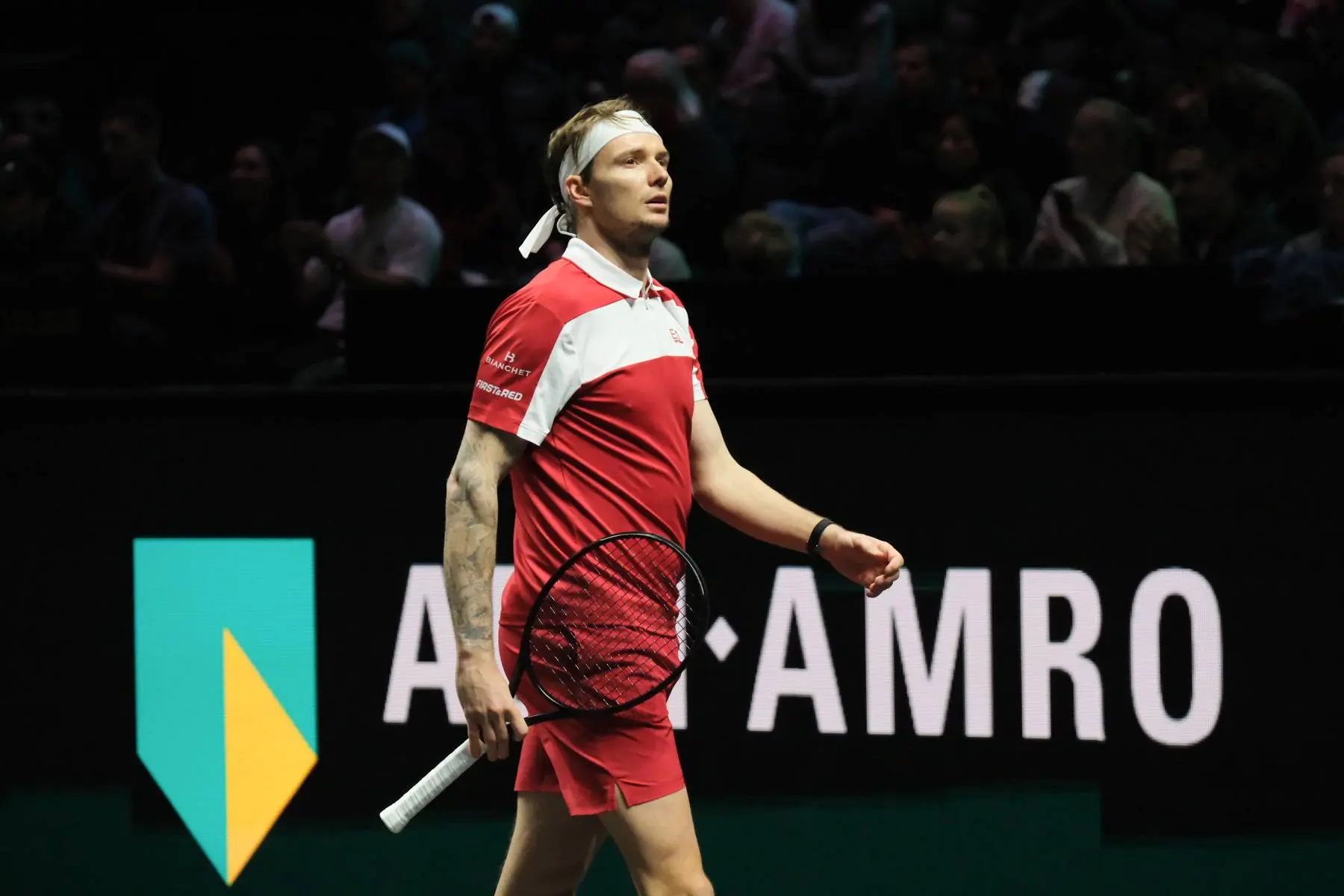
Stanislav Bublik was not only a parent but also the central figure in Alexander’s early career, overseeing his progression through juniors and into the professional circuit. He described giving up better-paid opportunities to focus on coaching, while managing the blurred boundary between family support and professional obligation.
That overlap, in his account, became most visible in financial terms. He said there had been an agreement — formal at first — granting him 20% of his son’s prize money, before being replaced by a verbal promise after family discussions.
“Normally, the player pays the coach’s salary. But how does it work when the coach is the father? It’s a delicate issue," he said. "Sasha thinks everyone should be paid except me. To be honest, during his entire tennis career, I received $20,000 from him when we split in 2019. That’s all I earned from my son, and I’m not even mentioning how much I spent on his career.”
The scale of Bublik’s current career gives those remarks a different weight. He is now a nine-time ATP title winner and one of the few players in recent seasons to win titles on multiple surfaces within a single year. His 2025 campaign marked a shift from inconsistency to sustained output, including a notable run at Roland Garros and a title at Halle that featured a win over Jannik Sinner.
Stanislav also pointed to a separate episode involving the Kazakhstan federation, where he said he defended his son during a funding dispute after disciplinary issues. The intervention, he noted, was later dismissed by Alexander as unnecessary, reinforcing the sense of misalignment in how past actions are viewed.
“In fact, we had a contract from when he was about 18. According to it, he gave me 20% of his prize money. At one point, Sasha’s mother said it wasn’t right. He came to me and said, ‘Dad, let’s break it now. But I promise you, as a man, that 20% of the prize money is yours.’ So far, I’ve received $20,000.”

Communication breakdown beyond tennis
Stanislav rejected the idea that tennis itself caused the distance, instead framing the situation as a personal decision made by his son. He stated that attempts to re-establish contact have come from his side, while Bublik has consistently avoided engagement, describing the matter publicly as private.
“To begin with, I’m not the one who doesn’t communicate with him — it’s him who doesn’t communicate with me. These are completely different things," Bublik's father said. "It has nothing to do with tennis. It’s better to ask him. He avoids the topic, saying it’s a family matter. I tried to communicate with him, to get in touch. Last year, during the Miami tournament, he spent 20 minutes with me near the trash can.”
The absence of communication, he added, has practical consequences. Without contact, there is no space to revisit past agreements or address unresolved issues. In that sense, the personal and financial aspects of the situation remain linked.
“If you are angry with someone and you don’t communicate with that person, you don’t owe them anything — that’s the position. By not communicating with me, he has no opportunity to give me anything; he avoids it. I don’t need anything, I don’t ask for anything. But we all understand that he won’t communicate with me. Because as soon as we start communicating, he will understand everything I have done.”

Cristhián AvilaTennis Journalist
Cristhián Ávila is a tennis journalist based in Santiago, Chile, and has been part of the TennisUpToDate team since early 2023. He covers the ATP and WTA Tours as well as all four Grand Slams, producing breaking news, match reports, analysis, and regular liveblogs from major tournaments.
His reporting combines statistical analysis with clear explanation, helping readers understand tactical developments, player form, and broader storylines across the tour. Working fluently in both Spanish and English, Cristhián collaborates with an international editorial team and contributes to comprehensive global coverage. As part of his work, he has conducted interviews and media interactions with leading figures in the sport, including Caroline Wozniacki and John McEnroe.
In his journalism, Cristhián places strong emphasis on careful sourcing, editorial accuracy, and updating articles promptly when new, verified information becomes available. His coverage is grounded in research, context, and direct engagement with professional tennis.
claps 0visitors 0
Just In

Popular News
Latest Comments
- Lena... Takin' care of business
 mandoist25-10-2026
 - Can you please stop publishing this nonsense? Stick to Tennis.mandoist25-10-2026
- Does Sinner need that 4.5 mil? I doubt it. He can make that with three modelling gigs!😅🤣Rapunzel21-10-2026
- Did "People Magazine" purchase this website? This nonstop storyline is bullshit.mandoist21-10-2026
- Listen... this is of no concern to anyone but these two. Deal with your own issues -- most of us have our own. Thanks, media, for these insignificant follow-ups which are meaningless.mandoist21-10-2026
- This is so very very sad, for all three of them. I truly thought they had an unbreakable bond, but life throws up so many differing challenges. Having your homeland suffering in such a terrible way, makes happiness lose out to guilt as well. Our thoughts are with them. X💔bjsexton20-10-2026
- I have lost all respect for Svitolina! Could she not have waited until he had played at the Paris Masters!!! She is selfish and don't give a damn about Gael. That is NOT how love is demonstrated Elina!!Rapunzel19-10-2026
- Perhaps convenient tennis tour sex is not a strong enough experience in which to base a marriage?mandoist19-10-2026
- Fight the Good Fight... Tennis (sports in general) need more Humans such as yourself.mandoist18-10-2026
- When is WTA going to mandate Genetic Testing (DNA) ???mandoist18-10-2026

Loading