"He’s just better at everything he’s doing": Holger Rune recalls moment he realised Jannik Sinner's approach to tennis had changed
ATP
Holger Rune believes Jannik Sinner’s rise to the very top of men’s tennis has been driven less by dramatic change and more by discipline, commitment and an openness to constant improvement, qualities he feels now define the new generation.
Speaking on Served with Andy Roddick, Rune gave a candid assessment of how Sinner plays, how their rivalry has evolved, and why facing the Italian today feels completely different to earlier in their careers ahead of the Australian Open.
Rune explained that what immediately stands out about Sinner is the discipline with which he approaches matches. “Whereas some players want to get on the front foot 60 or 65 per cent of the time, he just seems so disciplined with how he goes about his matches,” Rune said. “That’s also one thing that I kind of learned a little bit from these two players, especially because I think tennis has changed a little bit. It always changes from generation to generation, but I think these two, they just always commit.”
That commitment, Rune believes, is most obvious when there is an opportunity to attack. “If there’s a short ball, they never doubt,” he explained. “With other players, you can see it very clearly on TV, there’s a forehand where you have to change the punch, so they go a little under it and roll it. These two, they always go full, but to big targets and everything. They’re really, really aggressive players.”
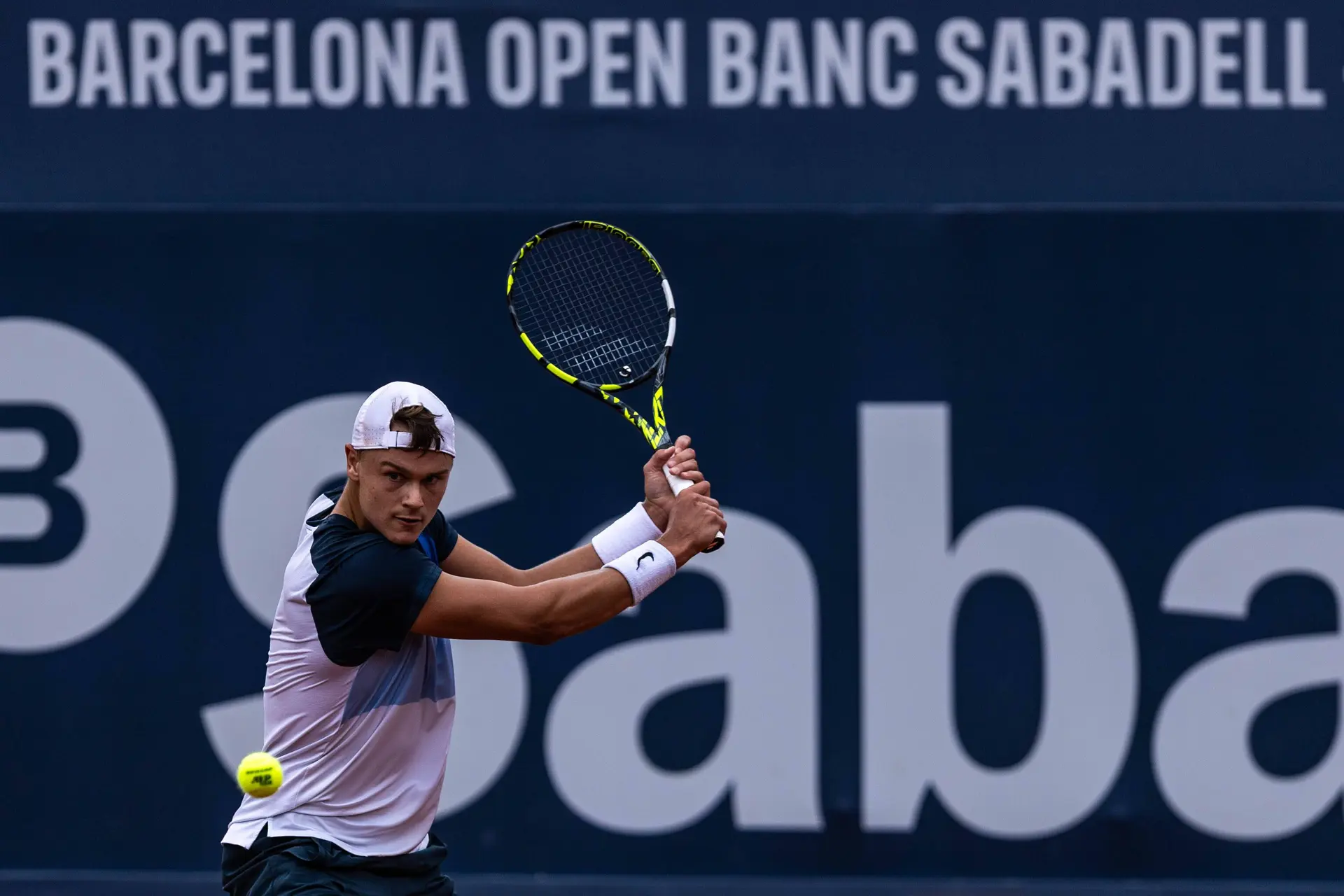
Rune admitted that his relationship with Sinner as an opponent has shifted significantly over time. “I used to kind of like playing him,” Rune said. “And I had a feeling that he didn’t like to play me. Now I think I don’t like to play him, and he doesn’t like to play me. I think it’s this way now.”
From Rune’s perspective, the turning point came as Sinner’s level rose sharply around 2023 and into his Grand Slam breakthrough the following season. “He improved a lot,” Rune said. “From, I think it was 2023, or when he started winning the Grand Slams in 2024, he improved a lot.”
What makes Sinner’s progression particularly interesting to Rune is how similar their paths once looked. “For me, it was like he was doing similar results to me before he really broke through at the Grand Slams,” Rune explained. “Making finals of Masters 1000s and stuff like this. He was still an amazing player, but it was just missing the little touch of becoming the best.”
Rune believes that missing piece was ultimately filled by discipline and hard work, something he vividly remembers observing during a training block in Monaco. “I remember one summer I was training in Monaco, where I was not in my best time,” Rune said. “And he was training every day, four hours a day, so disciplined with Vagnozzi. Short angle cross down the left forehand, just repeating it, repeating it all the time.”
By contrast, Rune admitted he was struggling during that period. “And I was there chatting to the ball a little bit,” he said. “All gone. And I was like, okay. You really understand why he broke through, because he just started working better. He worked more serious.”
Rune was careful not to speculate too much on Sinner’s internal process, but from the outside, the reason for his breakthrough felt obvious.
“I can’t speak on exactly what he did on his part,” Rune said. “But from outside, it looked like this.”
Crucially, Rune does not believe Sinner transformed his game overnight. “It’s not that his game changed so much,” he explained. “He’s just better at everything he’s doing. He serves better. He returns better. His forehand is better. His backhand is better. But it’s not like he learned something new.”
Even in areas that were never considered Sinner’s strongest, Rune sees clear improvement. “Even the volleys, it’s not his best shot, but he had a decent volley before and he still has a decent volley,” Rune said. “He just got better in everything.”
The scale of improvement
Rune said the scale of that improvement truly hit home when he faced Sinner at the Australian Open last year.
“When I played him in Australia last year, I realised how much he’s always stepping in when there’s a chance,” Rune said. “Never holding back. He’d rather miss a few shots by stepping in than wait for the ball to drop and play with you.”
That mentality stood out even more when compared to earlier rounds of the tournament.
“I played him in the fourth round,” Rune recalled. “And before that I played Shang, then Kecmanović and Berrettini coming up to Centre Court. The biggest difference I felt was that the guy was always stepping in, always taking charge when he could.”
An open generation
Rune believes this aggressive clarity is part of a broader generational shift, one that also shows up in how openly players talk about their form.
“This generation seems way more open,” Rune said. “I remember Carlos after Indian Wells, he loses to Draper and comes in and says, ‘I’m just not feeling my game.’ I’m like, we used to lie a lot more than this generation. You guys are so open.”
He pointed to Sinner’s honesty as another example. “Jannik walks into the US Open press conference after losing to Carlos, after having had the season he’s had, and he goes, ‘I need to change a lot of things,’” Rune said. “I’m going, s***, man. These guys are really honest.”
Rune admitted that, in hindsight, stubbornness may have held him back earlier in his career. “I would have been stubborn,” he said. “That’s probably what was wrong with me. But you all seem so open and honest with where you’re at at any given moment in your careers.”

Holger Rune sees an openness helping Sinner and co reach the top.
For Rune, that openness is exactly what allows players like Sinner and Alcaraz to keep improving, even when they are already at the top. “What those two are doing so well is that they are so open,” Rune said. “Because it gives them a chance to always keep improving.”
He highlighted Sinner’s decision to adjust his serve after the US Open as a perfect example.
“Why would you change your serve?” Rune asked. “The guy makes every Grand Slam final and could have won three out of four.”
Yet Rune believes that constant curiosity is the real edge. “This is the key,” he said. “You’re always curious to do better. Because if you stay the same, someone else is going to overtake you.”
That mindset is something Rune is now actively trying to apply himself. “That’s what I talked to my coaches about,” he explained. “We’re making some changes, not the most important things, but changing some technical stuff now that I have the time on the court.”
Rune believes focusing on specific details can actually ease pressure during matches. “When you step out there and you have something you concentrate on, you don’t just think, ‘I need to win this point,’” he said. “Maybe you’re focused on a detail that makes you calmer or more focused, for example in your service games.”


Samuel GillEditor-in-Chief
Samuel Gill is the Chief Content Officer (CCO) of TennisUpToDate.com, a role he has held since 2020. He is responsible for editorial governance across the platform, including setting content standards, overseeing accuracy and consistency, and guiding long-term editorial strategy. Since joining, he has contributed more than 10,000 articles and editorial pieces across the TennisUpToDate network, playing a central role in the daily operation and development of the site.
Based in Leicester, Samuel has a broad background in tennis media. In his current role, he works closely with editors and writers to ensure coverage meets clear journalistic standards, with particular attention to verification, consistency, and timely updates when new information becomes available.
claps 0visitors 0
Just In




Popular News


Latest Comments
- Does Sinner need that 4.5 mil? I doubt it. He can make that with three modelling gigs!😅🤣Rapunzel21-10-2026
- Did "People Magazine" purchase this website? This nonstop storyline is bullshit.
 mandoist21-10-2026
 - Listen... this is of no concern to anyone but these two. Deal with your own issues -- most of us have our own. Thanks, media, for these insignificant follow-ups which are meaningless.mandoist21-10-2026
- This is so very very sad, for all three of them. I truly thought they had an unbreakable bond, but life throws up so many differing challenges. Having your homeland suffering in such a terrible way, makes happiness lose out to guilt as well. Our thoughts are with them. X💔bjsexton20-10-2026
- I have lost all respect for Svitolina! Could she not have waited until he had played at the Paris Masters!!! She is selfish and don't give a damn about Gael. That is NOT how love is demonstrated Elina!!Rapunzel19-10-2026
- Perhaps convenient tennis tour sex is not a strong enough experience in which to base a marriage?mandoist19-10-2026
- Fight the Good Fight... Tennis (sports in general) need more Humans such as yourself.mandoist18-10-2026
- When is WTA going to mandate Genetic Testing (DNA) ???mandoist18-10-2026
- Hey, Dan... you just wake up from a coma? Regardless -- Thanks for the comedy this morning!mandoist18-10-2026
- Two Things: 1. Stop allowing these Spoiled Trust-Fund Elitists to behave badly. Your little hand-slaps do not deter them. 2. STOP the incessantly annoying "towel wiping" nonsense!!!!mandoist15-10-2026

Loading