"It's a tough moment, there's a lot of work to and it's not a secret": Holger Rune opens up on achilles rehab, approaches return with cautious mindset
ATP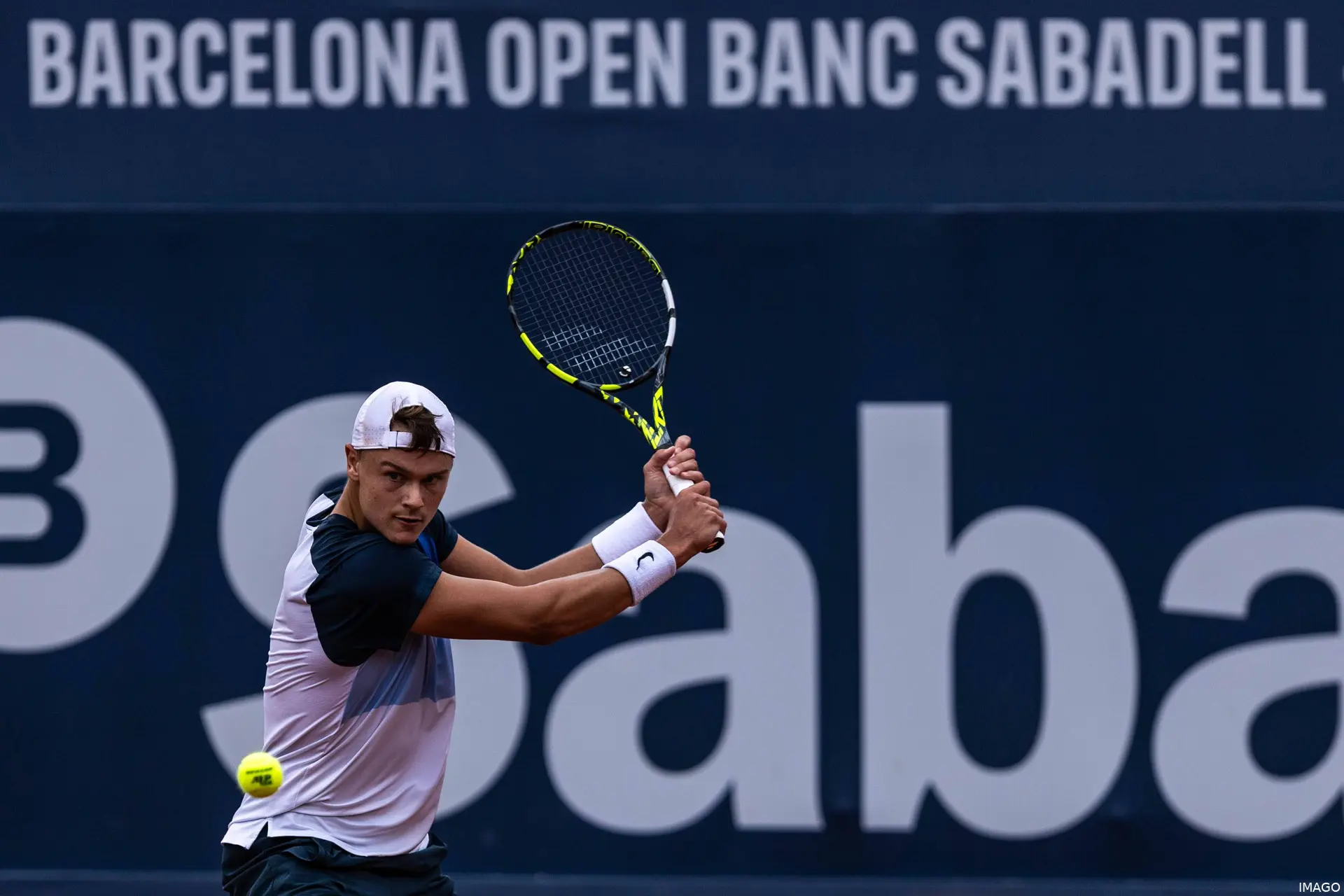
Holger Rune admits the moment his Achilles injury happened in October was devastating. There was uncertainty straight away, and once the damage was confirmed, it was clear it was “kind of the worst thing that could happen” to that part of the body.
But a few months on, the Danish star insists he is in a far better place — physically and mentally as he works through rehabilitation away from the tour. “Things are going really well actually,” Rune explained to Served. “I’m doing a lot of rehab and I’m doing great mentally. I’ve been very privileged to have all my team around me, and all my family and friends to support me and make life a little bit easier off the tour.”
The recovery process has been steady and, crucially, uninterrupted. Rune says he hasn’t suffered any setbacks so far, which has allowed him to move forward with confidence. That progress has been visible on social media, where fans have watched clips of him back on court, something that understandably causes concern among those eager for him not to rush ahead of the Australian Open.
Rune understands that reaction but says transparency feels natural. “I know how much the fans mean to me and all the people around the world who support me,” he says. “During this time, I just have the opinion that the more I can share my journey, the better. There’s nothing to hide. It’s a tough moment, there’s a lot of work to do, and it’s not a secret.”
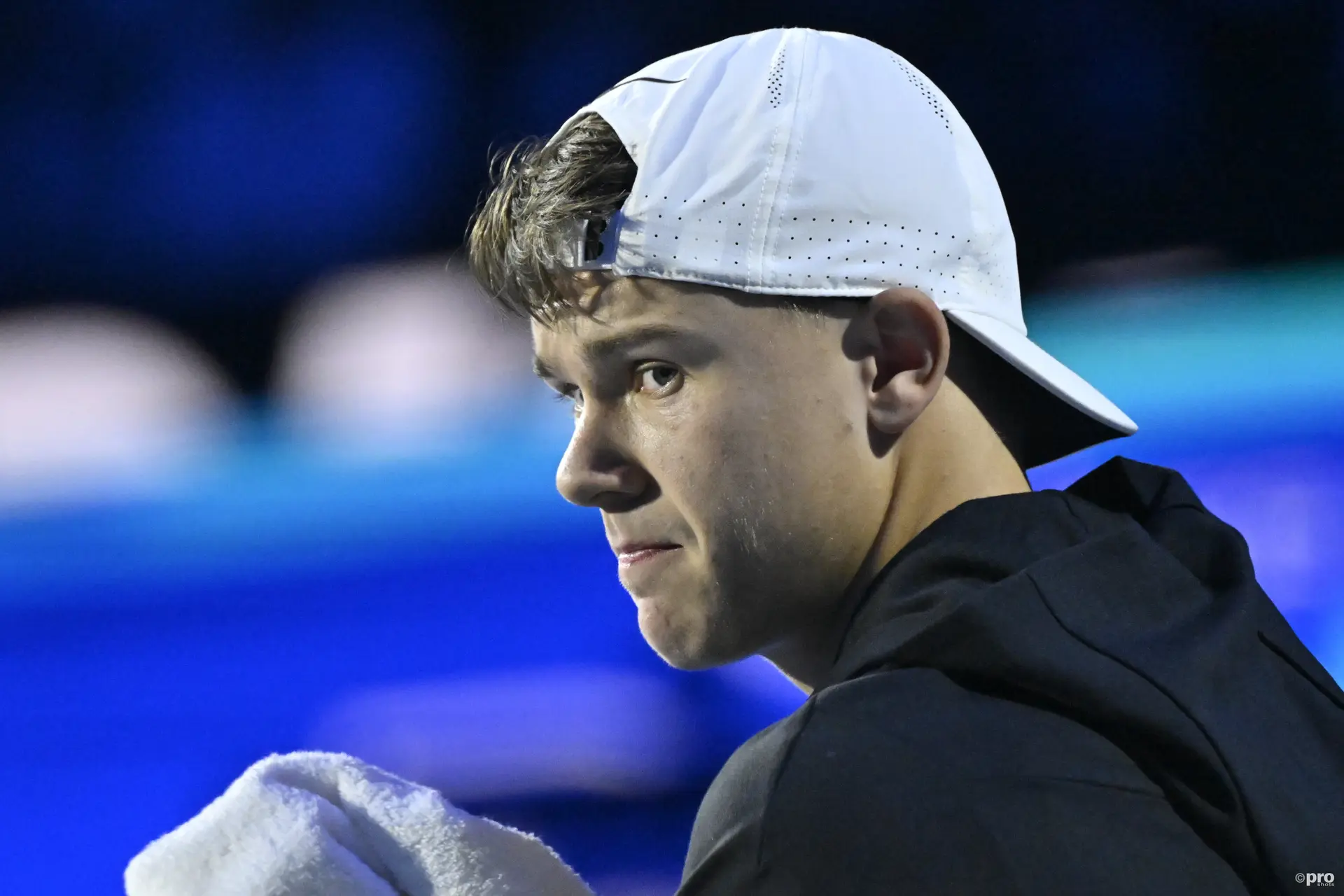
While he is back hitting balls, Rune is careful to stress that nothing he does is spontaneous or reckless. Every step is cleared by his surgeon and physios, with a tightly controlled program that balances on-court work with carefully planned tendon loading away from tennis.
“It’s not like, ‘Oh, I think it’s fun to be on a tennis court, I’m going to go on a tennis court,’” he says. “It’s because I’m allowed to. Everything is very detailed.”
Rather than measuring his recovery against an abstract timeline, Rune prefers to focus on short-term targets. Every seven to ten days, new goals are set, giving him something concrete to aim for.
“That keeps me motivated,” he says. “Every week or every ten days we say, ‘Okay, I need to be able to do this.’ That keeps me excited.”
Rune still has mindset to be the best
It’s a mindset he admits he could have applied earlier in his career. Looking back, Rune feels there were periods when he drifted week to week — reaching quarter-finals and semi-finals consistently, but without feeling satisfied.
“My ambition is to be the best,” he says. “So for me, that wasn’t really satisfying. Now I have time to rethink and understand myself better.”
That reflection has also extended to how he approaches scheduling and physical limits. In the latter stages of last season, Rune played a demanding run of events including Davis Cup, Laver Cup, Tokyo, Shanghai and Stockholm, criss-crossing the globe while chasing qualification for the ATP Finals in Turin. “When you’re feeling good and you’re young, you just want to play,” he says. “But it was way too much.”
Rune recalls arriving in Stockholm fatigued after Shanghai, where he had suffered near full-body cramping. Despite feeling tired, he pushed on — a decision he now views differently.
“In the future, I need to listen to my body more and be respectful to how I feel,” he admits. “I would rather be playing Australia right now than sitting at my desk here.”
The injury itself came without warning. Rune had felt a minor hamstring issue during his quarter-final against Tomás Martín Etcheverry in Stockholm, but after treatment it seemed manageable. The Achilles rupture that followed was completely unexpected.
“It was pretty brutal,” he says. “But it’s going to make me more aware in the future. If I feel small things, I need to be more cautious.”
Rune points to Federer comeback
That awareness has also been shaped by watching how the greats handled similar moments. Rune points to Roger Federer’s six-month layoff before his remarkable 2017 comeback as an example of patience paying off.
“Someone told me, ‘Don’t come back when you’re not ready, even if you feel good. Take your time. And when you come back, be an absolute beast,’” Rune says. “I totally agree with that.”
Away from competition, Rune has found himself watching more tennis than he ever did as a player on the road. It’s not just entertainment — it’s study.
“I’m a fan of tennis and I love to watch it,” he says. “But I also try to understand what they’re doing and why.”
In particular, he has paid close attention to the rise of Carlos Alcaraz and Jannik Sinner, studying their decision-making, discipline and shot selection. Rune believes there is no downside to learning from direct rivals.
“There’s a reason why Carlos and Jannik are the best players in the world right now,” he says. “I don’t just look at a great shot — I look at why they do it in that situation.”
Watching peers succeed can be motivating, but Rune admits it can also be frustrating. Still, he believes everyone’s journey unfolds at a different pace.
“Carlos was extremely early. Jannik came a bit later,” he says. “I won Paris very young and then had to take a step back.”
In fact, Rune reveals that reaching his career-high ranking was paradoxically one of the most difficult moments of his life.
“I didn’t really have structure,” he explains. “There were coaching changes, different opinions, and suddenly many more voices around me. I started questioning myself too much.”
With success came expectations — from fans, media and even people planning to watch future matches that hadn’t yet been reached.
“You still have four or five matches before that,” Rune says. “And you can lose in the first round. Tennis is brutal like that.”
Key areas holding Rune back before injury
Before his injury, Rune believes he had begun addressing one of the key areas holding him back. A frank team meeting in Tokyo helped sharpen his focus on matches that don’t come easily, the uncomfortable, grinding contests rather than the high-profile showdowns. “Those are the matches I need to get through,” he says. “If I put 10 out of 10 effort — not perfect tennis, but full effort — I know I’ll get through most of them.”
That effort, he clarifies, is primarily mental. Rune insists he has never lacked physical commitment, but admits there were times when tactics shifted too often or focus wavered.
“If I really tell myself I need to win this match, I usually find a way,” he says. “Those are the matches where you need to dig deep and forget how you feel.”
As he continues his recovery, Rune believes the lessons learned during this enforced pause could shape the rest of his career, from smarter scheduling to clearer goals and greater self-trust.
“This injury is going to teach me some things,” he says. “Sometimes you need to take time, be ready, and then come back strong.”
For now, the focus remains on patience. But Rune is clear about his intention when he eventually returns. “When I come back,” he says, “I want to be ready.”

Samuel GillEditor-in-Chief
Samuel Gill is the Chief Content Officer (CCO) of TennisUpToDate.com, a role he has held since 2020. He is responsible for editorial governance across the platform, including setting content standards, overseeing accuracy and consistency, and guiding long-term editorial strategy. Since joining, he has contributed more than 10,000 articles and editorial pieces across the TennisUpToDate network, playing a central role in the daily operation and development of the site.
Based in Leicester, Samuel has a broad background in tennis media. In his current role, he works closely with editors and writers to ensure coverage meets clear journalistic standards, with particular attention to verification, consistency, and timely updates when new information becomes available.
claps 0visitors 0
Just In

Popular News
Latest Comments
- A healthy Qinwen may be hard to stop next season. She was already scaring her opponents before her medical leave(s). Unfortunately, Zheng insisted on singing again. On the positive side -- Mirra did not sing!! ;~}
 mandoist11-10-2026
 - Where is it written that athletes, entertainers... People in general... are mandated to keep looking at -- or even using [anti]Social Media? Public & private figures consistently complain and reveal their concerns about negativity and violence thrown at them -- yet they insist on participating. Avoid it, don't use it, don't read it. It's okay to occasionally look up at the World instead beating your eyes & thumbs to death on The Inventions out there.mandoist11-10-2026
- great articlestennisseserver07-10-2026
- Medvedev was leading Djokovic 7-5, 3-5 when an attempted return..' NO you ignorants, Djokovic was leading .weiss05-10-2026
- No more bullshit "Wildcards" to these two. Qualify like everyone else -- there will be cameras there, too. Time to scream... WTF ????!!!!mandoist29-09-2026
- Let's not BS the general public -- Sabalenka started showing cracks in her game last season. Her losses and near-losses started at about the same time she began being distracted by Fame (constant Selfies, making TV commercials, magazine shoots, endless Social Media nonsense, etc., etc.) One would think even Saba could recognize the parallels with others who failed before her -- Raducanu, Giorgi, Bouchard to name a few.mandoist25-09-2026
- Gross!! Hey Raducanu, Giorgi, and Bouchard -- reserve a seat at your Social Media Selfie table for Saba + Naomi. They're heading in your direction soon enough.mandoist24-09-2026
- And then these same players will complain about how lengthy their season’s were and need more time-off. I’m all for more tennis but the amount of tennis we get now is actually kind of crazy! We all need a break, especially the players.DaveyWavey23-09-2026
- You should do a comparison article for "different kinds of justice" the courts decide for tennis players. I can think of at least three players who received very small bans of a few months, however Tara Moore has been fighting for her literal survival the past few years. It seems odd considering she is not a "name" player, unlike the other cases.DaveyWavey22-09-2026
- PRIZE MONEY & POINTS Winner - $185,500 Finalist - $114,500 Semi-Finalist - $66,003 Quarter-Finalist - $35,000 Round of 16 - $18,045 Round of 32 - $13,005 Winner - 500 Finalist - 325 Semi-Finalist - 195 Quarter-Finalist - 108 Round of 16 - 60 Round of 32 - 1DaveyWavey20-09-2026

Loading