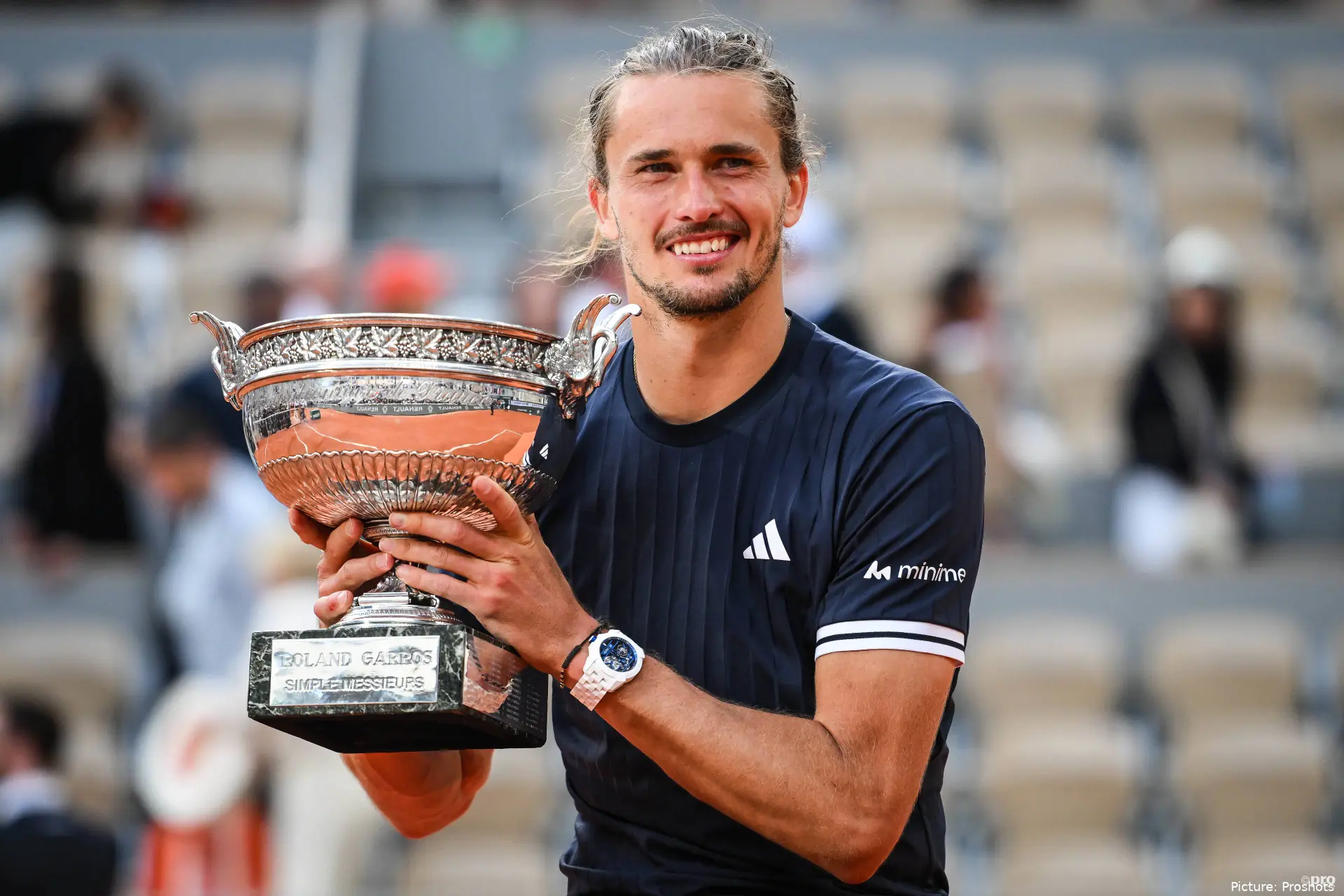
Alexander Zverev’s tennis day of destiny came earlier in
2026 when he finally won his first Grand Slam title. The doors opened for him in
Paris, seizing his opportunity and shaking off the pesky tag that had been swirling
around his head all these years. Would this long awaited title come sooner if
he was playing in a different generation?
More specifically in the era where the Big Three ruled
tennis. Roger Federer, Rafael Nadal and Novak Djokovic were in a league of
their own for the best part of a decade. While Djokovic soldiers on with Zverev,
Federer and Nadal have since said goodbye to the sport with a hefty number of
accolades.
Zverev has not even got close to these numbers, a sorry tale
with his reputation of being a brilliant tennis player always seeing him
slightly below someone else. These last few years, he has been the closest challenger
to Carlos Alcaraz and Jannik Sinner, along with Djokovic. He is the only player
aside from the top two to have won a major title since 2024 and is also
currently ranked higher than the Spaniard.
Away from the Grand Slam spectrum, he has won basically
everything else in the sport. It is just that major count that possibly should
have been boosted. Zverev has been in that precarious position of either
competing with the ‘Big Three’ or with Alcaraz and Sinner. The caveat to this
was that Federer and Nadal were coming to the end of their careers when he really
started to make his breakthrough.
The question remains what his overall ATP title tally would
be if he was to compete against the Big Three in their pomp, and how his
overall tennis trajectory would be affected compared to now.
Zverev's career at a glance
| Achievement | Record |
| Career high | No. 2 |
| Grand Slam titles | 1 |
| Grand Slam finals | 4 |
| Wimbledon | Final, 2026 |
| Australian Open | Final, 2025 |
| French Open | Champion, 2026 |
| US Open | Final, 2020 |
| ATP titles | 25 |
| Career prize money | $68,392,312 |
| Weeks at No. 1 | 0 |
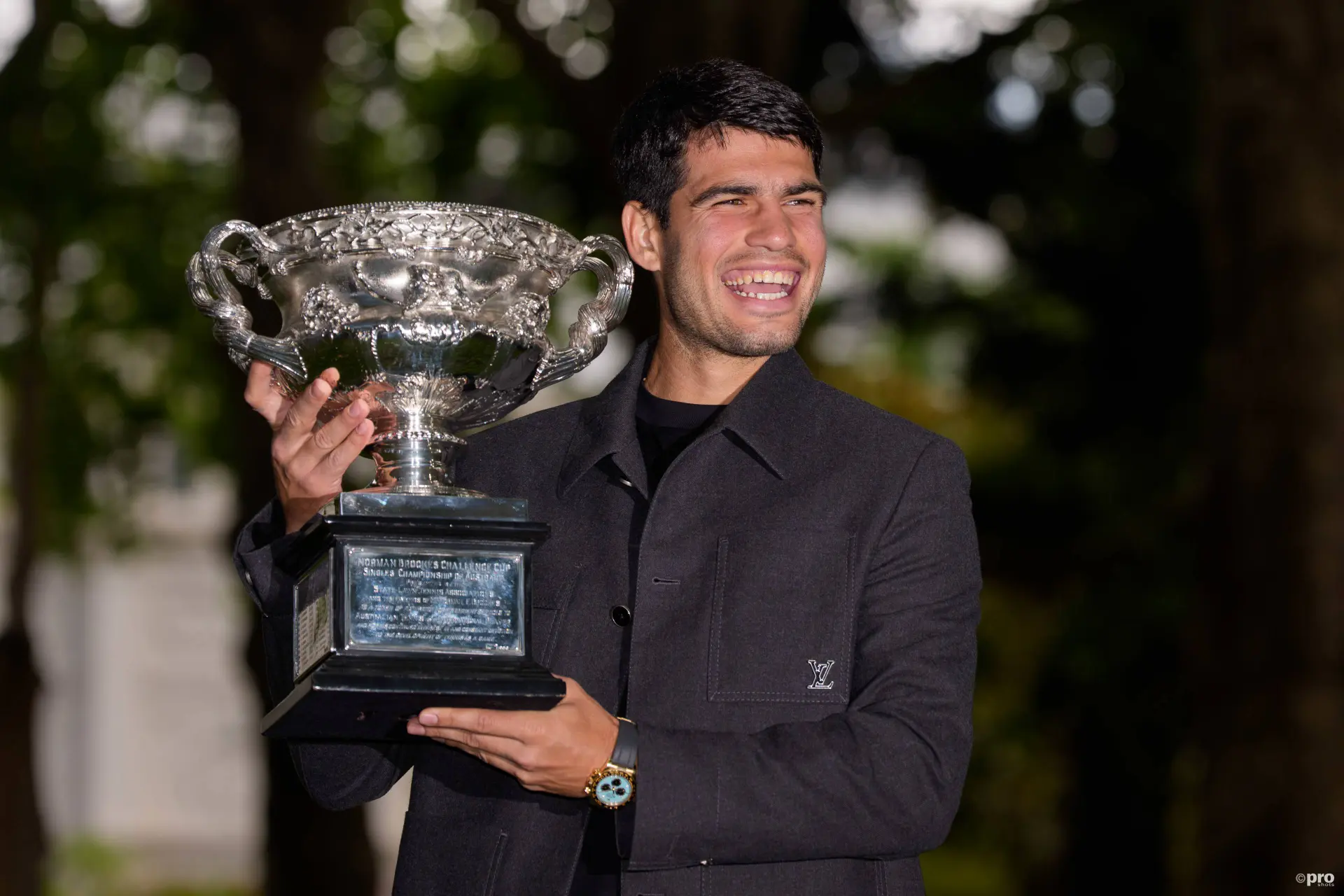
Relishing that potential, but not reaping the rewards
At 17-years-old, Zverev entered his first ever ATP
tournament at the International German Open. A seldom known youngster would
leave having reached the semi-finals and making a firm statement of intent to
the rest of the ATP Tour. He cracked the top 100 a year later in 2015 while
2016 brought him his first ATP title while his first real tests with Federer
and Nadal. He beat the Swiss star and squandered a simple match point against
Nadal. Promising signs for a bright future.
He would continue to rise at a rapid rate, winning the Rome
Open and Canadian Open in 2017 as he finished the year as World No.4. A title
in Madrid the next year was not backed up with great Grand Slam showings. He
reached a first quarter-final at Roland Garros, but aside from that nothing out
of the ordinary. That was until the end of the year where he defeated Novak
Djokovic in straight sets to win the ATP Finals.
He repeated that result in Paris 2019 before the heartbreak at
Flushing Meadows in 2020. By now Zverev was a fully fledged member of the ATP
Tour with some years of experience behind him. He was no longer that new kid on
the block, more of an actual threat to the main hierarchy. He bettered the
Australian Open semi-final by reaching the US Open final and led by two sets.
His opponent, Dominic Thiem, dragged himself back level before Zverev failed to
serve it out. The Austrian eventually got over the line for his one and only
Grand Slam success, leaving Zverev to ponder what could have been.

Alexander Zverev was a highly regarded young talent
At this stage it seemed that his maiden major title was just
around the corner. In truth, it would be some years before he got that honour.
He continued to plug away as he two Masters 1000 titles, an Olympic gold medal
and a second ATP Finals crown in 2021. While that elusive major title still remained
to be earned, he was proving to be a consistent challenger at the top of the
sport.
2022 brought its brutal challenges and was a time of transition.
Against Nadal in the Roland Garros semi-final, Zverev suffered a nasty and
horrific achilles injury, screaming out in pain as he saw the rest of his
season fade away. He was forced to rebuild and recover. It was the only year
from 2017 that he did not finish inside the top seven in the world.
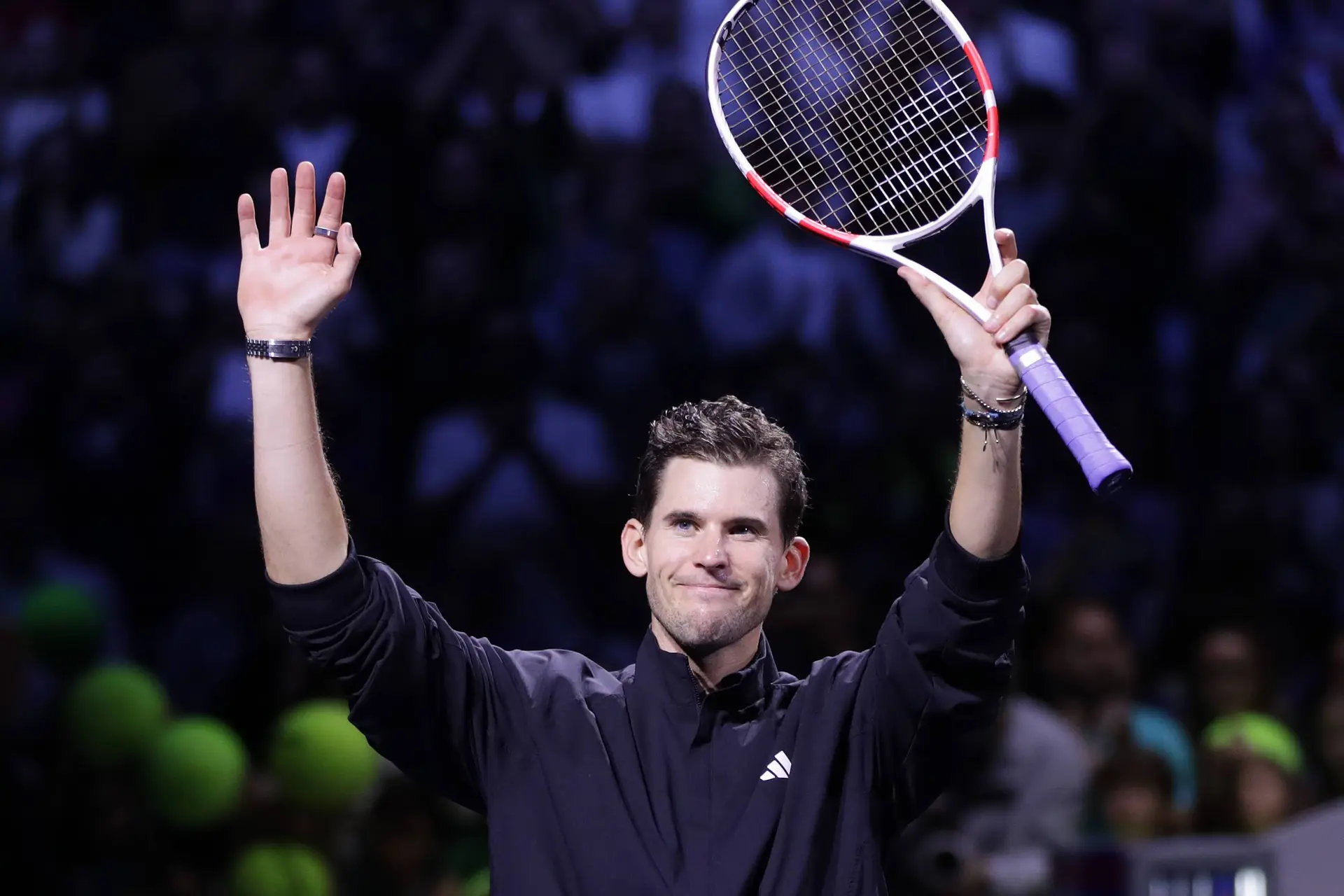
Big Three take a back seat as new challengers emerge
When he came back, a 19-year-old Alcaraz had already done
something he had not: win a major title. Quietly as well Sinner was becoming a
lethal tennis player with both of them set to take the ATP Tour by storm. Zverev
had competed viciously with the Big Three and gained a lot of experience and
learnt many valuable lessons.
The next big final he reached was the 2024 French Open one,
where he blew a 2-1 lead against Alcaraz as he won just three games in the
final two sets. His most recent Masters 1000 crown also came that year in the
Paris Masters. 2025 started well as he reached the Australian Open final. This
time it was Sinner who banished Zverev’s dreams and ambitions. In truth, 2025
was a slow season which did not pick up until the end. That went into 2026 were
Alcaraz and Sinner proved to be the thorn in his side.
It was obvious that he could not compete against them, but the
latest Roland Garros venture took a turn for the better. With Alcaraz injured and
Sinner collapsing in the Paris sun, Zverev finally took his chance. Flavio Cobolli
was a worthy competitor in the final, but seemingly inevitably Zverev had too
much for the Italian and finally won the tennis title that had been hiding from
him all this time. He went and backed it up with a fifth Grand Slam final, a
first at Wimbledon. He took the first set, but it would be a familiar result as
Sinner continues his dominance against him.
The US Open poses another huge chance. Sinner out injured
and Alcaraz playing in his first tournament since April, many will regard Zverev
as the favourite to lift the title.

Alexander Zverev finally won a first Grand Slam title at Roland Garros in 2026
Zverev's Roland Garros 2026 title results
| Round | Opponent | Result | Score |
| 1R | Benjamin Bonzi | W | 6–3, 6–4, 6–2 |
| 2R | Tomáš Macháč | W | 6–4, 6–2, 6–2 |
| 3R | Quentin Halys | W | 6–4, 6–3, 5–7, 6–2 |
| 4R | Jesper de Jong | W | 7–6(3), 6–4, 6–1 |
| QF | Rafael Jódar | W | 7–6(3), 6–1, 6–3 |
| SF | Jakub Menšík | W | 7–5, 6–2, 3–6, 6–3 |
| F | Flavio Cobolli (10) | W | 6–1, 4–6, 6–4, 6–7(5), 6–1 |
How would Zverev's tennis cope against the Big Three
While there are a lot of strong points to the Zverev game, one of the very eye-catching things is how his tall frame does not limit him or weaken other areas of his game, making him a formidable force on the court.
Being 6 ft 6 in, Zverev is a giant on the court. This alone helps him massively with his weapon of a serve. One of his strongest tools in his arsenal. Not just able to muster up a lot of power, but the ability for it to be so consistently reliable and on point prevents players from having too much joy against it, being able to bail him out of precarious situations.
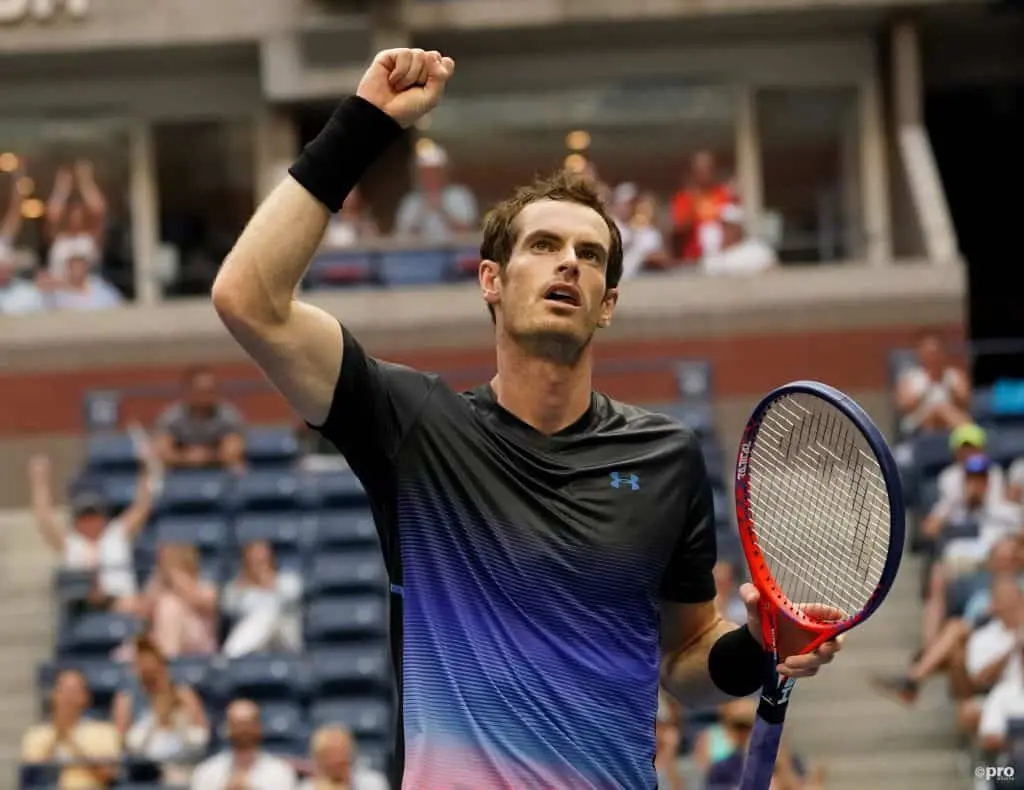
His height allows him to defend effectively from the return, with a notoriously wicked backhand also up his sleeve. This combination with the serve alone is enough to put off a lot of the competition. His backhand is up there with the absolute best on the ATP Tour. It does not matter how or where he is hitting it, the backhand is his trademark shot. His forehand can also prove to be effective, but does not have the natural nature of the backhand.
So that is what you would expect from someone with his frame: a big serve and a lot of power. When you add in his ability to get around the court very well with his movement highly regarded, then that is a brilliant combination.
| Attribute | Rating | Why |
| Serve | ★★★★★ | One of the biggest and most reliable serves among the elite; generates cheap points and protects his service games |
| Backhand | ★★★★★ | Probably his signature shot — extremely clean, powerful and consistent, especially down the line |
| Forehand | ★★★★☆ | Heavy and powerful, capable of dominating rallies, though less naturally reliable than his backhand |
| Return | ★★★★☆ | Uses his reach and anticipation extremely well; can neutralise big serves |
| Movement | ★★★★☆ | Remarkably good for a 6'6" player; covers the court better than his size suggests |
| Defence | ★★★★☆ | Excellent at turning defence into neutral or attacking positions |
| Consistency | ★★★★★ | One of the biggest strengths of his game; difficult to hit through over five sets |
| Power | ★★★★★ | Can hit through opponents from both wings |
| Tactical game | ★★★★☆ | Good at constructing points and changing direction, particularly from the backhand |
| Mentality | ★★★★☆ | Has become considerably more resilient, although historically this was a weakness |
| Net game | ★★★☆☆ | Improved significantly but still not as natural a strength as his baseline game |
Overall Zverev almost has the full package, which in truth is not enough most of the time when taking on the likes of Federer, Nadal and Djokovic. In every match against them, Zverev can pose the same strengths as listed above: the serve and backhand being key.
When facing Djokovic, the Serbian is able to absorb this power coming back at him with an elite return game that will at times put the Zverev serve under cosh. This means that the Zverev serve needs to be extra reliable and consistent. It is a similar pressure that Sinner puts on him in the current day, and the results speal for themselves.

Alexander Zverev has had to face Novak Djokovic, Rafael Nadal and Roger Federer countless times. How would he have coped when the Big Three were in their prime?
Nadal is probably best equipped to deal with that pesky backhand, especially on clay. His left-handed forehand matches up with the Zverev backhand when going cross court. The notorious weapon that Nadal has mastered, the 14-time Roland Garros champion can create so much topspin and power that even Zverev would struggle to recover it. This is emphasised on clay as Nadal would then go in for the kill. However, if Zverev was able to battle back against this threat and keep up in the ridiculously physical contest against the Spanish maestro, then he may have a chance.
Federer poses a different challenge in the sense that he is not so fond of a battle from the baseline, something that suits Zverev. He would get the German motoring around the court with variety with the intention of attacking and finding that killer blow. Zverev can combat this by putting Federer on the backfoot himself with his tremendous power. This is one of the rivalries that could favour one of the other depending on the court. Slower hardcourts would offer Zverev more of a shot, but Federer would be the one on top in a faster setting, most commonly on grass.
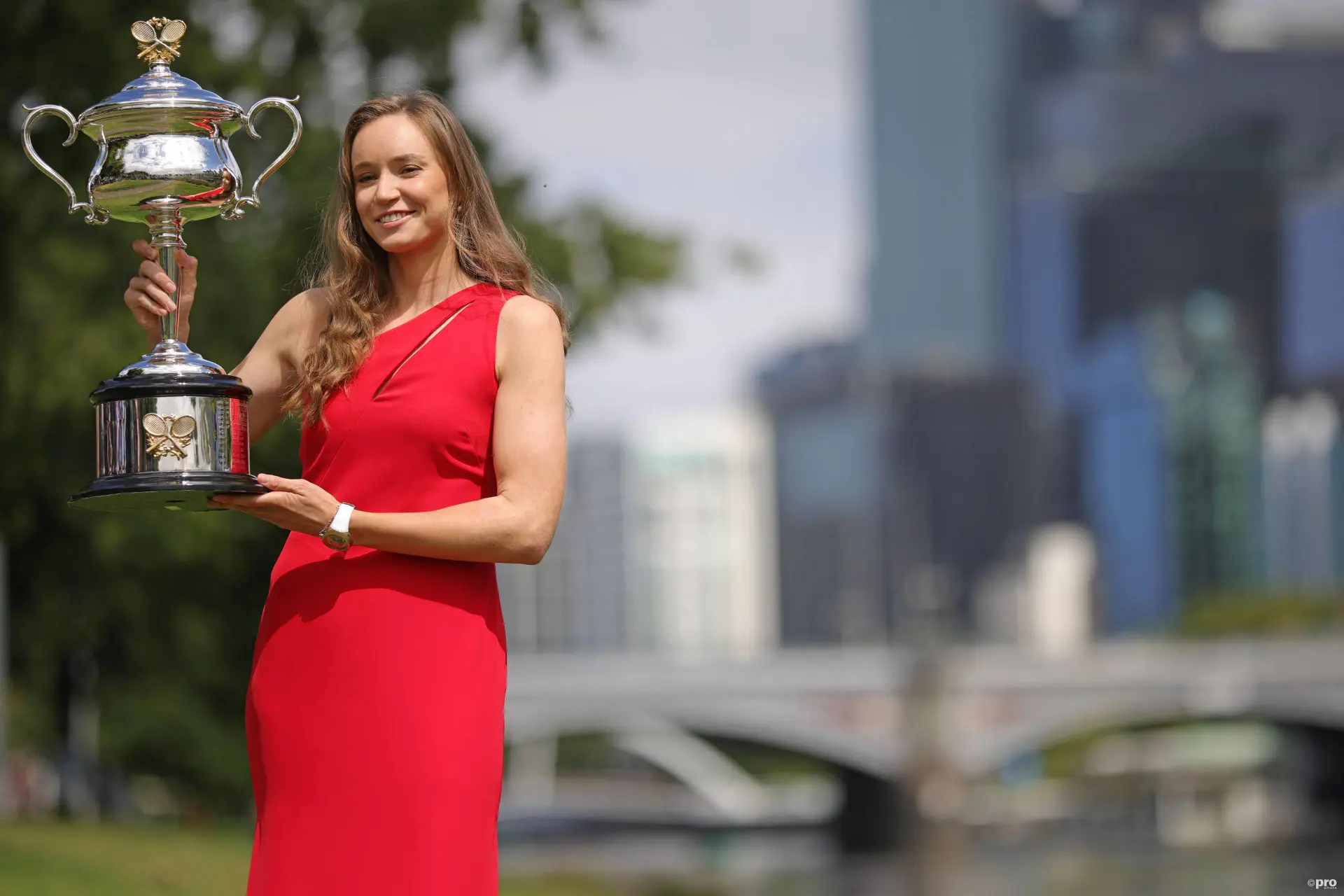
Zverev v the Big Three
| Opponent | How Zverev's game matches up | Biggest Zverev advantages | Biggest problem |
| Novak Djokovic | ⭐⭐⭐⭐½ | Serve, backhand, height, power | Djokovic's return and ability to absorb pace |
| Rafael Nadal | ⭐⭐⭐⭐☆ | Serve, backhand, flat hitting | Nadal's forehand, movement and ability to expose the Zverev forehand |
| Roger Federer | ⭐⭐⭐⭐☆ | Serve, backhand, physicality | Federer taking the ball early and exploiting Zverev's movement forward |
How he would have coped alongside the ‘Big Three’
To analyse this, it is not as easy as comparing their game
styles of even looking back on prior meetings. Zverev began his prominent rise
at the time where the Big Three were coming to the end of their dominant rule.
While Djokovic still posed a deadly threat, Federer and Nadal were not as much
of an issue as say a decade beforehand.
His route on clay would be firmly blocked by Nadal.
Previously said as his favourite surface, success would be limited but at the
same time he would be one of the main challengers to his crown. Zverev would
need to be very opportunistic with Nadal around. That proved to be the case
earlier this year when all his rivals were seldom seen from Paris, and he made
full use of this. Is he was in his pomp in 2009 when Nadal crashed out in the
fourth round, something similar may have occurred.
While not notoriously at his best on grass, Federer would
rule that avenue out. The style of play on the faster courts between the two
heavily favoured the Swiss and that would leave Zverev struggling and on the
back foot. On the slower hardcourts, that is where he could have capitalised,
but then he still would have to worry about the other two.
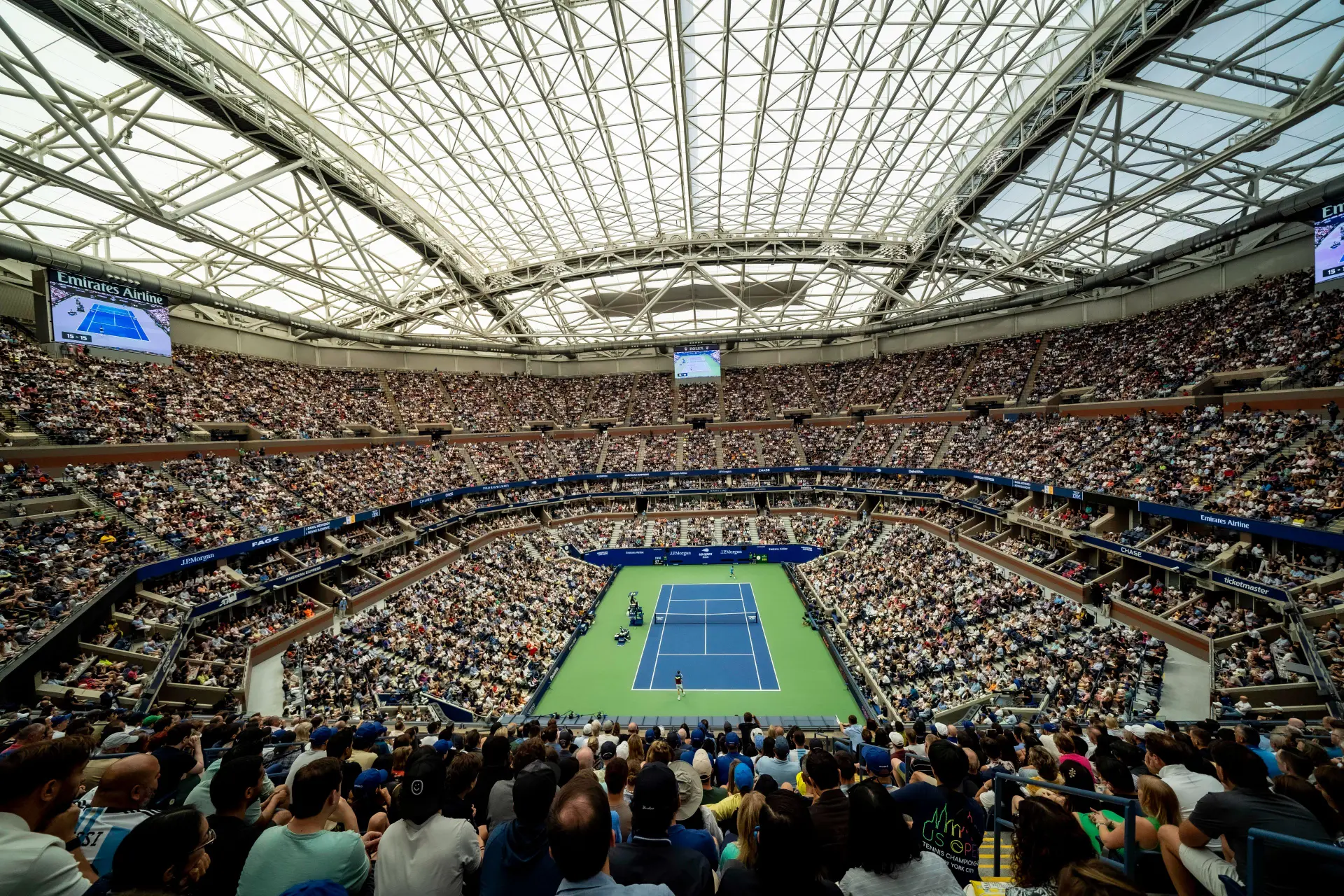
The Big Three are class above the rest, and that includes
Zverev. That does not mean the door is totally shut. The likes of Andy Murray,
Stan Wawrinka, Dominic Thiem, Marin Cilic and Juan Martin del Potro all won
Grand Slam titles in this period of time. If they could, what reasons would be
against Zverev doing so while being in that best of the rest category.
It would make a difference when he was playing against the
Big Three. As their era went on, the more chances that arose. The only possible
hitch is would Zverev capitalise. Aside from Roland Garros, his record has not
been great when based on this. Numerous major finals lost, two of them from
winning positions, and now coming to three years playing second fiddle to
Alcaraz and Sinner. If he cannot keep up with this generation of talent, what
hope would he have alongside Federer, Djokovic and Nadal in their peak.

Alexander Zverev's career would have shaped a lot differently if he participated alongside the Big Three
What would his career look like?
Grand Slams - 0/1 - likely a multiple Grand Slam
finalist but the consistency of his rivals would be his downfall
Career ranking- World No.1 spot out of his grasp,
anywhere between 2-5 in the world
Biggest variable - The Big Three's dominance and
more competition compared to current day
In conclusion, Zverev's style of play can combat and defeat
the Big Three on any given day. However, the Grand Slam, ATP Finals and Masters
1000 titles would be increasingly hard to win. Once beating one of them,
another would likely be waiting for him with a completely contradicting style
to deal with. Grand Slam success was definitely possible, but overall Zverev's
best chance would have come at the end of their reign. Coincidentally, he
played in that era and was unable to unlock his full potential, a blueprint for
what his career could have looked like if he was born a few years earlier.
Lucas MichaelTennis Journalist
Lucas Michael is a tennis journalist based in Cambridge, UK, specializing in comprehensive coverage of the ATP and WTA tours. For the past 1.5 years, he has been a core contributor to TennisUpToDate, where he has authored more than 3,000 data-driven match reports, deep-dive analysis pieces, and engaging liveblogs.
Lucas pairs real-time statistical analysis with on-the-ground reporting, frequently traveling to tournaments to cover the action firsthand from the press box and player press conferences. This blend of advanced metrics and direct access allows him to provide sharp context regarding player form, tactical trends, and breaking tour developments.
He holds a BA (Hons) in Sports Journalism. Grounded in core journalistic ethics, Lucas places a strict emphasis on meticulous sourcing, editorial accuracy, and a commitment to updating live content swiftly as verified information emerges.
claps 0visitors 0
Just In

Popular News
Latest Comments
- great articlestennisseserver07-10-2026
- Medvedev was leading Djokovic 7-5, 3-5 when an attempted return..' NO you ignorants, Djokovic was leading .weiss05-10-2026
- No more bullshit "Wildcards" to these two. Qualify like everyone else -- there will be cameras there, too. Time to scream... WTF ????!!!!
 mandoist29-09-2026
 - Let's not BS the general public -- Sabalenka started showing cracks in her game last season. Her losses and near-losses started at about the same time she began being distracted by Fame (constant Selfies, making TV commercials, magazine shoots, endless Social Media nonsense, etc., etc.) One would think even Saba could recognize the parallels with others who failed before her -- Raducanu, Giorgi, Bouchard to name a few.mandoist25-09-2026
- Gross!! Hey Raducanu, Giorgi, and Bouchard -- reserve a seat at your Social Media Selfie table for Saba + Naomi. They're heading in your direction soon enough.mandoist24-09-2026
- And then these same players will complain about how lengthy their season’s were and need more time-off. I’m all for more tennis but the amount of tennis we get now is actually kind of crazy! We all need a break, especially the players.DaveyWavey23-09-2026
- You should do a comparison article for "different kinds of justice" the courts decide for tennis players. I can think of at least three players who received very small bans of a few months, however Tara Moore has been fighting for her literal survival the past few years. It seems odd considering she is not a "name" player, unlike the other cases.DaveyWavey22-09-2026
- PRIZE MONEY & POINTS Winner - $185,500 Finalist - $114,500 Semi-Finalist - $66,003 Quarter-Finalist - $35,000 Round of 16 - $18,045 Round of 32 - $13,005 Winner - 500 Finalist - 325 Semi-Finalist - 195 Quarter-Finalist - 108 Round of 16 - 60 Round of 32 - 1DaveyWavey20-09-2026
- Pegula withdrew from this Singapore event
 tennishappens19-09-2026
 - Serena Williams chose her tournaments. It's not such a bad idea.MuswellHillbilly17-09-2026

Loading