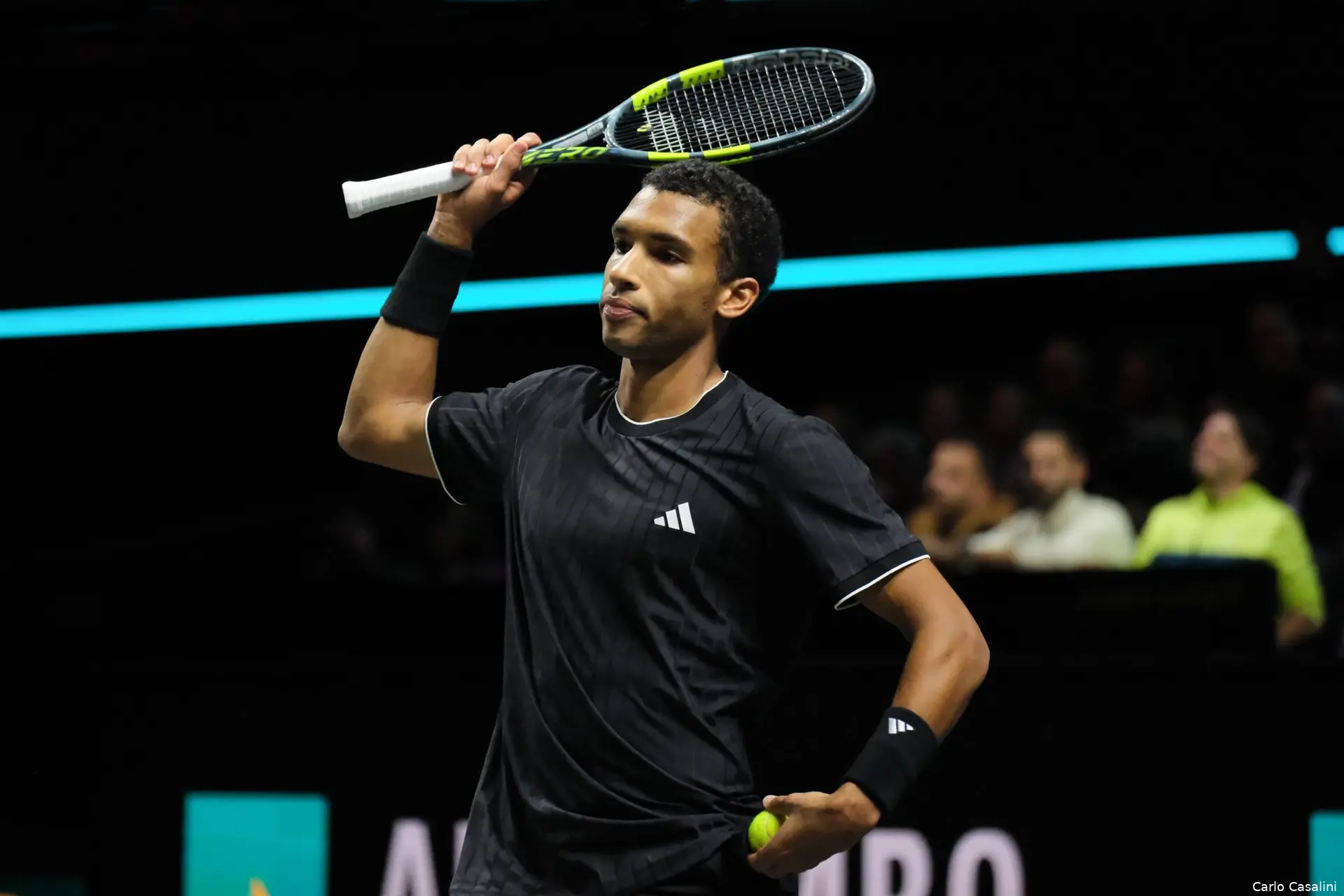
Félix Auger-Aliassime arrives at the Miami Open with renewed consistency and a clearer sense of direction in his career, even as he acknowledges that the fundamental pressures of the sport remain unchanged. The Canadian, currently seeded seventh, enters the second leg of the Sunshine Double following a sequence of strong results that have stabilised his 2026 campaign after an early setback in Australia.
The 25-year-old has compiled a 13–3 record since retiring in the first round of the Australian Open due to injury, responding with a title at the Open Occitanie in Montpellier, a runner-up finish in Rotterdam, and a semi-final showing in Dubai. Despite that momentum, his run in Indian Wells ended in the third round with a loss to Arthur Fils, leaving Miami as an opportunity to reset on a familiar surface.
Auger-Aliassime will begin his Miami campaign against either Christopher O’Connell or Marton Fucsovics, aiming to replicate or surpass his best result at the tournament. His standout performance at the event remains the 2019 edition, when, as an 18-year-old qualifier, he reached the semi-finals after defeating players including Casper Ruud, Hubert Hurkacz and Borna Coric before falling to John Isner in two tie-break sets.
Reflecting on that breakthrough run, Auger-Aliassime acknowledged both the significance of the moment and the changes that have taken place since, while maintaining a clear appreciation for returning to a venue that marked an early milestone in his career.
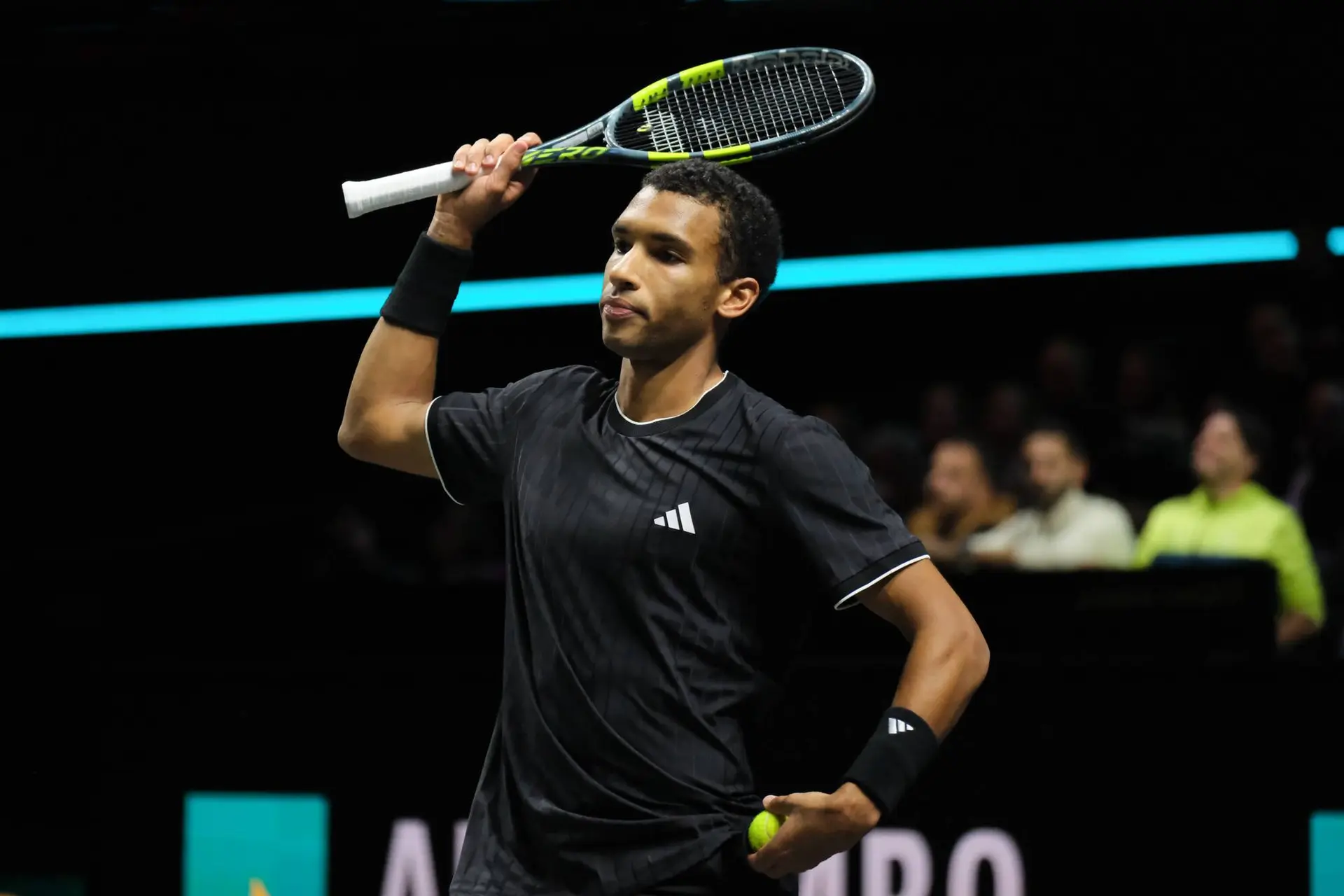
Greater control, same pressure: maturity on Tour
Auger-Aliassime emphasised that his development in recent years has centred on increased ownership of his career decisions, from scheduling to team structure. He described himself as feeling “more free now” and “more in control,” a shift that reflects a transition from emerging prospect to established top-10 player navigating his own long-term trajectory.
At the same time, he was careful to underline that competitive pressure remains constant regardless of experience. The expectation to perform, improve and handle setbacks has not diminished, even as his ability to respond to challenges has evolved with time and experience on the ATP Tour.
“Yeah, definitely more free now. Also, over the years, you take more ownership of your career. You make decisions yourself—choosing your schedule, deciding who to have around you. So I feel more in control of my career and what I’m doing,” the 25-year-old Canadian said to Tennis TV. “But the uncertainty of results is still the same. The pressure is still the same as when I was young. You’re always trying to do well, always trying to improve, and you’re always faced with challenges.”
This balance between greater autonomy and unchanged external demands has become a defining feature of his current phase, where consistency rather than breakthrough results appears to be the primary objective.

Scheduling decisions and indoor momentum shaping 2026
His recent scheduling adjustments illustrate that approach. After his early exit in Melbourne, Auger-Aliassime opted to add Montpellier to his calendar via a wild card, prioritising match play over rest due to the limited physical toll of his shortened Grand Slam campaign. The decision proved effective, delivering a title and setting the tone for a productive indoor stretch.
He explained that the move was driven by the need to “move on from that disappointment” and quickly return to competition, highlighting the importance of rhythm in maintaining performance levels. The subsequent results in Rotterdam and Dubai reinforced that strategy, with consistent deep runs across multiple events.
“I took a wild card in Montpellier, so I added a tournament to my schedule. I felt that I came back home, had time to train, and I wanted to compete again,” Auger-Aliassime commented. “In the end, it was about moving on from that disappointment in Australia, getting back on court, getting back to competition, and playing on a surface I like. I ended up winning the title there.”
Beyond scheduling, Auger-Aliassime also pointed to the suitability of Miami’s conditions for his game, noting that the balance of heat and relatively stable weather aligns with his aggressive baseline style and serve-led patterns, factors that contributed to his success at the event earlier in his career.

Hard-court consistency and Miami expectations
Looking ahead, Auger-Aliassime expressed confidence that his level on hard courts has not only returned but improved, pointing to a sustained run of results across the latter stages of the 2025 season and into 2026. His performances from Cincinnati through the US Open, followed by indoor events in Shanghai, Paris and the ATP Finals, form the foundation of that belief.
He highlighted consistency as the key metric, noting that while individual results fluctuate, maintaining a stable level across tournaments has become a priority. That approach has carried into the current season, where, aside from the interruption in Australia, his results have remained largely steady across surfaces, particularly on hard courts. “Yeah, I think it’s fully back—and even improved. You can see it in the results. I think the consistency I was able to bring from Cincinnati to New York, then Shanghai, Paris, and the Tour Finals shows that.”
As he returns to Miami, the challenge for Auger-Aliassime will be translating that broader consistency into a deep run at a tournament where he first established himself on the global stage, now approaching it from a position of experience rather than emergence.
“Aside from the setback in Australia, I feel like I’ve been pretty stable, especially on hard courts and indoors,” the world No. 8 added. “I try to keep my life as consistent as possible so that it shows in my results.”

Cristhián AvilaTennis Journalist
Cristhián Ávila is a tennis journalist based in Santiago, Chile, and has been part of the TennisUpToDate team since early 2023. He covers the ATP and WTA Tours as well as all four Grand Slams, producing breaking news, match reports, analysis, and regular liveblogs from major tournaments.
His reporting combines statistical analysis with clear explanation, helping readers understand tactical developments, player form, and broader storylines across the tour. Working fluently in both Spanish and English, Cristhián collaborates with an international editorial team and contributes to comprehensive global coverage. As part of his work, he has conducted interviews and media interactions with leading figures in the sport, including Caroline Wozniacki and John McEnroe.
In his journalism, Cristhián places strong emphasis on careful sourcing, editorial accuracy, and updating articles promptly when new, verified information becomes available. His coverage is grounded in research, context, and direct engagement with professional tennis.
claps 0visitors 0
Just In

Popular News
Latest Comments
- A healthy Qinwen may be hard to stop next season. She was already scaring her opponents before her medical leave(s). Unfortunately, Zheng insisted on singing again. On the positive side -- Mirra did not sing!! ;~}
 mandoist11-10-2026
 - Where is it written that athletes, entertainers... People in general... are mandated to keep looking at -- or even using [anti]Social Media? Public & private figures consistently complain and reveal their concerns about negativity and violence thrown at them -- yet they insist on participating. Avoid it, don't use it, don't read it. It's okay to occasionally look up at the World instead beating your eyes & thumbs to death on The Inventions out there.mandoist11-10-2026
- great articlestennisseserver07-10-2026
- Medvedev was leading Djokovic 7-5, 3-5 when an attempted return..' NO you ignorants, Djokovic was leading .weiss05-10-2026
- No more bullshit "Wildcards" to these two. Qualify like everyone else -- there will be cameras there, too. Time to scream... WTF ????!!!!mandoist29-09-2026
- Let's not BS the general public -- Sabalenka started showing cracks in her game last season. Her losses and near-losses started at about the same time she began being distracted by Fame (constant Selfies, making TV commercials, magazine shoots, endless Social Media nonsense, etc., etc.) One would think even Saba could recognize the parallels with others who failed before her -- Raducanu, Giorgi, Bouchard to name a few.mandoist25-09-2026
- Gross!! Hey Raducanu, Giorgi, and Bouchard -- reserve a seat at your Social Media Selfie table for Saba + Naomi. They're heading in your direction soon enough.mandoist24-09-2026
- And then these same players will complain about how lengthy their season’s were and need more time-off. I’m all for more tennis but the amount of tennis we get now is actually kind of crazy! We all need a break, especially the players.DaveyWavey23-09-2026
- You should do a comparison article for "different kinds of justice" the courts decide for tennis players. I can think of at least three players who received very small bans of a few months, however Tara Moore has been fighting for her literal survival the past few years. It seems odd considering she is not a "name" player, unlike the other cases.DaveyWavey22-09-2026
- PRIZE MONEY & POINTS Winner - $185,500 Finalist - $114,500 Semi-Finalist - $66,003 Quarter-Finalist - $35,000 Round of 16 - $18,045 Round of 32 - $13,005 Winner - 500 Finalist - 325 Semi-Finalist - 195 Quarter-Finalist - 108 Round of 16 - 60 Round of 32 - 1DaveyWavey20-09-2026

Loading