Monte-Carlo Masters Round-Up Day Two | Rublev and Vacherot move through, Tsitsipas and Shapovalov knocked out
ATP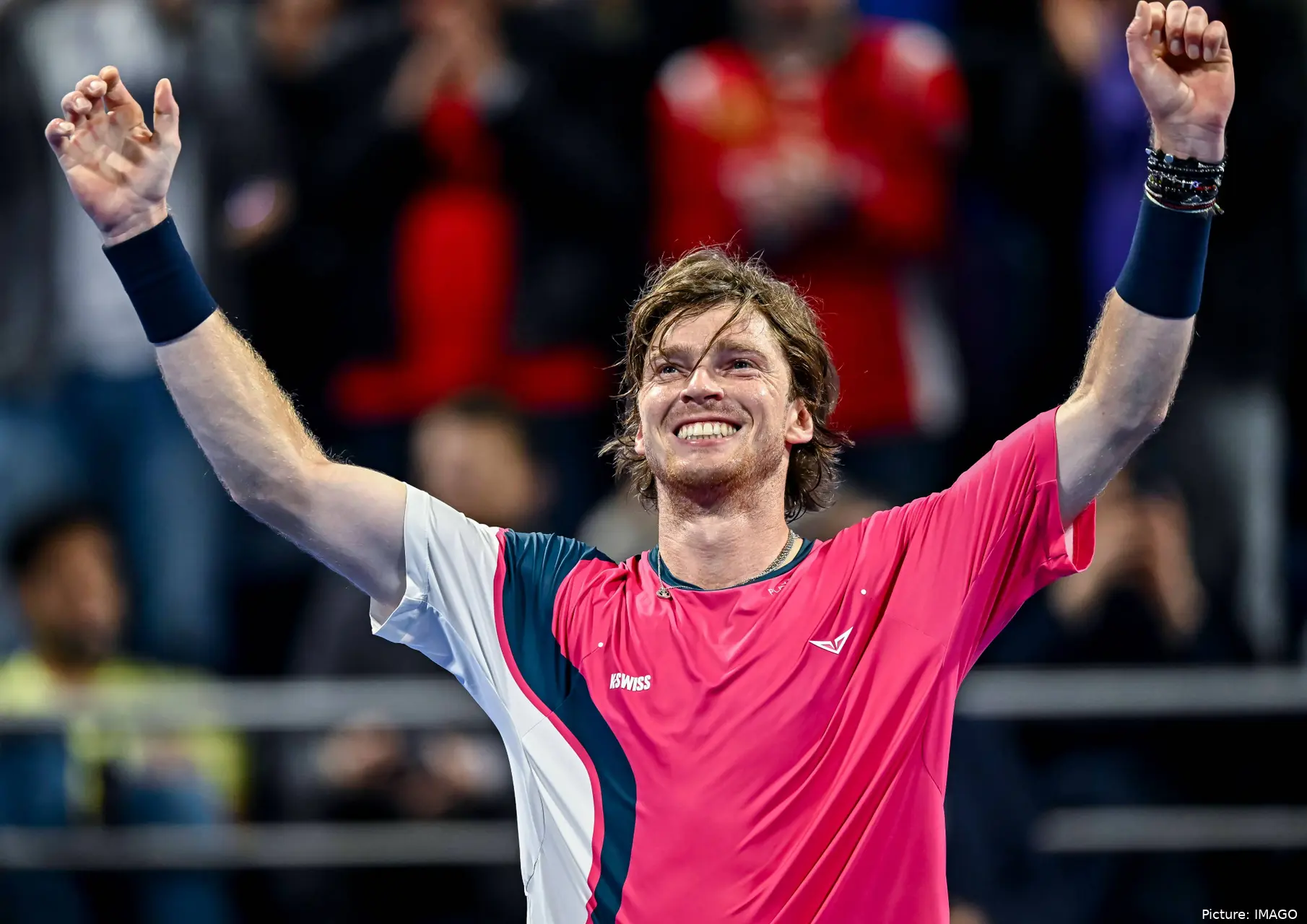
The Monte-Carlo Masters first round delivered early disruption on clay, with Francisco Cerundolo removing Stefanos Tsitsipas and Andrey Rublev navigating a fluctuating opening match. Across the opening day, several three-set contests shaped the early draw, while younger players and qualifiers generated pressure on established names in Monte-Carlo’s slower conditions.
The results carry immediate ranking and draw implications, particularly for Tsitsipas, whose early exit continues an unstable stretch on clay. Meanwhile, Rublev stabilised after a mid-match dip, and players like Tomas Machac and Valentin Vacherot built momentum through adjustments across extended matches, positioning themselves for more demanding second-round encounters.
Cerundolo exposes Tsitsipas in baseline exchanges
Francisco Cerundolo def. Stefanos Tsitsipas 7-5, 6-4
Francisco Cerundolo advanced to the second round in Monte-Carlo after a straight-sets win over Stefanos Tsitsipas, closing the match in controlled fashion across two tight sets. The opening phase remained balanced, with both players holding serve comfortably before Cerundolo capitalised late to secure the first set 7-5.
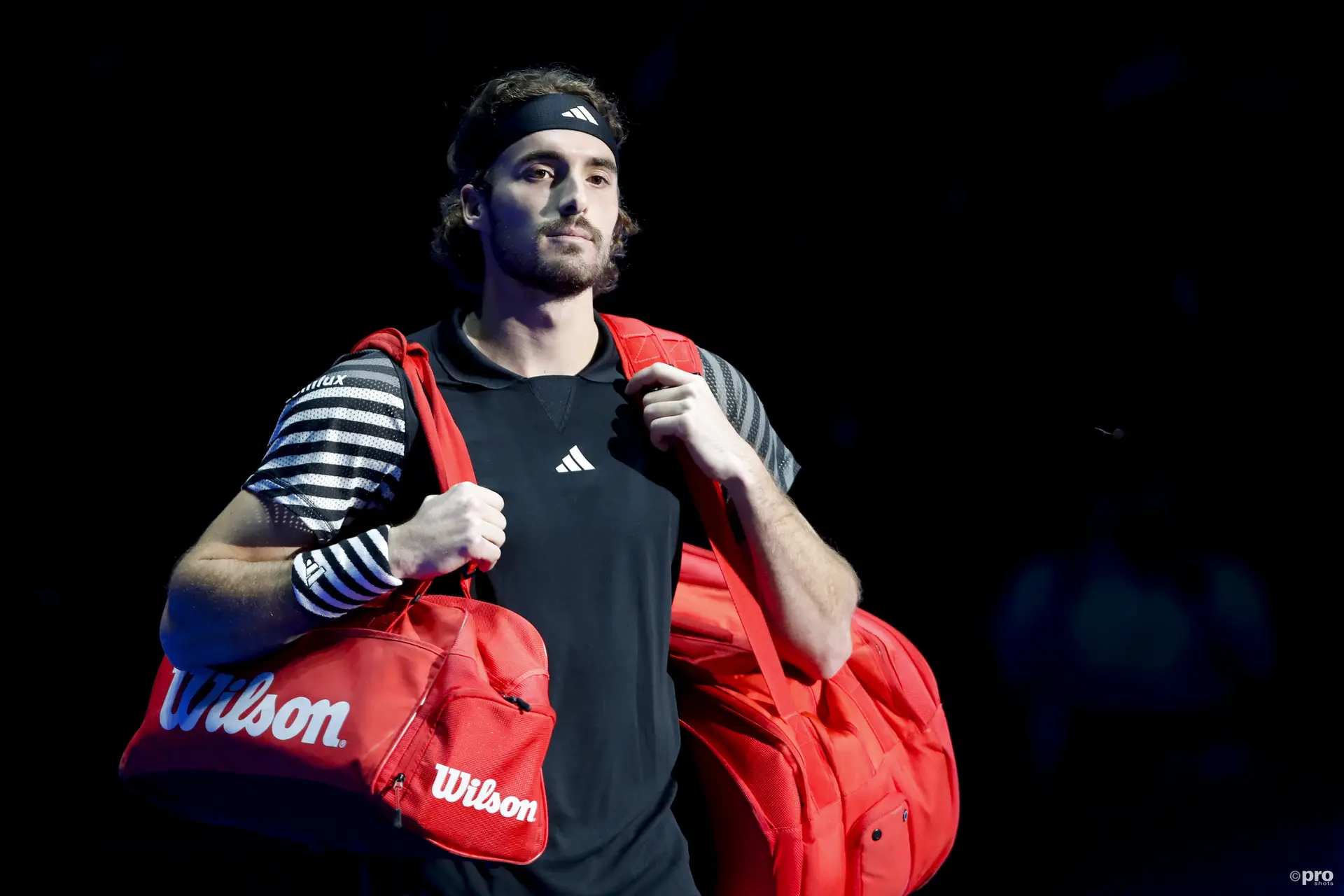
The shift came through sustained depth on return and increased consistency off the backhand wing, limiting Tsitsipas’ ability to dictate with his forehand. Cerundolo reduced unforced errors in longer exchanges, forcing Tsitsipas into lower-percentage patterns, particularly when defending on the backhand side under pressure.
Cerundolo converted key break opportunities late in each set, finishing with a higher break-point efficiency and more stable second-serve performance. Tsitsipas’ second-serve points dropped below 50%, exposing him in extended rallies. Cerundolo moves into the second round where he will play against Tomas Machac.
Rublev recovers structure after mid-match drop
Andrey Rublev def. Nuno Borges 6-4, 1-6, 6-1
Andrey Rublev progressed to the second round after a three-set win over Nuno Borges, navigating a match that shifted sharply in the second set. Rublev established early control with aggressive first-strike tennis to take the opener 6-4 before Borges disrupted the rhythm completely in the second set.
Borges altered the dynamic by extending rallies and targeting Rublev’s backhand under higher margins, drawing errors and breaking down his timing. Rublev’s first-serve percentage dropped significantly in the second set, leading to shorter service games and reduced control in baseline exchanges.
In the decider, Rublev re-established first-serve efficiency above 65% and improved depth on return, allowing him to break early and extend the lead. He converted multiple break points in the third set while limiting Borges to minimal second-serve success. Rublev advances with a more stable structure restored ahead of the next round.
Vacherot overturns deficit with extended run
Valentin Vacherot def. Juan Manuel Cerundolo 5-7, 6-2, 6-3
Valentin Vacherot progressed after recovering from a set down against Juan Manuel Cerundolo, reversing early momentum in Monte-Carlo. Cerundolo controlled the closing stages of the first set, winning 10 of the last 12 points to secure a 7-5 lead after a tight opening phase.
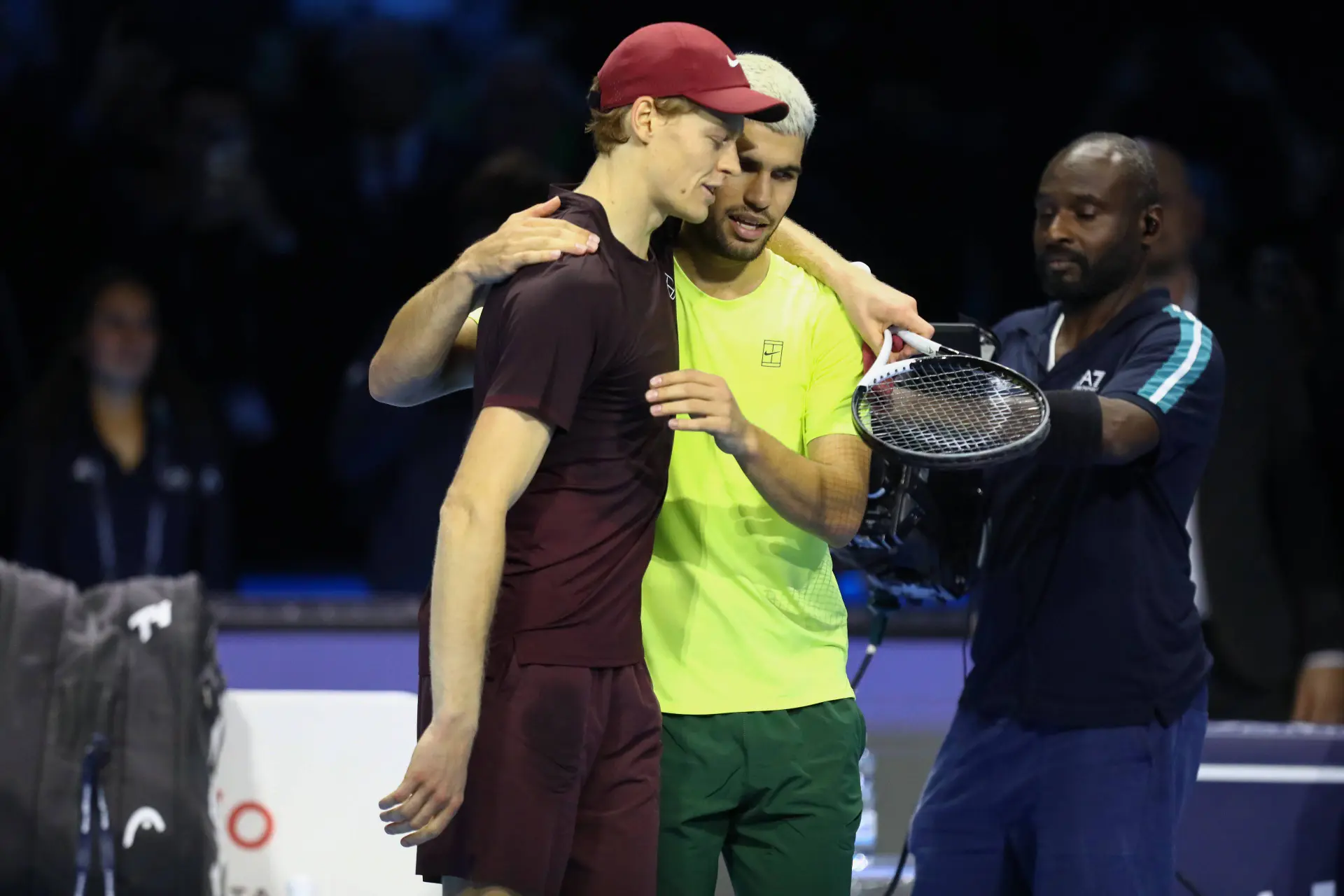
The match shifted sharply in the second set as Vacherot increased return depth and improved first-serve consistency, allowing him to string together six consecutive games. Cerundolo’s first-serve percentage dropped during this stretch, limiting his ability to shorten points on clay.
Vacherot produced an 11-game run across the second and third sets, building a decisive advantage. He converted multiple break points while maintaining a higher first-serve points won percentage in the final two sets. He advances to face Lorenzo Musetti, with the comeback reinforcing his baseline resilience on slower surfaces.
Machac regains control in deciding set
Tomas Machac def. Daniel Altmaier 6-4, 1-6, 6-3
Tomas Machac advanced in three sets against Daniel Altmaier, responding after a one-sided second set to close the match in Monte-Carlo. Machac secured the opening set through more efficient service games before losing control as Altmaier dominated the second set 6-1.
Altmaier extended rallies and targeted Machac’s second serve effectively, forcing shorter points on return and reducing Machac’s ability to build offensive positions. Machac’s first-serve percentage dipped during this phase, increasing exposure in baseline exchanges.
In the decider, Machac restored first-serve stability and improved break-point conversion, securing an early advantage. He limited Altmaier’s second-serve points won while maintaining a stronger return position. Machac moves into the second round with improved control heading into a potentially higher-ranked opponent.

Blockx secures upset over Shapovalov
Alexander Blockx def. Denis Shapovalov 6-4, 4-6, 6-3
Alexander Blockx delivered one of the key upsets of the opening round, defeating Denis Shapovalov in three sets to progress in Monte-Carlo. The Belgian established early control by taking the first set 6-4, maintaining a higher first-serve percentage and cleaner baseline execution.
Shapovalov responded in the second set by increasing aggression on return and shortening points, levelling the match at one set all. However, inconsistency off the ground remained a factor, particularly when rallies extended beyond five shots.
In the final set, Blockx improved break-point efficiency and reduced unforced errors, converting key chances while holding serve with higher first-serve points won. Shapovalov’s second-serve performance dropped under pressure, allowing Blockx to secure the decisive break. Blockx advances with a notable result against an established opponent and he will play

Samuel GillEditor-in-Chief
Samuel Gill is the Chief Content Officer (CCO) of TennisUpToDate.com, a role he has held since 2020. He is responsible for editorial governance across the platform, including setting content standards, overseeing accuracy and consistency, and guiding long-term editorial strategy. Since joining, he has contributed more than 10,000 articles and editorial pieces across the TennisUpToDate network, playing a central role in the daily operation and development of the site.
Based in Leicester, Samuel has a broad background in tennis media. In his current role, he works closely with editors and writers to ensure coverage meets clear journalistic standards, with particular attention to verification, consistency, and timely updates when new information becomes available.
claps 0visitors 0
Just In



Popular News


Latest Comments
- Does Sinner need that 4.5 mil? I doubt it. He can make that with three modelling gigs!😅🤣Rapunzel21-10-2026
- Did "People Magazine" purchase this website? This nonstop storyline is bullshit.
 mandoist21-10-2026
 - Listen... this is of no concern to anyone but these two. Deal with your own issues -- most of us have our own. Thanks, media, for these insignificant follow-ups which are meaningless.mandoist21-10-2026
- This is so very very sad, for all three of them. I truly thought they had an unbreakable bond, but life throws up so many differing challenges. Having your homeland suffering in such a terrible way, makes happiness lose out to guilt as well. Our thoughts are with them. X💔bjsexton20-10-2026
- I have lost all respect for Svitolina! Could she not have waited until he had played at the Paris Masters!!! She is selfish and don't give a damn about Gael. That is NOT how love is demonstrated Elina!!Rapunzel19-10-2026
- Perhaps convenient tennis tour sex is not a strong enough experience in which to base a marriage?mandoist19-10-2026
- Fight the Good Fight... Tennis (sports in general) need more Humans such as yourself.mandoist18-10-2026
- When is WTA going to mandate Genetic Testing (DNA) ???mandoist18-10-2026
- Hey, Dan... you just wake up from a coma? Regardless -- Thanks for the comedy this morning!mandoist18-10-2026
- Two Things: 1. Stop allowing these Spoiled Trust-Fund Elitists to behave badly. Your little hand-slaps do not deter them. 2. STOP the incessantly annoying "towel wiping" nonsense!!!!mandoist15-10-2026

Loading