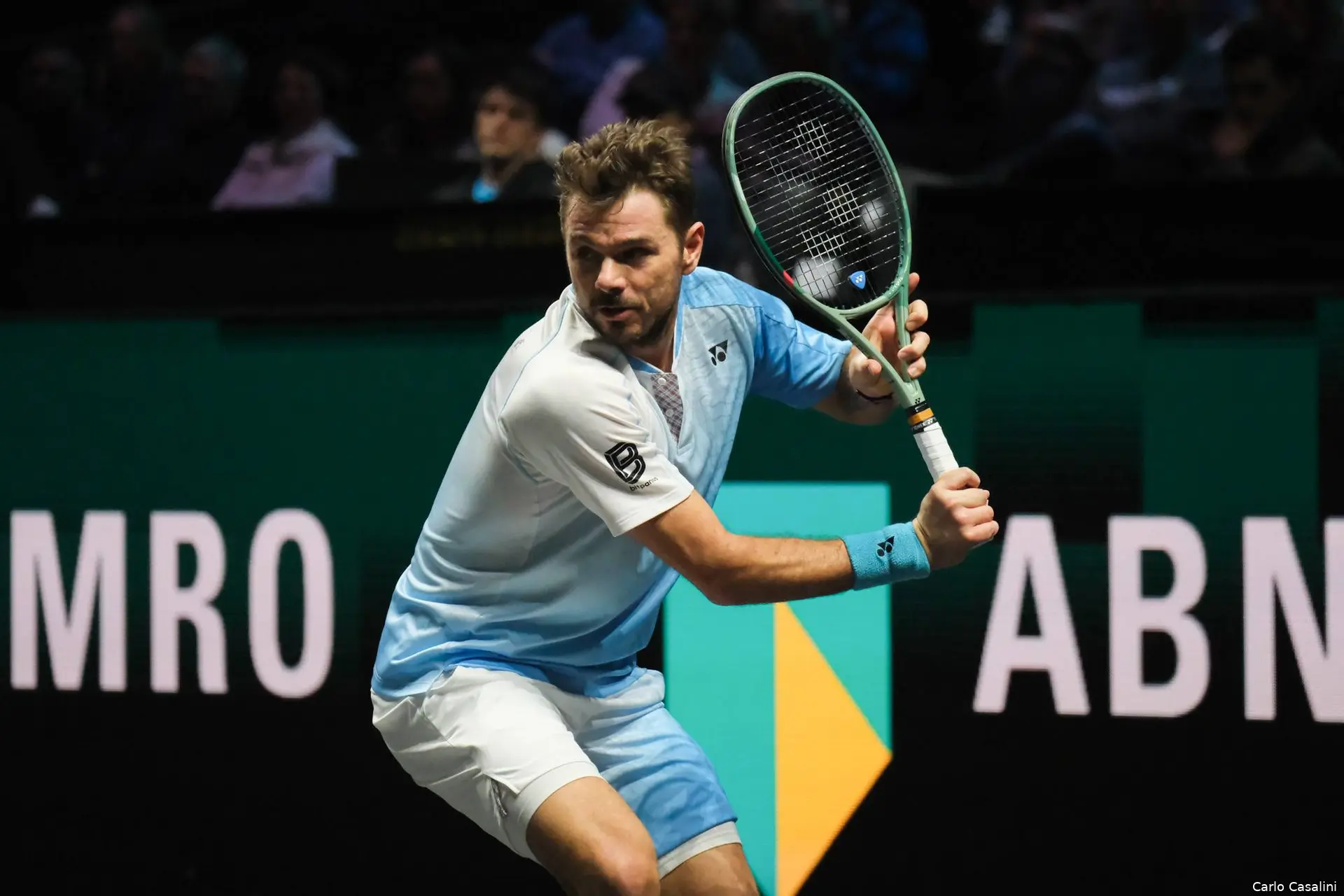
Stan Wawrinka closed his Monte Carlo chapter with a straight-sets defeat to Sebastián Báez, falling 7-5, 7-5 in the opening round of the ATP Masters 1000 event. At 41, the Swiss is competing in what he has confirmed will be his final season, marking the final phase of a career that includes three Grand Slam titles and a peak ranking of world No. 3.
The 2014 champion made his last appearance in the Principality, remaining competitive in a tight contest despite the early exit. Both sets were decided by narrow margins, reinforcing that Wawrinka continues to operate at a level capable of challenging established players, even as physical demands increase at this stage of his career.
Speaking afterwards, Wawrinka placed the moment in context, focusing less on the result and more on the opportunity to compete once more in Monte Carlo. He described it as “a difficult match” but stressed he was “happy to have had the chance to play here one last time,” underlining the atmosphere and crowd support as central elements of the experience.
Beyond the immediate result, the Swiss used the press conference to outline his plans for the remainder of the season, confirming an extensive farewell schedule. However, he stopped short of defining a final tournament, leaving open the possibility that his career ending will depend on how the coming months unfold.
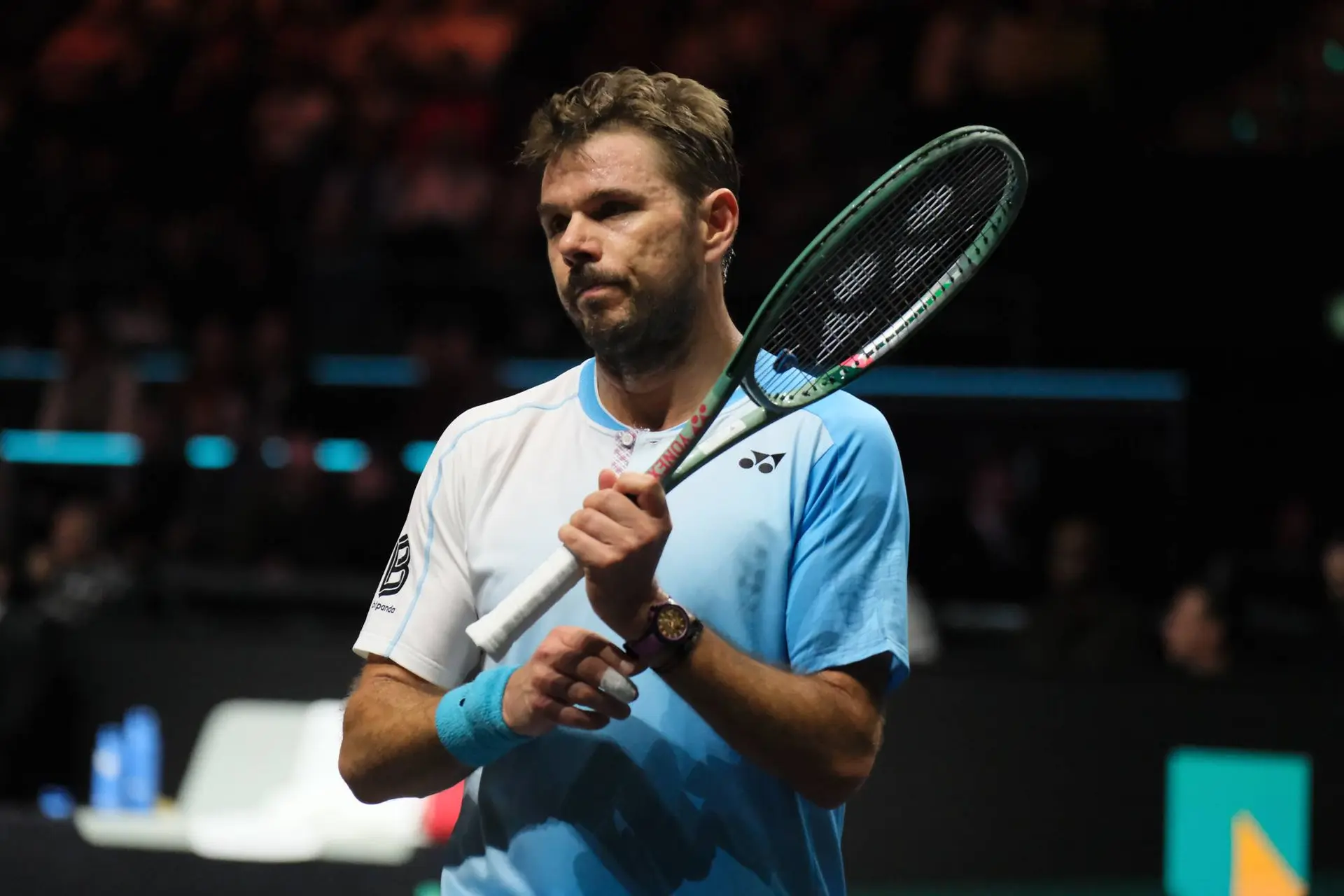
Full schedule confirmed, retirement still open
Wawrinka detailed a structured but flexible calendar across the remainder of the season, beginning with Barcelona and continuing through the European clay swing. His plan includes likely qualifying campaigns in Rome and Geneva, followed by a potential appearance at Roland Garros, before transitioning to grass with Wimbledon as a key target.
“Next week I play in Barcelona, and then probably the qualifying in Rome and Geneva. I’ll see if I have the opportunity to play Roland Garros," the former world No. 3 said. "I would like to play on grass, hopefully Wimbledon. Then Gstaad, Estoril. I hope to play the US Open. We’ll see if I play any tournament before, maybe Cincinnati qualifying or a Challenger. Then we’ll see. Basel, for sure. Lyon also.”
The final tournament of his career remains undecided. While Basel stands out as a logical endpoint given its status as his home event, Wawrinka made clear that no definitive decision has been taken and that alternative options remain under consideration.
“It’s at the end of the season. There is a possibility, yes. But we’ll see. It depends on the tournaments that come after. Last year I played in Athens, it was an incredible tournament, I loved it. So maybe I’ll play my last there. We’ll see.”
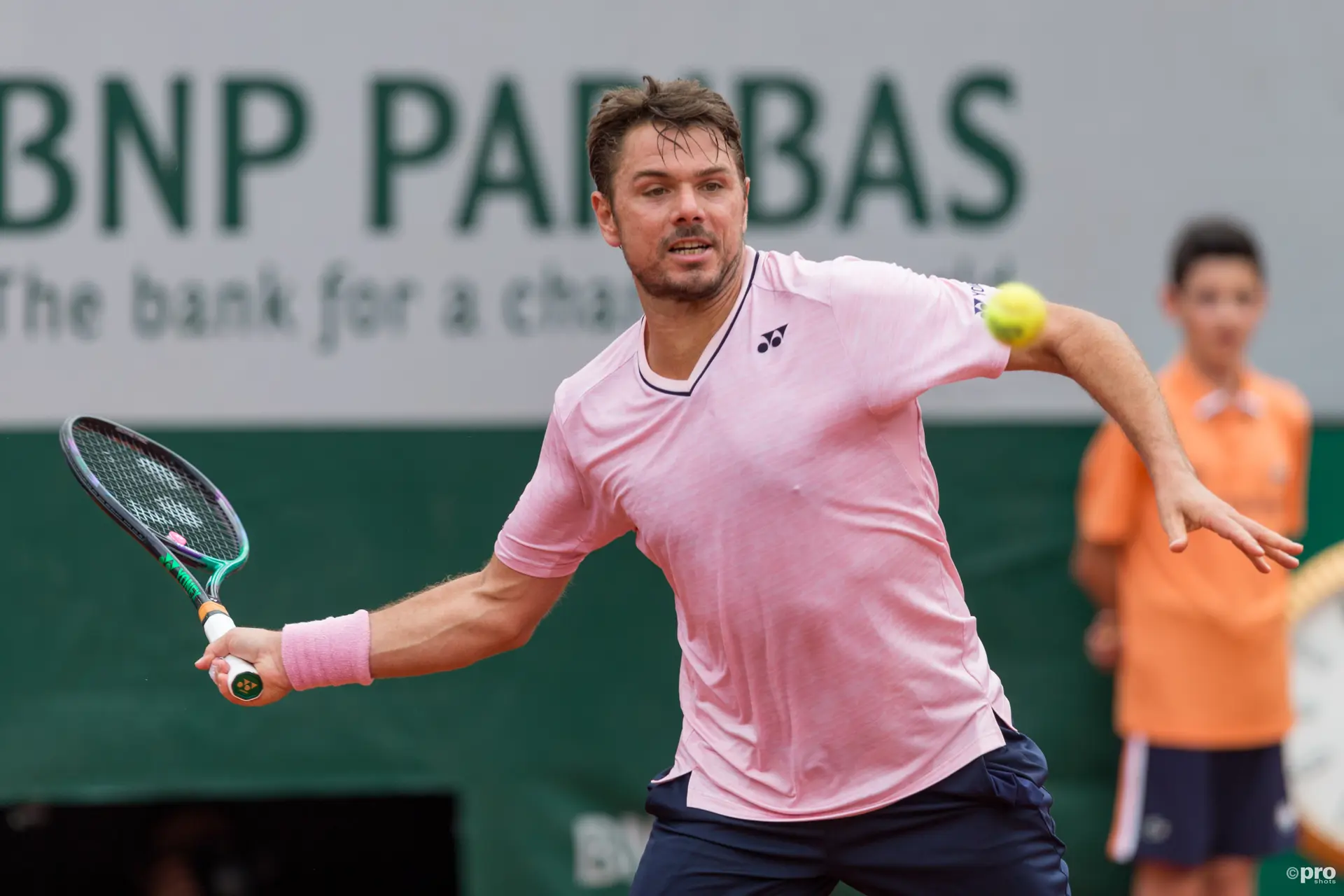
Competitive mindset and physical demands at 41
Despite the farewell context, Wawrinka rejected any suggestion of a reduced competitive approach. He emphasised that continuing to compete requires maintaining the same internal standards, with a clear focus on performance and results rather than participation alone.
“I don’t plan anything. If I want to play the whole year, I have to keep a competitive mindset. I always push myself to the maximum, always try to improve, be better. I put a lot of pressure on myself to try to win more matches.”
He acknowledged that sustaining this level is increasingly difficult on a daily basis, but framed those challenges within a broader motivation driven by his continued attachment to the sport. “Some days and weeks are really very difficult, but in the end it’s worth it. I’m passionate about this sport. I love what I do. I know this is my last year, so I’m trying to give my best.”
Legacy defined by progression rather than rankings
Reflecting on his career, Wawrinka emphasised progression over external milestones, noting that his objectives were never centred on rankings or titles but on continuous improvement. His trajectory — breaking through later than many peers and sustaining success across surfaces — aligns with that philosophy. “I grew up on a farm and dreamed of becoming a professional player with the only goal of giving my best every day, to push my limits without barriers.”
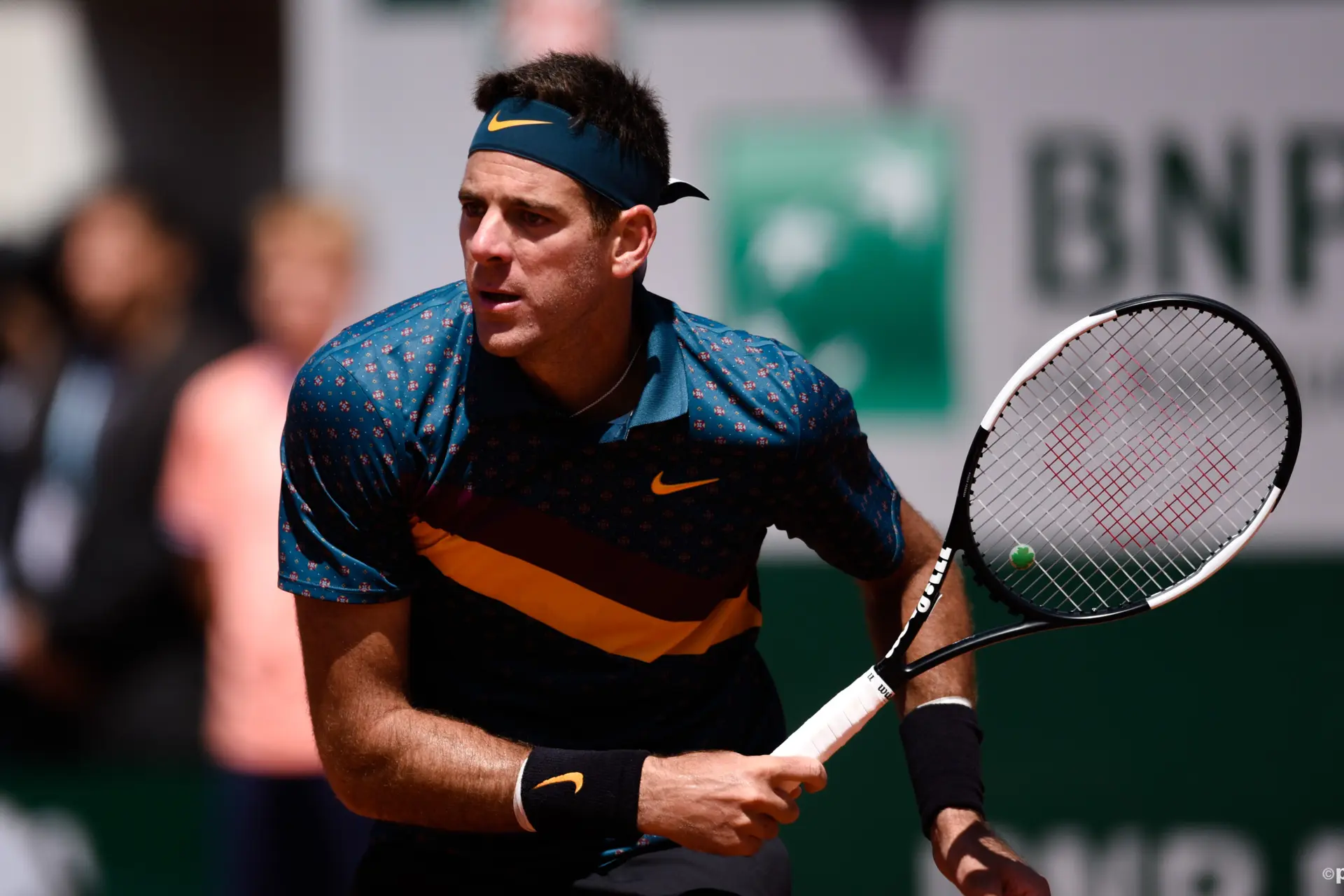
He made clear that traditional markers such as world No. 1 or Grand Slam titles were not explicit targets at the outset, instead framing his career through incremental development and consistency over time.
“I never set myself the goal of winning a Grand Slam or being number one. I just wanted to be better, always, and that’s what I achieved in my career,” the 41-year-old player added. “What matters to me is the love for the game and the passion that allowed me to succeed. My goal has always been to work long term, develop my physique and my tennis.”

Cristhián AvilaTennis Journalist
Cristhián Ávila is a tennis journalist based in Santiago, Chile, and has been part of the TennisUpToDate team since early 2023. He covers the ATP and WTA Tours as well as all four Grand Slams, producing breaking news, match reports, analysis, and regular liveblogs from major tournaments.
His reporting combines statistical analysis with clear explanation, helping readers understand tactical developments, player form, and broader storylines across the tour. Working fluently in both Spanish and English, Cristhián collaborates with an international editorial team and contributes to comprehensive global coverage. As part of his work, he has conducted interviews and media interactions with leading figures in the sport, including Caroline Wozniacki and John McEnroe.
In his journalism, Cristhián places strong emphasis on careful sourcing, editorial accuracy, and updating articles promptly when new, verified information becomes available. His coverage is grounded in research, context, and direct engagement with professional tennis.
claps 0visitors 0
Just In

Popular News

Latest Comments
- Lena... Takin' care of business
 mandoist25-10-2026
 - Can you please stop publishing this nonsense? Stick to Tennis.mandoist25-10-2026
- Does Sinner need that 4.5 mil? I doubt it. He can make that with three modelling gigs!😅🤣Rapunzel21-10-2026
- Did "People Magazine" purchase this website? This nonstop storyline is bullshit.mandoist21-10-2026
- Listen... this is of no concern to anyone but these two. Deal with your own issues -- most of us have our own. Thanks, media, for these insignificant follow-ups which are meaningless.mandoist21-10-2026
- This is so very very sad, for all three of them. I truly thought they had an unbreakable bond, but life throws up so many differing challenges. Having your homeland suffering in such a terrible way, makes happiness lose out to guilt as well. Our thoughts are with them. X💔bjsexton20-10-2026
- I have lost all respect for Svitolina! Could she not have waited until he had played at the Paris Masters!!! She is selfish and don't give a damn about Gael. That is NOT how love is demonstrated Elina!!Rapunzel19-10-2026
- Perhaps convenient tennis tour sex is not a strong enough experience in which to base a marriage?mandoist19-10-2026
- Fight the Good Fight... Tennis (sports in general) need more Humans such as yourself.mandoist18-10-2026
- When is WTA going to mandate Genetic Testing (DNA) ???mandoist18-10-2026

Loading