“Raising your level once is not enough”: Casper Ruud sets extreme standard ahead of potential Sinner final clash in Rome
ATP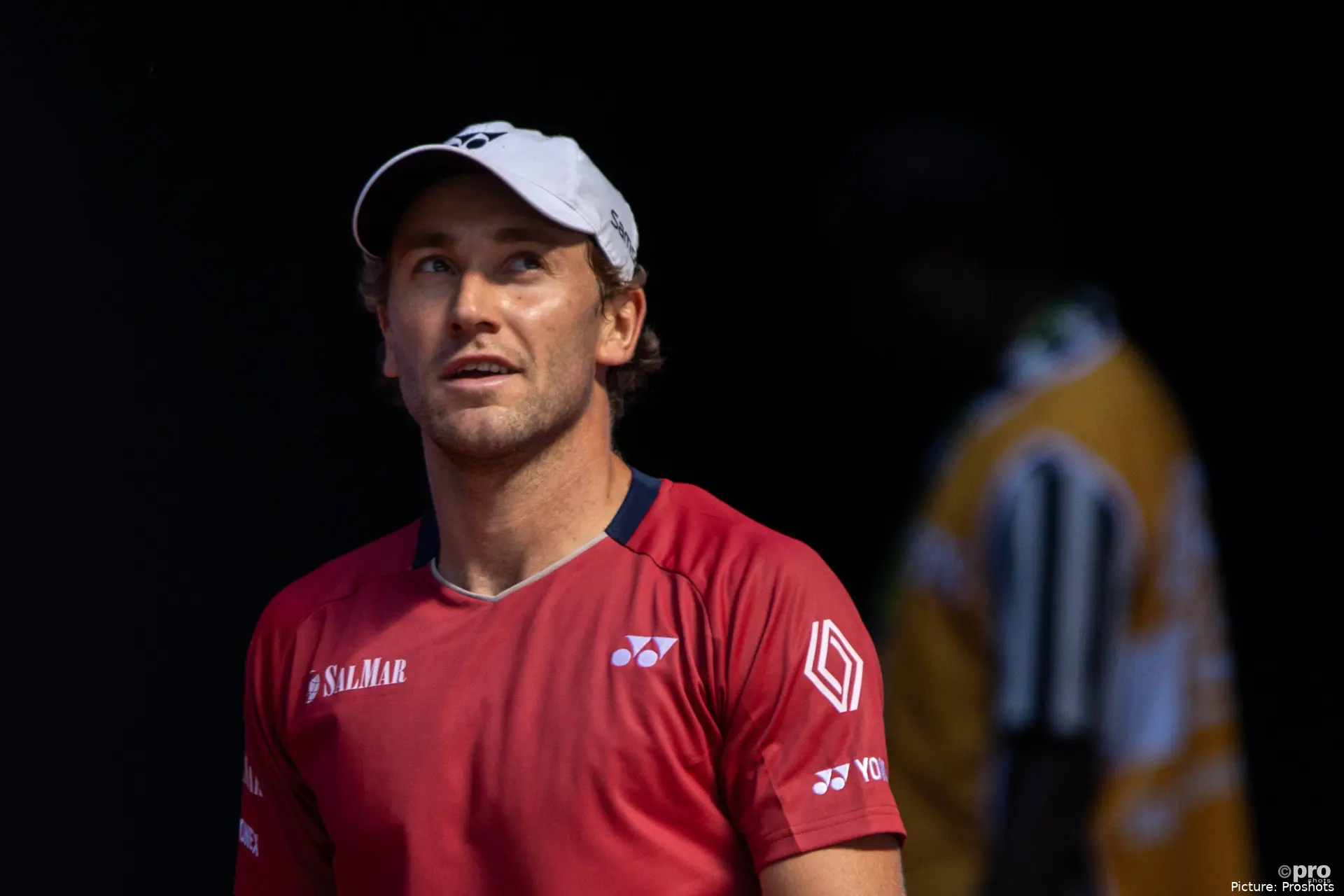
Casper Ruud moved into a potential Rome Open final showdown with Jannik Sinner after securing a straightforward semifinal victory over Luciano Darderi. The Norwegian reached his fourth Masters 1000 final and will look to pull off an upset on his preferred surface on Sunday, depending on the outcome of the suspended semifinal between Sinner and Daniil Medvedev.
He booked his place in the final after a week defined by early structural control of matches, repeatedly securing breaks in the opening games and dictating tempo before opponents could stabilise.
His semifinal win over Darderi was particularly dominant, as he conceded just two games in a 6–1, 6–1 result that reinforced his ability to impose immediate scoreboard separation from the outset.
Rain interruptions and stop-start scheduling have had limited impact on his rhythm, as he has repeatedly reasserted control immediately after resets. His path to the final has included wins over Jiří Lehečka, Lorenzo Musetti and Karen Khachanov, all following a similar structural pattern of early breaks and controlled service holds.

Controlled progress through Rome
Ruud’s semifinal followed the same structural pattern seen throughout his week: early break, immediate consolidation, and sustained pressure through return depth. Once ahead, he rarely allowed Darderi space to build rhythm or extend baseline exchanges into neutral patterns.
“It was a bit of a tricky situation with the rain again today,” Ruud said, describing the stop-start nature of conditions,” the 3-time Grand Slam finalist said to Tennis Channel. “It was crucial and important for me in winning the match that I got that perfect start and broke him straight off the bat.”
He added that early control was decisive in preventing any momentum shift after the interruption. “It was 5-1, serving for 6-1, and then I got a great hot start in the second as well and really never let him into the match, so I was super happy about it and saving a lot of energy for what’s to come on Sunday.”

Casper Ruud waving and celebrating the victory in the game the Mutua Madrid Open 2026
Unresolved final and competitive ceiling
Ruud now awaits an opponent still undecided after the suspension of the other semifinal between Jannik Sinner and Daniil Medvedev. The matchup presents two contrasting but equally demanding profiles depending on the outcome.
Against Sinner, the context is heavily one-sided, with a 4–0 head-to-head record and previous dominance in Rome conditions through early baseline pressure and court positioning. Medvedev, by contrast, offers a deeper defensive structure, extending rallies and testing error tolerance across long exchanges.

Ruud acknowledged the scale of the challenge in general terms, focusing on performance thresholds rather than tactical adjustments. “You have to think he is human too,” Ruud said. “Raising your level once is not going to be enough against this guy. You have to raise it two, three or four times and then see if you can hang with him from there.”
He also reflected on past limitations in Rome against elite opposition, particularly in matches where he struggled to impose first-strike control. “I had a bad loss to Jannik here last year and I didn’t really have much to push him with or challenge him with, so I just got kind of smoked.”
Despite that, Ruud framed the final as a reset rather than a continuation of previous encounters, emphasizing match independence over historical data. “Sunday is a new day, it’s a new tournament.”
Casper Ruud – Road to Rome Final 2026
| Round | Rival | Rk Rival | Score |
| F | Jannik Sinner / Daniil Medvedev | 1 / 9 | - |
| SF | Luciano Darderi | 18 | 6-1, 6-1 |
| QF | Karen Khachanov | 13 | 6–1, 1–6, 6–2 |
| R16 | Lorenzo Musetti | 8 | 6–3, 6–1 |
| R32 | Jiří Lehečka | 11 | 6–3, 6–4 |
| R64 | Zachary Svajda | 90 | 6–1, 6–3 |

Cristhián AvilaTennis Journalist
Cristhián Ávila is a tennis journalist based in Santiago, Chile, and has been part of the TennisUpToDate team since early 2023. He covers the ATP and WTA Tours as well as all four Grand Slams, producing breaking news, match reports, analysis, and regular liveblogs from major tournaments.
His reporting combines statistical analysis with clear explanation, helping readers understand tactical developments, player form, and broader storylines across the tour. Working fluently in both Spanish and English, Cristhián collaborates with an international editorial team and contributes to comprehensive global coverage. As part of his work, he has conducted interviews and media interactions with leading figures in the sport, including Caroline Wozniacki and John McEnroe.
In his journalism, Cristhián places strong emphasis on careful sourcing, editorial accuracy, and updating articles promptly when new, verified information becomes available. His coverage is grounded in research, context, and direct engagement with professional tennis.
claps 0visitors 0
Just In

Popular News
Latest Comments
- great articlestennisseserver07-10-2026
- Medvedev was leading Djokovic 7-5, 3-5 when an attempted return..' NO you ignorants, Djokovic was leading .weiss05-10-2026
- No more bullshit "Wildcards" to these two. Qualify like everyone else -- there will be cameras there, too. Time to scream... WTF ????!!!!
 mandoist29-09-2026
 - Let's not BS the general public -- Sabalenka started showing cracks in her game last season. Her losses and near-losses started at about the same time she began being distracted by Fame (constant Selfies, making TV commercials, magazine shoots, endless Social Media nonsense, etc., etc.) One would think even Saba could recognize the parallels with others who failed before her -- Raducanu, Giorgi, Bouchard to name a few.mandoist25-09-2026
- Gross!! Hey Raducanu, Giorgi, and Bouchard -- reserve a seat at your Social Media Selfie table for Saba + Naomi. They're heading in your direction soon enough.mandoist24-09-2026
- And then these same players will complain about how lengthy their season’s were and need more time-off. I’m all for more tennis but the amount of tennis we get now is actually kind of crazy! We all need a break, especially the players.DaveyWavey23-09-2026
- You should do a comparison article for "different kinds of justice" the courts decide for tennis players. I can think of at least three players who received very small bans of a few months, however Tara Moore has been fighting for her literal survival the past few years. It seems odd considering she is not a "name" player, unlike the other cases.DaveyWavey22-09-2026
- PRIZE MONEY & POINTS Winner - $185,500 Finalist - $114,500 Semi-Finalist - $66,003 Quarter-Finalist - $35,000 Round of 16 - $18,045 Round of 32 - $13,005 Winner - 500 Finalist - 325 Semi-Finalist - 195 Quarter-Finalist - 108 Round of 16 - 60 Round of 32 - 1DaveyWavey20-09-2026
- Pegula withdrew from this Singapore event
 tennishappens19-09-2026
 - Serena Williams chose her tournaments. It's not such a bad idea.MuswellHillbilly17-09-2026

Loading