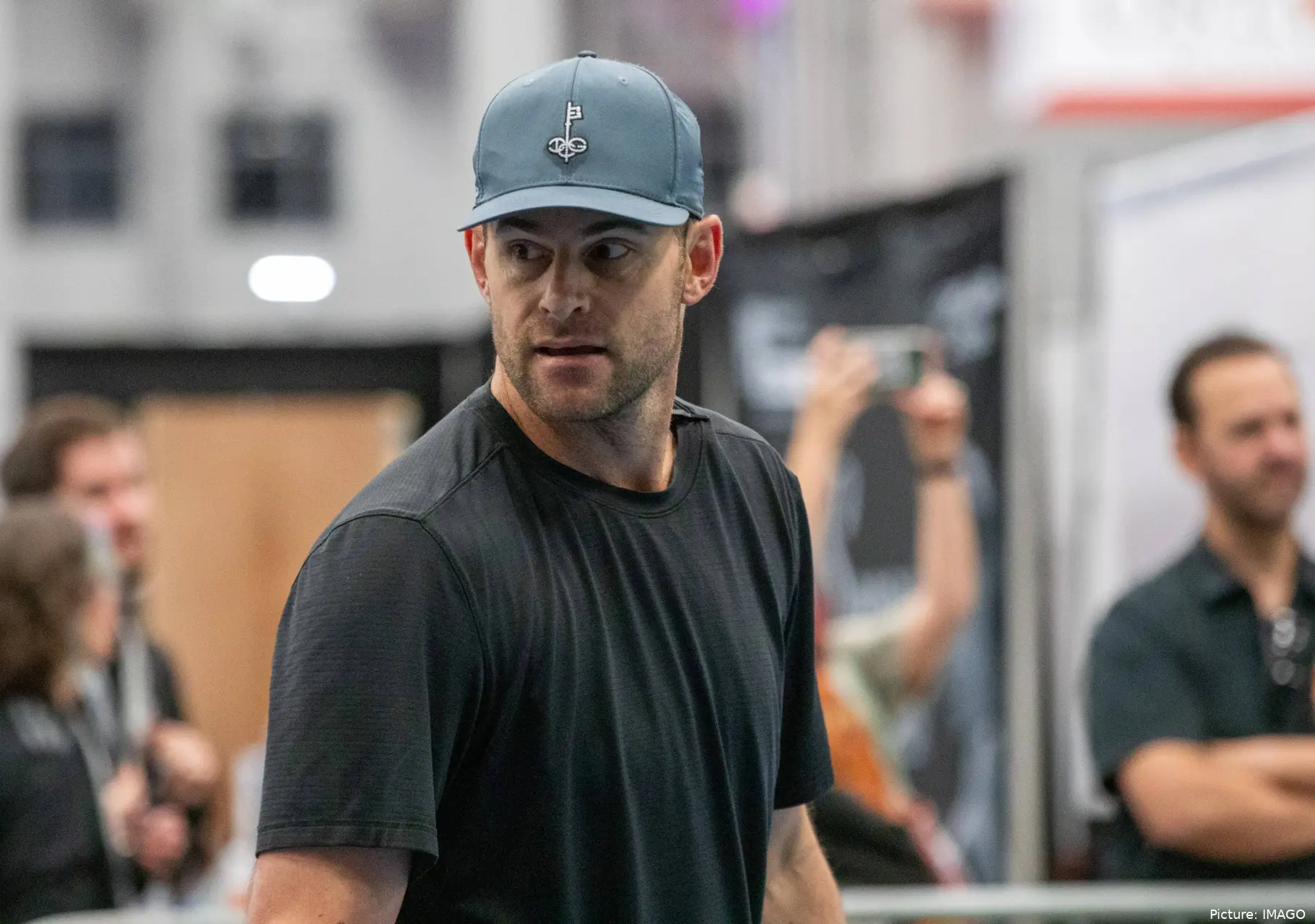
Andy Roddick believes clay season exposes more about a player’s game than any other stretch of the calendar, particularly from an American perspective. As the 2003 US Open champion noted, tennis is defined by its surface diversity, where “different surfaces magnify different skillsets,” forcing players to adapt quickly or risk falling behind.
With events in Houston, Bucharest and Marrakech opening the clay swing, the transition comes after a hard-court period dominated by Jannik Sinner and Carlos Alcaraz. Historically, however, American players have found less success on clay, a trend often linked to development pathways built around faster surfaces.
Roddick, one of the leading US figures of his generation, pointed out that this disparity is not accidental. The sport’s roots in different regions continue to shape outcomes, with clay remaining more embedded in European training systems than in the United States. As he explained, surface variation is not just aesthetic—it directly influences match results.
He underlined that even small changes in conditions can have major consequences, noting that players can face the same opponent under different circumstances and see “the entire win probability” shift dramatically. That variability becomes particularly evident during the clay swing, where patience and endurance replace power as primary factors.
Read also

Clay courts reshape tactics and challenge American profiles
From a tactical standpoint, clay requires a fundamental rethink. The aggressive, first-strike tennis often associated with American players becomes less effective, as slower conditions allow opponents more time to recover and extend rallies. As Andy Roddick explained, players cannot rely on pace alone, needing instead to build points with greater margin and patience.
Roddick noted that the biggest adjustment lies in how points are constructed, moving away from flat hitting toward heavier spin and height over the net. That shift fundamentally changes how players approach rallies, particularly against opponents comfortable sliding and resetting positions.
“Height is your friend. You can’t just bully the ball flat through the court," he said in Served with Roddick podcast. "If it’s not getting on you with pace quickly, players can recover, slide and create spin — so you have to construct almost every point differently.”
That dynamic has defined the success of clay-court specialists over the past two decades, most notably Rafael Nadal, whose dominance at Roland Garros remains unmatched. Roddick pointed to the structural advantages clay provides to players capable of generating heavy topspin and sustaining long rallies.
“Why was Nadal so good on clay? Because the ball is up out of the strike zone and he has time. When he has time, he generates more spin than anyone in history — that’s not a coincidence.”
Even within clay itself, variation plays a role. Differences in composition between American green clay and European red clay further complicate adaptation, particularly for players without consistent exposure to slower surfaces.
“If you rub green clay between your fingers, it feels like salt — firm and hard. At Roland Garros, it’s almost like powder, like baking powder.”
Read also
Physical demands, Shelton’s case and the US debate
Beyond tactics, clay introduces a significant physical challenge. Longer rallies increase workload, while sliding demands balance and lower-body control—areas that can expose inefficiencies in movement, particularly for players more accustomed to hard courts.
Roddick emphasised that endurance is central to success during this part of the season. Matches are often decided not by peak shot-making but by sustained physical output over extended exchanges. “Fitness is non-negotiable on clay. Points are longer — maybe 10 or 20 percent longer — and you’re not going to survive if you’re short on endurance.”
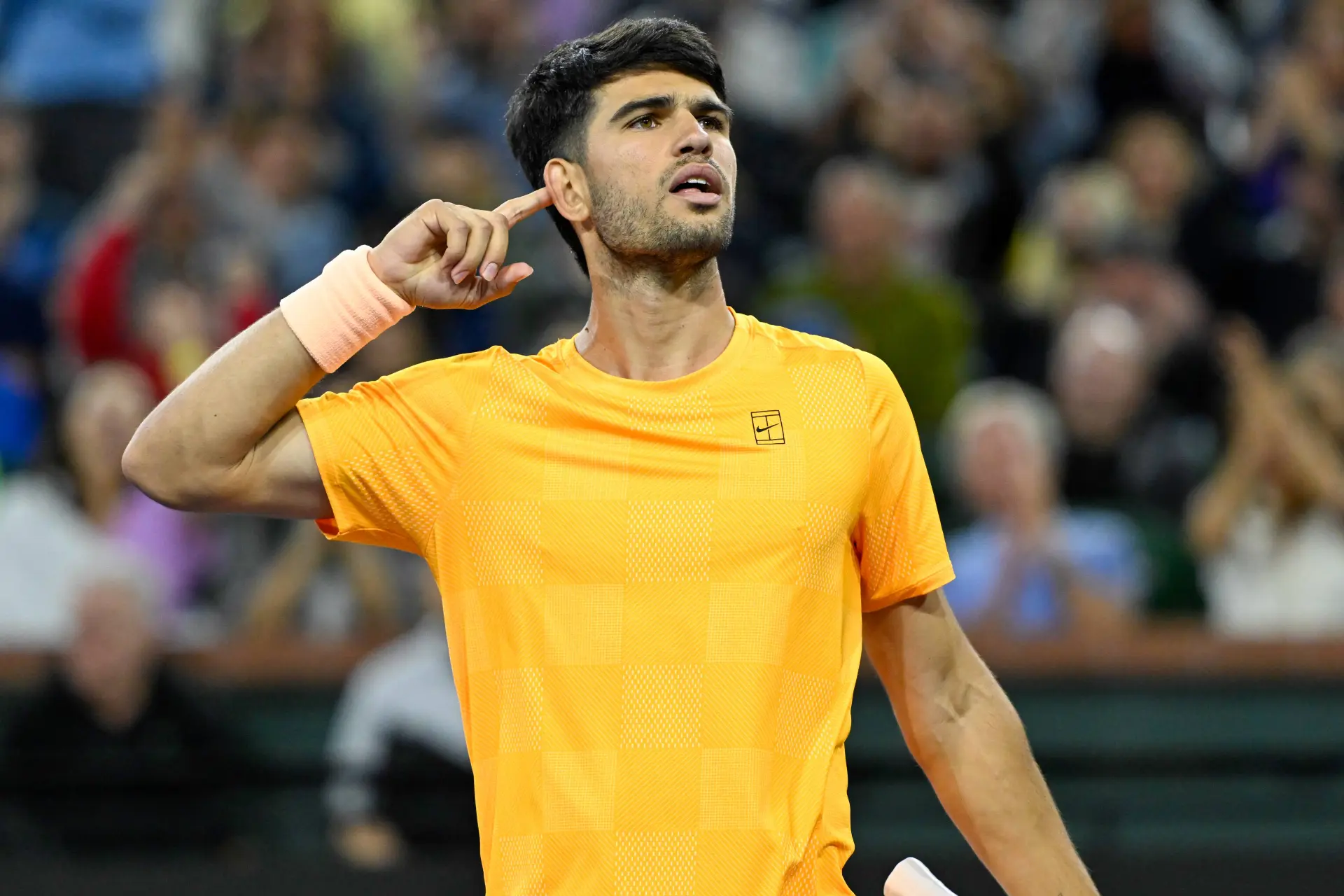
This context helps explain the challenges faced by emerging American players such as Ben Shelton. While his serve remains one of the most effective weapons on tour, clay reduces its immediate impact and places greater emphasis on rally tolerance.
“Clay is going to be the toughest surface for him. Players have more time to find space, especially to his backhand.”
The broader question of whether the United States should adjust its development model to prioritise clay remains open. While some advocate structural changes, Roddick questioned whether it is necessary to reshape the system for a limited portion of the calendar.
“You can play one person one week, switch the conditions, and the entire win probability can flip — from 70–30 to 30–70.”

Cristhián AvilaTennis Journalist
Cristhián Ávila is a tennis journalist based in Santiago, Chile, and has been part of the TennisUpToDate team since early 2023. He covers the ATP and WTA Tours as well as all four Grand Slams, producing breaking news, match reports, analysis, and regular liveblogs from major tournaments.
His reporting combines statistical analysis with clear explanation, helping readers understand tactical developments, player form, and broader storylines across the tour. Working fluently in both Spanish and English, Cristhián collaborates with an international editorial team and contributes to comprehensive global coverage. As part of his work, he has conducted interviews and media interactions with leading figures in the sport, including Caroline Wozniacki and John McEnroe.
In his journalism, Cristhián places strong emphasis on careful sourcing, editorial accuracy, and updating articles promptly when new, verified information becomes available. His coverage is grounded in research, context, and direct engagement with professional tennis.
claps 0visitors 0
Just In

Popular News
Latest Comments
- A healthy Qinwen may be hard to stop next season. She was already scaring her opponents before her medical leave(s). Unfortunately, Zheng insisted on singing again. On the positive side -- Mirra did not sing!! ;~}
 mandoist11-10-2026
 - Where is it written that athletes, entertainers... People in general... are mandated to keep looking at -- or even using [anti]Social Media? Public & private figures consistently complain and reveal their concerns about negativity and violence thrown at them -- yet they insist on participating. Avoid it, don't use it, don't read it. It's okay to occasionally look up at the World instead beating your eyes & thumbs to death on The Inventions out there.mandoist11-10-2026
- great articlestennisseserver07-10-2026
- Medvedev was leading Djokovic 7-5, 3-5 when an attempted return..' NO you ignorants, Djokovic was leading .weiss05-10-2026
- No more bullshit "Wildcards" to these two. Qualify like everyone else -- there will be cameras there, too. Time to scream... WTF ????!!!!mandoist29-09-2026
- Let's not BS the general public -- Sabalenka started showing cracks in her game last season. Her losses and near-losses started at about the same time she began being distracted by Fame (constant Selfies, making TV commercials, magazine shoots, endless Social Media nonsense, etc., etc.) One would think even Saba could recognize the parallels with others who failed before her -- Raducanu, Giorgi, Bouchard to name a few.mandoist25-09-2026
- Gross!! Hey Raducanu, Giorgi, and Bouchard -- reserve a seat at your Social Media Selfie table for Saba + Naomi. They're heading in your direction soon enough.mandoist24-09-2026
- And then these same players will complain about how lengthy their season’s were and need more time-off. I’m all for more tennis but the amount of tennis we get now is actually kind of crazy! We all need a break, especially the players.DaveyWavey23-09-2026
- You should do a comparison article for "different kinds of justice" the courts decide for tennis players. I can think of at least three players who received very small bans of a few months, however Tara Moore has been fighting for her literal survival the past few years. It seems odd considering she is not a "name" player, unlike the other cases.DaveyWavey22-09-2026
- PRIZE MONEY & POINTS Winner - $185,500 Finalist - $114,500 Semi-Finalist - $66,003 Quarter-Finalist - $35,000 Round of 16 - $18,045 Round of 32 - $13,005 Winner - 500 Finalist - 325 Semi-Finalist - 195 Quarter-Finalist - 108 Round of 16 - 60 Round of 32 - 1DaveyWavey20-09-2026

Loading