"When Alcaraz wasn’t in Shanghai and Sinner went down with cramps, it was open season": Andy Roddick marvels at Vacherot fairytale
ATP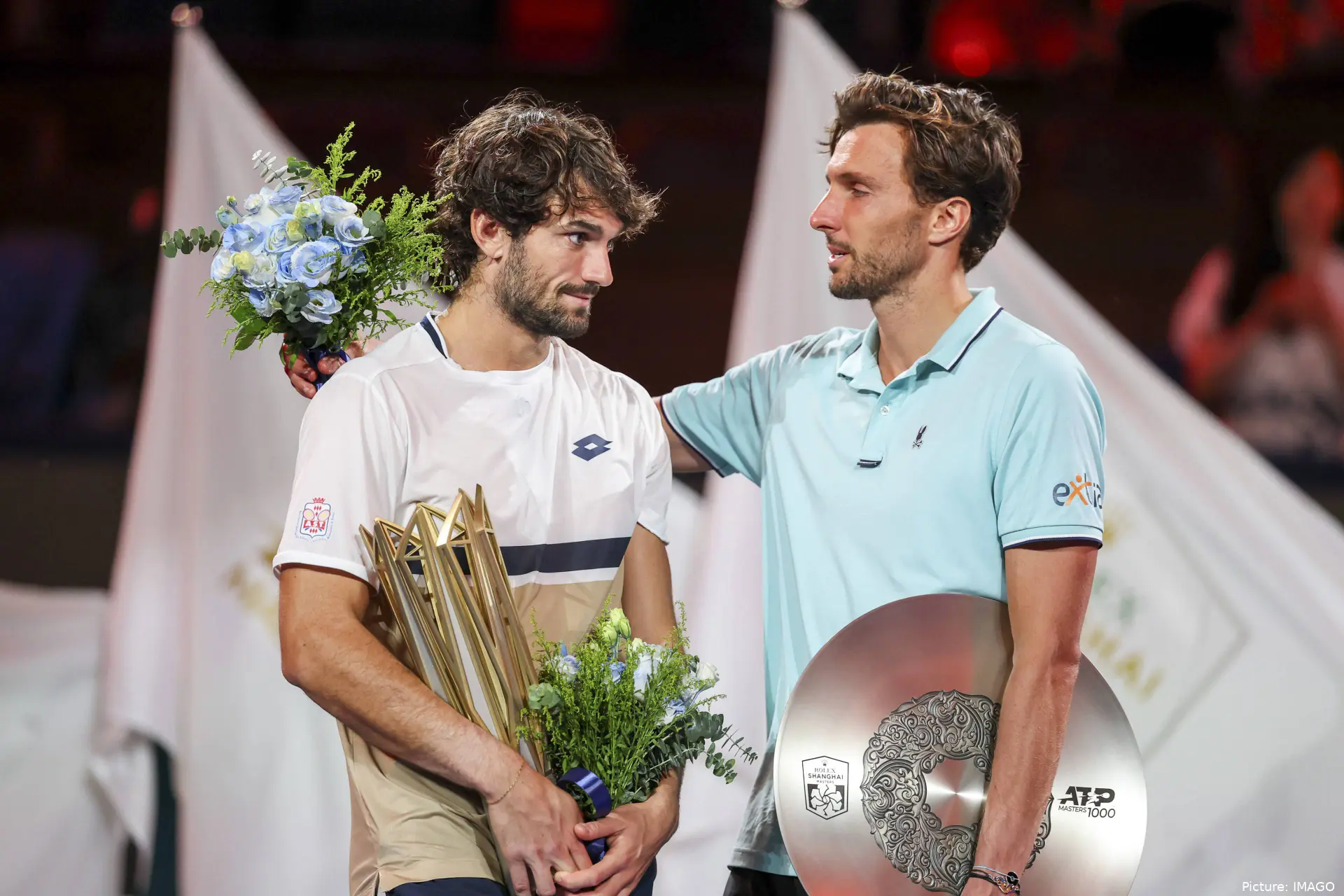
Shanghai played host to one of the most remarkable stories of the ATP season, as Valentin Vacherot — a player ranked No. 204 in the world — staged a stunning run to the final of a Masters 1000 event, defeating Novak Djokovic in the semis along the way. On the latest episode of Served with Andy Roddick, Roddick and his co-host dissected the improbable journey, offering insight into both the tennis and the human story behind it.
“It’s insane,” Roddick said on Served. “Two points away from losing in qualifying, runs the table from 204 in the world, beats Novak in the semis — and he lost the first set in like six of his eight wins. It’s a great story.”
The discussion also touched on the circumstances that made the tournament so open. With Carlos Alcaraz skipping Shanghai and Jannik Sinner dealing with injuries earlier in the season, the field presented a rare opportunity for lower-ranked players to shine.
“When Alcaraz wasn’t in Shanghai and Sinner went down with cramps, it was open season,” Roddick explained. “Vacherot capitalized on that, and he pointed right at himself, he was ready.”
The conversation then looked back to Miami, where Sinner was suspended and Alcaraz suffered an early exit to David Goffin. “Open season again,” Roddick noted, reflecting on how these absences reshaped the dynamics of the tour. “These guys change everything.”
Vacherot’s journey, however, wasn’t purely a story of luck. Roddick highlighted the preparation and experience that made it possible. “He had a lot of time,” Roddick said. “In a 12-day tournament, you have the ability to plan, recover, and handle the workload. But still — six matches in seven days is no joke.”
Roddick was quick to praise Vacherot’s opponent in the final, Arthur Rinderknech, who himself has been building steadily on the tour. “Props to Rinderknech,” he said. “Since Wimbledon, he’s beaten top players, including Zverev and Medvedev. He’s going to be top 30 soon, well-deserved.”
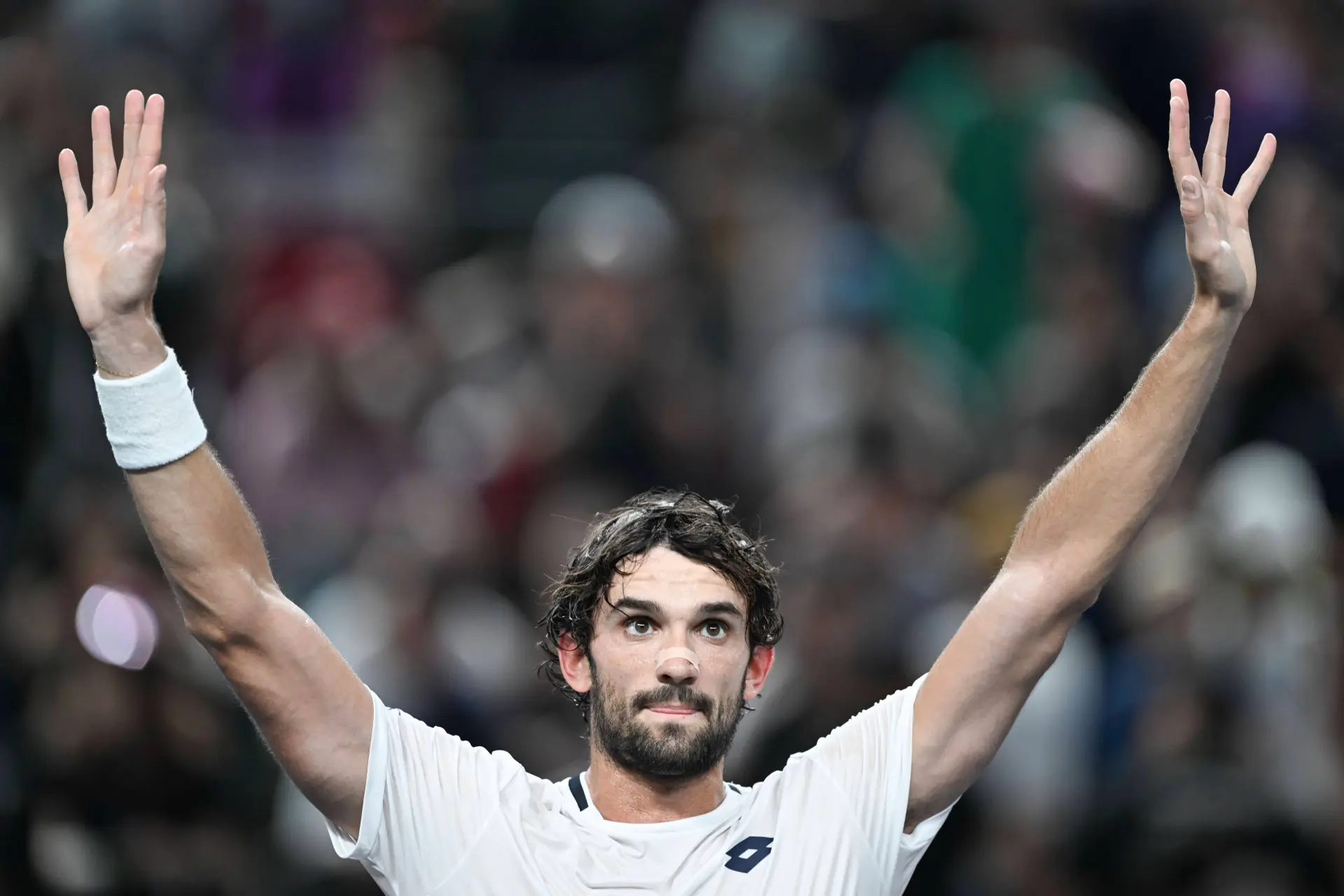
One of the lighter topics discussed was Vacherot’s use of a Breathe Right strip during matches — a quirky detail that became a talking point. “I never wore one,” Roddick laughed, “but I absolutely would have if someone paid me enough money. And if you wear it once and win, you’ve got to keep going.”
The podcast co-host pointed out that Alcaraz had worn a similar strip at the Laver Cup and won a match, prompting a humorous exchange about superstition and performance aids in tennis.

A life changer for Vacherot
Life-changing run
Vacherot’s performance didn’t just earn him a Masters final; it reshaped his career trajectory. As highlighted in a clip from Jon Wertheim:
“He won and picked up momentum, kept going, and now he’s in the top 40 and over a million dollars richer. It’s transformative — not just financially, but in terms of access to main draws of events.”
Roddick explained why the timing of the breakthrough was ideal. With tournament entry lists locked six weeks in advance, a mid-season surge allows a player to enter qualifying for upcoming events, ensuring more opportunities to gain points and build ranking. “If he had done this at Rome or between the Australian Open and Roland-Garros, it could have disrupted his schedule,” Roddick said. “But now he can plan his 2026 season perfectly.”
Family, college, and the Monaco connection
The podcast also delved into Vacherot’s personal background. In an unusual twist, he faced his cousin in one of the rounds, and his coach, Benjamin Balleret — a former junior rival of Roddick’s — is also a relative. “Everyone’s related!” Roddick joked. “Watching him win, seeing him write ‘Grandma and Grandpa would be proud’ on camera — that’s the heart of it.”
Vacherot and Rinderknech also share a Texas A&M connection, highlighting the sometimes-overlooked pathway of college tennis as a stepping stone to the professional circuit. “I’m so used to players turning pro at 17,” Roddick said. “Seeing someone come through college and make this run is refreshing.”
Despite the extraordinary week, Roddick remained measured in assessing what comes next. “Every match he wins now counts for points,” he said. “He’s not grinding all week for a couple of shekels anymore — this is the real deal.”
Vacherot’s career stats also highlight the unusual trajectory: his career singles record stands at 18–9, with four of those wins coming in Davis Cup play for Monaco. “That’s wild,” Roddick said. “And he’s only 26. He played college tennis, didn’t have a huge schedule, and now this happens.”
Valentin Vacherot’s week in Shanghai is a story of opportunity meeting preparation. From an alternate in qualifying to the top 40, he combined talent, timing, and perhaps a little family magic to pull off a tournament that will be remembered for years. As Roddick summarized: “It’s just a perfect storm of everything coming together — and it’s beautiful to watch.”

Samuel GillEditor-in-Chief
Samuel Gill is the Chief Content Officer (CCO) of TennisUpToDate.com, a role he has held since 2020. He is responsible for editorial governance across the platform, including setting content standards, overseeing accuracy and consistency, and guiding long-term editorial strategy. Since joining, he has contributed more than 10,000 articles and editorial pieces across the TennisUpToDate network, playing a central role in the daily operation and development of the site.
Based in Leicester, Samuel has a broad background in tennis media. In his current role, he works closely with editors and writers to ensure coverage meets clear journalistic standards, with particular attention to verification, consistency, and timely updates when new information becomes available.
claps 0visitors 0
Just In



Popular News
Latest Comments
- A healthy Qinwen may be hard to stop next season. She was already scaring her opponents before her medical leave(s). Unfortunately, Zheng insisted on singing again. On the positive side -- Mirra did not sing!! ;~}
 mandoist11-10-2026
 - Where is it written that athletes, entertainers... People in general... are mandated to keep looking at -- or even using [anti]Social Media? Public & private figures consistently complain and reveal their concerns about negativity and violence thrown at them -- yet they insist on participating. Avoid it, don't use it, don't read it. It's okay to occasionally look up at the World instead beating your eyes & thumbs to death on The Inventions out there.mandoist11-10-2026
- great articlestennisseserver07-10-2026
- Medvedev was leading Djokovic 7-5, 3-5 when an attempted return..' NO you ignorants, Djokovic was leading .weiss05-10-2026
- No more bullshit "Wildcards" to these two. Qualify like everyone else -- there will be cameras there, too. Time to scream... WTF ????!!!!mandoist29-09-2026
- Let's not BS the general public -- Sabalenka started showing cracks in her game last season. Her losses and near-losses started at about the same time she began being distracted by Fame (constant Selfies, making TV commercials, magazine shoots, endless Social Media nonsense, etc., etc.) One would think even Saba could recognize the parallels with others who failed before her -- Raducanu, Giorgi, Bouchard to name a few.mandoist25-09-2026
- Gross!! Hey Raducanu, Giorgi, and Bouchard -- reserve a seat at your Social Media Selfie table for Saba + Naomi. They're heading in your direction soon enough.mandoist24-09-2026
- And then these same players will complain about how lengthy their season’s were and need more time-off. I’m all for more tennis but the amount of tennis we get now is actually kind of crazy! We all need a break, especially the players.DaveyWavey23-09-2026
- You should do a comparison article for "different kinds of justice" the courts decide for tennis players. I can think of at least three players who received very small bans of a few months, however Tara Moore has been fighting for her literal survival the past few years. It seems odd considering she is not a "name" player, unlike the other cases.DaveyWavey22-09-2026
- PRIZE MONEY & POINTS Winner - $185,500 Finalist - $114,500 Semi-Finalist - $66,003 Quarter-Finalist - $35,000 Round of 16 - $18,045 Round of 32 - $13,005 Winner - 500 Finalist - 325 Semi-Finalist - 195 Quarter-Finalist - 108 Round of 16 - 60 Round of 32 - 1DaveyWavey20-09-2026

Loading