Friday’s three-hour battle between Elena Rybakina and Leylah Fernandez wasn’t about missed opportunities or an inability to close. It was high-level tennis from start to finish, the kind where margins disappear and outcomes feel earned rather than given.
It also underscored something that has been building since the start of the season. Rybakina is making a compelling case as the best player in the world right now. Not just in results, but in the way she is winning. Her game looks composed, repeatable, and increasingly adaptable to clay, where patience and construction matter as much as power.
If she carries this level forward, it is entirely realistic to see her take two of the three marquee clay titles: the 1000-level Madrid Open and Italian Open, and the Grand Slam, the storied French Open. That is less a prediction than a reflection of current form. She is not alone in that top tier.
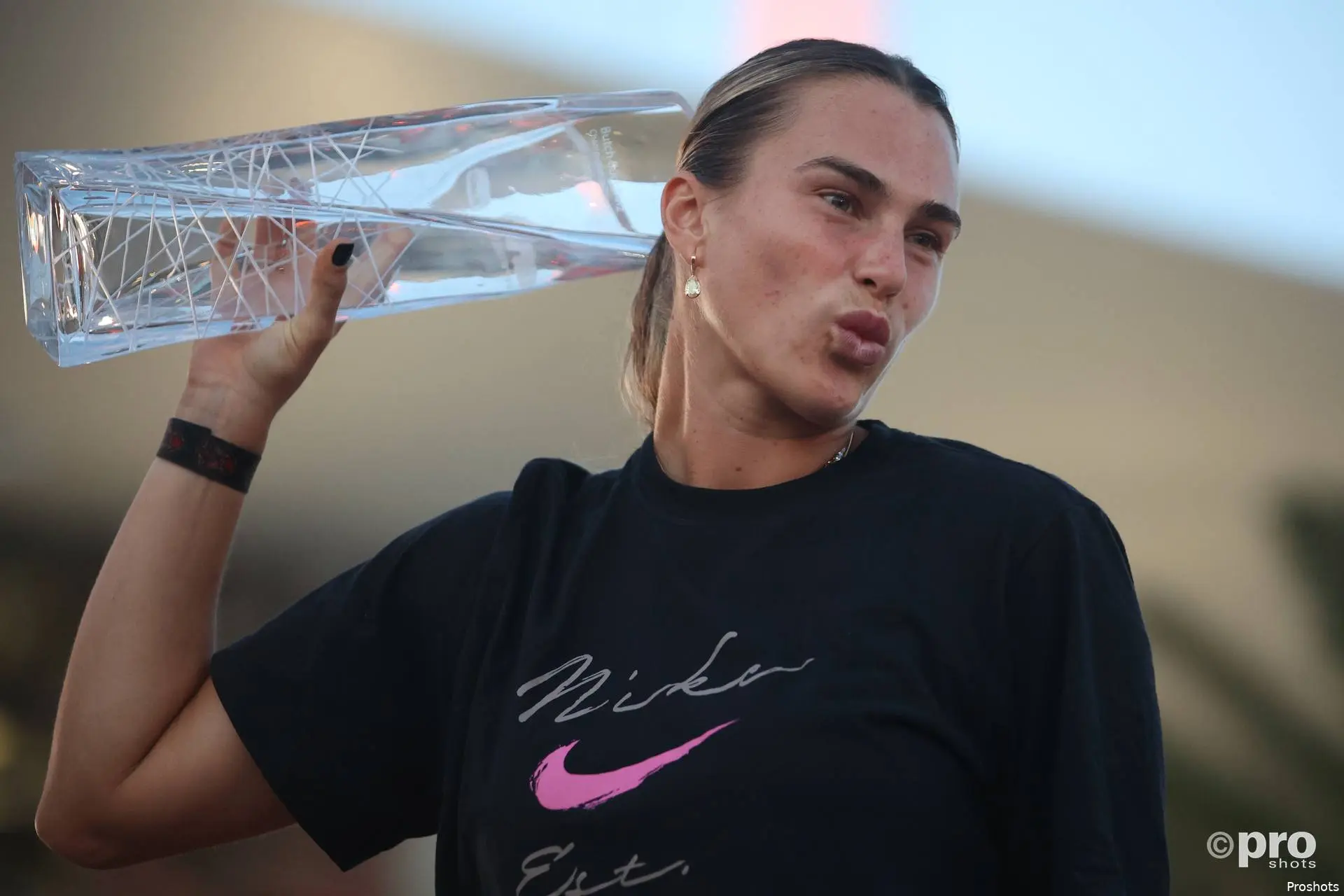
Aryna Sabalenka remains the most physically imposing player in the game when she is dialed in. On clay, the balance between aggression and control is everything, and lately she has been finding more of it. If that trend holds, she becomes a threat in every draw she enters.

Muchova, Svitolina and Pegula bring different scope
Karolina Muchova brings a different kind of danger. Her ability to vary pace, absorb power, and think her way through matches makes her particularly effective on clay. Few players are as comfortable adjusting mid-match when things are not going their way.
Elina Svitolina continues to reassert herself as one of the most resilient competitors on tour. Her movement and defensive instincts translate well to long rallies, and her recent form suggests she is once again a factor deep into tournaments.
Jessica Pegula rounds out this group. She does not rely on overwhelming weapons, but her consistency and ability to stay within herself make her a constant presence. Over a sustained stretch like this, that reliability becomes a major advantage.

Jessica Pegula - the WTA consistency queen.
There are, of course, many others trending upward. A quick look through the top 50 shows just how much movement there has been this year. But this group, at this moment, feels the most complete.
All of it unfolds against the backdrop of one of the most demanding stretches in tennis.
From the start of Madrid to the end of Paris, players are asked to navigate six consecutive weeks of high-intensity competition. Clay courts extend points, lengthen matches, and place unique stress on the body. Even with the two-week format at the biggest events, which can space out matches for top seeds, the cumulative toll is significant.
Fatigue is inevitable. Minor injuries are common. And beyond the physical, there is the mental strain of sustained competition, constant travel, and the pressure that builds with each successive round.
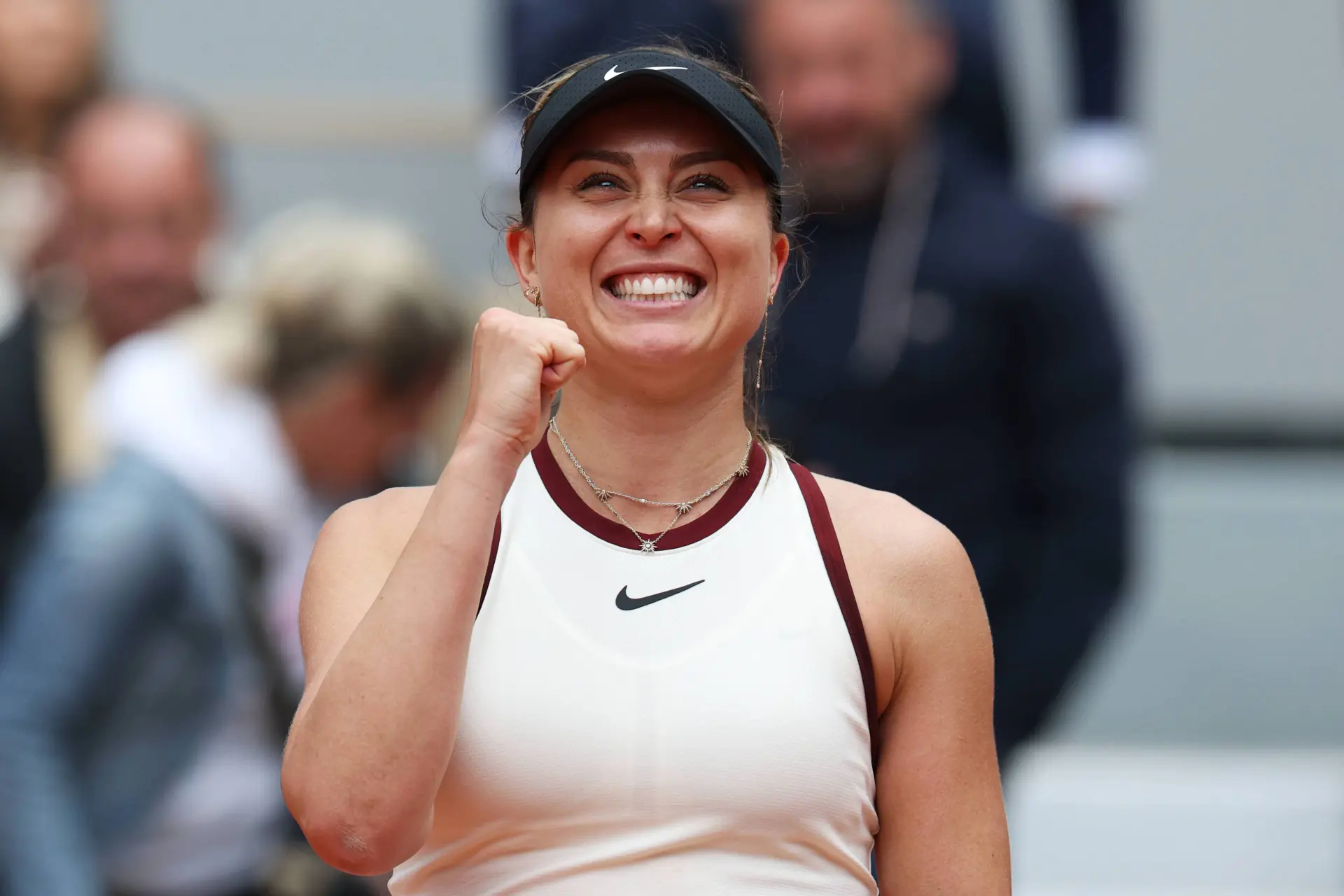
By the time the tour reaches Roland Garros, few players are operating at full capacity. The ones who are tend to be the ones who have managed the stretch, not just survived it.
That is what makes this period so revealing. It is not only about who can play the best tennis, but who can sustain it.
If there are two players most likely to emerge from this stretch still playing at their peak, it is Sabalenka and Rybakina. Different styles, different approaches, but both equipped to handle the physical and mental demands of the clay season.
In a six-week test of endurance, that combination may prove decisive.
Aron SolomonGuest Author
A Pulitzer Prize-nominated journalist for his groundbreaking op-ed in The Independent exposing the NFL’s “race-norming” policies, Aron Solomon, JD, is a globally recognized thought leader in law, media, and strategy.
As Chief Strategy Officer for AMPLIFY, he leverages his deep expertise to shape the future of legal marketing. Aron has taught entrepreneurship at McGill University and the University of Pennsylvania and was honored as a Fastcase 50 recipient, recognizing him among the world’s top legal innovators. A prolific commentator on law, business, and culture, his insights regularly appear in Newsweek, The Hill, Crunchbase News, and Literary Hub.
He has also been featured in The New York Times, Fast Company, Fortune, Forbes, CBS News, CNBC, USA Today, ESPN, TechCrunch, BuzzFeed, Venture Beat and countless other leading global media outlets. We are proud to have Aron on board at TennisUpToDate, where his deep tennis expertise enriches the site with sharp, original columns that connect the sport to wider cultural debates.
claps 1visitors 1
Just In

Popular News
Latest Comments
- Does Sinner need that 4.5 mil? I doubt it. He can make that with three modelling gigs!😅🤣Rapunzel21-10-2026
- Did "People Magazine" purchase this website? This nonstop storyline is bullshit.
 mandoist21-10-2026
 - Listen... this is of no concern to anyone but these two. Deal with your own issues -- most of us have our own. Thanks, media, for these insignificant follow-ups which are meaningless.mandoist21-10-2026
- This is so very very sad, for all three of them. I truly thought they had an unbreakable bond, but life throws up so many differing challenges. Having your homeland suffering in such a terrible way, makes happiness lose out to guilt as well. Our thoughts are with them. X💔bjsexton20-10-2026
- I have lost all respect for Svitolina! Could she not have waited until he had played at the Paris Masters!!! She is selfish and don't give a damn about Gael. That is NOT how love is demonstrated Elina!!Rapunzel19-10-2026
- Perhaps convenient tennis tour sex is not a strong enough experience in which to base a marriage?mandoist19-10-2026
- Fight the Good Fight... Tennis (sports in general) need more Humans such as yourself.mandoist18-10-2026
- When is WTA going to mandate Genetic Testing (DNA) ???mandoist18-10-2026
- Hey, Dan... you just wake up from a coma? Regardless -- Thanks for the comedy this morning!mandoist18-10-2026
- Two Things: 1. Stop allowing these Spoiled Trust-Fund Elitists to behave badly. Your little hand-slaps do not deter them. 2. STOP the incessantly annoying "towel wiping" nonsense!!!!mandoist15-10-2026

Loading