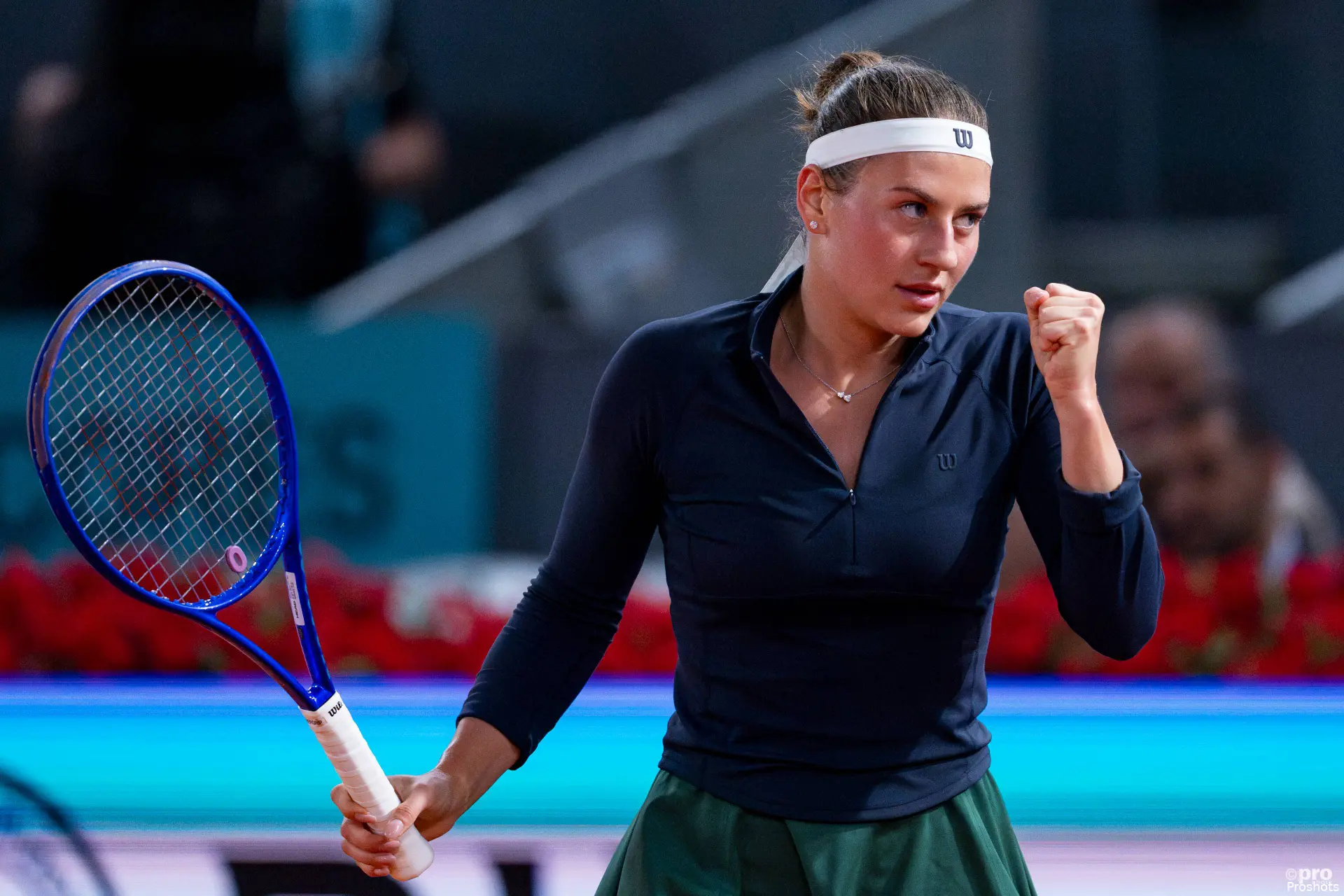
There are plenty of ways to spot a future Grand Slam champion. You can look at rankings. You can look at strokes. You can look at athleticism or results against top players. Or you can watch what happens in the moments when things start to unravel. That’s where the real answer usually lives.
Marta Kostyuk is not yet a Grand Slam champion. She is not even, by most conventional measures, at the absolute peak of her game. But if you watch her closely, especially over the past eighteen months, something more important is happening. She is becoming harder to break, as evidenced by last night’s lopsided third set win in Madrid against the “Austrian,” Potapova. Kostyuk goes to her first WTA 1000 final riding not only an 11-match winning streak, but the greatest strength she has evinced in her career
Not just physically. Emotionally. That distinction matters more than most people realize. For years, Kostyuk’s talent has never been in question. She has always had the tools: clean ball-striking, elite movement, and the kind of instincts that cannot be taught. But like many players who arrive early on the big stage, her ceiling seemed, at times, self-imposed. Matches would swing. Momentum would slip. The gap between her best tennis and her average tennis was simply too wide.
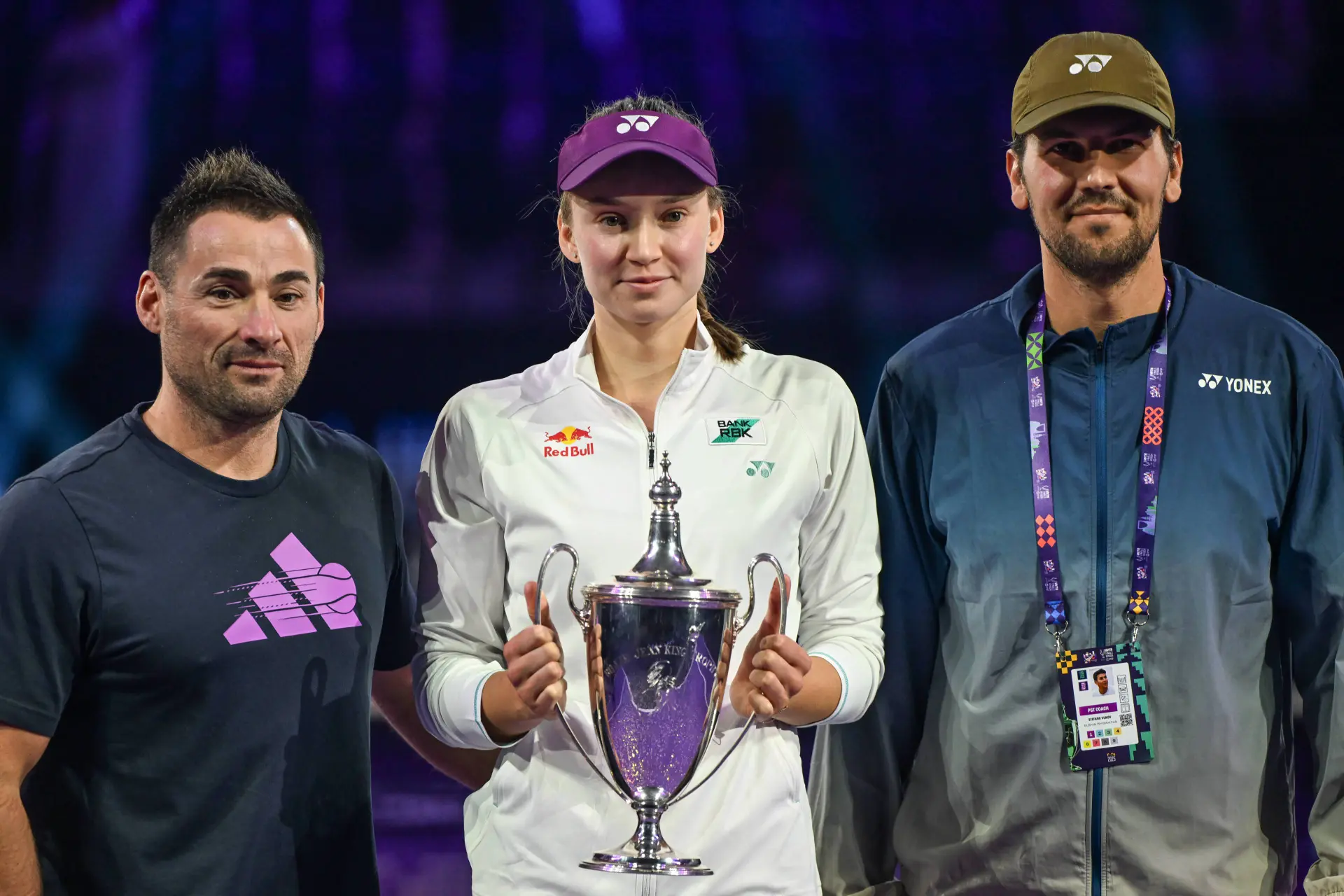
The big difference for Kostyuk
That gap is closing. And the reason why has a name: Sandra Zaniewska. Since partnering in the summer of 2023, Kostyuk and Zaniewska have built something that increasingly looks like one of the most effective player–coach relationships on the WTA Tour. Not flashy. Not overexposed. Just quietly, consistently transformative. This is not about technical overhaul. Kostyuk already had the game. This is about calibration.
Zaniewska has helped her redefine what her limits actually are. That sounds simple, but in elite tennis it is rare. Most players spend their careers operating within a range they believe to be fixed. They manage expectations instead of expanding them. Kostyuk is doing the opposite. You can see it in how she handles adversity mid-match. Points that used to spiral now reset. Games that might have slipped away are fought through with a different kind of composure. There is less visible frustration, more controlled aggression, and a growing willingness to stay in difficult rallies without forcing an outcome too early.

Marta Kostyuk plays in the final of the Madrid Open tomorrow.
That is not just maturity. That is learned belief. And belief, in tennis, is often the final barrier between very good and great. What makes this partnership particularly compelling is that Zaniewska brings the perspective of someone who lived the professional grind without reaching the very top tier. That experience matters. It creates a coaching dynamic grounded in realism rather than theory. There is credibility in the message, and clarity in how it is delivered.
More importantly, there is trust. Kostyuk is not just being coached. She is being understood. And when a player feels that, the game slows down. Decisions improve. Execution follows. We have seen this pattern before. Historically, the most successful player–coach pairings are not always the most obvious ones. They are the ones where the coach expands the player’s sense of what is possible.
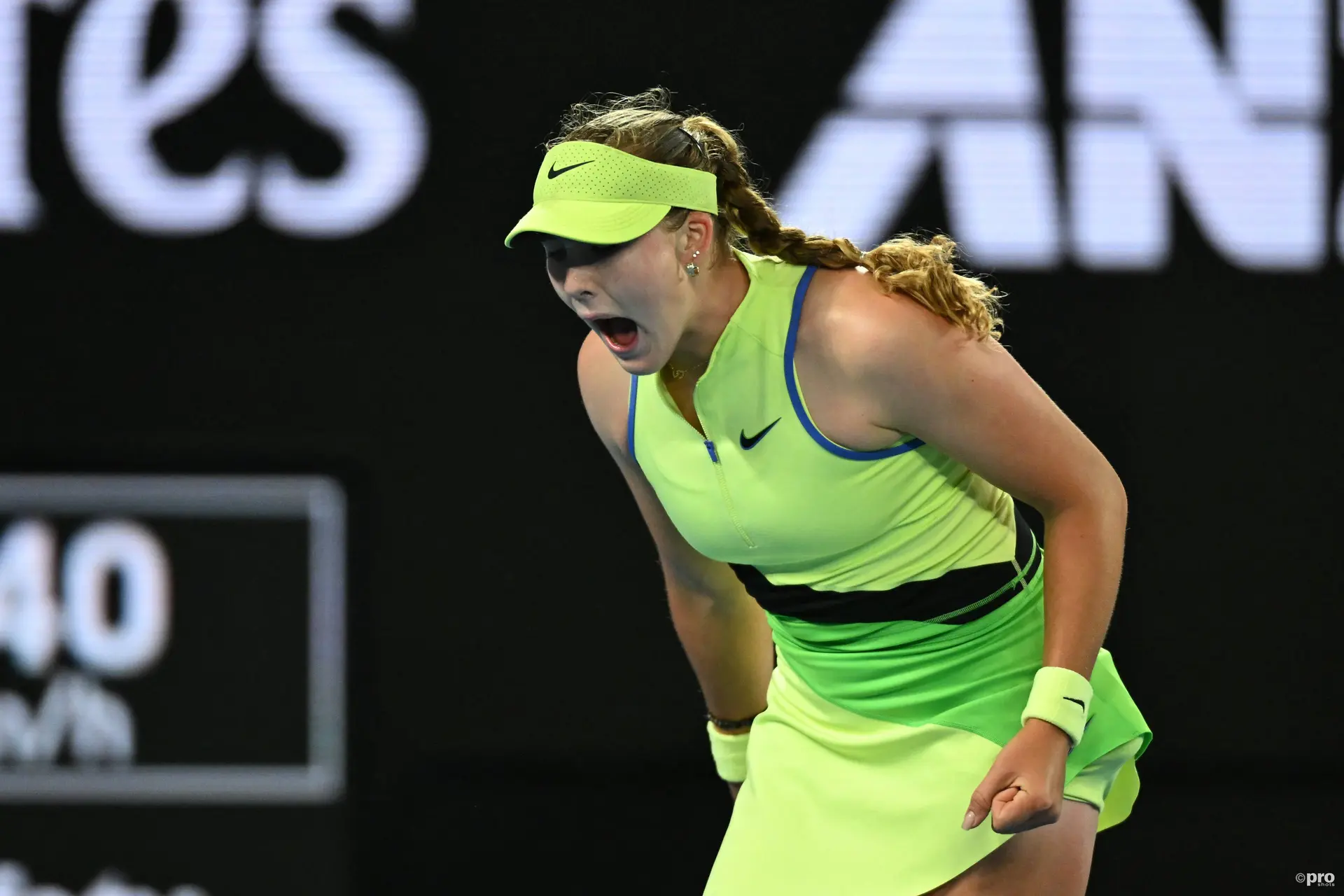
That is exactly what is happening here. The timeline matters too. By the end of 2027, Kostyuk will be in what is typically the prime competitive window for modern WTA players. The physical base will be fully built. The emotional volatility that defines early careers will have stabilized. And if her current trajectory continues, the mental side of her game will no longer be a question mark. It will be an advantage. That is when Grand Slams are won. Not when everything is perfect, but when enough pieces have aligned and the player trusts themselves to navigate the chaos that defines the second week of a major.
Kostyuk is getting closer to that point. She is not there yet. And that is precisely why this prediction matters. The easy picks are the players already holding trophies. The harder, more interesting call is identifying the player who is still assembling the version of themselves that can win one. Kostyuk is assembling that version now. And when it arrives, it will not feel sudden at all. It will feel inevitable.

Aron SolomonGuest Author
A Pulitzer Prize-nominated journalist for his groundbreaking op-ed in The Independent exposing the NFL’s “race-norming” policies, Aron Solomon, JD, is a globally recognized thought leader in law, media, and strategy.
As Chief Strategy Officer for AMPLIFY, he leverages his deep expertise to shape the future of legal marketing. Aron has taught entrepreneurship at McGill University and the University of Pennsylvania and was honored as a Fastcase 50 recipient, recognizing him among the world’s top legal innovators. A prolific commentator on law, business, and culture, his insights regularly appear in Newsweek, The Hill, Crunchbase News, and Literary Hub.
He has also been featured in The New York Times, Fast Company, Fortune, Forbes, CBS News, CNBC, USA Today, ESPN, TechCrunch, BuzzFeed, Venture Beat and countless other leading global media outlets. We are proud to have Aron on board at TennisUpToDate, where his deep tennis expertise enriches the site with sharp, original columns that connect the sport to wider cultural debates.
claps 2visitors 1
Just In

Popular News
Latest Comments
- A healthy Qinwen may be hard to stop next season. She was already scaring her opponents before her medical leave(s). Unfortunately, Zheng insisted on singing again. On the positive side -- Mirra did not sing!! ;~}
 mandoist11-10-2026
 - Where is it written that athletes, entertainers... People in general... are mandated to keep looking at -- or even using [anti]Social Media? Public & private figures consistently complain and reveal their concerns about negativity and violence thrown at them -- yet they insist on participating. Avoid it, don't use it, don't read it. It's okay to occasionally look up at the World instead beating your eyes & thumbs to death on The Inventions out there.mandoist11-10-2026
- great articlestennisseserver07-10-2026
- Medvedev was leading Djokovic 7-5, 3-5 when an attempted return..' NO you ignorants, Djokovic was leading .weiss05-10-2026
- No more bullshit "Wildcards" to these two. Qualify like everyone else -- there will be cameras there, too. Time to scream... WTF ????!!!!mandoist29-09-2026
- Let's not BS the general public -- Sabalenka started showing cracks in her game last season. Her losses and near-losses started at about the same time she began being distracted by Fame (constant Selfies, making TV commercials, magazine shoots, endless Social Media nonsense, etc., etc.) One would think even Saba could recognize the parallels with others who failed before her -- Raducanu, Giorgi, Bouchard to name a few.mandoist25-09-2026
- Gross!! Hey Raducanu, Giorgi, and Bouchard -- reserve a seat at your Social Media Selfie table for Saba + Naomi. They're heading in your direction soon enough.mandoist24-09-2026
- And then these same players will complain about how lengthy their season’s were and need more time-off. I’m all for more tennis but the amount of tennis we get now is actually kind of crazy! We all need a break, especially the players.DaveyWavey23-09-2026
- You should do a comparison article for "different kinds of justice" the courts decide for tennis players. I can think of at least three players who received very small bans of a few months, however Tara Moore has been fighting for her literal survival the past few years. It seems odd considering she is not a "name" player, unlike the other cases.DaveyWavey22-09-2026
- PRIZE MONEY & POINTS Winner - $185,500 Finalist - $114,500 Semi-Finalist - $66,003 Quarter-Finalist - $35,000 Round of 16 - $18,045 Round of 32 - $13,005 Winner - 500 Finalist - 325 Semi-Finalist - 195 Quarter-Finalist - 108 Round of 16 - 60 Round of 32 - 1DaveyWavey20-09-2026

Loading