
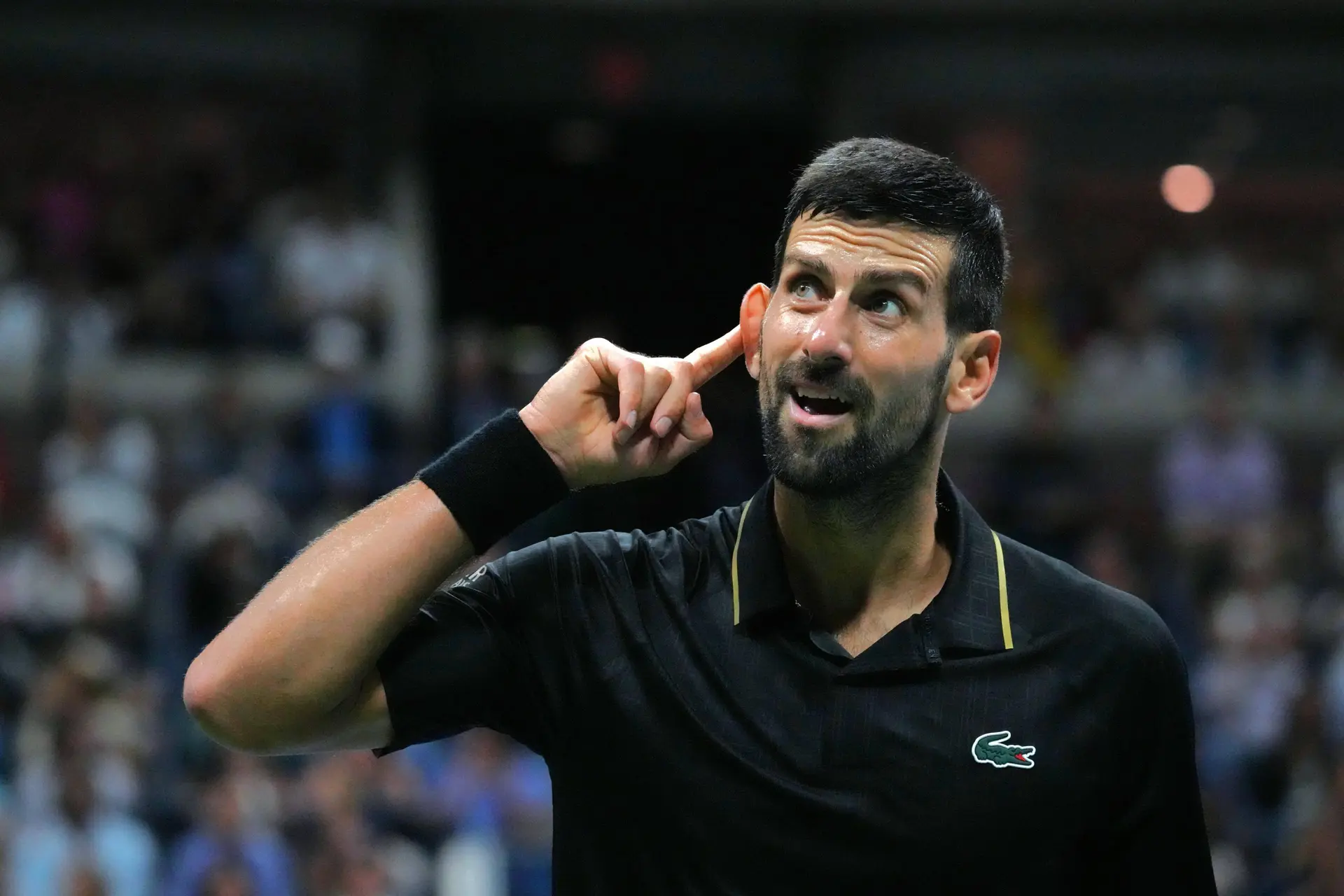
Marcos Baghdatis may not have won a Grand Slam, but he certainly left his mark on men’s tennis. The Cypriot star, known for his fiery personality and thrilling shot-making, had a career filled with memorable highs, including a 2006 Australian Open final and a Wimbledon semi-final, and tough battles against some of the greatest players the sport has ever seen. But when asked to name the toughest opponent he ever faced, Baghdatis didn’t hesitate: Novak Djokovic.
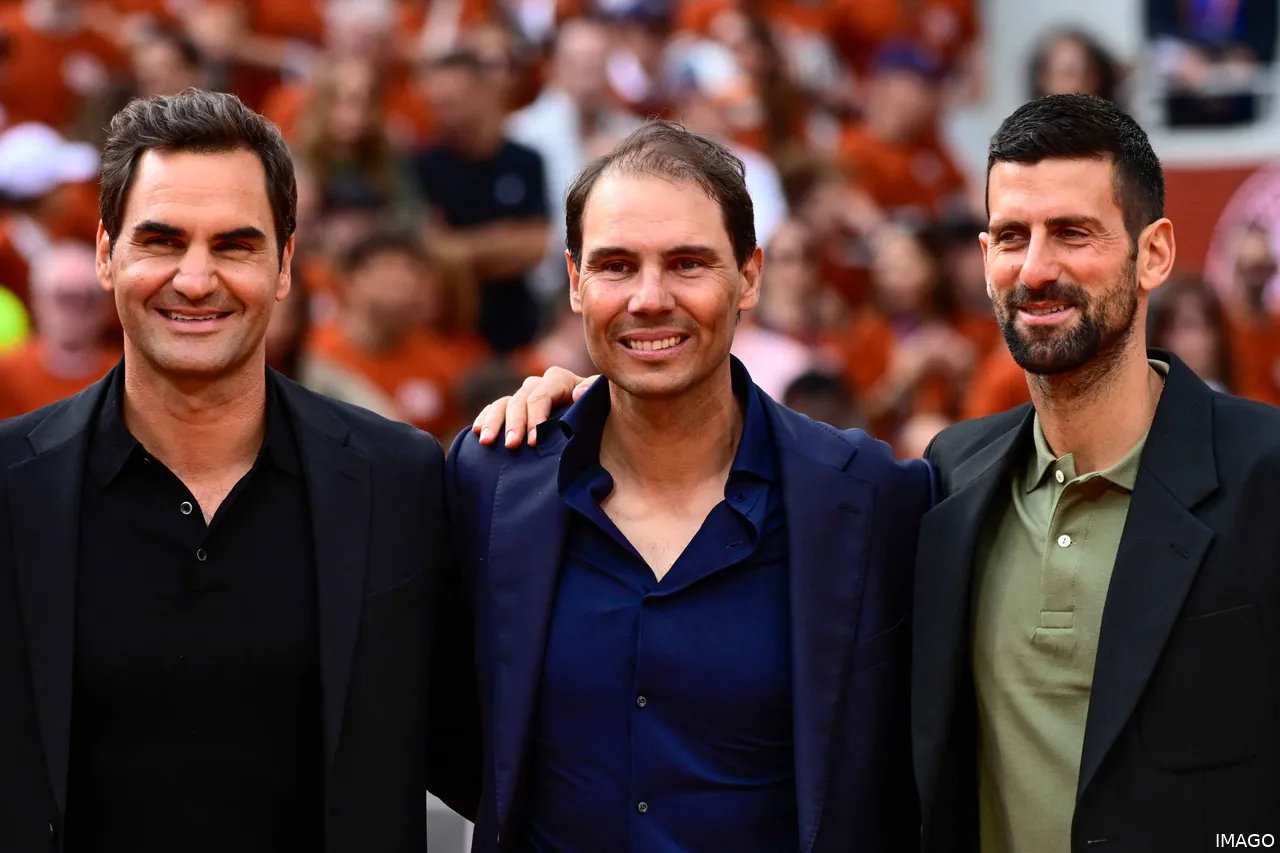
Baghdatis’s career spanned some of the most competitive years in men’s tennis, a golden era dominated by the so-called “Big Three": Roger Federer, Rafael Nadal, and Novak Djokovic. He competed against all three multiple times and even claimed victories over Federer and Nadal. Yet Djokovic, he said, was on another level entirely.
Why Djokovic was his nemesis
When you look at Baghdatis’s head-to-head record against the sport’s elite, the statistics tell a story. He faced Federer 10 times and Nadal nine, winning one match against each in 2010, Indian Wells for Federer and Cincinnati for Nadal. Against Djokovic, however, it was a different story. Baghdatis never won. Not once. Across eight meetings from 2007 to 2015, the Cypriot was 0‑8.
Baghdatis’s explanation for Djokovic being the toughest is simple, yet telling: “I never beat him," he said to Tennis 35. But it’s not just about the numbers. Baghdatis recalls matches where he managed to take a set off Djokovic, including in Grand Slam encounters, yet even in those moments, the feeling of being able to challenge him fully never arrived. “With Federer and Nadal, I always felt I could find a way to challenge them,” he said. “With Djokovic, that never happened. He just seemed to have all the answers.”
One particular match stands out in Baghdatis’s memory: the 2015 Indian Wells Masters, where Djokovic defeated him. "I felt like the guy gave me a lesson,” Baghdatis recalled. “You realize you are up against someone who is not just strong, but nearly impossible to outthink.” For Baghdatis, Djokovic represented a mental and tactical wall that he simply couldn’t climb, a puzzle he never solved.
The big three and the golden era
While Djokovic proved to be the toughest, Baghdatis had deep respect for Federer and Nadal. He acknowledged the unique challenges they presented but found them, in some ways, more approachable. Against Federer, Baghdatis enjoyed the thrill of facing a player whose style was so elegant it seemed almost effortless. Against Nadal, he faced the relentless intensity and ferocious topspin that defined the Spaniard’s career. In both cases, Baghdatis believed he could find weaknesses, exploit them, and win, and he did, once each.
This was a time in tennis history when top-level competition was intense. Players like Juan Martín del Potro, Stan Wawrinka, Marin Čilić, David Ferrer, Jo-Wilfried Tsonga, and Tomáš Berdych were all capable of deep runs in major tournaments. Baghdatis’s era demanded not only technical skill but also tactical intelligence and mental resilience. The fact that Djokovic stood out even among these giants speaks volumes about his dominance.
Baghdatis’s reflections also highlight the psychological element of tennis. Facing Federer and Nadal, he felt he could devise strategies and fight his way to a win. Against Djokovic, the Cypriot felt a different kind of pressure: an intangible sense that no matter what he tried, Djokovic had already anticipated it. This mental hurdle made every match a unique challenge, one that left a lasting impression on Baghdatis long after the rallies ended.
Legacy beyond the scoreboard
Despite the struggles against Djokovic, Baghdatis’s career is celebrated for his passion and resilience. His battles against the Big Three and other top players showcased a fearless competitor who brought excitement and emotion to the court. He proved that even players who aren’t consistently at the very top can leave a memorable legacy by challenging greatness and giving fans unforgettable moments.
For Baghdatis, Djokovic was a benchmark, the player who pushed him to the limit and highlighted the elite standard of the era. Yet it was these very challenges that made Baghdatis a better player, forcing him to evolve his game and adapt to the highest level of competition. His career is a reminder that tennis greatness is measured not only by titles but also by the battles fought against the sport’s best.
Ultimately, Baghdatis’s story is one of admiration, respect, and the thrill of competition. Facing Djokovic, Federer, and Nadal allowed him to test his limits, and in doing so, he carved out his own place in tennis history. For fans and aspiring players alike, his reflections serve as a vivid reminder: sometimes the toughest opponents are the ones who teach you the most, even if you never beat them.

claps 0visitors 0
Just In

Popular News
Latest Comments
- A healthy Qinwen may be hard to stop next season. She was already scaring her opponents before her medical leave(s). Unfortunately, Zheng insisted on singing again. On the positive side -- Mirra did not sing!! ;~}
 mandoist11-10-2026
 - Where is it written that athletes, entertainers... People in general... are mandated to keep looking at -- or even using [anti]Social Media? Public & private figures consistently complain and reveal their concerns about negativity and violence thrown at them -- yet they insist on participating. Avoid it, don't use it, don't read it. It's okay to occasionally look up at the World instead beating your eyes & thumbs to death on The Inventions out there.mandoist11-10-2026
- great articlestennisseserver07-10-2026
- Medvedev was leading Djokovic 7-5, 3-5 when an attempted return..' NO you ignorants, Djokovic was leading .weiss05-10-2026
- No more bullshit "Wildcards" to these two. Qualify like everyone else -- there will be cameras there, too. Time to scream... WTF ????!!!!mandoist29-09-2026
- Let's not BS the general public -- Sabalenka started showing cracks in her game last season. Her losses and near-losses started at about the same time she began being distracted by Fame (constant Selfies, making TV commercials, magazine shoots, endless Social Media nonsense, etc., etc.) One would think even Saba could recognize the parallels with others who failed before her -- Raducanu, Giorgi, Bouchard to name a few.mandoist25-09-2026
- Gross!! Hey Raducanu, Giorgi, and Bouchard -- reserve a seat at your Social Media Selfie table for Saba + Naomi. They're heading in your direction soon enough.mandoist24-09-2026
- And then these same players will complain about how lengthy their season’s were and need more time-off. I’m all for more tennis but the amount of tennis we get now is actually kind of crazy! We all need a break, especially the players.DaveyWavey23-09-2026
- You should do a comparison article for "different kinds of justice" the courts decide for tennis players. I can think of at least three players who received very small bans of a few months, however Tara Moore has been fighting for her literal survival the past few years. It seems odd considering she is not a "name" player, unlike the other cases.DaveyWavey22-09-2026
- PRIZE MONEY & POINTS Winner - $185,500 Finalist - $114,500 Semi-Finalist - $66,003 Quarter-Finalist - $35,000 Round of 16 - $18,045 Round of 32 - $13,005 Winner - 500 Finalist - 325 Semi-Finalist - 195 Quarter-Finalist - 108 Round of 16 - 60 Round of 32 - 1DaveyWavey20-09-2026

Loading