“All those hacks are just apps, not the operating system”: Aryna Sabalenka’s coach explains the mindset shift behind her rise to World No. 1
WTA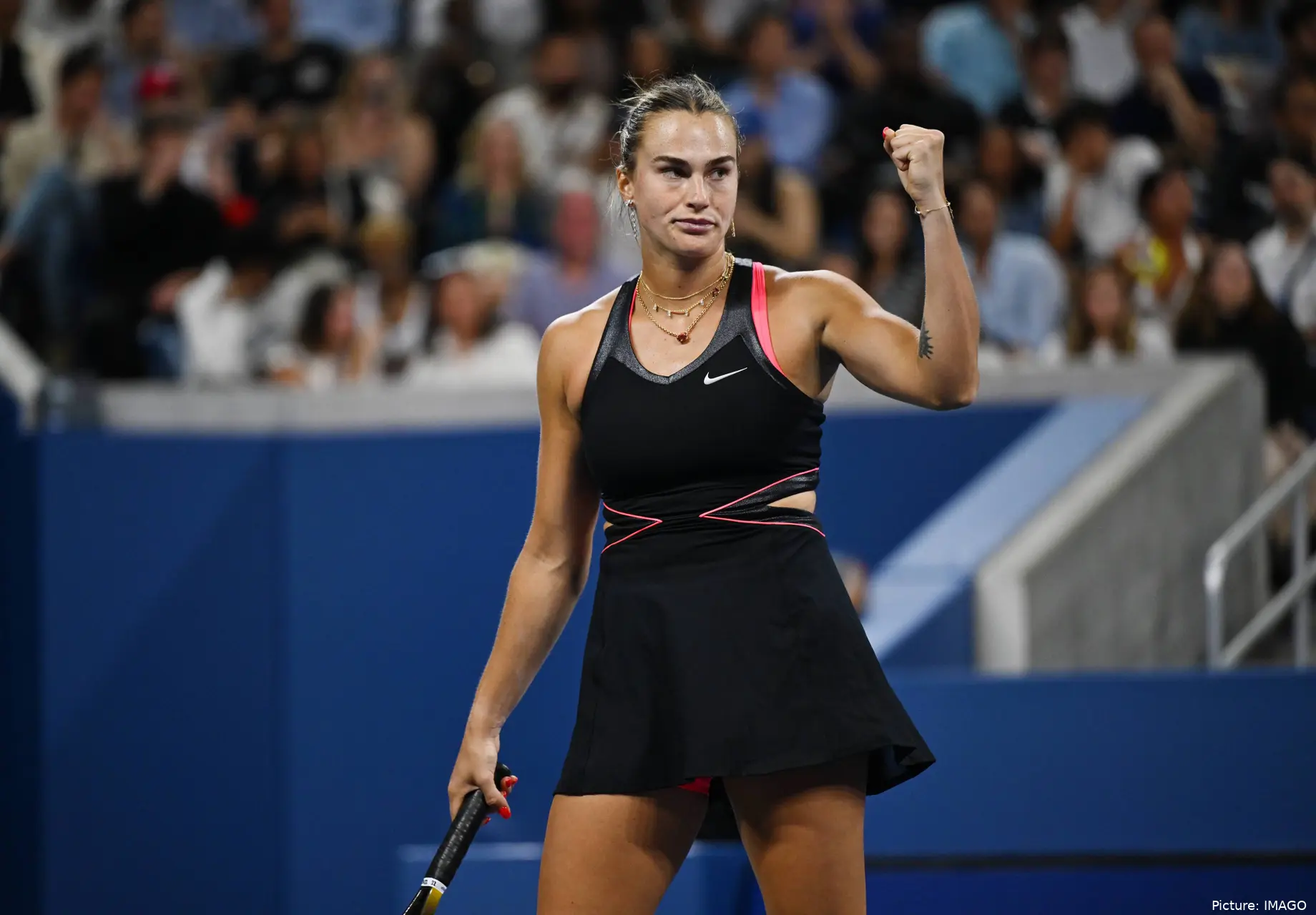
Aryna Sabalenka’s 2025 season will go down as the year of total consolidation. Finishing the year as the World No. 1 and capturing her fourth Grand Slam title at the US Open, the Belarusian successfully transitioned from a volatile challenger to the tour’s most consistent force.
At the center of this stabilization is Jason Stacy, her performance and mental coach. A figure with a background in martial arts and biomechanics rather than traditional tennis pedagogy, Stacy has spent years re-engineering Sabalenka’s psychological approach. His methods, often viewed as unconventional, focus on embracing the inherent lack of control in the sport. While other top players frequently cite the grueling calendar as a detriment to performance, Stacy argues that accepting the schedule’s "constant cycle" is the only path to longevity.
Stacy confirmed he is releasing a book titled The Pressure Code, set to hit shelves between late December and early January. This publication marks a shift for the coach, who admits he was previously reluctant to share his "Three E's" framework (Energy, Emotions, Environment) publicly.
However, Stacy’s most cutting analysis relates to how the broader tennis world approaches improvement. He notes that players often try to fix a slump by changing coaches or rackets—what he calls "apps"—without addressing their fundamental behavioral patterns. He offered a sharp critique of this tendency, using a technological analogy to explain why superficial changes fail to produce sustained results like Sabalenka's:
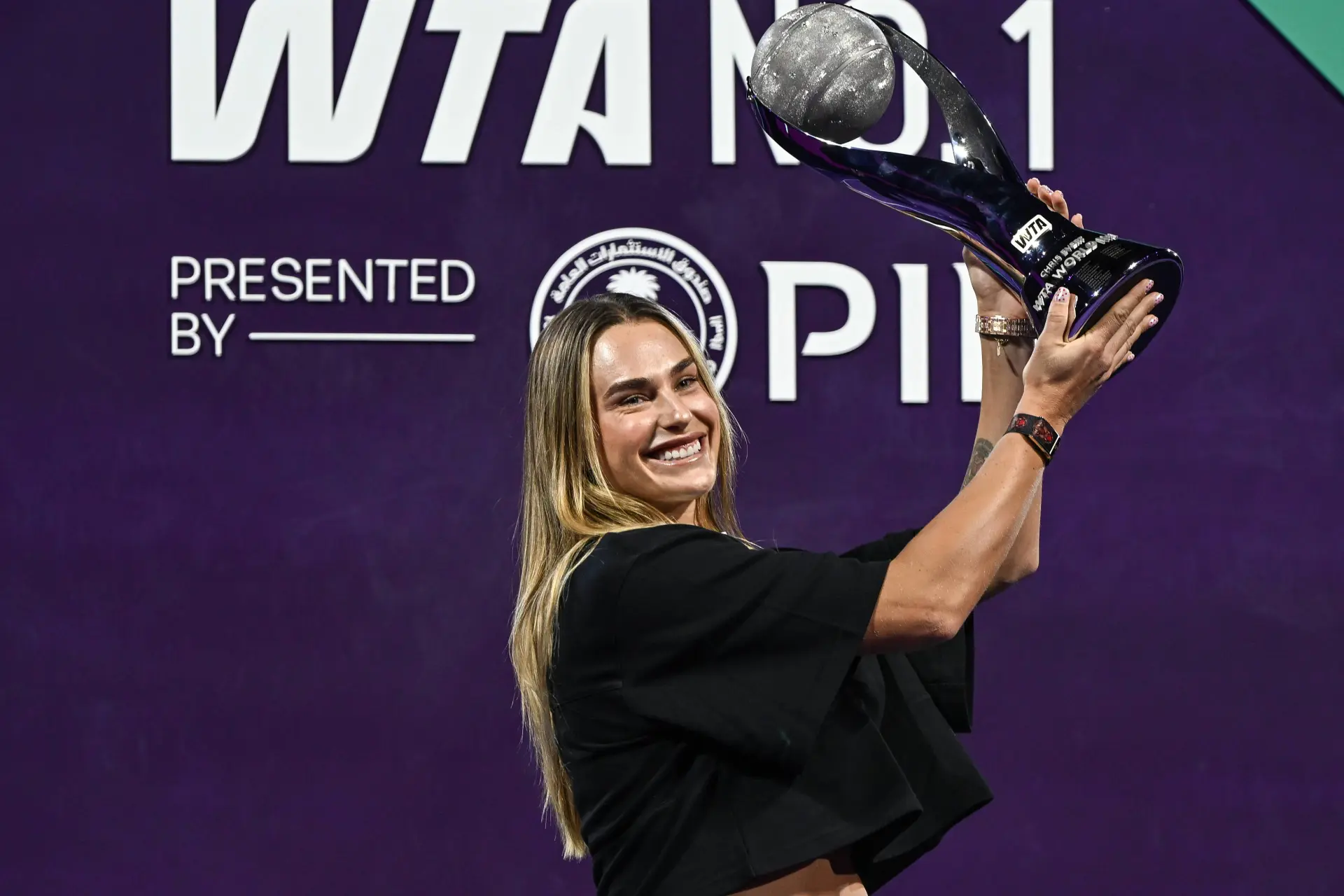
"All the programs that people have, the systems they follow, the strategies, all these different hacks that people do these days, all those things, those are kind of like the apps on your phone, right? And the three E's (Energy, Emotions, Environment) are like the operating system of the phone. So most people, they're chasing new apps all the time... but they don't actually look at the deeper part, the operating system," he said to Inside-In.
The shift from self-interest to legacy
Beyond the structural theories, Stacy identified a specific psychological pivot that saved Sabalenka from the "post-success void" that claims many champions. After a player achieves their life-long dreams—winning a Major and hitting No. 1—motivation often evaporates. Stacy acknowledges that early in a career, a player is naturally driven by "chasing the money" or the desire to prove themselves to the world. However, those fuels burn dirty and run out quickly once the objectives are met.

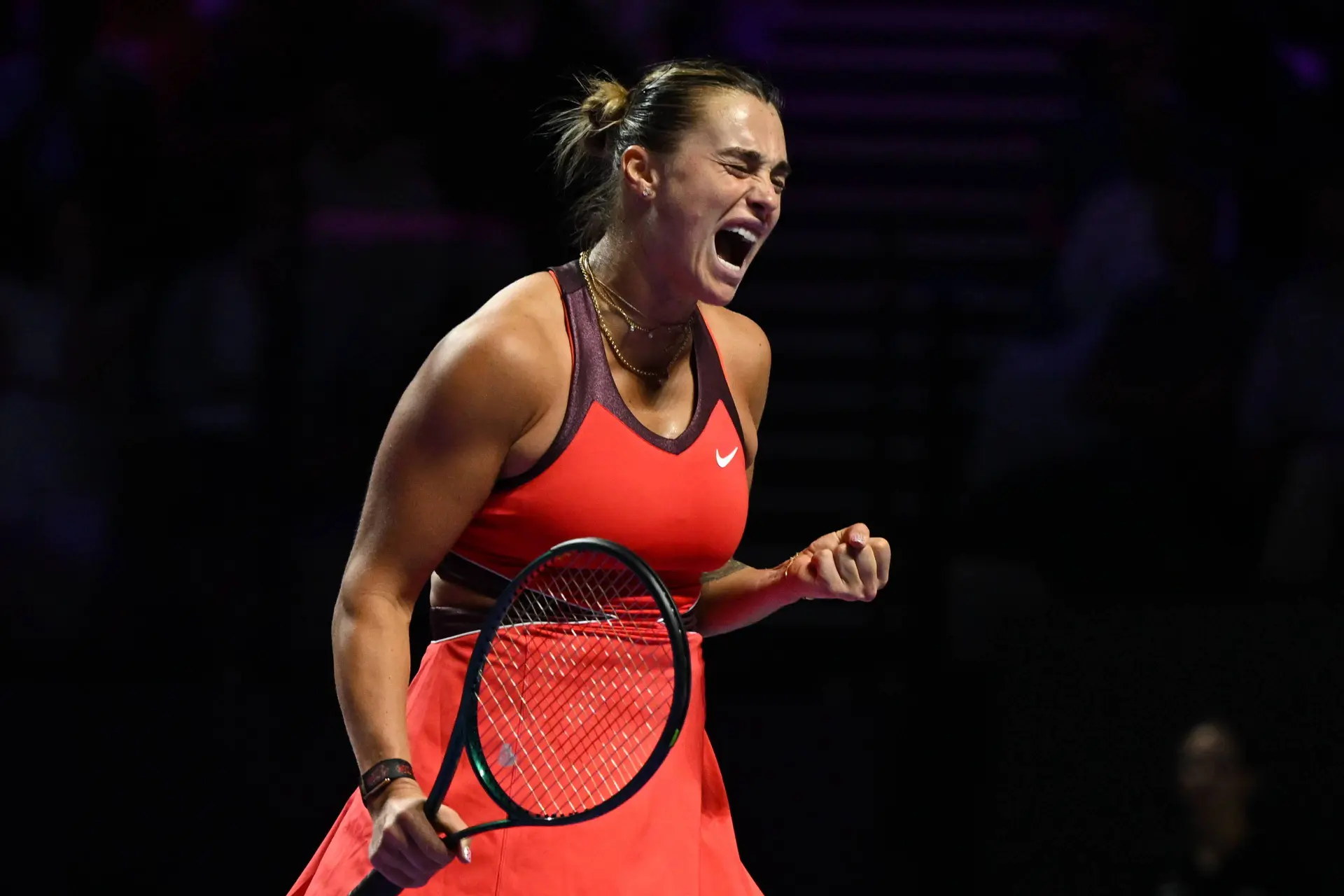
Aryna Sabalenka celebrating a point at the 2025 WTA Finals
To maintain the intensity required to defend a World No. 1 ranking throughout 2025, the team had to reconstruct Sabalenka’s "why." Stacy revealed that the focus moved entirely away from personal accolades. The coaching staff worked to instill a sense of duty to the "family name" and the team itself. By externalizing the motivation, the pressure became less about personal failure and more about collective responsibility, allowing Sabalenka to bounce back faster from defeats.
Stacy detailed this critical evolution, explaining that the longevity of a modern champion depends on fighting for a cause greater than the individual: "What I think the shift happens is that you go from, you're kind of like fighting for yourself to get this thing that you want so bad, to where now you're fighting for everyone around you. You're fighting for your family name, maybe. Like for me, it's a legacy for her name, right? For her, it's the team... It's not about you. You're out there like, no. And you're always going to do that extra for everyone else."
Embracing the chaos of the tour
Finally, Stacy addressed the logistical complaints that have become a staple of WTA press conferences. With the calendar expanding and conditions varying wildly from week to week, consistency is the hardest metric to achieve. Stacy’s background in grappling and MMA influences his view here; he teaches that "zero control" over the environment should not induce panic. Instead of trying to force the schedule to fit a perfect plan, the team focuses on "rhythm" and adaptability.
This philosophy was put to the test during the 2025 season, where varied time zones and match uncertainties played a major role. Rather than viewing these as administrative failures by the tour, Stacy views them as a competitive advantage for those mentally equipped to handle them. He explained his unique enthusiasm for the very aspects of professional tennis that drive other coaches crazy:
"The schedule... Just the fact that they're in different time zones all the time. There's all these variables that like as a performance coach, I want to control, right? As an athlete, I want to control as a coach, you need to control and you have zero control over. And so that was to me like, Ooh, I love this. This is like amazing. Like I love this constant puzzle... having to adapt."

Cristhián AvilaTennis Journalist
Cristhián Ávila is a tennis journalist based in Santiago, Chile, and has been part of the TennisUpToDate team since early 2023. He covers the ATP and WTA Tours as well as all four Grand Slams, producing breaking news, match reports, analysis, and regular liveblogs from major tournaments.
His reporting combines statistical analysis with clear explanation, helping readers understand tactical developments, player form, and broader storylines across the tour. Working fluently in both Spanish and English, Cristhián collaborates with an international editorial team and contributes to comprehensive global coverage. As part of his work, he has conducted interviews and media interactions with leading figures in the sport, including Caroline Wozniacki and John McEnroe.
In his journalism, Cristhián places strong emphasis on careful sourcing, editorial accuracy, and updating articles promptly when new, verified information becomes available. His coverage is grounded in research, context, and direct engagement with professional tennis.
claps 0visitors 0
Just In


Popular News
Latest Comments
- Does Sinner need that 4.5 mil? I doubt it. He can make that with three modelling gigs!😅🤣Rapunzel21-10-2026
- Did "People Magazine" purchase this website? This nonstop storyline is bullshit.
 mandoist21-10-2026
 - Listen... this is of no concern to anyone but these two. Deal with your own issues -- most of us have our own. Thanks, media, for these insignificant follow-ups which are meaningless.mandoist21-10-2026
- This is so very very sad, for all three of them. I truly thought they had an unbreakable bond, but life throws up so many differing challenges. Having your homeland suffering in such a terrible way, makes happiness lose out to guilt as well. Our thoughts are with them. X💔bjsexton20-10-2026
- I have lost all respect for Svitolina! Could she not have waited until he had played at the Paris Masters!!! She is selfish and don't give a damn about Gael. That is NOT how love is demonstrated Elina!!Rapunzel19-10-2026
- Perhaps convenient tennis tour sex is not a strong enough experience in which to base a marriage?mandoist19-10-2026
- Fight the Good Fight... Tennis (sports in general) need more Humans such as yourself.mandoist18-10-2026
- When is WTA going to mandate Genetic Testing (DNA) ???mandoist18-10-2026
- Hey, Dan... you just wake up from a coma? Regardless -- Thanks for the comedy this morning!mandoist18-10-2026
- Two Things: 1. Stop allowing these Spoiled Trust-Fund Elitists to behave badly. Your little hand-slaps do not deter them. 2. STOP the incessantly annoying "towel wiping" nonsense!!!!mandoist15-10-2026

Loading