“I would be equally happy if I lost”: Marta Kostyuk explains why winning is no longer the only goal
WTA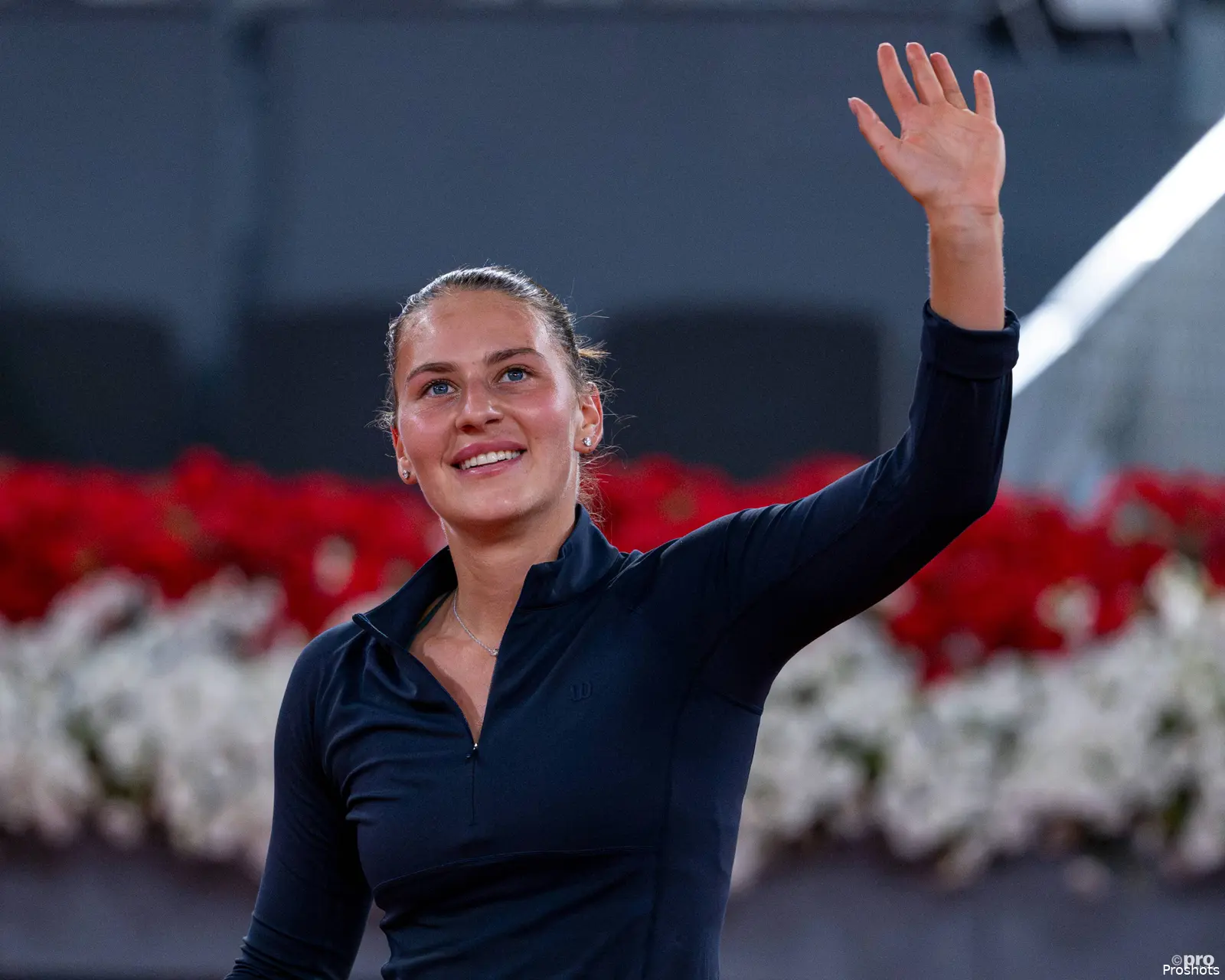
Marta Kostyuk’s Wimbledon run is being defined less by tactical evolution and more by a visible shift in competitive psychology. The Ukrainian, now into the fourth round, has framed her recent surge not as a technical breakthrough, but as a recalibration of expectations and internal pressure.
After defeating 23rd seed Emma Navarro in a three-set battle, Kostyuk moved into the second week at the All England Club for the first time, continuing a season marked by consistency across surfaces and extended runs at major events.
Her trajectory this year includes a strong clay-court swing with titles in Rouen and Madrid, alongside a Roland Garros semi-final appearance. At Wimbledon, she has added wins over Nadia Podoroska, Anna Blinkova, and Navarro, building one of her most complete Grand Slam campaigns.
Yet the most striking element of her progress is not statistical but conceptual. Kostyuk herself has repeatedly emphasised that her performance is now tied to enjoyment and mental balance rather than outcome-driven pressure.
Read also
“I would be equally happy” – a shift away from result dependency
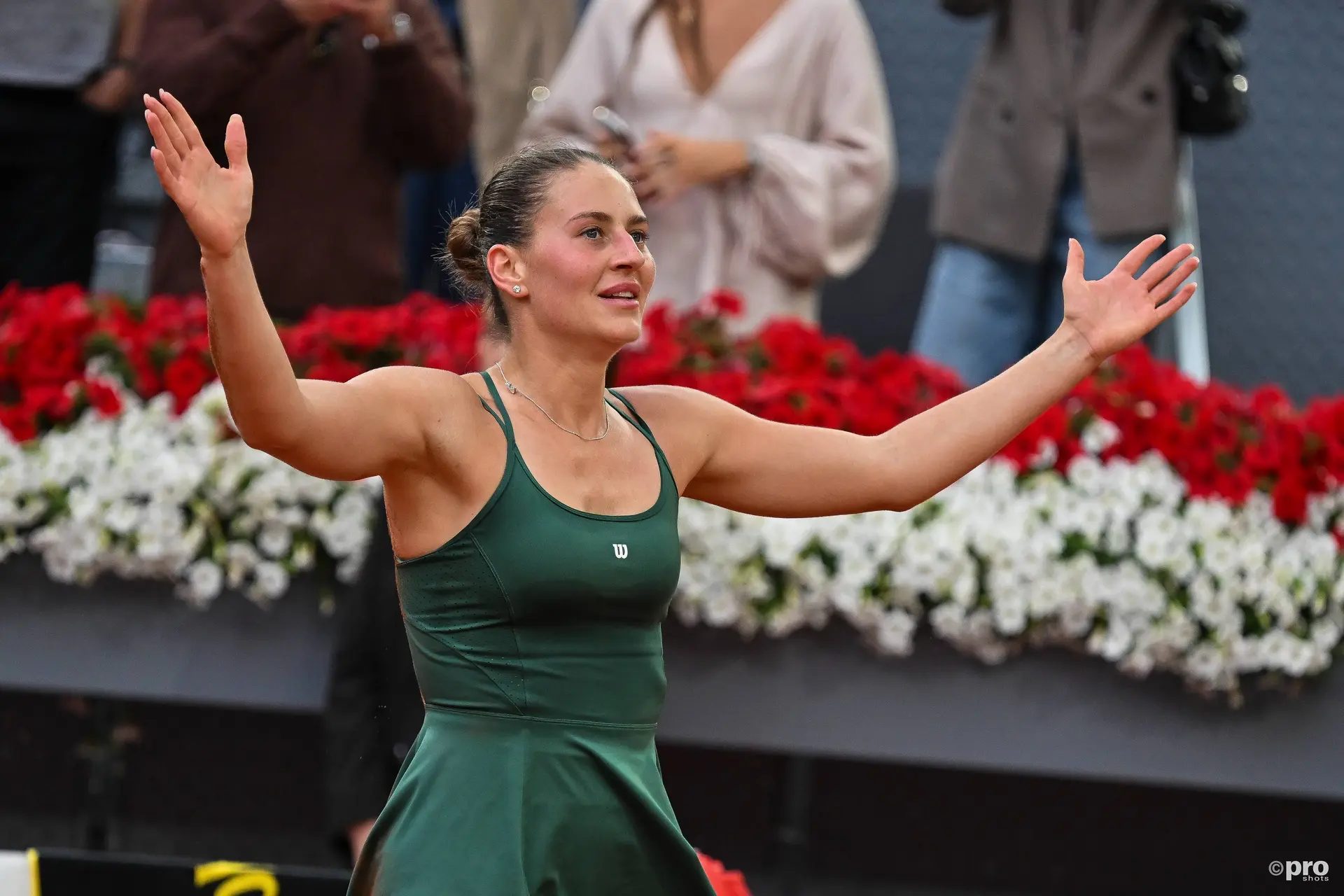
Kostyuk’s post-match comments after beating Navarro underline a mindset that diverges from conventional elite sport framing, where victory is typically the dominant metric. Instead, she described a performance state where result and satisfaction are no longer strictly aligned.
This reflects a broader change in her competitive approach. “Well, I have no problem talking about good things about myself, for sure. I think the previous match and this match both were great," the 24-year-old player said in press conference. "Good tennis. At the end, for me, it's all that matters because you win some, you lose some. I would be equally happy today whether I won or lost this match because I made it so far already.”
That framing is unusual in a tournament environment like Wimbledon, where pressure increases significantly from the third round onward. For Kostyuk, however, progression itself has become a stabilising factor rather than a source of escalation.
She explicitly linked this approach to her expectations entering the tournament, which were shaped by previous early exits and a desire to break a recurring pattern of first-round disappointments. “Wimbledon, I was coming here thinking, please, just don't lose first round again. And here I am in the fourth, so very happy.”
Mental restructuring behind a career-best run
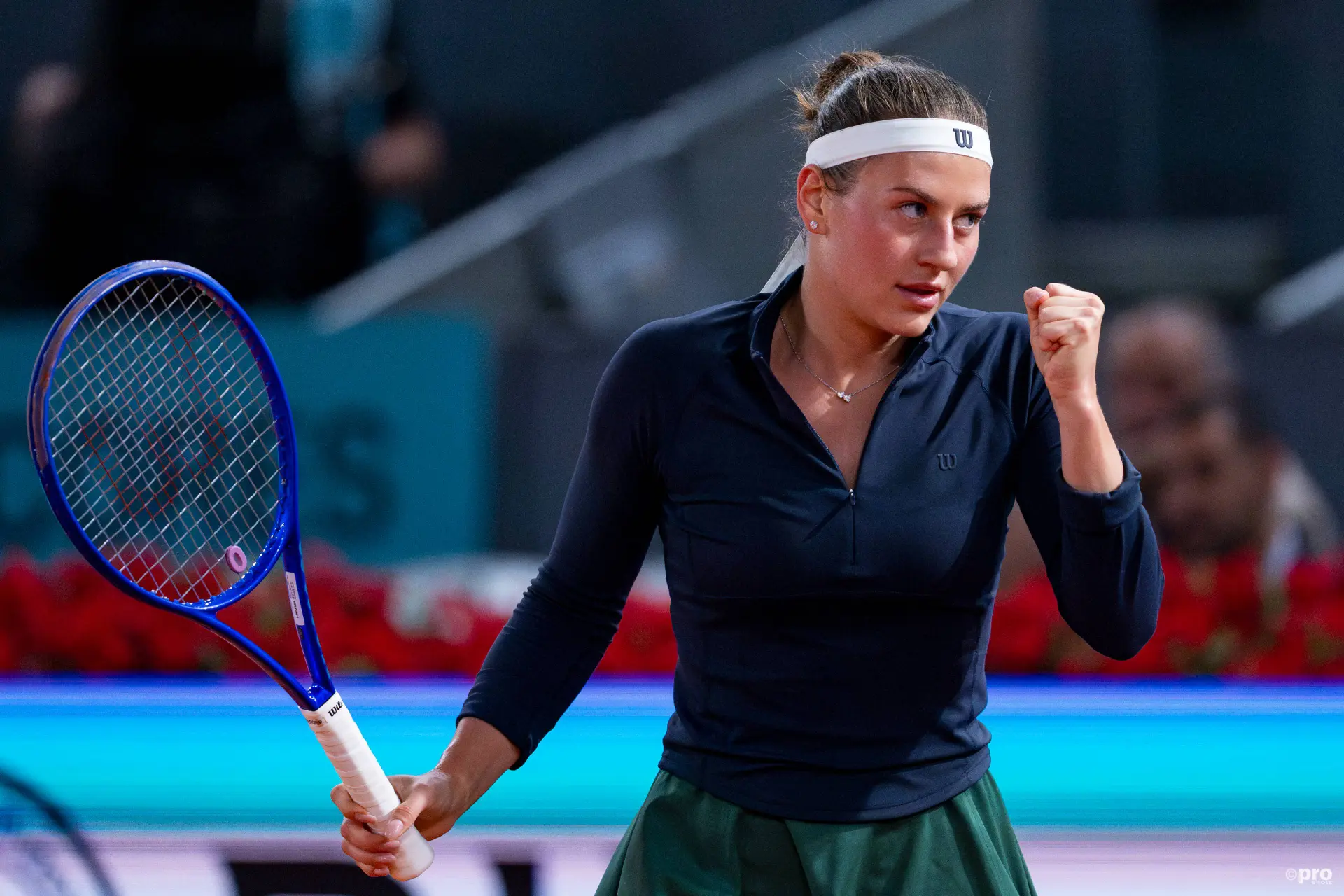
The underlying explanation Kostyuk offers for her form is not technical adjustment but psychological simplification. She repeatedly returned to the idea of reducing internal pressure as the primary driver of performance gains.
This interpretation aligns with her broader results trend: a 19-1 stretch in singles and deep runs at both Roland Garros and Wimbledon. While such numbers suggest peak physical condition, she attributes them more directly to emotional regulation. “Maybe just learn to be kinder to myself, I guess, is the key.”
Her analysis also reflects a broader elite-level reality: margins in women’s tennis are increasingly defined by small statistical and psychological differences rather than large tactical gaps.
“I think all the players know how to play tennis, especially at the level that I'm at. And it's really a matter of a few points, few statistics, few percent of whatever it is. And everything counts here. And I feel like if you can give yourself the best chance, especially in your head, you can find a lot of answers.”
Kostyuk also referenced the idea that success may simply be a function of timing and accumulated experience, rather than sudden transformation. “Maybe. I don't know. I worked really hard all my life and especially in my career in the last few years. And I think, you know, hard work pays off, I guess. Eventually it does. You know, everybody has a different timeline. And this is your time right now.”
A broader philosophy: enjoyment as performance structure
Beyond results and rankings—she is projected around the edge of the top 10 in live standings—Kostyuk’s explanation extends into lifestyle and competitive sustainability. She explicitly described enjoyment as a structural element of her season rather than a consequence of winning.
This is particularly relevant in a tour context where scheduling density and constant competition create limited recovery windows between tournaments. “I am on tour for a very long time already and I feel like I missed out on a lot of incredible moments because I was so focused on winning, on achieving something."
"With tennis, it never stops. I play well here, there is the next tournament starting the next week. It never ends, so I probably found this formula for myself, no matter what the result is, the most important thing is to enjoy it 100 per cent. It is a privilege to be here.”

Cristhián AvilaTennis Journalist
Cristhián Ávila is a tennis journalist based in Santiago, Chile, and has been part of the TennisUpToDate team since early 2023. He covers the ATP and WTA Tours as well as all four Grand Slams, producing breaking news, match reports, analysis, and regular liveblogs from major tournaments.
His reporting combines statistical analysis with clear explanation, helping readers understand tactical developments, player form, and broader storylines across the tour. Working fluently in both Spanish and English, Cristhián collaborates with an international editorial team and contributes to comprehensive global coverage. As part of his work, he has conducted interviews and media interactions with leading figures in the sport, including Caroline Wozniacki and John McEnroe.
In his journalism, Cristhián places strong emphasis on careful sourcing, editorial accuracy, and updating articles promptly when new, verified information becomes available. His coverage is grounded in research, context, and direct engagement with professional tennis.
claps 0visitors 0
Just In

Popular News
Latest Comments
- A healthy Qinwen may be hard to stop next season. She was already scaring her opponents before her medical leave(s). Unfortunately, Zheng insisted on singing again. On the positive side -- Mirra did not sing!! ;~}
 mandoist11-10-2026
 - Where is it written that athletes, entertainers... People in general... are mandated to keep looking at -- or even using [anti]Social Media? Public & private figures consistently complain and reveal their concerns about negativity and violence thrown at them -- yet they insist on participating. Avoid it, don't use it, don't read it. It's okay to occasionally look up at the World instead beating your eyes & thumbs to death on The Inventions out there.mandoist11-10-2026
- great articlestennisseserver07-10-2026
- Medvedev was leading Djokovic 7-5, 3-5 when an attempted return..' NO you ignorants, Djokovic was leading .weiss05-10-2026
- No more bullshit "Wildcards" to these two. Qualify like everyone else -- there will be cameras there, too. Time to scream... WTF ????!!!!mandoist29-09-2026
- Let's not BS the general public -- Sabalenka started showing cracks in her game last season. Her losses and near-losses started at about the same time she began being distracted by Fame (constant Selfies, making TV commercials, magazine shoots, endless Social Media nonsense, etc., etc.) One would think even Saba could recognize the parallels with others who failed before her -- Raducanu, Giorgi, Bouchard to name a few.mandoist25-09-2026
- Gross!! Hey Raducanu, Giorgi, and Bouchard -- reserve a seat at your Social Media Selfie table for Saba + Naomi. They're heading in your direction soon enough.mandoist24-09-2026
- And then these same players will complain about how lengthy their season’s were and need more time-off. I’m all for more tennis but the amount of tennis we get now is actually kind of crazy! We all need a break, especially the players.DaveyWavey23-09-2026
- You should do a comparison article for "different kinds of justice" the courts decide for tennis players. I can think of at least three players who received very small bans of a few months, however Tara Moore has been fighting for her literal survival the past few years. It seems odd considering she is not a "name" player, unlike the other cases.DaveyWavey22-09-2026
- PRIZE MONEY & POINTS Winner - $185,500 Finalist - $114,500 Semi-Finalist - $66,003 Quarter-Finalist - $35,000 Round of 16 - $18,045 Round of 32 - $13,005 Winner - 500 Finalist - 325 Semi-Finalist - 195 Quarter-Finalist - 108 Round of 16 - 60 Round of 32 - 1DaveyWavey20-09-2026

Loading