
Coco Gauff began her 2026 Madrid Open campaign with a 6-3, 6-0 win over Léolia Jeanjean, advancing to the third round in 82 minutes. The world No. 3 produced a controlled performance, converting seven of 16 break points while winning 61.7% of return points and 60.6% behind her first serve, indicators of a match played largely on her terms.
The result follows a shorter run at the Stuttgart Open, where Gauff recorded one win before a quarter-final loss to Karolína Muchová. Madrid, however, represents a different phase of the clay swing, both in terms of conditions and recent history, having reached the final here last season.
That 2025 clay campaign remains the most consistent stretch of her career on the surface. Gauff finished runner-up in both Madrid and Rome—losing to Aryna Sabalenka and Jasmine Paolini respectively—before winning the Roland Garros title, her second Grand Slam and the result that ended Iga Świątek’s three-year run in Paris.
Despite those results, Gauff continues to frame her relationship with clay in cautious terms, highlighting a disconnect between output and perception that remains evident in her own assessment.
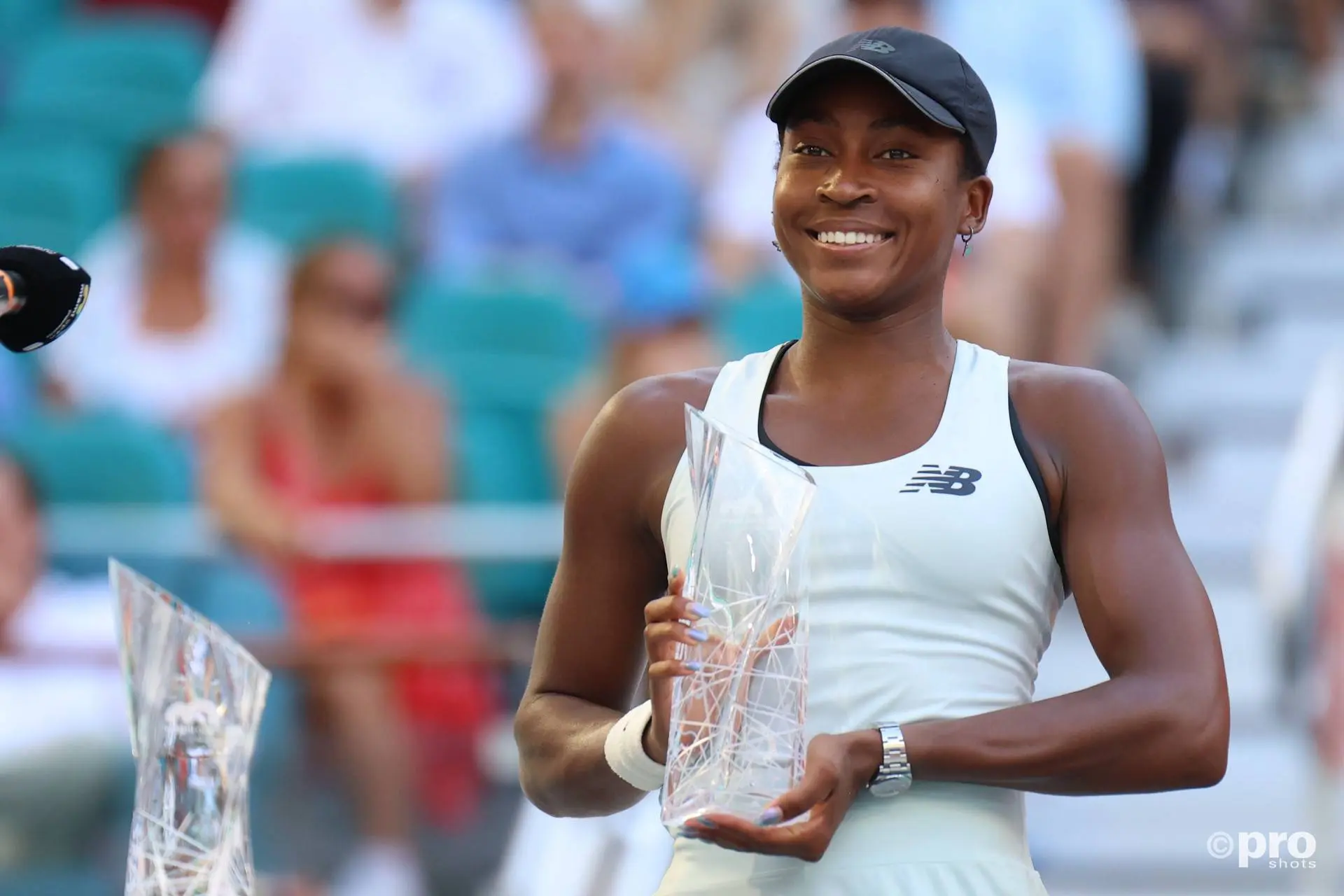
“The chemistry is just not there”: Gauff’s view on clay
Gauff described her relationship with clay through a metaphor that reflects both familiarity and distance, even after sustained success on the surface.
“Clay is like the good guy that treats you nice, but the chemistry is just not there," the world No. 3 said to Tennis Channel. "I have a lot of icks with clay. My socks get dirty, I’m always falling—I’ve got a cut and something on my knee. It’s never completely a true love.”
Her comments contrast with her statistical profile over the past 12 months, where clay has produced her deepest runs at major and WTA 1000 level. The performance against Jeanjean followed a similar pattern: structured baseline control, high return efficiency, and minimal exposure in service games.
The underlying theme is not a lack of effectiveness, but a lack of predictability. Gauff pointed to the variability of clay conditions as a defining factor in how she approaches matches, particularly compared to more stable surfaces. “You never know what you’re going to get, which makes it fun sometimes, but sometimes I just need stability in my life.”
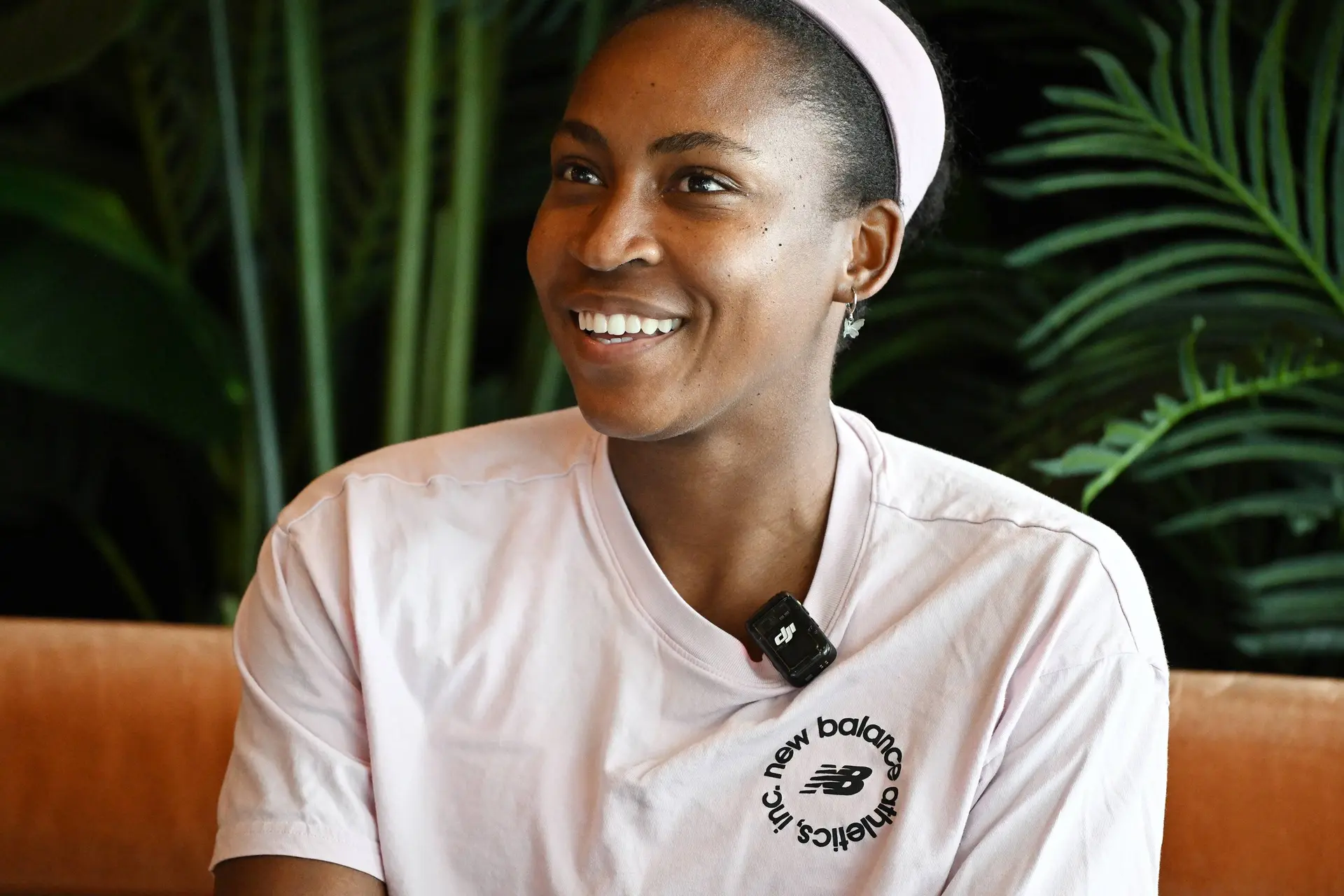
Madrid conditions align with Gauff’s game
The conditions in Madrid offer a partial explanation for that disconnect. At altitude, the surface produces a higher bounce and faster ball speed, reducing some of the variability typically associated with clay and allowing Gauff to play more directly through her groundstrokes.
“It forces you to trust your shots more and let the conditions work for you. Sometimes you think you have to play amazing, but really, they can work a lot for you. I hit balls today that I didn’t think were that good, but the altitude really makes them bounce.”
That adjustment has been central to her results in Madrid, where she has previously reached the final and again opened with a dominant performance. The transition from Stuttgart—played indoors with a lower bounce—remains a challenge, one she acknowledged in her preparation week.
“Stuttgart is always a difficult tournament for me, I just can never seem to find myself on the clay… The transition is tough—you go from indoors where the ball bounces a lot lower to here where it bounces a lot higher. Honestly, my practice week wasn’t the best, but the last two days have been great, so I’ll take it.”
Gauff will next face Anastasia Potapova, who entered the draw as a lucky loser following the withdrawal of Madison Keys.

Cristhián AvilaTennis Journalist
Cristhián Ávila is a tennis journalist based in Santiago, Chile, and has been part of the TennisUpToDate team since early 2023. He covers the ATP and WTA Tours as well as all four Grand Slams, producing breaking news, match reports, analysis, and regular liveblogs from major tournaments.
His reporting combines statistical analysis with clear explanation, helping readers understand tactical developments, player form, and broader storylines across the tour. Working fluently in both Spanish and English, Cristhián collaborates with an international editorial team and contributes to comprehensive global coverage. As part of his work, he has conducted interviews and media interactions with leading figures in the sport, including Caroline Wozniacki and John McEnroe.
In his journalism, Cristhián places strong emphasis on careful sourcing, editorial accuracy, and updating articles promptly when new, verified information becomes available. His coverage is grounded in research, context, and direct engagement with professional tennis.
claps 0visitors 0
Just In



Popular News
Latest Comments
- Lena... Takin' care of business
 mandoist25-10-2026
 - Can you please stop publishing this nonsense? Stick to Tennis.mandoist25-10-2026
- Does Sinner need that 4.5 mil? I doubt it. He can make that with three modelling gigs!😅🤣Rapunzel21-10-2026
- Did "People Magazine" purchase this website? This nonstop storyline is bullshit.mandoist21-10-2026
- Listen... this is of no concern to anyone but these two. Deal with your own issues -- most of us have our own. Thanks, media, for these insignificant follow-ups which are meaningless.mandoist21-10-2026
- This is so very very sad, for all three of them. I truly thought they had an unbreakable bond, but life throws up so many differing challenges. Having your homeland suffering in such a terrible way, makes happiness lose out to guilt as well. Our thoughts are with them. X💔bjsexton20-10-2026
- I have lost all respect for Svitolina! Could she not have waited until he had played at the Paris Masters!!! She is selfish and don't give a damn about Gael. That is NOT how love is demonstrated Elina!!Rapunzel19-10-2026
- Perhaps convenient tennis tour sex is not a strong enough experience in which to base a marriage?mandoist19-10-2026
- Fight the Good Fight... Tennis (sports in general) need more Humans such as yourself.mandoist18-10-2026
- When is WTA going to mandate Genetic Testing (DNA) ???mandoist18-10-2026

Loading