“Screw it, we’ll start it”: How Pegula, Keys, Brady and Krawczyk launched Player’s Box before last US Open
WTA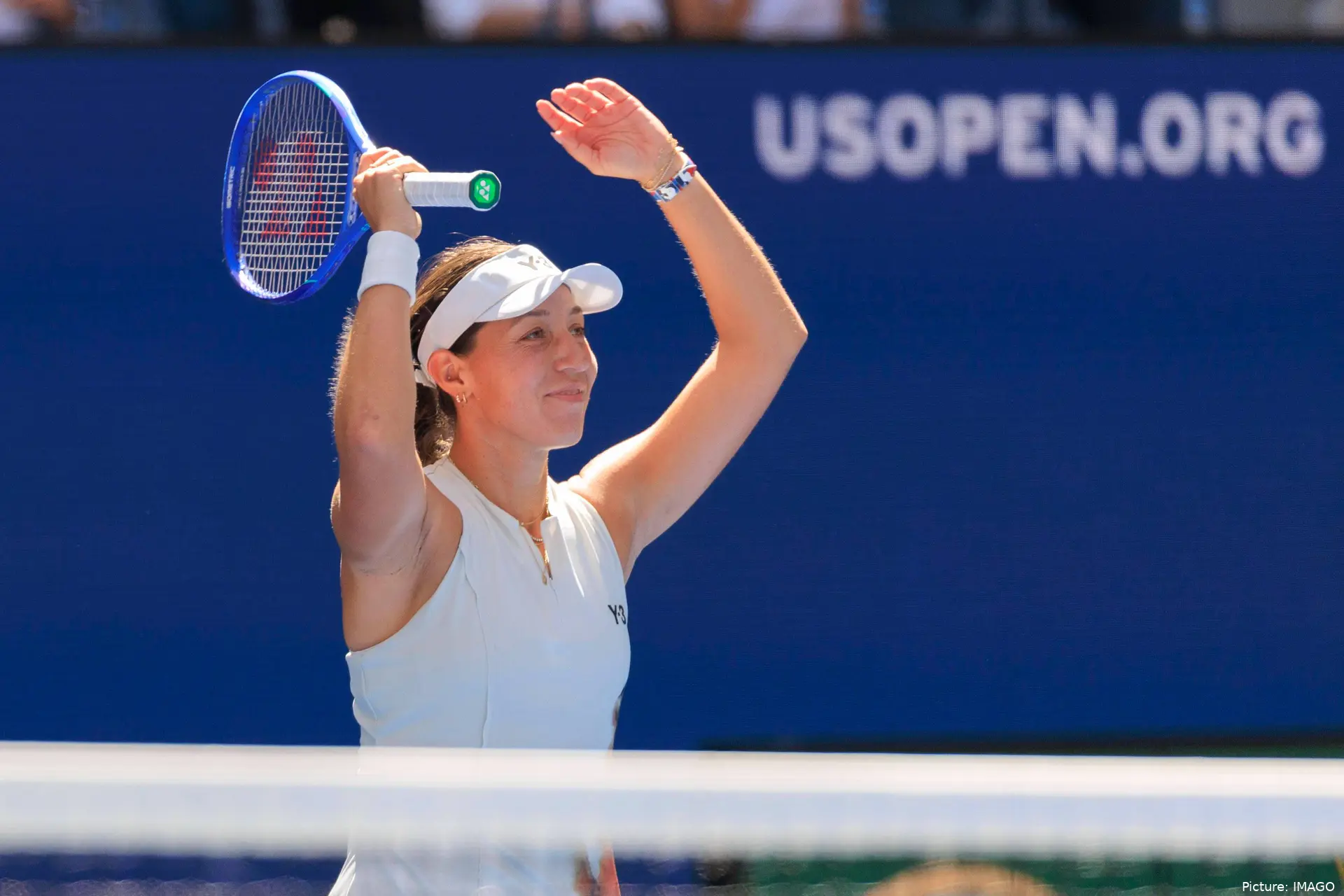
What began as informal banter between four American players on the WTA Tour has evolved into a structured media project with measurable reach. Jessica Pegula, Madison Keys, Jennifer Brady and Desirae Krawczyk launched the “Player’s Box” podcast at last year’s US Open, describing it as the “fastest launch ever" in an interview with WTA Tour. Within months, the show reached 10,000 subscribers on YouTube and built a growing international audience.
All four players are current or former Top 15 competitors in singles or doubles, with established followings across social media. Their on-court credentials — including Grand Slam runs and deep performances at major tournaments — provide the foundation. However, the podcast is not driven by results analysis. Instead, it offers informal, player-led access to the realities of tour life.
The concept emerged from a long-running group chat. Brady — runner-up at the 2021 Australian Open — recalled that inside jokes and unusual moments at tournaments often felt like content that should not remain private. The idea was discussed casually before the group committed to production, bringing in a crew and coordinating recording schedules around tournament travel.
The 2025 Australian Open Madison Keys champion described the decision-making process in direct terms. “We finally just said, ‘Screw it. We’ll start it. We’ll do a trial. We’ll see if we’re any good. We’ll see if we like it.’ We ended up really enjoying it, and it seemed like fans quite enjoy it as well, so we’ve just kind of run with it.”
A format built on informality
Unlike conventional sports podcasts, “Player’s Box” avoids studio settings and formal interviews. Episodes are recorded from homes, hotel rooms and locker rooms, often across multiple time zones.
The structure is conversational, with recurring segments but limited scripting, preserving what Krawczyk called a 'sense of authenticity'. The guiding principle, according to the former Roland Garros doubles finalist Krawczyk, is accessibility. “We want them to feel like they’re part of the group chat in a way.”
Regular segments include the “Unforced Error of the Week,” where each player recounts a personal mistake or mishap. The stories range from travel errors to minor off-court embarrassments. Pegula, whose family owns the NFL’s Buffalo Bills, once avoided wearing a Kansas City Chiefs jersey after defeating Keys at the Australian Open, leaving Keys to honor a Thanksgiving-themed wager involving apple pie and cheddar cheese.
Fan interaction has become central to the show’s identity. Questions submitted by listeners often focus on behind-the-scenes details of tour life, including equipment habits and tournament policies. Krawczyk noted that fans are not simply seeking entertainment; they want technical clarification and insider perspective on routines rarely explained publicly.
Roles, reach and long-term plans
As the podcast developed, the players began refining responsibilities. Pegula acknowledged that initial episodes were loosely organized but said structure has improved. “We’ve learned how to designate who’s good at what things, what parts, being a little bit more structured, and how the episode is going to go, who’s talking about what things.”
Pegula — champion of the WTA 1000 Dubai Duty Free Tennis Championships this weekend — also addressed the unexpected geographic spread of their audience. “I was not expecting the Player’s Box podcast to be so popular — especially when we just started — in China. To see that be so popular in an area of the world that — I don’t even know where they listen to it. I’m not sure how that crossover happened — but it’s pretty neat to see.”
The group has experimented with guest appearances, including two-time Grand Slam champion Coco Gauff during the offseason. When asked about dream guests, Brady cited Buffalo Bills quarterback Josh Allen as “a no-brainer,” while tennis icons were also mentioned as aspirational choices.
Internally, the dynamic remains the defining feature. Pegula joked about her own contribution, calling herself “just the filler,” but the interplay between personalities appears central to the show’s sustainability. Krawczyk summarised that cohesion directly: “Just the four of us, I wouldn’t change the group at all. We’re such different personalities that we shine in our own ways. We complement each other so well. It’s just constant banter and the chemistry is just there. That’s probably the best part.”

Cristhián AvilaTennis Journalist
Cristhián Ávila is a tennis journalist based in Santiago, Chile, and has been part of the TennisUpToDate team since early 2023. He covers the ATP and WTA Tours as well as all four Grand Slams, producing breaking news, match reports, analysis, and regular liveblogs from major tournaments.
His reporting combines statistical analysis with clear explanation, helping readers understand tactical developments, player form, and broader storylines across the tour. Working fluently in both Spanish and English, Cristhián collaborates with an international editorial team and contributes to comprehensive global coverage. As part of his work, he has conducted interviews and media interactions with leading figures in the sport, including Caroline Wozniacki and John McEnroe.
In his journalism, Cristhián places strong emphasis on careful sourcing, editorial accuracy, and updating articles promptly when new, verified information becomes available. His coverage is grounded in research, context, and direct engagement with professional tennis.
claps 0visitors 0
Just In


Popular News
Latest Comments
- great articlestennisseserver07-10-2026
- Medvedev was leading Djokovic 7-5, 3-5 when an attempted return..' NO you ignorants, Djokovic was leading .weiss05-10-2026
- No more bullshit "Wildcards" to these two. Qualify like everyone else -- there will be cameras there, too. Time to scream... WTF ????!!!!
 mandoist29-09-2026
 - Let's not BS the general public -- Sabalenka started showing cracks in her game last season. Her losses and near-losses started at about the same time she began being distracted by Fame (constant Selfies, making TV commercials, magazine shoots, endless Social Media nonsense, etc., etc.) One would think even Saba could recognize the parallels with others who failed before her -- Raducanu, Giorgi, Bouchard to name a few.mandoist25-09-2026
- Gross!! Hey Raducanu, Giorgi, and Bouchard -- reserve a seat at your Social Media Selfie table for Saba + Naomi. They're heading in your direction soon enough.mandoist24-09-2026
- And then these same players will complain about how lengthy their season’s were and need more time-off. I’m all for more tennis but the amount of tennis we get now is actually kind of crazy! We all need a break, especially the players.DaveyWavey23-09-2026
- You should do a comparison article for "different kinds of justice" the courts decide for tennis players. I can think of at least three players who received very small bans of a few months, however Tara Moore has been fighting for her literal survival the past few years. It seems odd considering she is not a "name" player, unlike the other cases.DaveyWavey22-09-2026
- PRIZE MONEY & POINTS Winner - $185,500 Finalist - $114,500 Semi-Finalist - $66,003 Quarter-Finalist - $35,000 Round of 16 - $18,045 Round of 32 - $13,005 Winner - 500 Finalist - 325 Semi-Finalist - 195 Quarter-Finalist - 108 Round of 16 - 60 Round of 32 - 1DaveyWavey20-09-2026
- Pegula withdrew from this Singapore event
 tennishappens19-09-2026
 - Serena Williams chose her tournaments. It's not such a bad idea.MuswellHillbilly17-09-2026

Loading