Tennis Legends - Evonne Goolagong Cawley: An Aussie trailblazer who broke through racial barriers to become an all-time great
WTA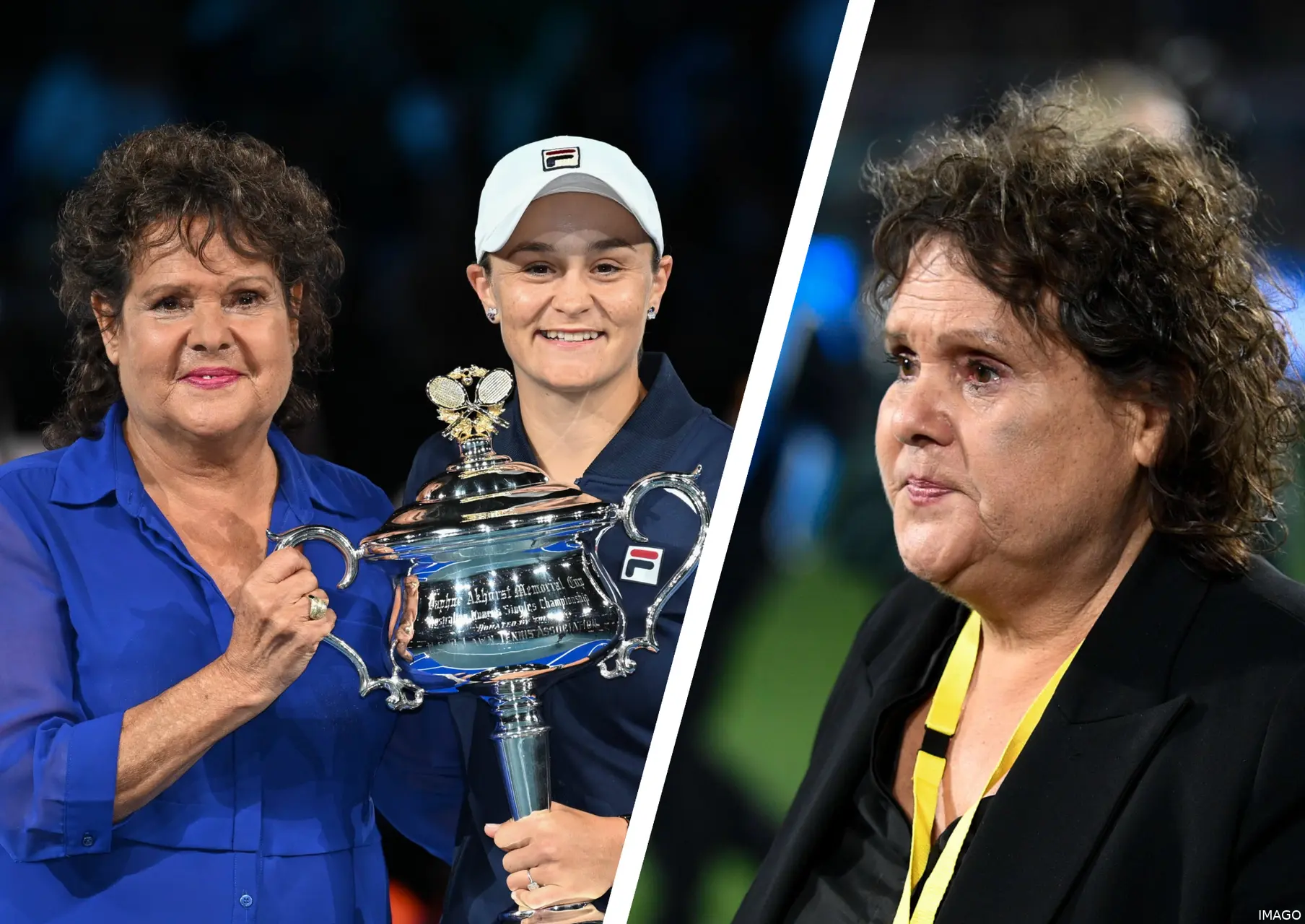
Evonne Goolagong Cawley broke through racial barriers to become one of the all-time greats, with seven Grand Slam singles titles, six Grand Slam doubles, and one in mixed doubles competitions. She was the only woman to beat Chris Evert, Margaret Court, and Martina Navratilova in Grand Slam finals.
Evonne Goolagong Cawley: Early life in the "stolen generation"
Born in Griffith, New South Wales on July 31, 1951, Goolagong was the third of eight children from an Australian Aboriginal family. Her father, Ken, was a sheep shearer and mother, Melinda, was a homemaker.
Goolagong grew up in a period of Australian history known as the ‘stolen generations’, where the State and federal government agencies and church missions would remove children of Aboriginal and Torres Strait Islander heritage. The young Evonne avoided capture, but lived in perpetual fear: “Every time a shiny car would come down the road, my mum used to say, ' You better run and hide, the welfare man's going to take you away.' So I remember hiding very nervously under the bed, cause I didn't want to get taken away.”
Goolagong averts racial barriers to play tennis
In spite of the discrimination her community faced, Goolagong managed to play tennis via a local resident, Bill Kurtzman, who saw her looking through a fence and invited her to play.
She then moved to Sydney and was mentored by Vic Edwards, who became her legal guardian, coach, and manager. Goolagong’s parents sanctioned the move.
Goolagong's arrival in the professional game coincided with the dawn of tennis’ open era. Her first tournament win, a clay court event in Sydney, came five months after the sport was declared Open. An additional four titles were claimed in 1969, all of which materialised at home.
The 1970 season yielded a flurry of five titles in the UK. These successes were accompanied by six other titles, including wins in Austria and West Germany.
Goplagong made a Grand Slam breakthrough in 1971. It became a season in which she established herself as one of the elite players in the women's game. Her maiden major final saw Goolagong defeated in three sets by Court in an all-Aussie final at the Australian Open. She wouldn't have to wait long before a first Slam title arrived. Facing another compatriot, Helen Gourlay, at the French Open final, Goolagong won in straight sets. This would prove to be a solitary Roland Garros success, partly due to Goolagong making only four appearances at the Paris showpiece. Back-to-back Grand Slams soon followed when she gained revenge on Court in the Wimbledon final.
A trio of Grand Slam finals were reached in the 1972 season, but Goolagong failed to convert any of them into a victory. Virginia Wade accounted for her in Australia, before Billie Jean King toppled her at the French Open and Wimbledon. But 12 titles elsewhere offered some compensation for a Grand Slam blank.
Goolagong's wins over Evert and Navratilova
Another significant haul of eleven trophies in 1973 included victory, at the third attempt, of winning her home Slam. Played in December, Goolagong beat Chris Evert 6-0 in the deciding set.
The 1974 season produced a sextet of tournament victories, culminating in the retention of her Australian Open title. She got the better of Martina Navratilova in the final by a straight-sets victory. Goolagong's 1975 campaign followed a similar pattern, triumphing in four tournaments and finishing with another successful defence of the Australian Open. In the summer of that year, Goolagong became Goolagong Cawley after marrying British tennis player Roger Cawley.
There was no Grand Slam title in 1976, but the now married New South Wales native clinched seven titles including the Virginia Slims Championship, an event now known as the WTA Tour Finals.
The year 1977 witnessed a late rush of success for Goolagong Cawley. She won her first title of the season in November and then added three more trophies before the campaign's climax. The final success was a fourth Australian Open title in five years. In the showpiece match, she beat Helen Gourlay Cawley, who, interestingly, was no relation to Roger.
Goolagong Cawley's 1978 season began with a fifth successive tournament win. Six more titles were added but she failed to reach a Grand Slam final.
Four titles in 1979, but a further campaign without a Grand Slam final appearance suggested her best days were behind her. However, in 1980, a time when Chris Evert and Martina Navratilova were battling for tennis supremacy, Goolagong Cawley rolled back the years. She defeated Evert 6-1, 7-6 to claim the seventh and final singles Grand Slam from 18 final appearances. It would also be the last of 84 singles titles for the popular Australian.
Goolagong Cawley achieved a hugely successful doubles career alongside her singles career. A total of 53 titles feature five Grand Slam women's doubles trophies. Four of these materialised at the Australian Open (one with Margaret Court, two with Peggy Michel and another with Helen Gourlay). She also claimed the Wimbledon doubles crown in 1974 with Michel. Alongside Kim Warwick, a fellow Aussie, she was triumphant at the 1972 French Open mixed doubles. This gave her 13 Grand Slam titles across all three disciplines.
When representing Australia, she was a member of three Federation Cup (now the Billie Jean King Cup) squads. Triumphs in 1971, 1973 and 1974 helped create an Australian dynasty. Goolagong was the only player to feature in all three successes. Her singles record across 25 rubbers was 22-3 and a doubles record of 13-2.
Goolagong Cawley played on until 1983, but without any success. By now, Navratilova was ultra dominant, and Goolagong struggled to deal with the powerful American once Navratilova had reached her peak. The rivalry was once in Goolagong Cawley’s favour at 11-4 on the head-to-head. The Australian then conspired to win just one of their further twelve meetings.
The US Open remained the only major to elude her and deny Goolagong Cawley a career Grand Slam. A run of four consecutive final losses from 1973 stands as her best showing at the New York Slam. It's feasible she'd have enjoyed further success at the French Open if it weren't for her being initially banned by the French federation over her involvement with World Team Tennis. The ban was later rescinded, but Goolagong Cawley opted to boycott the event over her treatment. She only relented for a farewell appearance in 1983.
Recognition for all her success
Goolagong Cawley received vast recognition for her achievements as a player, but also for being a trailblazer for indigenous individuals on a world stage. She was anointed Australian of the Year in 1971. An MBE followed a year later, and in 1982, she was awarded Australia's highest civilian honour, the Officer of the Order of Australia. In 1985, she was inducted into the Sport Australia Hall of Fame. Three years later, induction into the International Tennis Hall of Fame materialised. In 2018, she was elevated to a Companion of the Order of Australia "for eminent service to tennis as a player at the national and international level, as an ambassador, supporter and advocate for the health, education and wellbeing of young Indigenous people through participation in sport."
The winner's trophy at the Brisbane International tournament is named after her. Goolagong Cawley also has a RiverCat ferry named in her honour in Sydney.
The National Museum of Australia holds a collection of memorabilia related to the second-greatest female Australian player of all time. Artefacts on display include her two Wimbledon trophies, various items of clothing worn in her pomp and racquets used for her success in SW19.
In her hometown of Barellan, a 45ft replica of a racquet used by Goolagong Cawley is erected in Evonne Goolagong Park. It was unveiled during the town's centenary celebrations.
In summer 2018, the International Tennis Federation (ITF) awarded her with its most prestigious honour, the Philippe Chatrier Award for her contributions to tennis. This puts her in a very exclusive club of players to receive this honour.
In early 2025, Goolagong Cawley was bestowed with a Lifetime Achievement Award at the National Aboriginal and Torres Strait Islander Awards.
One of her past coaches, Victor Edwards, was later accused of making sexual advances to Goolagong Cawley. Her romance with Roger Cawley further strained the relationship between player and coach until she could free herself of his legal control once she married in 1975. He bizarrely oversaw one more tournament, Wimbledon, after she tied the knot. Edwards sat away from the rest of Goolagong Cawley's camp. Her husband then took over as the coach and manager, with the pair relocating to Naples, Florida.
Goolagong Cawley’s father, Ken, died in a car crash shortly after Edwards had denied the release of money that had been requested to purchase a new family vehicle. Her mother, Melinda, passed away in 1991. Meeting so many indigenous relatives at her funeral triggered her interest in getting more familiar with them and her heritage. Her two children, Kelly and Morgan, both born in the USA, relocated to Queensland with their parents.
The legacy of Goolagong Cawley is one of great successes on the court that played a part in shifting perceptions amongst the Australian public about the indigenous communities that had suffered brutal hardship and been isolated within Australian society. Some players have an impact that stretches beyond the sporting landscape. Goolagong was unquestionably one of them.
Evonne Goolagong Cawley: Career Titles and Major Achievements
| Category | Achievement | Details |
| Singles Grand Slams | 7 | Australian Open (4), Wimbledon (2), French Open (1) |
| Total Grand Slams | 14 | 7 Singles, 6 Women's Doubles, 1 Mixed Doubles |
| Total Career Titles | 86 | 6th all-time in the Open Era |
| World No. 1 | 2 Weeks | Retroactively awarded in 2007 for her dominance in 1976 |
| Wimbledon History | Mothers' Record | First mother to win Wimbledon in the Open Era (1980) |
| Fed Cup Titles | 3 | Lead Australia to victory in 1971, 1973, and 1974 |
| Heritage Milestone | Pioneer | First Aboriginal Australian to win a Grand Slam title |
| Hall of Fame | Inductee | Inducted into the International Tennis Hall of Fame (1988) |
Evonne Goolagong Cawley: Major Finals and Milestones
| Year | Competition / Tournament | Result | Category |
| 1971 | French Open | Winner | 1st Grand Slam Singles Title (Defeated Helen Gourlay) |
| 1971 | Wimbledon | Winner | Defeated Margaret Court in straight sets at age 19 |
| 1974 | Australian Open | Winner | 1st of 4 titles in her home Grand Slam |
| 1974 | WTA Finals | Winner | Defeated Chris Evert to win the year-end championship |
| 1975 | Australian Open | Winner | Successfully defended her title vs. Martina Navratilova |
| 1976 | Australian Open | Winner | Won 3rd consecutive Australian Open title |
| 1976 | WTA Finals | Winner | 2nd Season-Ending Championship title |
| 1977 | Australian Open | Winner | 4th title (Dec. edition); won without dropping a set |
| 1980 | Wimbledon | Winner | 2nd Title; Iconic win as a mother vs. Chris Evert |
| 1982 | Fed Cup | Finalist | Final major appearance for the Australian national team |
| 1983 | French Open | 3rd Round | Final Grand Slam singles appearance |
Jay Brannon is a sports journalist from Sutton Coldfield, England, with a lifelong passion for athletic competition and storytelling. For the past 1.5 years, he has been a prominent voice at TennisUpToDate.com, where he has authored more than 3,000 articles, specializing in deep-dive columns, tactical analyses, liveblogs, and comprehensive match reports for the ATP and WTA tours.
Jay’s tennis reporting blends rigorous, real-time statistical analysis with on-the-ground coverage. He frequently travels to tournaments to cover the action firsthand from the press box and player press conferences. This direct access allows him to deliver sharp insight into player form and tour developments—a dedication sparked by his earliest sporting memory of the iconic 1991 Wimbledon final between Michael Stich and Boris Becker.
Beyond the court, Jay brings a versatile background in live broadcasting and media. His professional experience includes serving as a sports reporter for BHBN Hospital Radio—where he delivered live updates and analysis for West Bromwich Albion and Wolverhampton Wanderers matches—as well as working as a match reporter for Sutton Coldfield Town.
Jay holds a degree in Music Journalism and Broadcasting from Staffordshire University, a foundational training that shaped his voice as a thoughtful, authentic storyteller. Grounded in core journalistic ethics, he places a strict emphasis on careful sourcing, editorial accuracy, and swift, verified updates.
claps 1visitors 1
Just In

Popular News
Latest Comments
- A healthy Qinwen may be hard to stop next season. She was already scaring her opponents before her medical leave(s). Unfortunately, Zheng insisted on singing again. On the positive side -- Mirra did not sing!! ;~}
 mandoist11-10-2026
 - Where is it written that athletes, entertainers... People in general... are mandated to keep looking at -- or even using [anti]Social Media? Public & private figures consistently complain and reveal their concerns about negativity and violence thrown at them -- yet they insist on participating. Avoid it, don't use it, don't read it. It's okay to occasionally look up at the World instead beating your eyes & thumbs to death on The Inventions out there.mandoist11-10-2026
- great articlestennisseserver07-10-2026
- Medvedev was leading Djokovic 7-5, 3-5 when an attempted return..' NO you ignorants, Djokovic was leading .weiss05-10-2026
- No more bullshit "Wildcards" to these two. Qualify like everyone else -- there will be cameras there, too. Time to scream... WTF ????!!!!mandoist29-09-2026
- Let's not BS the general public -- Sabalenka started showing cracks in her game last season. Her losses and near-losses started at about the same time she began being distracted by Fame (constant Selfies, making TV commercials, magazine shoots, endless Social Media nonsense, etc., etc.) One would think even Saba could recognize the parallels with others who failed before her -- Raducanu, Giorgi, Bouchard to name a few.mandoist25-09-2026
- Gross!! Hey Raducanu, Giorgi, and Bouchard -- reserve a seat at your Social Media Selfie table for Saba + Naomi. They're heading in your direction soon enough.mandoist24-09-2026
- And then these same players will complain about how lengthy their season’s were and need more time-off. I’m all for more tennis but the amount of tennis we get now is actually kind of crazy! We all need a break, especially the players.DaveyWavey23-09-2026
- You should do a comparison article for "different kinds of justice" the courts decide for tennis players. I can think of at least three players who received very small bans of a few months, however Tara Moore has been fighting for her literal survival the past few years. It seems odd considering she is not a "name" player, unlike the other cases.DaveyWavey22-09-2026
- PRIZE MONEY & POINTS Winner - $185,500 Finalist - $114,500 Semi-Finalist - $66,003 Quarter-Finalist - $35,000 Round of 16 - $18,045 Round of 32 - $13,005 Winner - 500 Finalist - 325 Semi-Finalist - 195 Quarter-Finalist - 108 Round of 16 - 60 Round of 32 - 1DaveyWavey20-09-2026

Loading