Martina Navratilova backs Sabalenka and Rybakina as Indian Wells favourites: “They might come close to Sinner and Alcaraz”:
WTA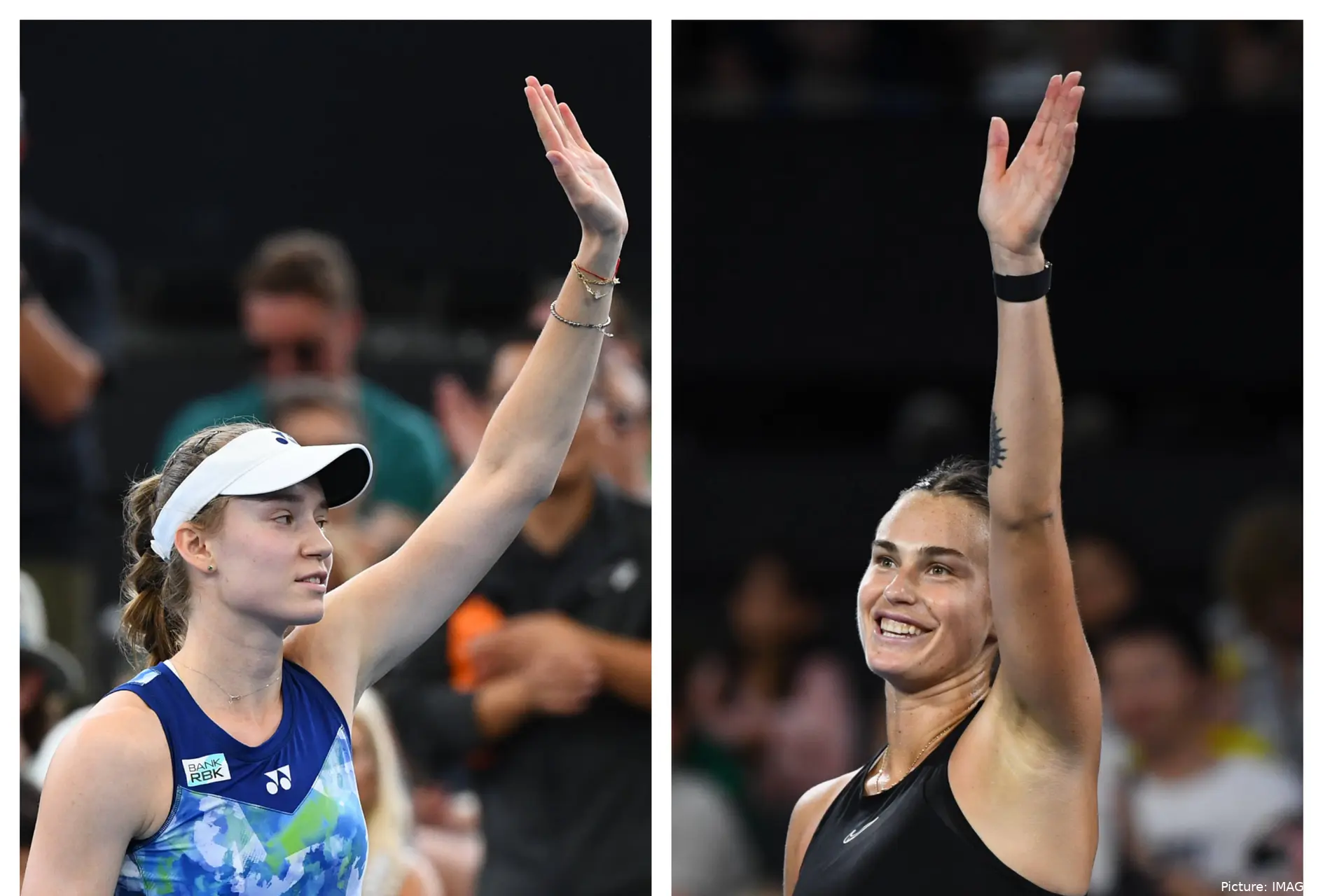
The 18-time Grand Slam champion Martina Navratilova ventured to choose her candidates for the title in the women’s draw at Indian Wells, placing World No. 1 Aryna Sabalenka and the recent Australian Open champion Elena Rybakina one step ahead of the rest.
The former American player has two titles at Indian Wells (1990–1991) and is the only female player who has successfully defended the title in Tennis Paradise. Speaking ahead of the Sunshine Swing, Navratilova made clear from the outset that, in her view, the two stand apart as “clear frontrunners” in 2026.
Sabalenka, the reigning World No. 1, arrives in the Californian desert with an 11-1 record this season despite not playing since the Australian Open. Rybakina, meanwhile, claimed the Australian Open title and has reasserted herself after an illness disrupted her immediate post-Melbourne schedule. For Navratilova, those early-season signals matter.
The American of Czech origin also placed the broader context into focus, noting how difficult it is to sustain excellence across Indian Wells and Miami. The so-called Sunshine Double remains one of the sport’s toughest back-to-back challenges, demanding both physical resilience and emotional control across two consecutive two-week events.
Behind the leading pair, Navratilova sees questions. Iga Swiatek and Coco Gauff, by their own standards, have endured a comparatively quieter start. At the same time, a new wave of teenagers and emerging contenders is applying tactical pressure, narrowing margins that once seemed comfortable for the established elite.
Sabalenka and Rybakina set the pace
Navratilova did not need much time to define the season’s early narrative. For her, the shift was clear from Melbourne onward, where Elena Rybakina claimed the Australian Open title and reasserted her position among the elite. “The biggest one is that Rybakina is back. Winning the Australian Open, she played the best tennis when it mattered most. She was holding her nerves better than Sabalenka in the final and won in three.”
Rybakina’s post-Melbourne illness, which forced her to skip Abu Dhabi and manage her schedule carefully in the Middle East, did not change Navratilova’s outlook. She described the physical dip as familiar territory after a major title run. “She was ill after Australia, which happens a lot. It’s normal to get sick after a major. More often than not, I got sick after Wimbledon and the US Open because the body just goes. After skipping Abu Dhabi, I’m hoping her immune system is OK.”
If healthy, Navratilova sees no separation between Rybakina and World No. 1 Aryna Sabalenka, whose 11-1 start to 2026 includes another Australian Open final appearance. The Belarusian’s consistency at majors remains a defining factor. “You still have to go with Sabalenka because she’s got the weapons,” the two-time Indian Wells champion added. “Right now, the way everything is going, if Rybakina is fully healthy, they are the top two players, clear frontrunners. They might come close to the level of Jannik Sinner and Carlos Alcaraz if they keep going this way.”
Sabalenka’s recent Grand Slam defeats — three losses in her past five major finals — prompted a psychological assessment rather than a technical one. Navratilova framed it as a recurring mental hurdle that only appears on the biggest stage.
“It’s a tough one to get over because you can deal with it — until you get there again,” Martina Navratilova stated. “When you get into that situation, the body kind of does its own thing. And you don’t know what to do. You feel like you’re outside of your body looking down. It’s so easy to develop scar tissue, considering it’s the biggest stage. The whole world is watching.”
She also highlighted the structural challenge of the Sunshine Double, noting how sustaining peak form across two consecutive two-week tournaments demands prolonged physical and emotional control.
“With back-to-back two-week events, it’s tough to stay on top of it for so long, physically or emotionally. You stay in this state of anticipation, with those competitive juices — the neurons are firing. Even with a day off, you’re still in the tournament. It’s a longer stretch of engagement.”
Swiatek and Gauff face narrowing margins
When the conversation shifted to Iga Swiatek and Coco Gauff, Navratilova avoided alarmist conclusions but acknowledged that the competitive gap has narrowed. Matches once decided routinely are now contested deeper into sets.
“I think for both Iga and Coco, the matches that they used to win easily, they’re now winning sometimes with difficulty … or losing. It doesn’t take much to have that happen. What’s the final score line, maybe 6-4, 6-4, but it’s only 100 points to 94.”
Navratilova suggested that tactical familiarity is playing a role, with opponents increasingly equipped to handle the heavy topspin and baseline patterns that once overwhelmed the field.
“I think the other players are beginning to figure out how to beat them because they have the tools now to get the tactics right. They have clarity of action. They’re used to that kind of stuff, so they don’t get on the court and say, ‘My God, I haven’t seen that much topspin ever before.’”
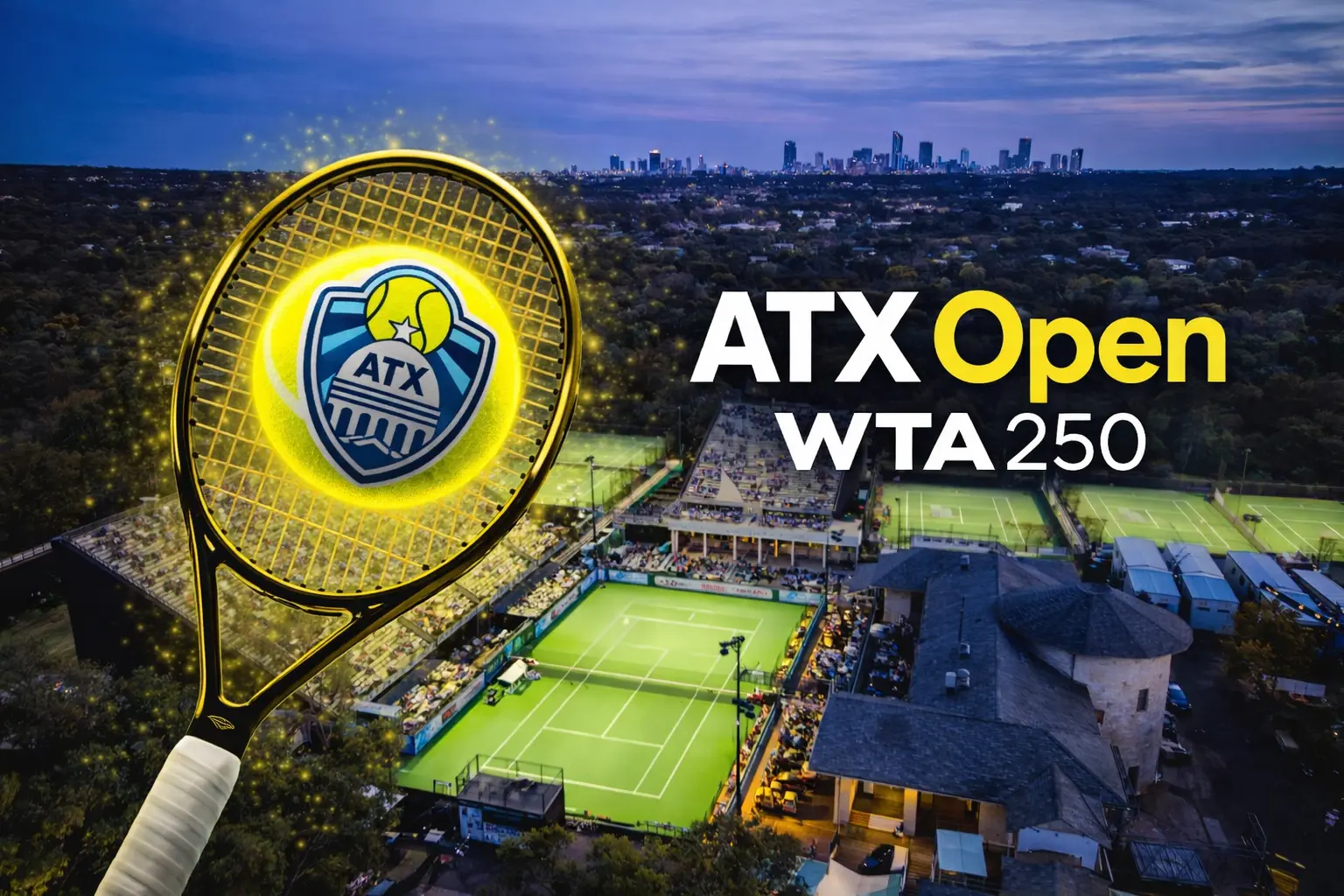
Gauff’s serve, particularly a recent rise in double faults, was framed as more mental than mechanical. Navratilova contrasted it with Sabalenka’s past technical struggles, emphasising that confidence can be decisive.
“Technically Sabalenka was all over the map with her technique when she was double faulting. Now she’s got that solved. With Coco, as far as I can see, the technique is fine. Sometimes it can become mental when the technique is OK. As soon as you think, ‘I don’t want to double fault’ — you double fault. It’s a self-fulfilling prophecy. She’s only 21 … I think she’ll get it straightened out.”

Cristhián AvilaTennis Journalist
Cristhián Ávila is a tennis journalist based in Santiago, Chile, and has been part of the TennisUpToDate team since early 2023. He covers the ATP and WTA Tours as well as all four Grand Slams, producing breaking news, match reports, analysis, and regular liveblogs from major tournaments.
His reporting combines statistical analysis with clear explanation, helping readers understand tactical developments, player form, and broader storylines across the tour. Working fluently in both Spanish and English, Cristhián collaborates with an international editorial team and contributes to comprehensive global coverage. As part of his work, he has conducted interviews and media interactions with leading figures in the sport, including Caroline Wozniacki and John McEnroe.
In his journalism, Cristhián places strong emphasis on careful sourcing, editorial accuracy, and updating articles promptly when new, verified information becomes available. His coverage is grounded in research, context, and direct engagement with professional tennis.
claps 1visitors 1
Just In

Popular News
Latest Comments
- A healthy Qinwen may be hard to stop next season. She was already scaring her opponents before her medical leave(s). Unfortunately, Zheng insisted on singing again. On the positive side -- Mirra did not sing!! ;~}
 mandoist11-10-2026
 - Where is it written that athletes, entertainers... People in general... are mandated to keep looking at -- or even using [anti]Social Media? Public & private figures consistently complain and reveal their concerns about negativity and violence thrown at them -- yet they insist on participating. Avoid it, don't use it, don't read it. It's okay to occasionally look up at the World instead beating your eyes & thumbs to death on The Inventions out there.mandoist11-10-2026
- great articlestennisseserver07-10-2026
- Medvedev was leading Djokovic 7-5, 3-5 when an attempted return..' NO you ignorants, Djokovic was leading .weiss05-10-2026
- No more bullshit "Wildcards" to these two. Qualify like everyone else -- there will be cameras there, too. Time to scream... WTF ????!!!!mandoist29-09-2026
- Let's not BS the general public -- Sabalenka started showing cracks in her game last season. Her losses and near-losses started at about the same time she began being distracted by Fame (constant Selfies, making TV commercials, magazine shoots, endless Social Media nonsense, etc., etc.) One would think even Saba could recognize the parallels with others who failed before her -- Raducanu, Giorgi, Bouchard to name a few.mandoist25-09-2026
- Gross!! Hey Raducanu, Giorgi, and Bouchard -- reserve a seat at your Social Media Selfie table for Saba + Naomi. They're heading in your direction soon enough.mandoist24-09-2026
- And then these same players will complain about how lengthy their season’s were and need more time-off. I’m all for more tennis but the amount of tennis we get now is actually kind of crazy! We all need a break, especially the players.DaveyWavey23-09-2026
- You should do a comparison article for "different kinds of justice" the courts decide for tennis players. I can think of at least three players who received very small bans of a few months, however Tara Moore has been fighting for her literal survival the past few years. It seems odd considering she is not a "name" player, unlike the other cases.DaveyWavey22-09-2026
- PRIZE MONEY & POINTS Winner - $185,500 Finalist - $114,500 Semi-Finalist - $66,003 Quarter-Finalist - $35,000 Round of 16 - $18,045 Round of 32 - $13,005 Winner - 500 Finalist - 325 Semi-Finalist - 195 Quarter-Finalist - 108 Round of 16 - 60 Round of 32 - 1DaveyWavey20-09-2026

Loading