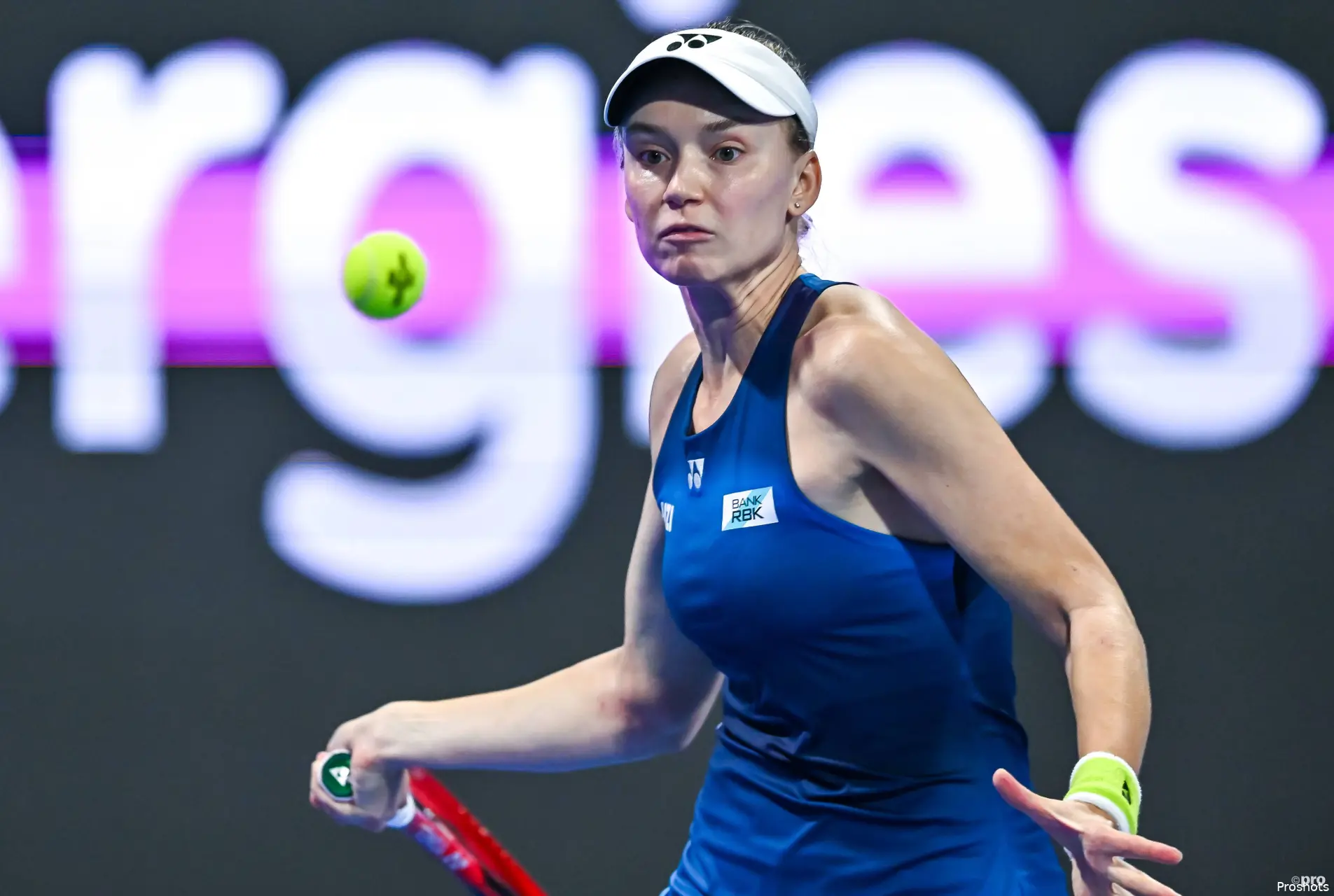
Elena Rybakina was involved in an unusual on-court exchange with the umpire during her match against Zheng Qinwen at the Madrid Open 2026, following a disputed electronic line call on a Zheng serve. The incident occurred during a routine service game but quickly became the defining moment of the match due to Rybakina’s visible disagreement with the automated decision.
Zheng had taken the opening set 6-4 through consistent first-serve execution and controlled baseline exchanges, limiting Rybakina’s ability to dictate early. The second set followed a similar pattern initially, with both players holding serve without facing sustained pressure, keeping the margin tight as the set progressed.
The defining moment came at 4-3 in the second set, with Zheng serving. A delivery was ruled in by the electronic system, prompting Rybakina to approach the chair and indicate a visible mark on the clay that appeared out. The interruption extended beyond a routine clarification, pausing play and altering the rhythm of the game before Zheng completed the hold.
Despite the disruption, Rybakina reset her service patterns and maintained composure in the closing stages of the set. She later broke in the 10th game to take the second set 6-4, forcing a decider after trailing by a set and rebalancing the match heading into the final phase.
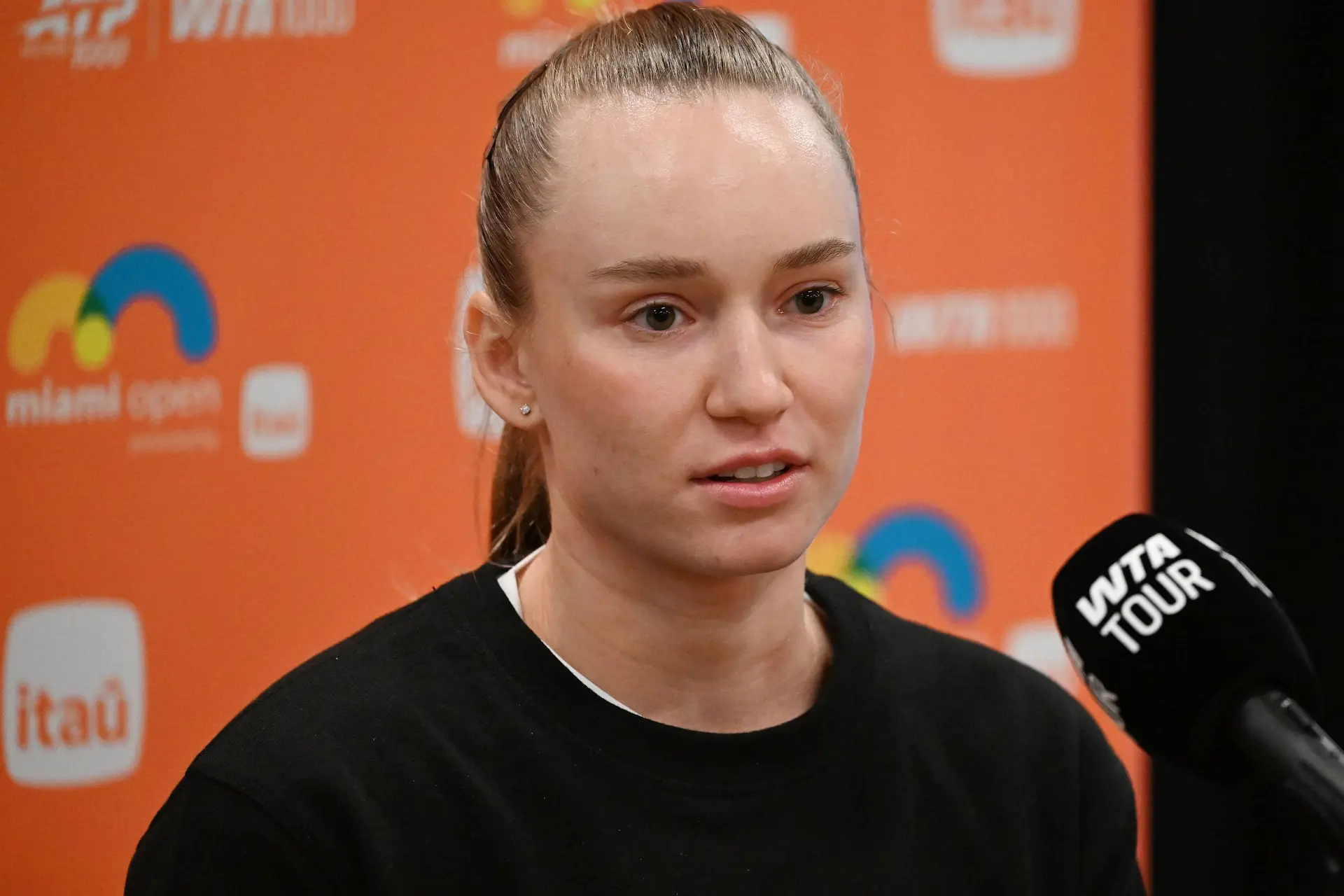
Disputed call highlights limits of electronic line calling on clay
The Madrid Open operates with a full electronic line-calling system, eliminating traditional line judges and limiting the role of the umpire in overrule situations. On clay, however, the presence of visible ball marks introduces a contrasting reference point, which in this case appeared to conflict with the automated decision.
Rybakina’s reaction was grounded in that visual evidence, as she repeatedly pointed to the mark left on the surface. Unlike hard courts, where verification relies entirely on technology, clay courts historically allow players and officials to inspect marks directly. The coexistence of these two systems creates potential friction when outcomes do not align.
Despite the protest, the decision remained unchanged, as electronic calls are final under current tournament protocols. The sequence illustrates the structural limitation of the system: once a call is made, there is no secondary verification process available to players, even when visual indicators suggest a different outcome.

Cristhián AvilaTennis Journalist
Cristhián Ávila is a tennis journalist based in Santiago, Chile, and has been part of the TennisUpToDate team since early 2023. He covers the ATP and WTA Tours as well as all four Grand Slams, producing breaking news, match reports, analysis, and regular liveblogs from major tournaments.
His reporting combines statistical analysis with clear explanation, helping readers understand tactical developments, player form, and broader storylines across the tour. Working fluently in both Spanish and English, Cristhián collaborates with an international editorial team and contributes to comprehensive global coverage. As part of his work, he has conducted interviews and media interactions with leading figures in the sport, including Caroline Wozniacki and John McEnroe.
In his journalism, Cristhián places strong emphasis on careful sourcing, editorial accuracy, and updating articles promptly when new, verified information becomes available. His coverage is grounded in research, context, and direct engagement with professional tennis.
claps 0visitors 0
Just In



Popular News
Latest Comments
- Boss move, Sinner !Rapunzel27-10-2026
- Apparently still refusing to seek 'help' ...and still playing Dress-Up like a 10 year-old.
 mandoist27-10-2026
 - Lena... Takin' care of businessmandoist25-10-2026
- Can you please stop publishing this nonsense? Stick to Tennis.mandoist25-10-2026
- Does Sinner need that 4.5 mil? I doubt it. He can make that with three modelling gigs!😅🤣Rapunzel21-10-2026
- Did "People Magazine" purchase this website? This nonstop storyline is bullshit.mandoist21-10-2026
- Listen... this is of no concern to anyone but these two. Deal with your own issues -- most of us have our own. Thanks, media, for these insignificant follow-ups which are meaningless.mandoist21-10-2026
- This is so very very sad, for all three of them. I truly thought they had an unbreakable bond, but life throws up so many differing challenges. Having your homeland suffering in such a terrible way, makes happiness lose out to guilt as well. Our thoughts are with them. X💔bjsexton20-10-2026
- I have lost all respect for Svitolina! Could she not have waited until he had played at the Paris Masters!!! She is selfish and don't give a damn about Gael. That is NOT how love is demonstrated Elina!!Rapunzel19-10-2026
- Perhaps convenient tennis tour sex is not a strong enough experience in which to base a marriage?mandoist19-10-2026

Loading
