End of the South American clay swing? Argentina Open set for ATP 500 promotion and hard-court future
ATP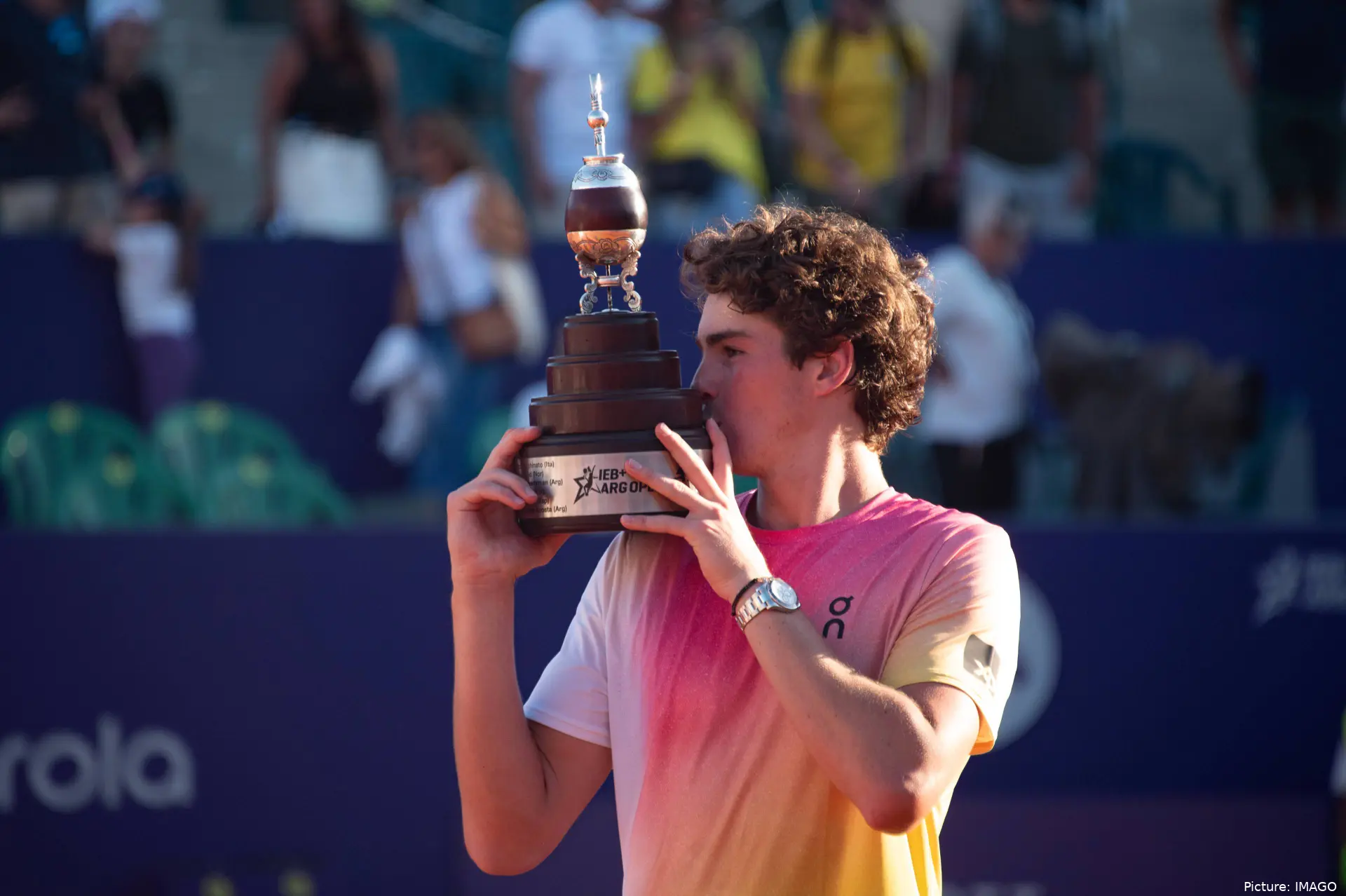
ATP's reported acquisition of the Argentina Open could bring major changes to the South American calendar, with plans for a hard-court switch and ATP 500 status raising questions about the future of the region's clay-court identity.
The ATP's acquisition of the Argentina Open has reportedly been approved, with only the final signature remaining before the transaction becomes official. According to information published by La Nacion, the governing body of men's professional tennis will assume ownership of the ATP 250 event in Buenos Aires, ending Tennium's tenure as majority owner after nearly a decade. The move forms part of a broader restructuring effort that could significantly reshape the ATP calendar from 2028 onward.
The tournament, staged annually at the Buenos Aires Lawn Tennis Club since 2001, will remain at its current venue, where an agreement is already in place through 2033. In the short term, neither its ATP 250 category nor its clay-court surface is expected to change. However, plans reportedly under discussion would see the event upgraded to ATP 500 level and switched to hard courts beginning in 2029.
The purchase is expected to be financed through ATP investment funds linked to Saudi Arabia's growing involvement in tennis. Sources cited by La Nacion indicate that the ATP will also reach an agreement allowing Tennium to continue operating the tournament for five years despite relinquishing ownership of the licence.

The development comes amid a period of significant change within professional tennis. Saudi investment has become an increasingly influential factor in the sport's future direction, and the Buenos Aires acquisition would represent one of the ATP's most important direct investments in a tournament property.
ATP ownership aligns with wider calendar restructuring plans
The reported acquisition aligns with a broader ATP strategy aimed at increasing control over its tournament portfolio. By owning event licences directly, the ATP would gain greater flexibility when redesigning the calendar, upgrading selected tournaments and reducing reliance on independent licence holders.
According to the report, the organisation's long-term objectives include reducing the number of ATP 250 tournaments, promoting more events to ATP 500 level, shortening the season to create additional recovery time for players and concentrating attention on the tournaments that generate the largest audiences and commercial returns: Grand Slams and Masters 1000 events.

Joao Fonseca after won his first title at Argentina Open
A key factor in that restructuring is the expected arrival of a new Masters 1000 tournament in Saudi Arabia in 2028. The expanded schedule will likely force adjustments elsewhere on the calendar, with reports suggesting that events such as the ATP 500 in Acapulco and the ATP 250 in Los Cabos could be among those vulnerable to future changes. ATP is expected to formally unveil its 2028 calendar plans later this year.
The ATP's growing role in tournament ownership reflects a desire for greater autonomy in shaping the future of the men's tour. Buenos Aires appears poised to become one of the flagship projects of that strategy, with its potential promotion to ATP 500 status viewed as a key component of the organisation's long-term vision.
"The sale has already been approved and only the signature is missing," stated La Nacion. "The ATP will purchase the Argentina Open and will also sign an agreement with Tennium allowing the company to continue operating the tournament for five years."
Potential ripple effects across the South American swing
Beyond the ownership change itself, the proposed surface switch may carry the greatest implications for South American tennis. The region's February clay-court swing has already been reduced in recent years. The Córdoba Open was removed from the calendar after the 2024 season, leaving only three ATP events in South America: the Rio Open (ATP 500), Argentina Open (ATP 250) and Chile Open (ATP 250).
Should Buenos Aires ultimately move to hard courts, organisers in Rio de Janeiro and Santiago would face important strategic decisions. Rio has reportedly expressed interest in a hard-court future for several years, largely due to the challenges of attracting top-ranked players immediately after the Australian Open. A surface change in Buenos Aires could increase pressure on neighbouring tournaments to consider a similar move.

The issue has already been acknowledged by Chile Open tournament director Catalina Fillol, who openly discussed the challenges faced by clay-court events in South America when competing for elite players. Her comments reflected a reality that tournament organisers across the region have increasingly confronted in recent seasons.
"In South America, playing on clay makes it much more difficult for us to attract players because they come from a major hard-court swing in Australia and are preparing for another important hard-court swing in the United States," she said to Clay back in January 2025.
"We have to look for ways to improve the field. That's the reality. If improving the field means switching to hard courts, then we switch to hard courts. And if improving the field in the long term means staying on clay because South American players begin climbing the rankings again, then we stay on clay. We used to have several South Americans in the top 20. One of our current challenges is that the entire top 20 prefers hard courts."
South American tennis faces a defining decision
For now, the Argentina Open remains a clay-court ATP 250 event and will continue to be played at its traditional venue. Yet the reported plans illustrate how rapidly the professional tennis landscape is evolving as the ATP seeks greater influence over its own assets and calendar structure.
ATP chairman Andrea Gaudenzi visited both Buenos Aires and Rio de Janeiro earlier this year, reportedly evaluating the region's tennis culture and operational capabilities. According to those involved, the visit was viewed positively and suggested that the ATP still sees strategic value in maintaining a strong presence in South America.
The larger question is what form that presence will take in the future. For decades, the South American swing has occupied a unique place on the ATP calendar, providing a rare stretch of clay-court competition during a season dominated by hard courts.
If Buenos Aires ultimately becomes a hard-court ATP 500, the region may gain stronger fields and greater commercial relevance. At the same time, it could move one step closer to losing the clay-court identity that has defined the swing for generations.

Cristhián AvilaTennis Journalist
Cristhián Ávila is a tennis journalist based in Santiago, Chile, and has been part of the TennisUpToDate team since early 2023. He covers the ATP and WTA Tours as well as all four Grand Slams, producing breaking news, match reports, analysis, and regular liveblogs from major tournaments.
His reporting combines statistical analysis with clear explanation, helping readers understand tactical developments, player form, and broader storylines across the tour. Working fluently in both Spanish and English, Cristhián collaborates with an international editorial team and contributes to comprehensive global coverage. As part of his work, he has conducted interviews and media interactions with leading figures in the sport, including Caroline Wozniacki and John McEnroe.
In his journalism, Cristhián places strong emphasis on careful sourcing, editorial accuracy, and updating articles promptly when new, verified information becomes available. His coverage is grounded in research, context, and direct engagement with professional tennis.
claps 0visitors 0
Just In


Popular News

Latest Comments
- Two Things: 1. Stop allowing these Spoiled Trust-Fund Elitists to behave badly. Your little hand-slaps do not deter them. 2. STOP the incessantly annoying "towel wiping" nonsense!!!!
 mandoist15-10-2026
 - A healthy Qinwen may be hard to stop next season. She was already scaring her opponents before her medical leave(s). Unfortunately, Zheng insisted on singing again. On the positive side -- Mirra did not sing!! ;~}mandoist11-10-2026
- Where is it written that athletes, entertainers... People in general... are mandated to keep looking at -- or even using [anti]Social Media? Public & private figures consistently complain and reveal their concerns about negativity and violence thrown at them -- yet they insist on participating. Avoid it, don't use it, don't read it. It's okay to occasionally look up at the World instead beating your eyes & thumbs to death on The Inventions out there.mandoist11-10-2026
- great articlestennisseserver07-10-2026
- Medvedev was leading Djokovic 7-5, 3-5 when an attempted return..' NO you ignorants, Djokovic was leading .weiss05-10-2026
- No more bullshit "Wildcards" to these two. Qualify like everyone else -- there will be cameras there, too. Time to scream... WTF ????!!!!mandoist29-09-2026
- Let's not BS the general public -- Sabalenka started showing cracks in her game last season. Her losses and near-losses started at about the same time she began being distracted by Fame (constant Selfies, making TV commercials, magazine shoots, endless Social Media nonsense, etc., etc.) One would think even Saba could recognize the parallels with others who failed before her -- Raducanu, Giorgi, Bouchard to name a few.mandoist25-09-2026
- Gross!! Hey Raducanu, Giorgi, and Bouchard -- reserve a seat at your Social Media Selfie table for Saba + Naomi. They're heading in your direction soon enough.mandoist24-09-2026
- And then these same players will complain about how lengthy their season’s were and need more time-off. I’m all for more tennis but the amount of tennis we get now is actually kind of crazy! We all need a break, especially the players.DaveyWavey23-09-2026
- You should do a comparison article for "different kinds of justice" the courts decide for tennis players. I can think of at least three players who received very small bans of a few months, however Tara Moore has been fighting for her literal survival the past few years. It seems odd considering she is not a "name" player, unlike the other cases.DaveyWavey22-09-2026

Loading