"Hopefully I can win a few matches this year. Finishing my career in the top 100 would be a dream" - Stan Wawrinka displeased about current form
ATP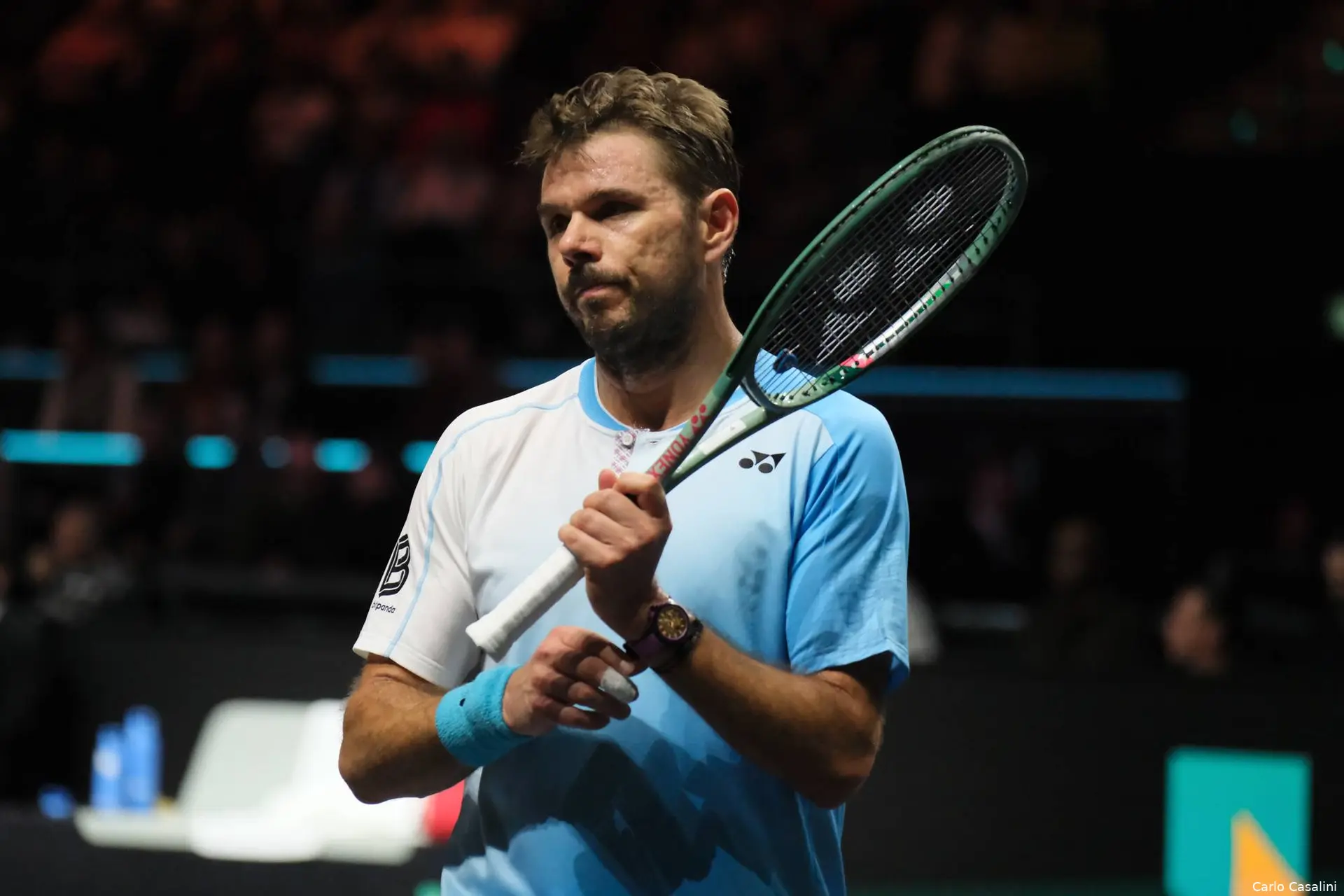
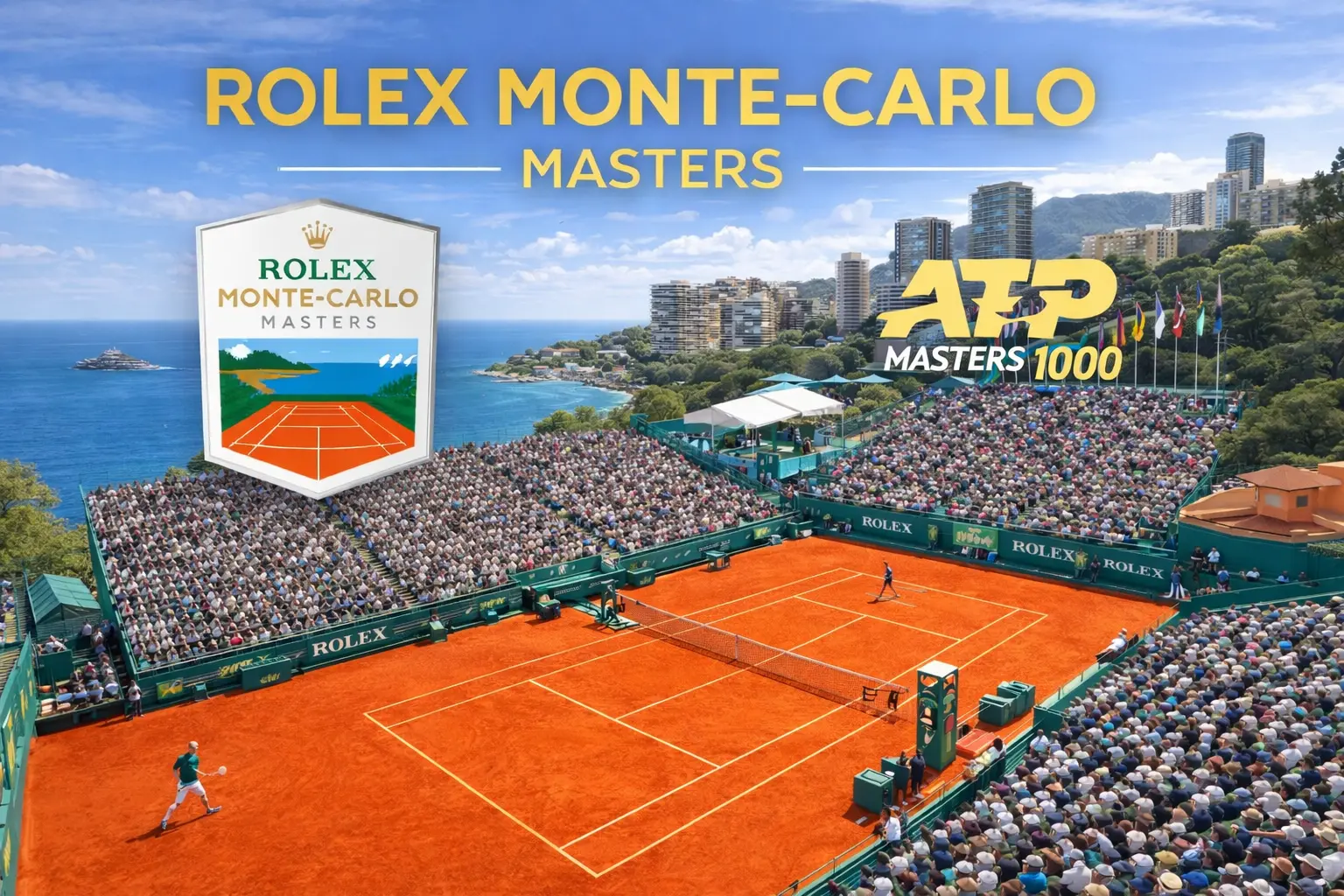
This was the last time Stan Wawrinka will ever play at the Monte-Carlo Masters. This statement will be true every tournament he competes in as he looks to say goodbye in style.
While the frustrations were seeping that he was not picking up enough positive results on court, he was still making the most of his final season on the ATP Tour while enjoying Monaco. "I’m doing fantastic. I’m here in your city, enjoying myself very much," he told the Tennis Channel.
"So far, so good. Of course, it’s my last year, so I’m trying to find a way to enjoy it while still pushing myself—that’s the goal. I’m trying to keep my level up a little bit. I’m not winning enough matches for my liking, but that’s part of the journey. Overall, it’s been a great start to the year."
Wawrinka's pathway into the sport
Wawrinka's story had to start from somewhere. Going back to when he was only eight, he was forced to pick a sport to play. As fate would have it, a tennis club sat just down the road, and the rest is history.
"When I was young, I was going to school like every kid at eight years old. My parents wanted me and my brother to do a sport outside of school, and we had a tennis club five minutes from home. That’s how we started—just one hour every Wednesday."
It was something that he picked up really quickly, having a great time on the court. "But I immediately enjoyed it. I loved the game, and I loved that you’re alone on the court and have to think for yourself, find solutions. I quickly became passionate about that."
At the age of 41, Wawrinka has enjoyed a stunning tennis career. Many people have grown up looking at him for inspiration and as a role model. When the Swiss was an eight-year-old kid, he also looked up to the best players of a prior generation. "There were a few, but Pete Sampras was one of them," he said, answering who inspired him the most growing up. "Pete was the guy."
Saving his best game for the biggest stage
In an era dominated by the 'Big Three', only scraps were left for the other competitors. Andy Murray was a notable rival for them, possibly overshadowing the brilliance of Wawrinka. The Swiss went toe-to-toe against the best players in the world, winning three Grand Slams among other successes. All of them came against the current world number one, a hugely notable achievement.
Those were truly memorable moments. But not just winning those tournaments, all the hard work put in to reach that stage. "First, I always built my confidence through winning, working hard, and pushing myself," he stated. "The deeper I went in tournaments, the more confidence I gained in my game. So when I stepped on court—even against the number one—I knew I was capable of beating them."
He knew the talent within, but also that he was the underdog on the biggest stage of them all, relieving him of that added pressure. "Second, when you play the number one in a final, you actually have a bit less pressure. You don’t have to win—you want to win, of course—but you’re not the favourite. It’s a different kind of pressure."
The work put into building a career lasting 20 years
The work and effort put into a long career have most definitely paid off. His CV is one that most tennis players would trade for in a heartbeat. A long-time admirer of 'trusting the process,' Wawrinka always had it in his mind to play for a long time while producing the best results he could.
"All of my confidence comes from the daily routine and the work you put in," he commented. "At the end of the day, you need to push the limits of what you can control. You can’t control the result on the court, but you can control how well you prepare. That’s always been my mindset—to improve, to play the long game, the long career. When I was younger, I sacrificed many tournaments to build myself physically and technically, always trying to reach my limits."
In this time, tennis has changed. He has been able to adapt his game and style to compete with the best in whatever scenario which meets him. "The game has definitely changed," he confirmed. "And that’s the beauty of a long career—facing different generations and constantly adapting."
Even now, if he were going to continue, he would have to redefine aspects of his game. "If I were to keep playing beyond this year, I would probably look for a new racket again. Conditions have changed a lot—especially the balls. I think the balls have changed more than the courts, and they make the game very different."
The style of play has altered, using examples of players who are tricky to come up against. "It’s harder now to mix your game. If you look at players today, only a few—like Carlos Alcaraz or Lorenzo Musetti—really have that variety. The balls make it tougher to play that kind of style."
One thing which has seemingly disappeared from tennis has been the one-handed backhand. While still seen to this day, it is becoming more of a thing from the past. "There will always be a one-handed backhand—always," he said.
"It will be a minority, for sure. If you look at someone like Musetti, he has one of the best one-handed backhands right now—I love watching him play. But the game is very physical now, with players hitting hard from both sides. It’s easier to develop a two-handed backhand, especially when you’re young. Still, you’ll always see some one-handed backhands at the top."

Stan Wawrinka lining up for a one-handed backhand
Dream Wimbledon final
The 2015 champion came back from a set deficit to defeat Novak Djokovic for his second Grand Slam, and a first on the grass of Wimbledon. Pitched to him was an extremely tough question: play Alcaraz or Sampras at Wimbledon.
While Sampras was his idol, he had recently stated his wishes to face off against the current world number one, spurning the chance to do so after losing his opening match in Monte-Carlo. However, no one was taking the place of the American.
"I’d choose Pete at Wimbledon Centre Court. I grew up watching him, but I arrived a bit too late—he stopped just before my time. Luckily, when I won my first Grand Slam in Australia, he gave me the trophy. That moment was incredible—honestly, I was almost more focused on Pete than the trophy! So yes, Wimbledon, for the history of the game."
What is next
Clay has always been a favourable surface for Wawrinka. He had made two Roland Garros finals, winning one of them, while reaching all three of his Masters 1000 finals on the European clay. He is excited to complete a final clay swing with a number of tournaments lined up.
"I’m going to Barcelona next week, then hopefully Rome qualifying, probably Geneva, and hopefully the French Open—we’ll see," he explained, wanting to play as much as he could.
"I’m trying to play a full season because it’s my last year. But I’m not just playing to say goodbye—I’m a competitor. It’s tough for me to lose a match and then have some kind of farewell moment on court—that’s not what I want. That said, I’m really enjoying the support from fans—they’ve been amazing, especially here. Hopefully, I can win a few matches this year. Finishing my career in the top 100 would be a dream."
Wawrinka earned a wildcard for the Barcelona Open, which will be the next tournament he appears at. It will take place from April 13-19.
Lucas MichaelTennis Journalist
Lucas Michael is a tennis journalist based in Cambridge, UK, specializing in comprehensive coverage of the ATP and WTA tours. For the past 1.5 years, he has been a core contributor to TennisUpToDate, where he has authored more than 3,000 data-driven match reports, deep-dive analysis pieces, and engaging liveblogs.
Lucas pairs real-time statistical analysis with on-the-ground reporting, frequently traveling to tournaments to cover the action firsthand from the press box and player press conferences. This blend of advanced metrics and direct access allows him to provide sharp context regarding player form, tactical trends, and breaking tour developments.
He holds a BA (Hons) in Sports Journalism. Grounded in core journalistic ethics, Lucas places a strict emphasis on meticulous sourcing, editorial accuracy, and a commitment to updating live content swiftly as verified information emerges.
claps 0visitors 0
Just In

Popular News
Latest Comments
- A healthy Qinwen may be hard to stop next season. She was already scaring her opponents before her medical leave(s). Unfortunately, Zheng insisted on singing again. On the positive side -- Mirra did not sing!! ;~}
 mandoist11-10-2026
 - Where is it written that athletes, entertainers... People in general... are mandated to keep looking at -- or even using [anti]Social Media? Public & private figures consistently complain and reveal their concerns about negativity and violence thrown at them -- yet they insist on participating. Avoid it, don't use it, don't read it. It's okay to occasionally look up at the World instead beating your eyes & thumbs to death on The Inventions out there.mandoist11-10-2026
- great articlestennisseserver07-10-2026
- Medvedev was leading Djokovic 7-5, 3-5 when an attempted return..' NO you ignorants, Djokovic was leading .weiss05-10-2026
- No more bullshit "Wildcards" to these two. Qualify like everyone else -- there will be cameras there, too. Time to scream... WTF ????!!!!mandoist29-09-2026
- Let's not BS the general public -- Sabalenka started showing cracks in her game last season. Her losses and near-losses started at about the same time she began being distracted by Fame (constant Selfies, making TV commercials, magazine shoots, endless Social Media nonsense, etc., etc.) One would think even Saba could recognize the parallels with others who failed before her -- Raducanu, Giorgi, Bouchard to name a few.mandoist25-09-2026
- Gross!! Hey Raducanu, Giorgi, and Bouchard -- reserve a seat at your Social Media Selfie table for Saba + Naomi. They're heading in your direction soon enough.mandoist24-09-2026
- And then these same players will complain about how lengthy their season’s were and need more time-off. I’m all for more tennis but the amount of tennis we get now is actually kind of crazy! We all need a break, especially the players.DaveyWavey23-09-2026
- You should do a comparison article for "different kinds of justice" the courts decide for tennis players. I can think of at least three players who received very small bans of a few months, however Tara Moore has been fighting for her literal survival the past few years. It seems odd considering she is not a "name" player, unlike the other cases.DaveyWavey22-09-2026
- PRIZE MONEY & POINTS Winner - $185,500 Finalist - $114,500 Semi-Finalist - $66,003 Quarter-Finalist - $35,000 Round of 16 - $18,045 Round of 32 - $13,005 Winner - 500 Finalist - 325 Semi-Finalist - 195 Quarter-Finalist - 108 Round of 16 - 60 Round of 32 - 1DaveyWavey20-09-2026

Loading