Jannik Sinner arrives at Roland Garros as the clear reference point of the men’s tour, after a season defined by dominance, consistency and sustained control across the biggest tournaments. The Italian reaches Paris following his Rome title and a broader stretch that has consolidated his position as world No.1.
His 2026 campaign has been built on rare stability at Masters 1000 level, with six titles across Indian Wells, Miami, Monte-Carlo, Madrid and Rome, in addition to the Paris Masters 2025 title. That sequence is accompanied by a 34-match winning streak in Masters events.
The scale of that dominance places Sinner in position to challenge for a fifth Grand Slam title in Paris and, longer term, a Career Grand Slam. That achievement—winning each of the four majors at least once—has only been completed in the Open Era by Andre Agassi, Roger Federer, Rafael Nadal, Novak Djokovic and Carlos Alcaraz.
Despite that statistical positioning, Sinner continues to frame his approach in controlled, process-driven terms rather than outcome-based expectations. “I’m very concentrated on what I have to do,” the four-time Grand Slam champion said to L’Équipe. “That’s why people see me as very calm, but it’s just because I try to execute the right shot at the right moment.”
Control, perception and competitive identity
Sinner’s competitive identity has become defined by external perceptions of emotional neutrality. He does not fully reject that description, but he disputes the interpretation that it reflects absence of feeling rather than controlled expression under pressure.
“I have the image of a player without emotions,” the world No.1 said. “But that’s because I’m very focused on what I have to do. It doesn’t mean I don’t feel anything. Sometimes there is a storm in my head, but I try not to show it to my opponents.”

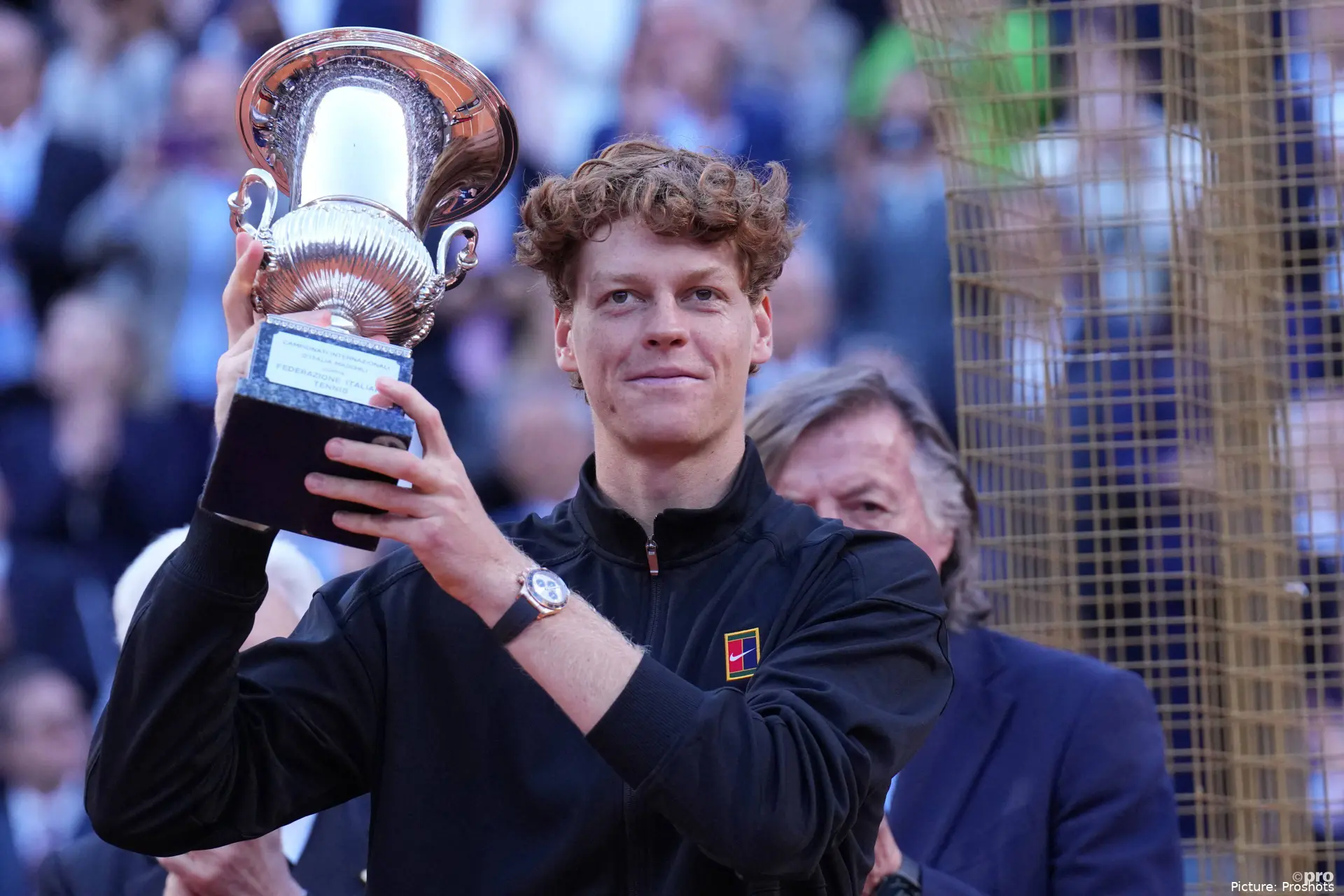
Jannik Sinner of Italy lifts the tropy as he celebrates the victory of the Internazionali BNL d'Italia 2026 tennis tournament at Foro Italico in Rome
That internal framing is central to how he manages matches at the highest level. The objective is not emotional suppression, but the removal of visible instability that opponents could exploit in key moments of a contest. “I sometimes have a storm in my head,” Sinner added. “But I try not to show it to my opponents. That’s the difference. Everyone has moments like that, but in matches you have to protect yourself.”
His game structure is equally explicit in its emphasis on precision and repetition. Sinner rejects improvisational descriptions of his style, instead situating it within execution under controlled conditions.
“People call it being a robot,” Sinner said. “I don’t see it as negative. I try to be as precise as possible, to execute the right shot at the right moment. That requires physical and mental preparation. That’s why I train.”
Rome title, Masters dominance and Roland Garros expectations
Sinner’s return to winning form in Rome marked a key reference point in his season, both in competitive rhythm and in psychological reset after earlier demands of the calendar. The victory reinforced his status as the most consistent performer on the ATP Tour across 2025–26.
From that point, his Masters 1000 run has remained uninterrupted in terms of title production, with victories in Indian Wells, Miami, Monte-Carlo, Madrid and Rome, plus the Paris Masters 2025 title. The accumulation of results reflects sustained performance rather than isolated peaks.

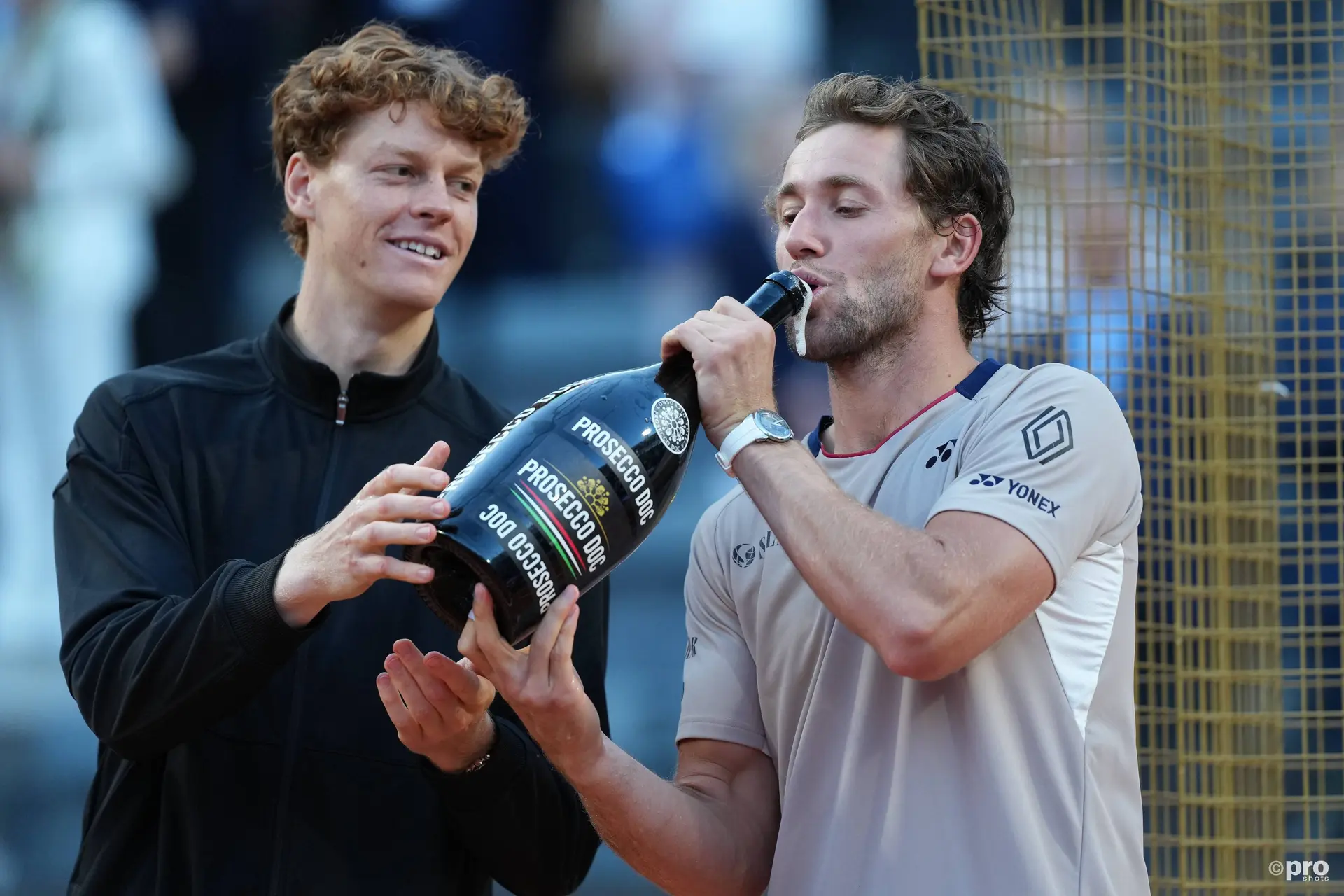
Jannik Sinner during the man’s singles final between Jannik Sinner (ITA) vs Casper Ruud (NOR) at the Internazionali d'Italia in Rome
The broader context heading into Roland Garros includes reduced resistance from Carlos Alcaraz during parts of the clay swing due to injury-related interruptions. That has increased external expectation around Sinner’s ability to convert dominance into another Grand Slam title.
Sinner, however, continues to frame his position through balance and perspective rather than inevitability. The emphasis remains on normalising pressure rather than amplifying it.
“Being world No.1 has a price,” Sinner said. “People recognise you everywhere. But I try to live it normally. I don’t need to show off anything. I’m happy with what I have, and I’m especially happy to be healthy and able to compete.”
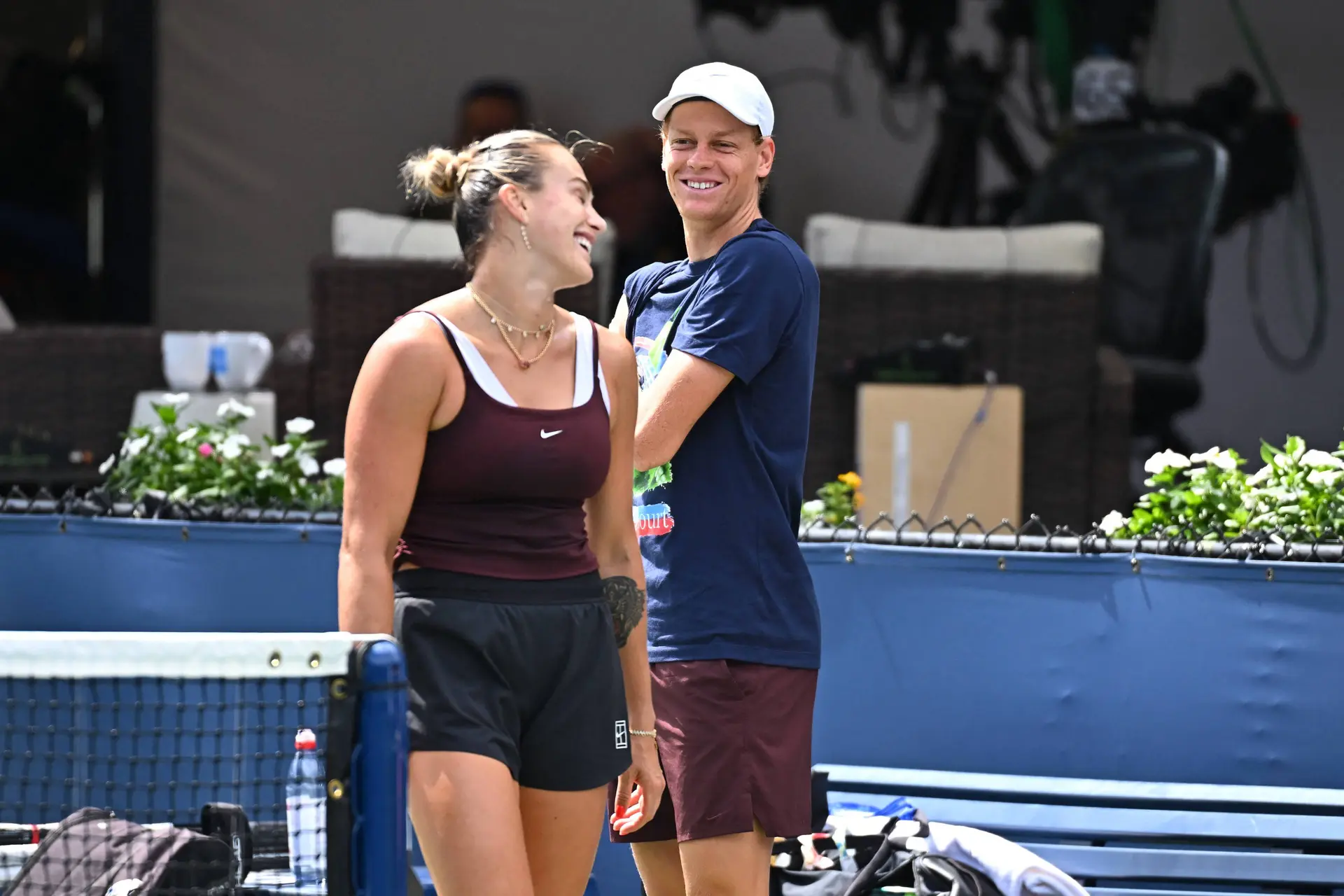
He also situates his career within a broader life structure, where long-term success is balanced against personal development and time outside the sport. “The life I chose comes with sacrifices,” Sinner said. “But it is also about balance. You are 24 only once. I try to enjoy life outside tennis, to stay connected with my friends and to keep a normal rhythm when I can.”
Sacrifice, routine and life beyond tennis
Sinner’s off-court routine reflects a deliberate effort to maintain separation between competitive intensity and personal recovery. He uses structured downtime and limited distractions as part of his mental reset process during tournaments.
“When I need to relax, I sometimes play golf,” he said. “We spend so much time on social media and with the phone. Being outside for a few hours, away from everything, helps me a lot.”
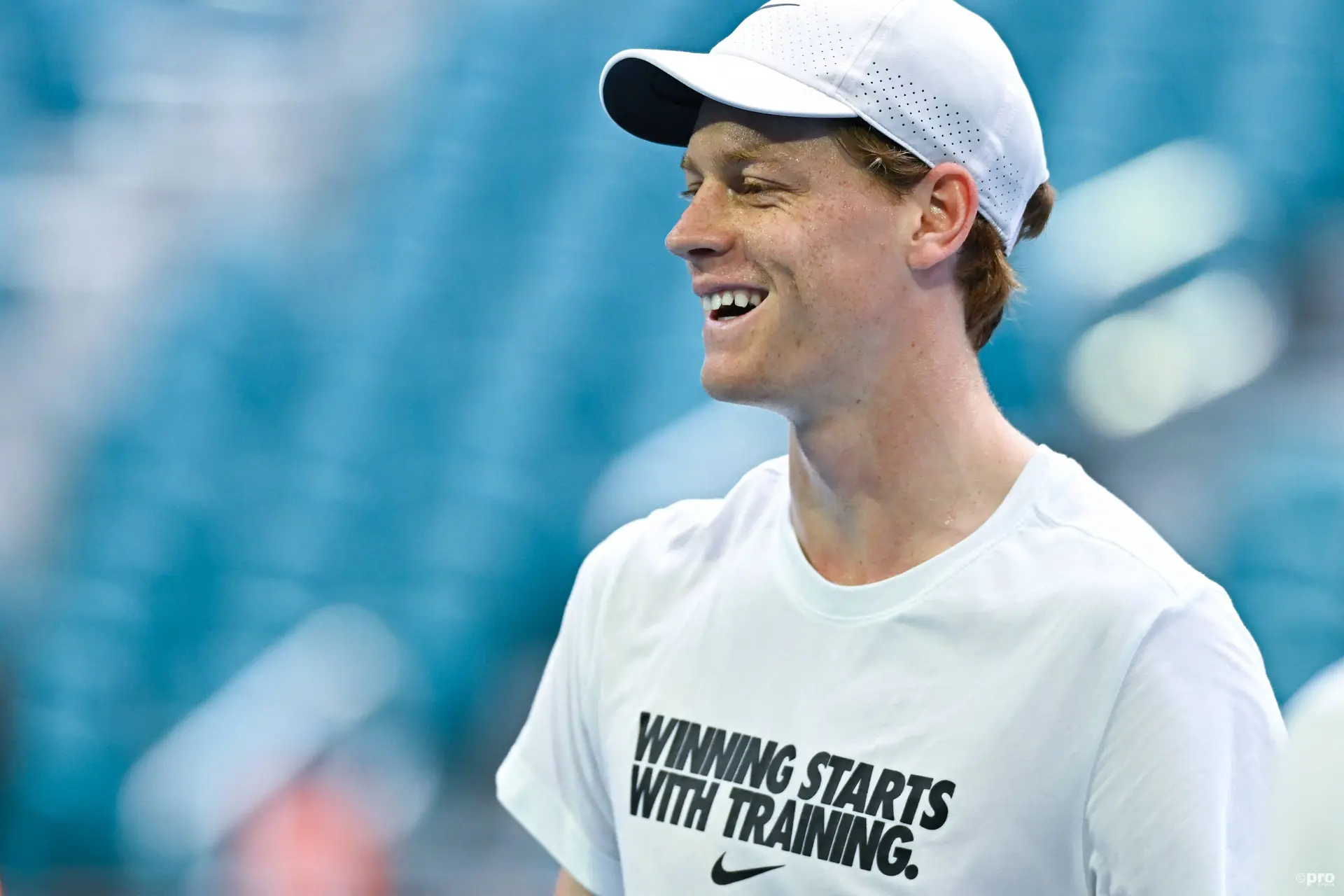
He also identifies driving as a key form of isolation within a highly visible professional environment, describing it as a controlled space away from external pressure and expectation. “The thing that relaxes me most is being alone in the car,” he said. “It feels like my own bubble, where nobody can touch me.”
His engagement with media and external information remains selective rather than withdrawn. He follows football and Formula 1, while limiting exposure to tennis-related content to avoid over-saturation.
“I read newspapers because I think it’s important to know what is happening in the world,” he said. “But when I see tennis news, I skip it. I already know what is happening there.”

Cristhián AvilaTennis Journalist
Cristhián Ávila is a tennis journalist based in Santiago, Chile, and has been part of the TennisUpToDate team since early 2023. He covers the ATP and WTA Tours as well as all four Grand Slams, producing breaking news, match reports, analysis, and regular liveblogs from major tournaments.
His reporting combines statistical analysis with clear explanation, helping readers understand tactical developments, player form, and broader storylines across the tour. Working fluently in both Spanish and English, Cristhián collaborates with an international editorial team and contributes to comprehensive global coverage. As part of his work, he has conducted interviews and media interactions with leading figures in the sport, including Caroline Wozniacki and John McEnroe.
In his journalism, Cristhián places strong emphasis on careful sourcing, editorial accuracy, and updating articles promptly when new, verified information becomes available. His coverage is grounded in research, context, and direct engagement with professional tennis.
claps 0visitors 0
Just In

Popular News
Latest Comments
- A healthy Qinwen may be hard to stop next season. She was already scaring her opponents before her medical leave(s). Unfortunately, Zheng insisted on singing again. On the positive side -- Mirra did not sing!! ;~}
 mandoist11-10-2026
 - Where is it written that athletes, entertainers... People in general... are mandated to keep looking at -- or even using [anti]Social Media? Public & private figures consistently complain and reveal their concerns about negativity and violence thrown at them -- yet they insist on participating. Avoid it, don't use it, don't read it. It's okay to occasionally look up at the World instead beating your eyes & thumbs to death on The Inventions out there.mandoist11-10-2026
- great articlestennisseserver07-10-2026
- Medvedev was leading Djokovic 7-5, 3-5 when an attempted return..' NO you ignorants, Djokovic was leading .weiss05-10-2026
- No more bullshit "Wildcards" to these two. Qualify like everyone else -- there will be cameras there, too. Time to scream... WTF ????!!!!mandoist29-09-2026
- Let's not BS the general public -- Sabalenka started showing cracks in her game last season. Her losses and near-losses started at about the same time she began being distracted by Fame (constant Selfies, making TV commercials, magazine shoots, endless Social Media nonsense, etc., etc.) One would think even Saba could recognize the parallels with others who failed before her -- Raducanu, Giorgi, Bouchard to name a few.mandoist25-09-2026
- Gross!! Hey Raducanu, Giorgi, and Bouchard -- reserve a seat at your Social Media Selfie table for Saba + Naomi. They're heading in your direction soon enough.mandoist24-09-2026
- And then these same players will complain about how lengthy their season’s were and need more time-off. I’m all for more tennis but the amount of tennis we get now is actually kind of crazy! We all need a break, especially the players.DaveyWavey23-09-2026
- You should do a comparison article for "different kinds of justice" the courts decide for tennis players. I can think of at least three players who received very small bans of a few months, however Tara Moore has been fighting for her literal survival the past few years. It seems odd considering she is not a "name" player, unlike the other cases.DaveyWavey22-09-2026
- PRIZE MONEY & POINTS Winner - $185,500 Finalist - $114,500 Semi-Finalist - $66,003 Quarter-Finalist - $35,000 Round of 16 - $18,045 Round of 32 - $13,005 Winner - 500 Finalist - 325 Semi-Finalist - 195 Quarter-Finalist - 108 Round of 16 - 60 Round of 32 - 1DaveyWavey20-09-2026

Loading