
Alexander Zverev begins his Mexican Open campaign in Acapulco carrying both momentum and unfinished business. The German returns to competition for the first time since his five-set semi-final defeat to Carlos Alcaraz at the Australian Open, a match in which he recovered from two sets down before ultimately falling in the decider.
That loss ended a demanding fortnight in Melbourne, where Zverev showed resilience and physical endurance across multiple rounds. Against Alcaraz, he forced a fifth set after trailing early, but admitted the physical toll proved decisive. It was a match that tested both his conditioning and his tactical discipline at the highest level.
Despite the defeat, Zverev views the tournament as confirmation that his off-season adjustments are beginning to take shape. The former US Open finalist believes the broader framework for his 2026 campaign is functioning as intended, even if the result in Melbourne fell short of a final appearance.
Speaking to ATP Media before the Mexican Open Acapulco, Zverev framed Australia not as a setback but as a step forward, both technically and strategically. “I felt like Australia, I played the right way. I lost the match because I got tired in the end, to be very honest. I had nothing left,” Zverev mentioned. “I still feel like Australia in a way was a success. I feel like my game was working and the plan that we had for this year seems to be working. I’m happy about that.”
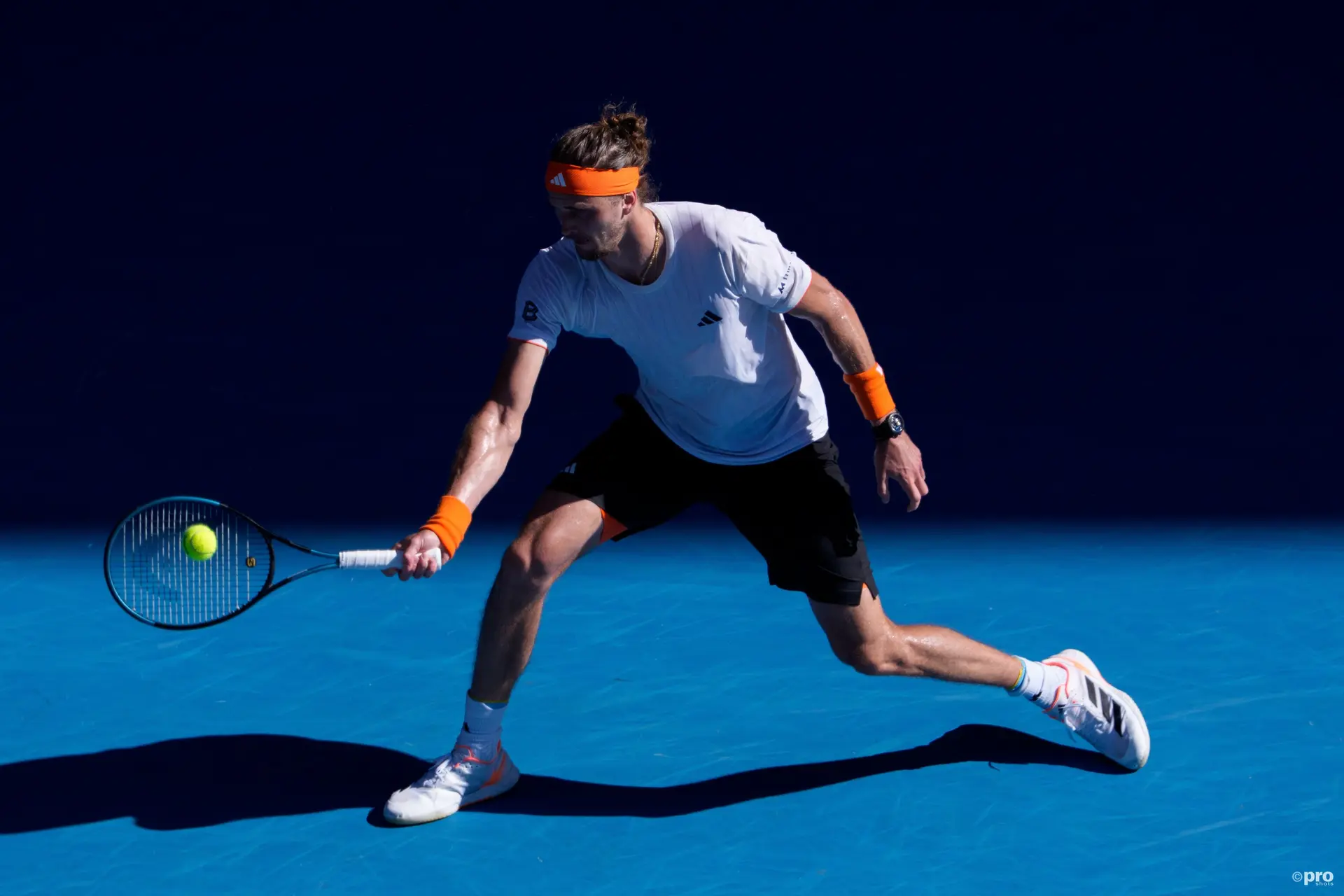
Tactical shift: “A lot more aggressive”
A central theme of Zverev’s 2026 season is a conscious move toward greater aggression. Long known for his baseline consistency and physical durability, he is now aiming to shorten points and assert control earlier in rallies. The adjustment, he says, was established during the off-season and remains a priority.
He described the evolution as an attempt to impose rather than react, reducing reliance on extended exchanges. Instead of “winning just by being physically fitter,” he wants to dictate with pace and positioning, including more frequent approaches to the net.
“Just a lot more aggressive. Trying to hit the ball a lot harder. Also trying come in a bit more,” the world No. 4 stated. “Just trying to take the racquet out of my opponents’ hands a bit more rather than rallying. Rather than winning just by being physically fitter sometimes. The adjustment has been made in the off-season, for this year. We’re trying to stick to that game plan.”
Acapulco presents an opportunity to test that approach on hard courts against a competitive ATP 500 field. The conditions traditionally reward first-strike tennis, aligning with Zverev’s stated objective of controlling points earlier and conserving energy deep into tournaments.
Read also
Perspective beyond the court
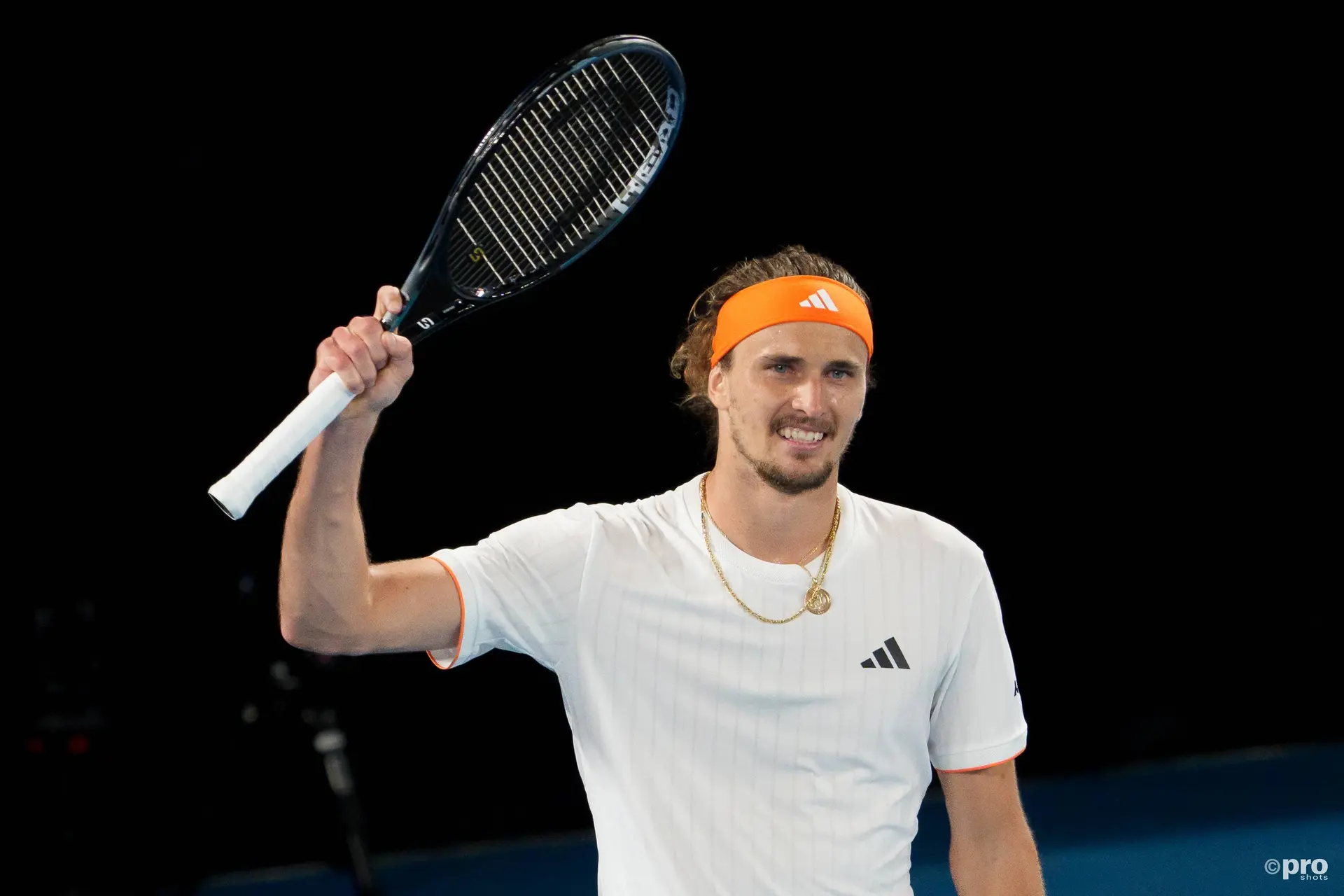
Away from competition, Zverev continues to balance professional demands with fatherhood. His four-year-old daughter, Mayla, is in Acapulco this week, as she was at several tournaments last season. He has been deliberate about limiting her exposure to public attention.
“I try to keep her away from the spotlight. I want her to be a normal child, growing up with a normal life,” the three-time Grand Slam runner-up said. “I try to keep her out of social media, all the Instagrammie stuff. It’s nice that she comes more and more.”
In a separate appearance during “Mextenis Talks,” Zverev also reflected on living with diabetes, a condition he has managed since childhood. He spoke about early doubts surrounding his athletic potential and how those experiences shaped his outlook, particularly after the serious ankle injury he suffered in Paris in 2024.
“I am fortunate. When my mother was told that a person with diabetes could not be an athlete, I was able to prove to the doctors that I could be a high-performance athlete. I hope that one day an athlete with diabetes can be a Grand Slam champion, and I hope that it will be me.
This condition does not define me, I have not let this disease condition my life. I learned to mature very young. Don’t let anyone tell you that you can’t do something. Don’t let this disease define you or limit you. After my injury in Paris in 2024, I started thinking about my foundation and sharing my experience with everyone who suffers from this disease.”
Zverev is the first seed of the tournament – in a draw that includes names such as Casper Ruud, Alex de Minaur, Flavio Cobolli and Alejandro Davidovich Fokina. Zverev’s debut is scheduled for this Tuesday during the night session, when the German faces the left-handed Frenchman Corentin Moutet, against whom he holds a 2-0 head-to-head record.

Cristhián AvilaTennis Journalist
Cristhián Ávila is a tennis journalist based in Santiago, Chile, and has been part of the TennisUpToDate team since early 2023. He covers the ATP and WTA Tours as well as all four Grand Slams, producing breaking news, match reports, analysis, and regular liveblogs from major tournaments.
His reporting combines statistical analysis with clear explanation, helping readers understand tactical developments, player form, and broader storylines across the tour. Working fluently in both Spanish and English, Cristhián collaborates with an international editorial team and contributes to comprehensive global coverage. As part of his work, he has conducted interviews and media interactions with leading figures in the sport, including Caroline Wozniacki and John McEnroe.
In his journalism, Cristhián places strong emphasis on careful sourcing, editorial accuracy, and updating articles promptly when new, verified information becomes available. His coverage is grounded in research, context, and direct engagement with professional tennis.
claps 0visitors 0
Just In


Popular News
Latest Comments
- great articlestennisseserver07-10-2026
- Medvedev was leading Djokovic 7-5, 3-5 when an attempted return..' NO you ignorants, Djokovic was leading .weiss05-10-2026
- No more bullshit "Wildcards" to these two. Qualify like everyone else -- there will be cameras there, too. Time to scream... WTF ????!!!!
 mandoist29-09-2026
 - Let's not BS the general public -- Sabalenka started showing cracks in her game last season. Her losses and near-losses started at about the same time she began being distracted by Fame (constant Selfies, making TV commercials, magazine shoots, endless Social Media nonsense, etc., etc.) One would think even Saba could recognize the parallels with others who failed before her -- Raducanu, Giorgi, Bouchard to name a few.mandoist25-09-2026
- Gross!! Hey Raducanu, Giorgi, and Bouchard -- reserve a seat at your Social Media Selfie table for Saba + Naomi. They're heading in your direction soon enough.mandoist24-09-2026
- And then these same players will complain about how lengthy their season’s were and need more time-off. I’m all for more tennis but the amount of tennis we get now is actually kind of crazy! We all need a break, especially the players.DaveyWavey23-09-2026
- You should do a comparison article for "different kinds of justice" the courts decide for tennis players. I can think of at least three players who received very small bans of a few months, however Tara Moore has been fighting for her literal survival the past few years. It seems odd considering she is not a "name" player, unlike the other cases.DaveyWavey22-09-2026
- PRIZE MONEY & POINTS Winner - $185,500 Finalist - $114,500 Semi-Finalist - $66,003 Quarter-Finalist - $35,000 Round of 16 - $18,045 Round of 32 - $13,005 Winner - 500 Finalist - 325 Semi-Finalist - 195 Quarter-Finalist - 108 Round of 16 - 60 Round of 32 - 1DaveyWavey20-09-2026
- Pegula withdrew from this Singapore event
 tennishappens19-09-2026
 - Serena Williams chose her tournaments. It's not such a bad idea.MuswellHillbilly17-09-2026

Loading