“It can be done”: Roddick points to Kobe Bryant and Kevin Durant when discussing Rune’s Achilles injury
ATP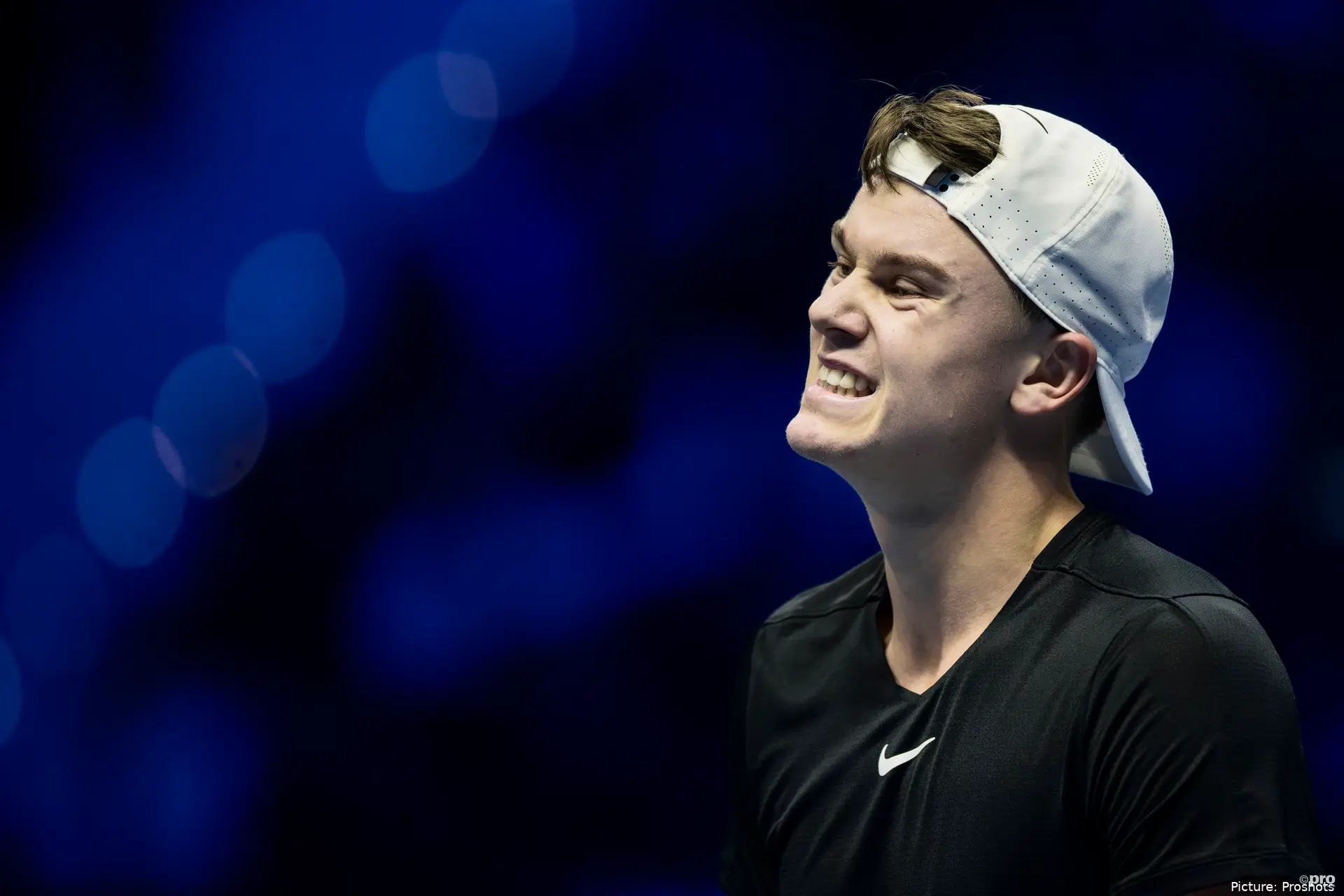
Andy Roddick addressed Holger Rune’s season through a single, defining lens: injury. Speaking on his podcast, the former world No. 1 focused specifically on Rune’s Achilles rupture, making it clear that the discussion surrounding the Dane has shifted entirely. At just 22 years old, Rune has already managed to establish himself among the elite, particularly after lifting the Paris Masters title in 2022.
However, in the seasons that followed, while remaining a heavyweight presence on tour, he has struggled to fully cement himself as a consistent top-10 fixture or capture the major titles many expected. As he was battling toward a year-end return to the top 10, the unfortunate injury in Stockholm struck—an Achilles rupture that will keep him sidelined for several months.
Roddick emphasized that once an injury of this magnitude enters the equation, debates about form, tactics, or temperament become secondary. The former US Open champion stressed that serious injuries demand empathy first, especially when they affect players still building their careers rather than defending established legacies.
“All the preferences of when we’re talking about style of game and temperament, or if you’re critical about something—who gives a damn? At this point, we just want him to be healthy,” said the 2003 US Open champion. “An Achilles rupture when you’re 22, 23 years old, fighting to be on the upswing—that’s not anything anyone wants to see.”
Rune, a former world No. 4, entered the year aiming to stabilize his results after an uneven run at the Grand Slams. Achilles ruptures remain rare in tennis and carry long-term uncertainty. Roddick acknowledged the seriousness of the injury but pointed to examples from other sports where elite athletes have successfully returned, noting that Rune’s age provides a crucial margin for recovery.
Read also
Rune’s recovery mindset and long-term horizon
Roddick referenced high-profile recoveries outside of tennis to underline that a return to elite competition remains possible. He cited Kobe Bryant and Kevin Durant—both of whom suffered Achilles injuries later in their careers—as proof that the path back exists, suggesting Rune’s youth could ultimately work in his favor.
“It’s a major traumatic lower-leg injury at 22 years old. Kobe Bryant was able to do it. Kevin Durant was able to do it. It can be done, and if he makes a full recovery, the guy’s got ten more years of runway.”
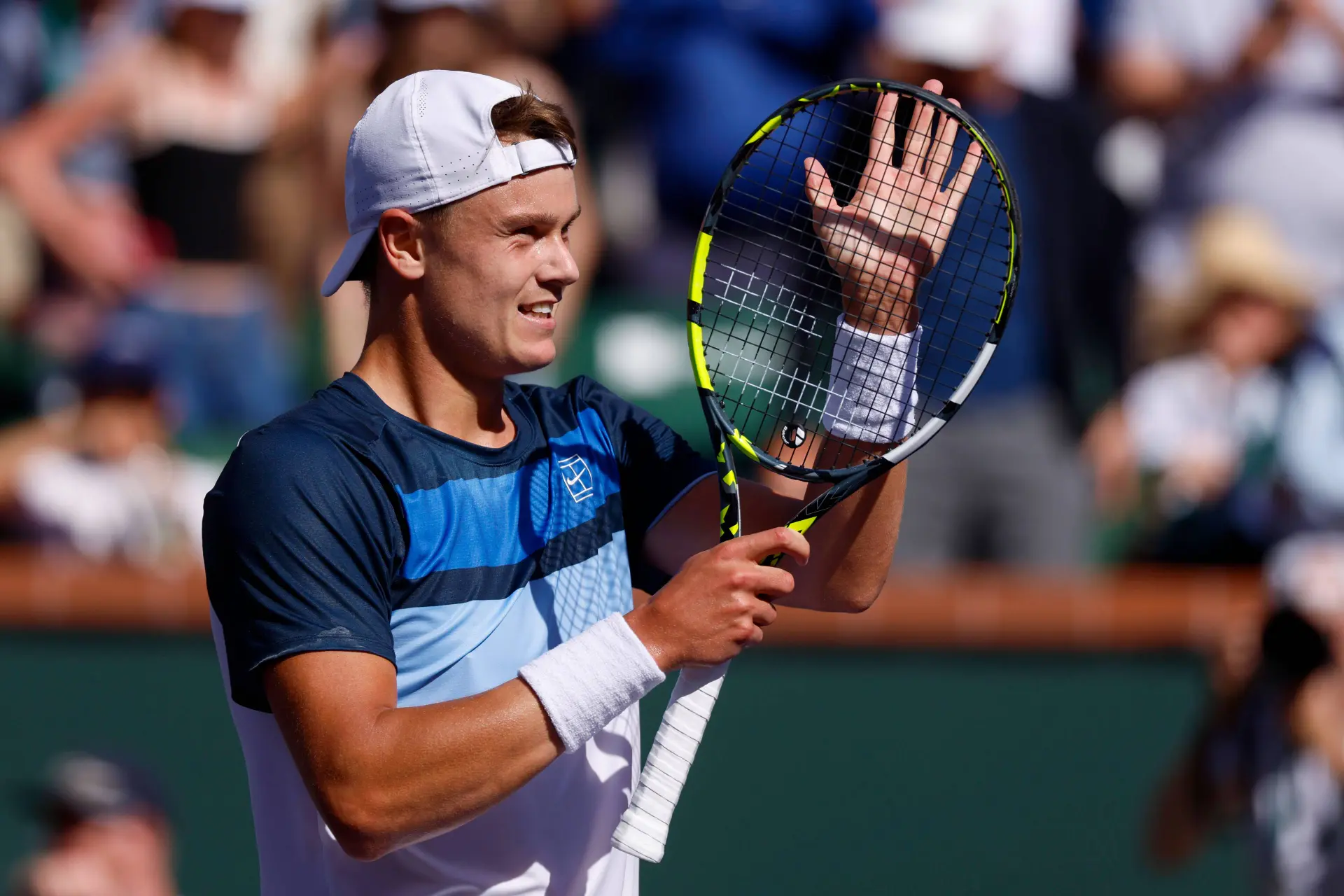
The former American star also highlighted Rune’s response to the setback as an encouraging sign. Rather than retreating from the spotlight, Rune has remained visible and engaged, projecting optimism and accountability—qualities Roddick described as essential during long rehabilitation processes.
“If I’m coaching someone going through the exact same thing, I want them projecting all of the energy that Holger is projecting right now. That’s exactly what I’d be trying to sell.”
Roddick confirmed that Rune is expected to appear on the podcast ahead of the Australian Open to provide an update on his recovery. For now, expectations remain deliberately conservative, with Roddick suggesting that success would mean being fully healthy and realistically targeting the 2027 Australian Open rather than rushing milestones.
Alexander Bublik and the limits of predictability
The conversation later shifted to Alexander Bublik, whose season offered a stark contrast. Where Rune’s year came to an abrupt halt, Bublik’s unfolded without logic. The Kazakh slipped outside the top 80 before reigniting his campaign with a Challenger title in Phoenix and notable wins over top players, including Jannik Sinner and Jack Draper.
Roddick described Bublik as unpredictable even by his own standards—capable of beating elite opponents one week and disappearing the next. That volatility, he argued, makes projections nearly impossible. “It makes no sense. It doesn’t make sense to him either. And I think, to his great credit, I’m as baffled as you are.”
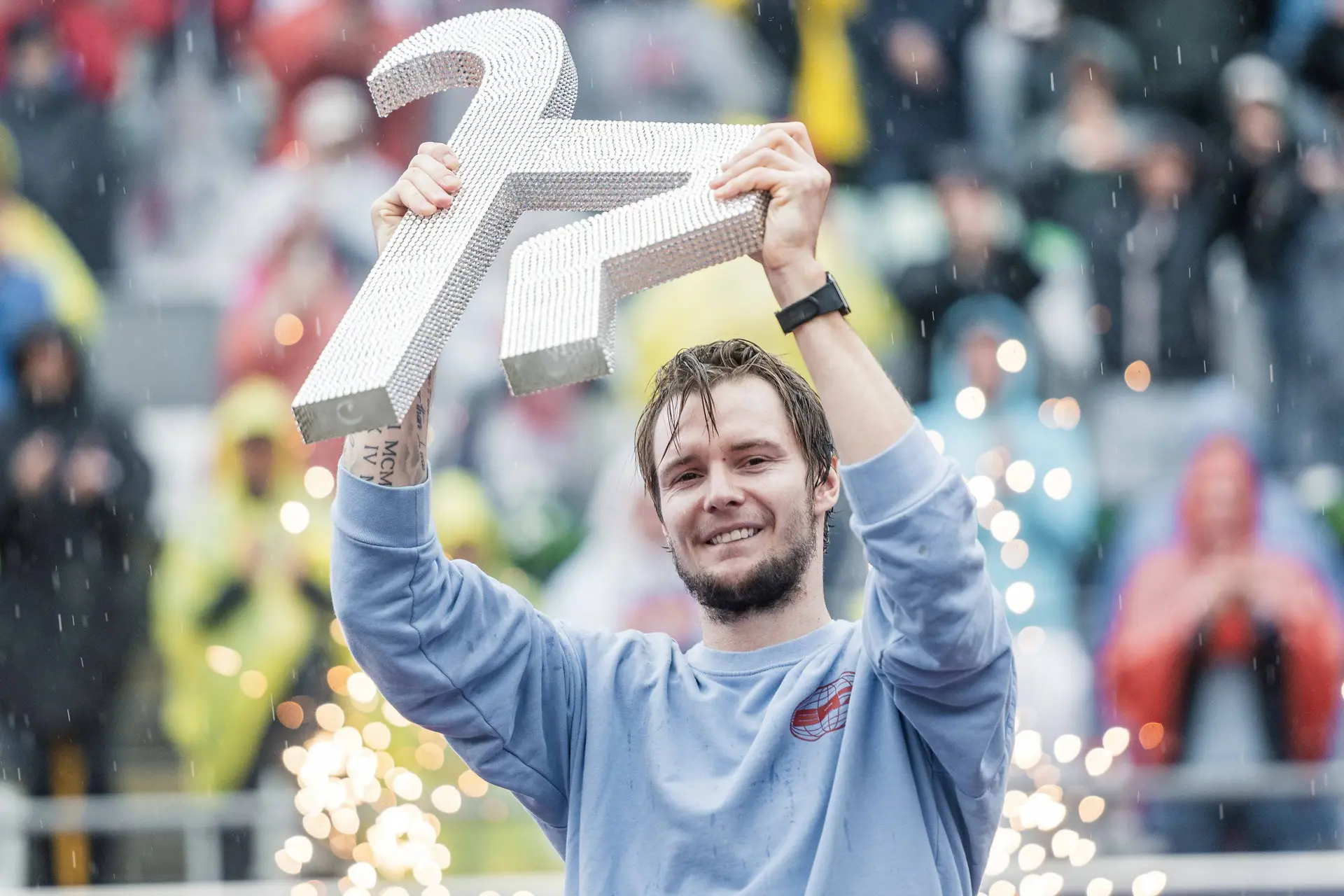
Despite Bublik’s raw talent and athleticism, Roddick questioned whether sustained consistency is realistic. While ranking mathematics leave room for a climb, he remained skeptical about a stable top-20 future, noting that tennis ultimately rewards reliability over flashes of brilliance.
“If he doesn’t know what he’s going to do, how the hell are you supposed to guard against it? That’s what makes him fun—and impossible to predict.”

Cristhián AvilaTennis Journalist
Cristhián Ávila is a tennis journalist based in Santiago, Chile, and has been part of the TennisUpToDate team since early 2023. He covers the ATP and WTA Tours as well as all four Grand Slams, producing breaking news, match reports, analysis, and regular liveblogs from major tournaments.
His reporting combines statistical analysis with clear explanation, helping readers understand tactical developments, player form, and broader storylines across the tour. Working fluently in both Spanish and English, Cristhián collaborates with an international editorial team and contributes to comprehensive global coverage. As part of his work, he has conducted interviews and media interactions with leading figures in the sport, including Caroline Wozniacki and John McEnroe.
In his journalism, Cristhián places strong emphasis on careful sourcing, editorial accuracy, and updating articles promptly when new, verified information becomes available. His coverage is grounded in research, context, and direct engagement with professional tennis.
claps 0visitors 0
Just In

Popular News
Latest Comments
- A healthy Qinwen may be hard to stop next season. She was already scaring her opponents before her medical leave(s). Unfortunately, Zheng insisted on singing again. On the positive side -- Mirra did not sing!! ;~}
 mandoist11-10-2026
 - Where is it written that athletes, entertainers... People in general... are mandated to keep looking at -- or even using [anti]Social Media? Public & private figures consistently complain and reveal their concerns about negativity and violence thrown at them -- yet they insist on participating. Avoid it, don't use it, don't read it. It's okay to occasionally look up at the World instead beating your eyes & thumbs to death on The Inventions out there.mandoist11-10-2026
- great articlestennisseserver07-10-2026
- Medvedev was leading Djokovic 7-5, 3-5 when an attempted return..' NO you ignorants, Djokovic was leading .weiss05-10-2026
- No more bullshit "Wildcards" to these two. Qualify like everyone else -- there will be cameras there, too. Time to scream... WTF ????!!!!mandoist29-09-2026
- Let's not BS the general public -- Sabalenka started showing cracks in her game last season. Her losses and near-losses started at about the same time she began being distracted by Fame (constant Selfies, making TV commercials, magazine shoots, endless Social Media nonsense, etc., etc.) One would think even Saba could recognize the parallels with others who failed before her -- Raducanu, Giorgi, Bouchard to name a few.mandoist25-09-2026
- Gross!! Hey Raducanu, Giorgi, and Bouchard -- reserve a seat at your Social Media Selfie table for Saba + Naomi. They're heading in your direction soon enough.mandoist24-09-2026
- And then these same players will complain about how lengthy their season’s were and need more time-off. I’m all for more tennis but the amount of tennis we get now is actually kind of crazy! We all need a break, especially the players.DaveyWavey23-09-2026
- You should do a comparison article for "different kinds of justice" the courts decide for tennis players. I can think of at least three players who received very small bans of a few months, however Tara Moore has been fighting for her literal survival the past few years. It seems odd considering she is not a "name" player, unlike the other cases.DaveyWavey22-09-2026
- PRIZE MONEY & POINTS Winner - $185,500 Finalist - $114,500 Semi-Finalist - $66,003 Quarter-Finalist - $35,000 Round of 16 - $18,045 Round of 32 - $13,005 Winner - 500 Finalist - 325 Semi-Finalist - 195 Quarter-Finalist - 108 Round of 16 - 60 Round of 32 - 1DaveyWavey20-09-2026

Loading