“It happened when I didn’t want to stop”: Arthur Fery explains repeated nosebleeds after epic Wimbledon comeback
ATP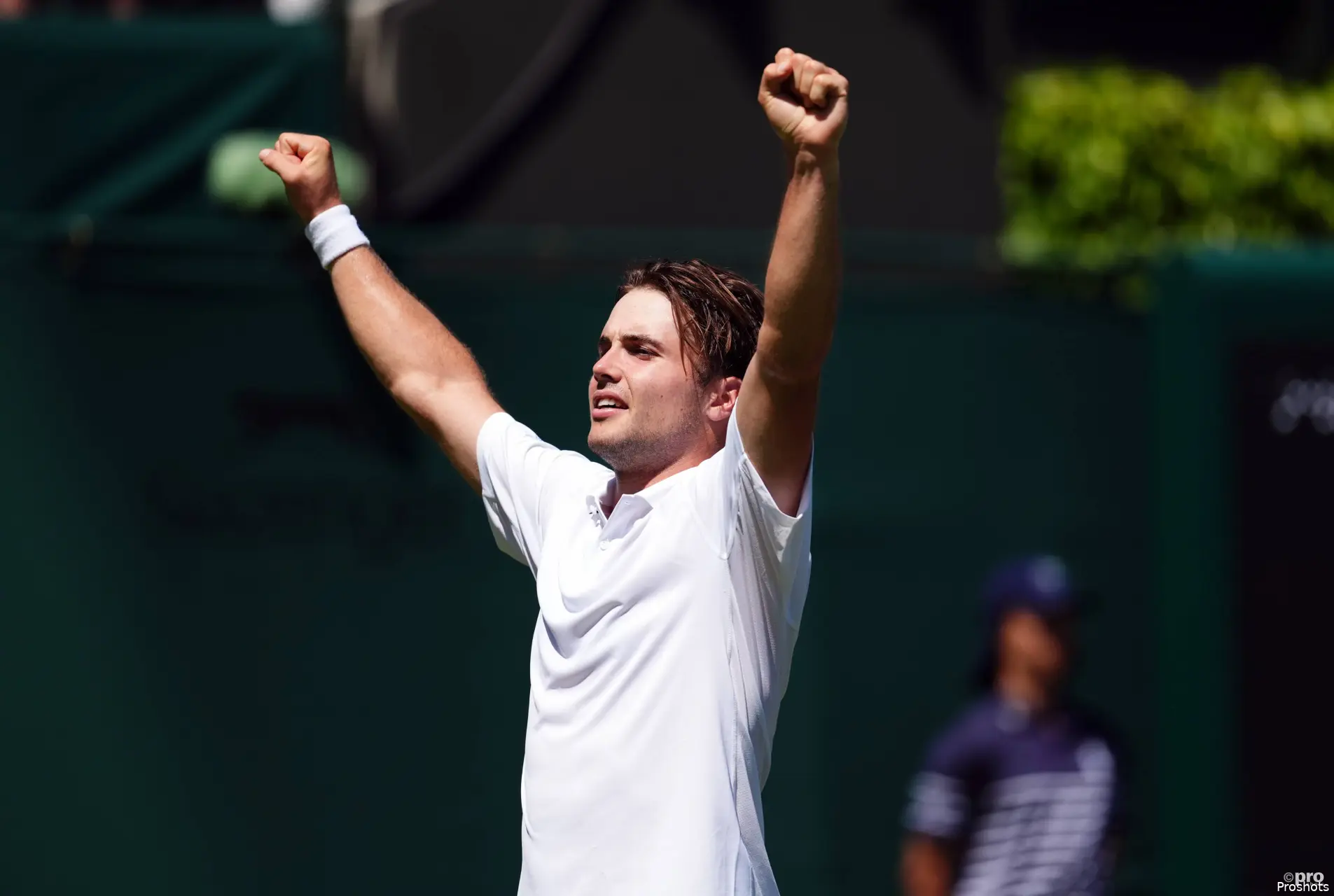
Arthur Fery produced one of the defining moments of Wimbledon on Saturday, fighting back from the brink to defeat Belgium's Zizou Bergs in a five-set marathon and book his place in the fourth round of a Grand Slam for the first time in his career. Yet beyond the remarkable comeback, another storyline unfolded throughout the nearly five-hour contest: repeated nosebleeds that forced multiple medical interruptions.
The British wildcard recovered from two sets to one down to prevail 2-6, 7-5, 2-6, 7-6(3), 7-6(10-5) after four hours and 40 minutes on Court 18. Even more impressively, he erased a double-break deficit at 1-4 in the fourth set before recovering from another 1-4 hole in the deciding set, eventually sealing victory in the match tie-break to become the last British man standing in the singles draw.
Fery's run has quickly become one of the stories of this year's Championships. Ranked world No. 114 entering Wimbledon, the 23-year-old has already guaranteed himself a Top 100 debut when the tournament ends, climbing at least 23 places to a projected career-high of No. 91 in the live rankings. His reward is a Round of 16 clash against either Grigor Dimitrov or Matteo Berrettini.
His emergence also comes after a difficult start to the tournament for British tennis. Jack Draper's late withdrawal through injury and Emma Raducanu's early exit had already reduced local expectations, while Cameron Norrie was eliminated in the opening round, leaving few home hopes alive. Fery has now unexpectedly become the face of Britain's men's campaign heading into the second week.

"It happened when I didn't want to stop": Fery explains nosebleed interruptions
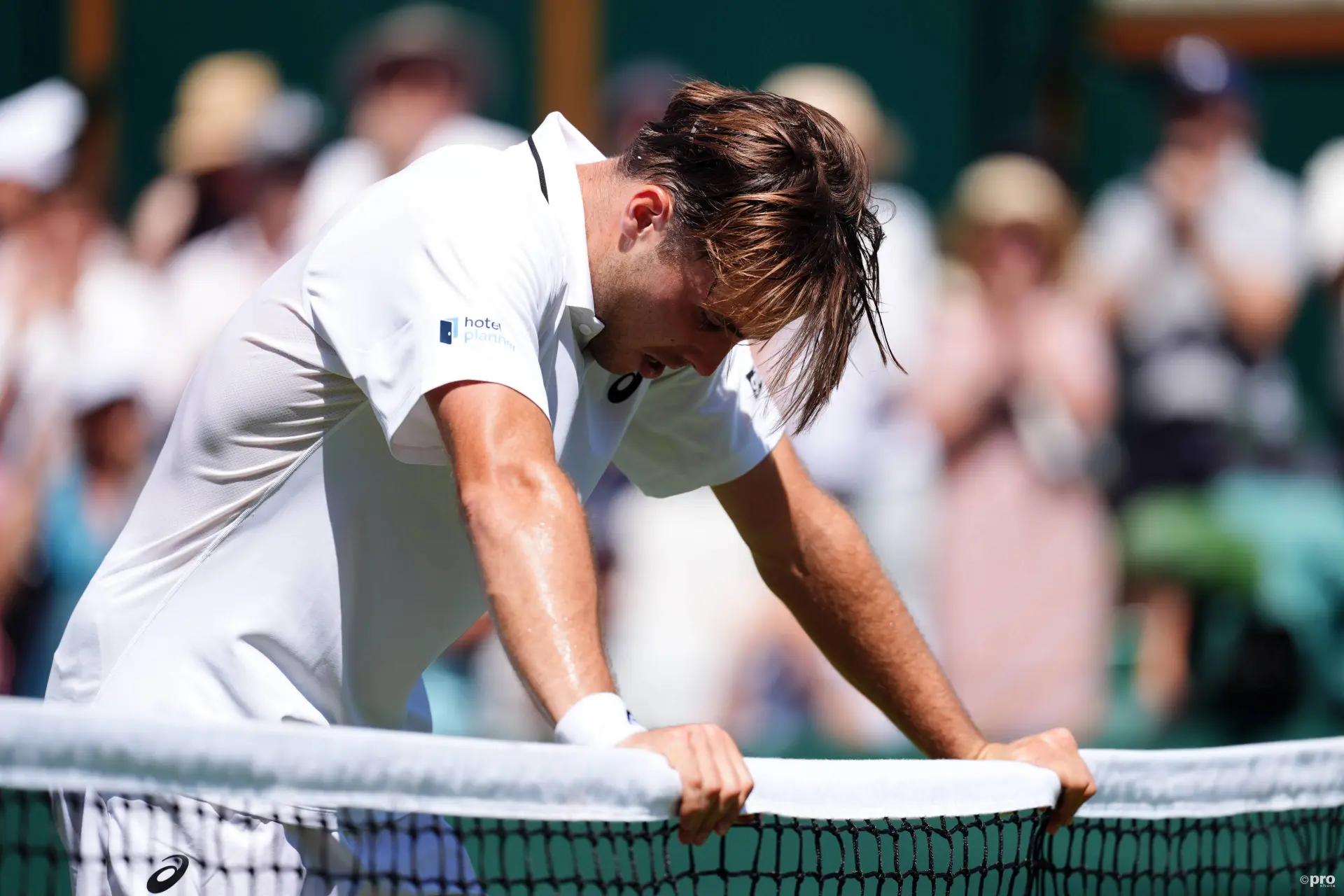
One of the most unusual aspects of Fery's victory came through a series of nosebleeds that required medical treatment during the match. The interruptions occasionally allowed him extra recovery time during a physically demanding encounter.
The Brit admitted they also arrived at the worst possible moments from a competitive standpoint. "It is a problem I am going to address. It has happened before, but it's not that common."
"It happened at times today when I didn't want to stop, when momentum was with me. I know it is annoying for the opponent. It gives me some extra time to rest sometimes, I guess."
ARTHUR FERY IN FIVEEEE!!!!!!!!!!! 😍
— LTA (@the_LTA) July 4, 2026
Absolutely insane from @ArthurFery02 to make the @Wimbledon fourth round#Wimbledon pic.twitter.com/xklF6kb0Lb
Despite the interruptions, Fery never lost belief. The former Stanford standout repeatedly clawed his way back into the contest, recovering from seemingly impossible positions against Bergs, who actually finished the match ahead in several statistical categories, including total points won, first-serve points won, second-serve points won and net points.
Nevertheless, Fery proved more resilient when it mattered most. "Just tried to stay in the match, just backing myself as a competitor," the 23-year-old player added. "I was down for pretty much the whole match, managed to scramble back from two breaks and 4-1 in the fifth, and just tried to put up as much of a fight as I could."
British dream continues as Top 100 debut awaits
As soon as match point landed, Fery dropped onto the grass and remained there while Court 18 erupted around him. The victory not only secured the biggest win of his career but also made him just the second British wildcard in the Open Era to reach the men's Round of 16 at Wimbledon, joining Andrew Foster's achievement in 1993.
Speaking moments after the victory, Fery admitted he was still struggling to process what had happened after nearly five hours of tennis in front of an increasingly vocal home crowd. "It’s unreal. Four hours and 40 with that support, it’s unbelievable.
"I requested to play on this court because it’s awesome. I had a great time on it in the second round and this trumps it, but I got so much support, it’s awesome," Arthur Fery added. "No words for it, honestly. I don't know what is going on right now. It will take time to digest it. So many first times after this match. I'm just so glad."

Fery now stands one victory away from his first Grand Slam quarter-final and continues a breakthrough season that already included his maiden ATP Tour quarter-final at Queen's Club.
Regardless of what happens next against either Dimitrov or Berrettini, the British wildcard has already secured the biggest ranking jump of his career and established himself as one of the surprise stories of Wimbledon 2026.

Cristhián AvilaTennis Journalist
Cristhián Ávila is a tennis journalist based in Santiago, Chile, and has been part of the TennisUpToDate team since early 2023. He covers the ATP and WTA Tours as well as all four Grand Slams, producing breaking news, match reports, analysis, and regular liveblogs from major tournaments.
His reporting combines statistical analysis with clear explanation, helping readers understand tactical developments, player form, and broader storylines across the tour. Working fluently in both Spanish and English, Cristhián collaborates with an international editorial team and contributes to comprehensive global coverage. As part of his work, he has conducted interviews and media interactions with leading figures in the sport, including Caroline Wozniacki and John McEnroe.
In his journalism, Cristhián places strong emphasis on careful sourcing, editorial accuracy, and updating articles promptly when new, verified information becomes available. His coverage is grounded in research, context, and direct engagement with professional tennis.
claps 0visitors 0
Just In

Popular News
Latest Comments
- A healthy Qinwen may be hard to stop next season. She was already scaring her opponents before her medical leave(s). Unfortunately, Zheng insisted on singing again. On the positive side -- Mirra did not sing!! ;~}
 mandoist11-10-2026
 - Where is it written that athletes, entertainers... People in general... are mandated to keep looking at -- or even using [anti]Social Media? Public & private figures consistently complain and reveal their concerns about negativity and violence thrown at them -- yet they insist on participating. Avoid it, don't use it, don't read it. It's okay to occasionally look up at the World instead beating your eyes & thumbs to death on The Inventions out there.mandoist11-10-2026
- great articlestennisseserver07-10-2026
- Medvedev was leading Djokovic 7-5, 3-5 when an attempted return..' NO you ignorants, Djokovic was leading .weiss05-10-2026
- No more bullshit "Wildcards" to these two. Qualify like everyone else -- there will be cameras there, too. Time to scream... WTF ????!!!!mandoist29-09-2026
- Let's not BS the general public -- Sabalenka started showing cracks in her game last season. Her losses and near-losses started at about the same time she began being distracted by Fame (constant Selfies, making TV commercials, magazine shoots, endless Social Media nonsense, etc., etc.) One would think even Saba could recognize the parallels with others who failed before her -- Raducanu, Giorgi, Bouchard to name a few.mandoist25-09-2026
- Gross!! Hey Raducanu, Giorgi, and Bouchard -- reserve a seat at your Social Media Selfie table for Saba + Naomi. They're heading in your direction soon enough.mandoist24-09-2026
- And then these same players will complain about how lengthy their season’s were and need more time-off. I’m all for more tennis but the amount of tennis we get now is actually kind of crazy! We all need a break, especially the players.DaveyWavey23-09-2026
- You should do a comparison article for "different kinds of justice" the courts decide for tennis players. I can think of at least three players who received very small bans of a few months, however Tara Moore has been fighting for her literal survival the past few years. It seems odd considering she is not a "name" player, unlike the other cases.DaveyWavey22-09-2026
- PRIZE MONEY & POINTS Winner - $185,500 Finalist - $114,500 Semi-Finalist - $66,003 Quarter-Finalist - $35,000 Round of 16 - $18,045 Round of 32 - $13,005 Winner - 500 Finalist - 325 Semi-Finalist - 195 Quarter-Finalist - 108 Round of 16 - 60 Round of 32 - 1DaveyWavey20-09-2026

Loading