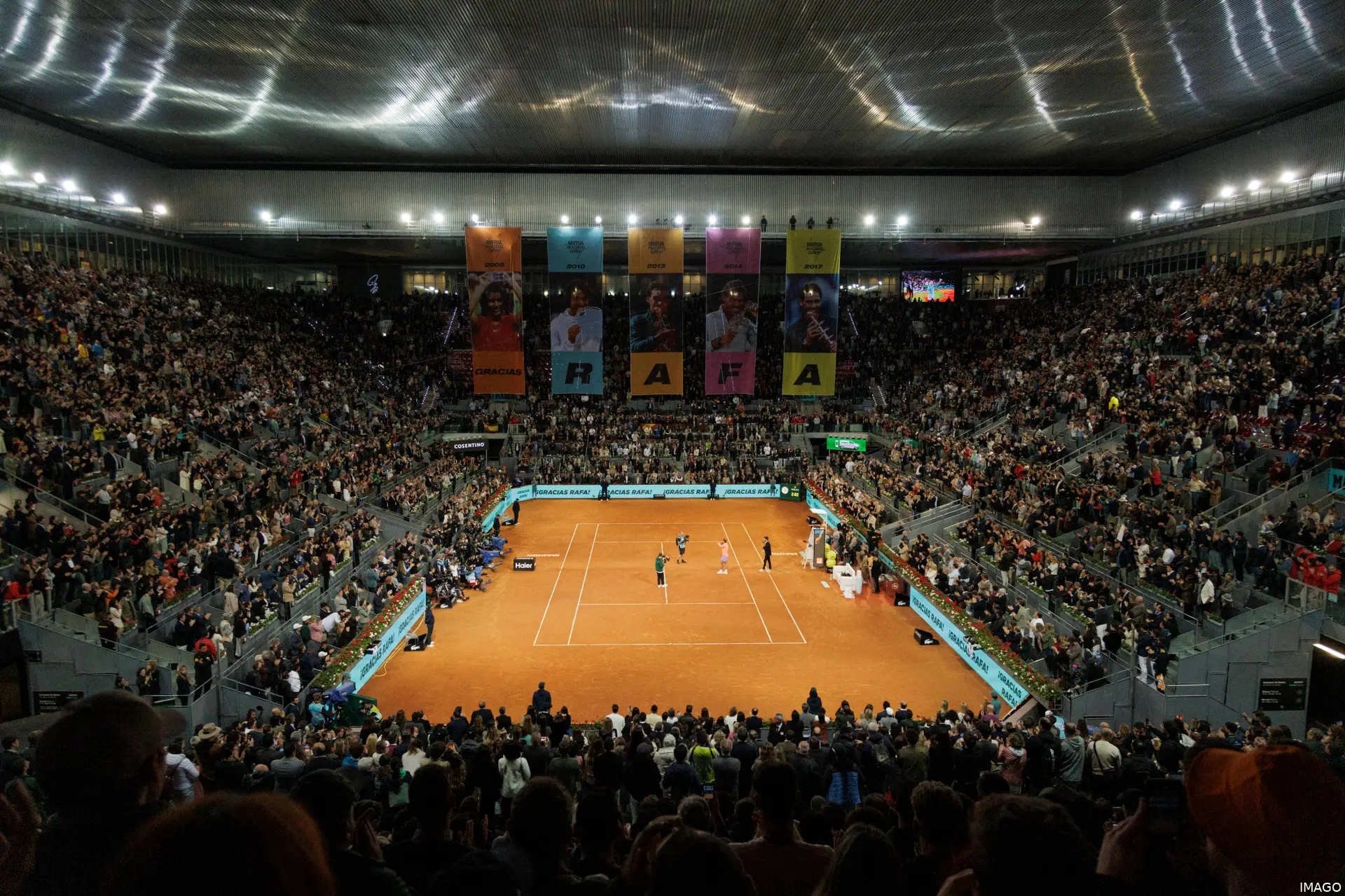
Tennis has always been about precision, timing and those razor-thin margins that decide everything. Now? Technology is catapulting the sport into a brand-new era. Whether it’s AI-powered analytics, smart rackets, live betting platforms or immersive fan experiences, tennis today mixes innovation with athleticism.
There’s still something classic about tennis. The sound of a clean serve, the nerves in a grass-court tiebreaker or the hush before match point, those moments feel old-school and honestly, that’s part of the charm. But behind the scenes, tennis has quietly turned into one of the most high-tech sports around.
You’ll find players training with biometric trackers, coaches dissecting opponents with data models and fans placing live bets straight from their phones while watching matches. Tech reaches just about every corner of the sport.
And the thing is, tennis hasn’t let innovation crowd out tradition. Wimbledon looks like it always has, but under the surface, there’s a whole ecosystem of software, sensors and digital platforms shaping where the sport goes next.
Smart courts and better training
Players these days know more about their bodies and performances than ever before. Ten years ago, coaches worked mostly by instinct and watching. Now, top athletes train with systems tracking movement, spin rate, footwork and recovery patterns all in real time.
Motion tracking has been one of the biggest leaps. Cameras around practice courts analyze every move a player makes, measuring sprint speed, reaction time and their positioning during rallies. Coaches can then study matches frame by frame, pinpointing weaknesses or patterns that opponents might exploit.
Smart rackets are everywhere now, too. Built-in sensors collect data on ball impact, swing speed and shot placement.
Fans get a whole new experience
Watching tennis feels wildly different than it did ten years ago. Fans aren’t stuck with TV broadcasts anymore; matches stream across apps, betting platforms and social feeds all in real time. Interactive stats pop up during matches, giving viewers access to analytics that only coaches used to get.
Second-screen habits are everywhere. Fans watch games while scrolling live stats, social media and betting odds on their phones. That’s where sports betting ties itself tightly to modern tennis. Live betting’s taken off because tennis delivers constant momentum swings. Odds change fast after just one break of serve, turning every match into a playground for in-play wagering.
For example, tennis fans wanting information on Michigan online casino options can now pull up detailed guides breaking down legal sportsbooks, casino platforms, bonuses and betting tips. These sites are turning into handy resources for anyone wanting a clear picture of regulated gambling while keeping up with tournaments year-round.
Hawk-eye and no more guessing
No tech has changed tennis quite like Hawk-Eye. Before electronic line calling, disputed calls were part of the game. Players argue with umpires, crowds booed and controversy stuck around for years. Hawk-Eye flipped all that almost instantly.
Multiple high-speed cameras track the ball’s path, figuring out if it was in or out within millimeters. At first, players got a set number of challenges. Fans loved seeing questionable calls replayed on big screens for all to judge.
AI is tennis’ quiet powerhouse
Artificial intelligence (AI) is sneaking deeper into tennis, most fans barely noticing. Coaching teams use AI-powered software to sift through massive match data. Algorithms pull out patterns; how an opponent serves, preferred rally lengths and weaknesses under stress.
For instance, software could show a player always serves wide on break points, or struggles with high topspin shots to the backhand after long exchanges. Coaches fold that info straight into game plans.
Broadcasters lean on AI, too. Automated systems craft highlight reels in minutes, picking out exciting points without anyone needing to sit through hours of footage. Some streaming platforms tailor the experience, recommending clips based on which players fans like or which tournaments they prefer.
Recovery and injury prevention matter more
One part of tennis tech that’s easy to miss is recovery science. Tennis puts huge strain on joints and muscles, so injury prevention is everything. Teams use cryotherapy chambers, muscle oxygen monitors and advanced physio gear to keep players healthy during long grinds.
Data’s crucial here, too. Coaches track training loads closely, watching for signs of fatigue before injuries happen. Even nutrition’s gotten personal. Some athletes use systems to track hydration, then get meal plans customized to their workload and the climate wherever they’re playing.
Technology at the core
Tennis keeps its traditions close, but technology is changing everything under the surface. From smart training setups to AI predictions, live betting platforms and immersive fan experiences, innovation is reshaping how tennis is played, watched, and understood.
What’s cool is how naturally these tools fit in. The tension in a five-set match or the beauty of a perfect volley hasn’t faded. If anything, tech only helps fans appreciate the tiny details more.

Samuel GillEditor-in-Chief
Samuel Gill is the Chief Content Officer (CCO) of TennisUpToDate.com, a role he has held since 2020. He is responsible for editorial governance across the platform, including setting content standards, overseeing accuracy and consistency, and guiding long-term editorial strategy. Since joining, he has contributed more than 10,000 articles and editorial pieces across the TennisUpToDate network, playing a central role in the daily operation and development of the site.
Based in Leicester, Samuel has a broad background in tennis media. In his current role, he works closely with editors and writers to ensure coverage meets clear journalistic standards, with particular attention to verification, consistency, and timely updates when new information becomes available.
claps 0visitors 0
Just In

Popular News
Latest Comments
- A healthy Qinwen may be hard to stop next season. She was already scaring her opponents before her medical leave(s). Unfortunately, Zheng insisted on singing again. On the positive side -- Mirra did not sing!! ;~}
 mandoist11-10-2026
 - Where is it written that athletes, entertainers... People in general... are mandated to keep looking at -- or even using [anti]Social Media? Public & private figures consistently complain and reveal their concerns about negativity and violence thrown at them -- yet they insist on participating. Avoid it, don't use it, don't read it. It's okay to occasionally look up at the World instead beating your eyes & thumbs to death on The Inventions out there.mandoist11-10-2026
- great articlestennisseserver07-10-2026
- Medvedev was leading Djokovic 7-5, 3-5 when an attempted return..' NO you ignorants, Djokovic was leading .weiss05-10-2026
- No more bullshit "Wildcards" to these two. Qualify like everyone else -- there will be cameras there, too. Time to scream... WTF ????!!!!mandoist29-09-2026
- Let's not BS the general public -- Sabalenka started showing cracks in her game last season. Her losses and near-losses started at about the same time she began being distracted by Fame (constant Selfies, making TV commercials, magazine shoots, endless Social Media nonsense, etc., etc.) One would think even Saba could recognize the parallels with others who failed before her -- Raducanu, Giorgi, Bouchard to name a few.mandoist25-09-2026
- Gross!! Hey Raducanu, Giorgi, and Bouchard -- reserve a seat at your Social Media Selfie table for Saba + Naomi. They're heading in your direction soon enough.mandoist24-09-2026
- And then these same players will complain about how lengthy their season’s were and need more time-off. I’m all for more tennis but the amount of tennis we get now is actually kind of crazy! We all need a break, especially the players.DaveyWavey23-09-2026
- You should do a comparison article for "different kinds of justice" the courts decide for tennis players. I can think of at least three players who received very small bans of a few months, however Tara Moore has been fighting for her literal survival the past few years. It seems odd considering she is not a "name" player, unlike the other cases.DaveyWavey22-09-2026
- PRIZE MONEY & POINTS Winner - $185,500 Finalist - $114,500 Semi-Finalist - $66,003 Quarter-Finalist - $35,000 Round of 16 - $18,045 Round of 32 - $13,005 Winner - 500 Finalist - 325 Semi-Finalist - 195 Quarter-Finalist - 108 Round of 16 - 60 Round of 32 - 1DaveyWavey20-09-2026

Loading