Bencic, Navarro, Svitolina and Noskova? Andy Roddick and Jon Wertheim debate which WTA players could crack the top 10 next season
WTA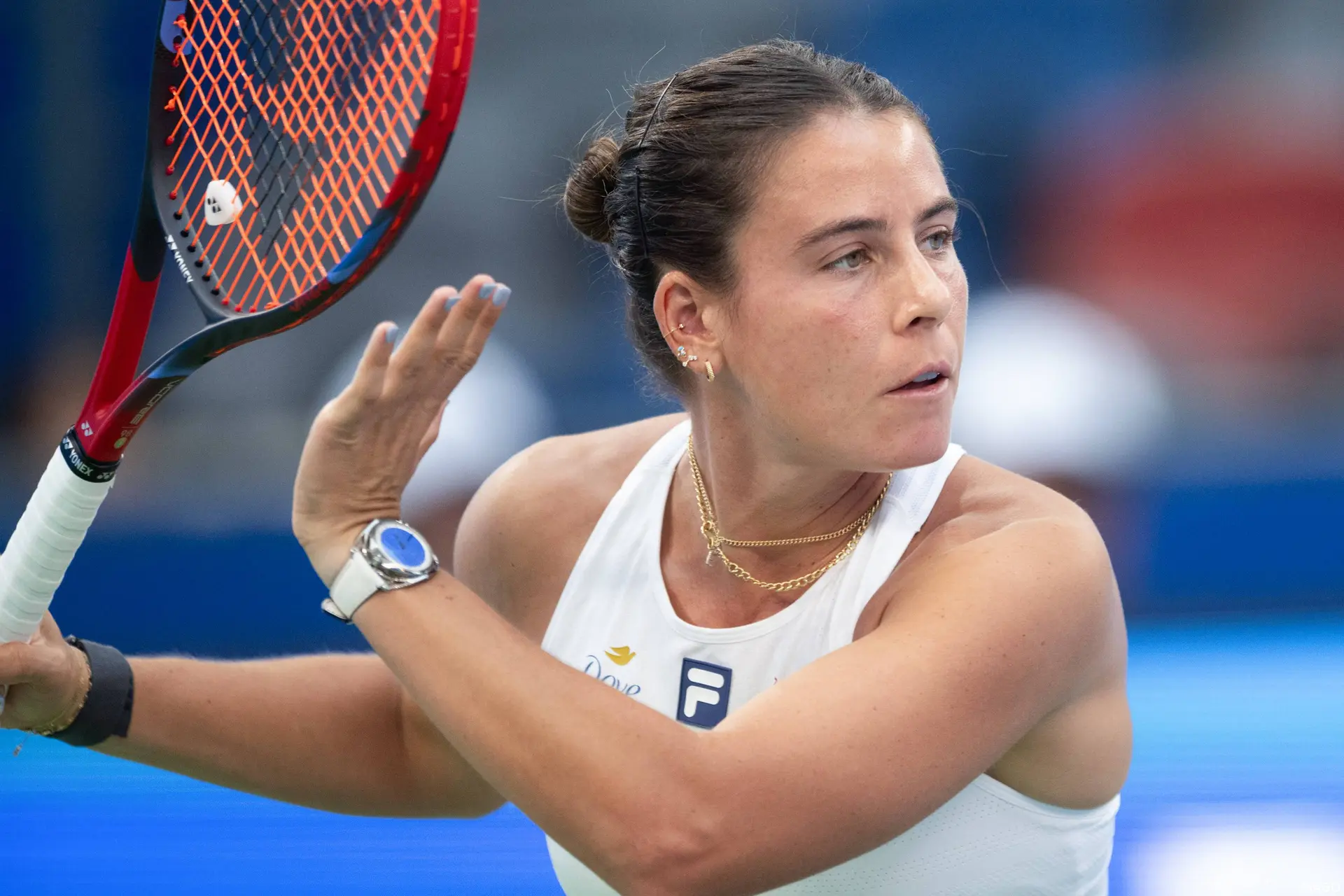
Andy Roddick and Jon Wertheim took a deep dive into the WTA rankings on the latest episode of Served, focusing on players ranked between 15 and 11 and debating which of them has the best chance of reaching the top 10 by the end of next year.
“We’re at number 15, Emma Navarro,” Roddick said. “I think we should take a look at these players 15 through, say, 11, which is Navarro, Svitolina, Noskova, Tauson and Bencic.”
Roddick framed the discussion as a forward-looking exercise rather than a reflection of current rankings. “My question to you guys is, of these five players, who has the best chance of being in the top 10 by the end of next year?”
Roddick on Bencic and Navarro
Roddick was quick to make his selection. “I’m going to take Bencic,” he said. “Because I think we have to have a bigger conversation about what she actually did this year, which I’ve said before, but it’s just insane.”
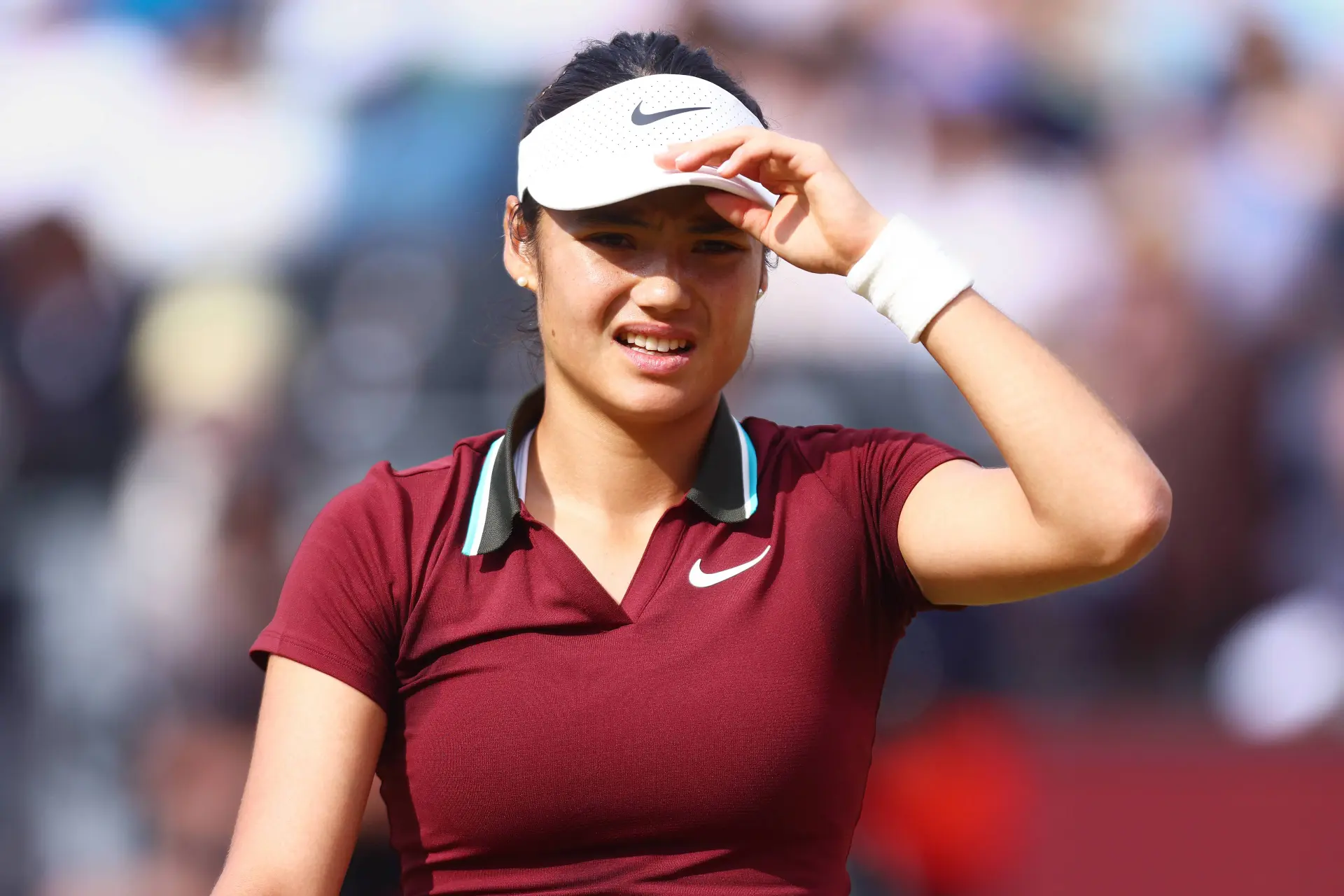
He then turned his attention to Emma Navarro, noting how expectations can shift dramatically after a breakout season. “Emma Navarro finished last year, she was at seven or eight in the world and made a couple of semis at Slams,” Roddick said. “So not the year that she had the year before. I think second time through the lineup is a big thing.”
According to Roddick, the biggest challenge for Navarro may be mental rather than technical. “I think expectation matters,” he said. “When she walks into a tournament, it’s like, ‘Oh, you’re the favorite,’ or ‘You’re definitely going to make semis.’ That takes some getting used to. That’s a different jacket than she was wearing as the disruptor the year before.”
Still, Roddick expressed confidence in her long-term trajectory. “But game-wise, I think she’s going to be fine,” he added. “She’s a really smart tennis player and actually got better at injecting pace into the ball this year. So I think she’ll be fine.”
Svitolina’s consistency and intelligence
Roddick also highlighted Elina Svitolina’s ability to win consistently, even on a reduced schedule. “Svitolina, win-loss by the way, you see a lot of barely above .500 players making the top 30,” he said. “I think she was 37 and 15 this year.”
He praised her tactical awareness and resilience. “She’s just there every week, maybe playing a little bit more of a pared-down schedule than most, which is understandable,” Roddick said. “But she never really punches herself out of anything. Hyper-intelligent player, completely self-aware and dangerous on faster surfaces.”
At this stage of her career, surface speed matters. “I think she needs those faster surfaces, or prefers them at least, at this point in her career,” he said.
Noskova and Tauson on the rise
Roddick pointed to Linda Noskova’s late-season run as a key reason she entered the discussion. “Noskova was 21 in the world, beat Swiatek in a big match and did some work post US Open,” he said. “Finals in Tokyo, finals in China. I’d say that’s where kind of the bulk of her points came in.”
He was equally animated when discussing Clara Tauson’s playing style. “Tauson is crazy to watch,” Roddick said. “She’ll go from just inflicting violence on the ball, and then you remember how Cedric Pioline used to walk between points.”
After Jon Wertheim laughed in agreement, Roddick expanded on the comparison. “It could be one zero in the first set and in between points he’s acting exhausted,” Roddick said. “Tauson is not in a hurry between points. Then she steps up on the line and just beats people. She can create a lot of power off both sides.”
Wertheim backs momentum and Noskova
When Roddick handed the question over, Wertheim framed his answer around trajectory rather than reputation. “This is momentum investing,” Wertheim said. “I guess I’ll say Noskova.”
He paused to acknowledge Svitolina’s broader context before moving on. “I think Svitolina is fascinating,” Wertheim said. “Her country is ravaged by what I will call invasion and not war. She’s married to another player who’s retiring. Oh yes, she’s a mother and she’s still winning 35 to 40 matches. All credit to her. Discussion for another time.”
Wertheim also revisited the idea of a sophomore slump in reference to Navarro. “Do we think it’s the opponent now knows Emma Navarro’s game and she’s going from hunted to hunter?” Wertheim asked. “Or do we think some of this is just exhausting? You need to pace yourself. The first year is fun.”
According to Wertheim, Navarro’s experience is far from unusual. “She’s hardly the first player to not completely fall apart, but to have a sophomore season that doesn’t measure up to the freshman season,” he said.
Czech depth and late-season momentum
Returning to Noskova, Wertheim highlighted the remarkable depth of Czech tennis. “Noskova is another Czech player,” he said. “They keep coming. Resistance is futile. This country has like 10 million people. That’s Ohio. It’s not warm for training.”
“That ain’t Bradenton,” Roddick interjected. “Exactly,” Wertheim replied. “Not exactly a climate conducive to minting tennis star after tennis star.”
Wertheim also gave credit to Tauson’s recent progress. “She beat Rybakina at Wimbledon,” he said. “She’s had some really nice wins. Is she going to win the WTA 100-meter dash? Probably not. But her movement’s gotten better and she hits a big, big ball.”
Still, Wertheim was clear in his final answer. “But to answer your question, Noskova is my answer,” he said. “Strong body, not scared to go against the top players.”
He concluded by pointing to timing as a key factor. “With a young player, you kind of think they’re going to find that consistency,” Wertheim said. “Also momentum, finishing the year strong. Maybe sometimes that leads to starting the year strong. I think I’d like that also.”

Samuel GillEditor-in-Chief
Samuel Gill is the Chief Content Officer (CCO) of TennisUpToDate.com, a role he has held since 2020. He is responsible for editorial governance across the platform, including setting content standards, overseeing accuracy and consistency, and guiding long-term editorial strategy. Since joining, he has contributed more than 10,000 articles and editorial pieces across the TennisUpToDate network, playing a central role in the daily operation and development of the site.
Based in Leicester, Samuel has a broad background in tennis media. In his current role, he works closely with editors and writers to ensure coverage meets clear journalistic standards, with particular attention to verification, consistency, and timely updates when new information becomes available.
claps 0visitors 0
Just In

Popular News
Latest Comments
- A healthy Qinwen may be hard to stop next season. She was already scaring her opponents before her medical leave(s). Unfortunately, Zheng insisted on singing again. On the positive side -- Mirra did not sing!! ;~}
 mandoist11-10-2026
 - Where is it written that athletes, entertainers... People in general... are mandated to keep looking at -- or even using [anti]Social Media? Public & private figures consistently complain and reveal their concerns about negativity and violence thrown at them -- yet they insist on participating. Avoid it, don't use it, don't read it. It's okay to occasionally look up at the World instead beating your eyes & thumbs to death on The Inventions out there.mandoist11-10-2026
- great articlestennisseserver07-10-2026
- Medvedev was leading Djokovic 7-5, 3-5 when an attempted return..' NO you ignorants, Djokovic was leading .weiss05-10-2026
- No more bullshit "Wildcards" to these two. Qualify like everyone else -- there will be cameras there, too. Time to scream... WTF ????!!!!mandoist29-09-2026
- Let's not BS the general public -- Sabalenka started showing cracks in her game last season. Her losses and near-losses started at about the same time she began being distracted by Fame (constant Selfies, making TV commercials, magazine shoots, endless Social Media nonsense, etc., etc.) One would think even Saba could recognize the parallels with others who failed before her -- Raducanu, Giorgi, Bouchard to name a few.mandoist25-09-2026
- Gross!! Hey Raducanu, Giorgi, and Bouchard -- reserve a seat at your Social Media Selfie table for Saba + Naomi. They're heading in your direction soon enough.mandoist24-09-2026
- And then these same players will complain about how lengthy their season’s were and need more time-off. I’m all for more tennis but the amount of tennis we get now is actually kind of crazy! We all need a break, especially the players.DaveyWavey23-09-2026
- You should do a comparison article for "different kinds of justice" the courts decide for tennis players. I can think of at least three players who received very small bans of a few months, however Tara Moore has been fighting for her literal survival the past few years. It seems odd considering she is not a "name" player, unlike the other cases.DaveyWavey22-09-2026
- PRIZE MONEY & POINTS Winner - $185,500 Finalist - $114,500 Semi-Finalist - $66,003 Quarter-Finalist - $35,000 Round of 16 - $18,045 Round of 32 - $13,005 Winner - 500 Finalist - 325 Semi-Finalist - 195 Quarter-Finalist - 108 Round of 16 - 60 Round of 32 - 1DaveyWavey20-09-2026

Loading