The timing is significant. For years, I’ve been one of the WTA’s more consistent critics. Sometimes that’s been because of poor governance. Sometimes it’s been because of baffling scheduling decisions. And sometimes it’s been because the tour has seemed willing to sacrifice long-term credibility for short-term financial relief.
So it’s only fair to acknowledge when the WTA gets something right. Its decision to end the WTA Finals’ partnership with Saudi Arabia a year before the agreement expired is one of those moments. Not because it solves every problem. Because it finally recognizes that not every sponsorship dollar is equal.
Bold decision to end contract
When the WTA announced it was taking its showcase event to Riyadh, the argument was familiar. The money was unprecedented. The investment would grow women’s tennis. Engagement in the region would improve opportunities for women and girls. Sport, we were told, could become a force for positive change.
There was always some truth to that. There usually is. Saudi Arabia has undeniably invested heavily in sport. Tennis programs expanded. Attendance reportedly increased. Community initiatives reached thousands of people. Those are real accomplishments that shouldn’t simply be dismissed.

But they never erased the larger question. Should the premier championship in women’s tennis become part of a country’s broader effort to rehabilitate its international image?
For many fans—and for many players—the answer was always uncomfortable. Women’s tennis has spent decades fighting for equal treatment, equal prize money, and equal respect. Billie Jean King and generations of players built the WTA around the idea that women’s sports deserved not just investment, but values worth defending.
That history matters. Which is why this move feels different. The WTA didn’t have to wait until the contract expired. It could have collected another year of enormous financial support, issued another round of optimistic press releases, and delayed the difficult conversation.
Instead, it chose to leave. That deserves credit. Now comes the harder part. Because nobody should pretend this decision is free. The immediate consequence is almost certain to be financial.
Financial implications
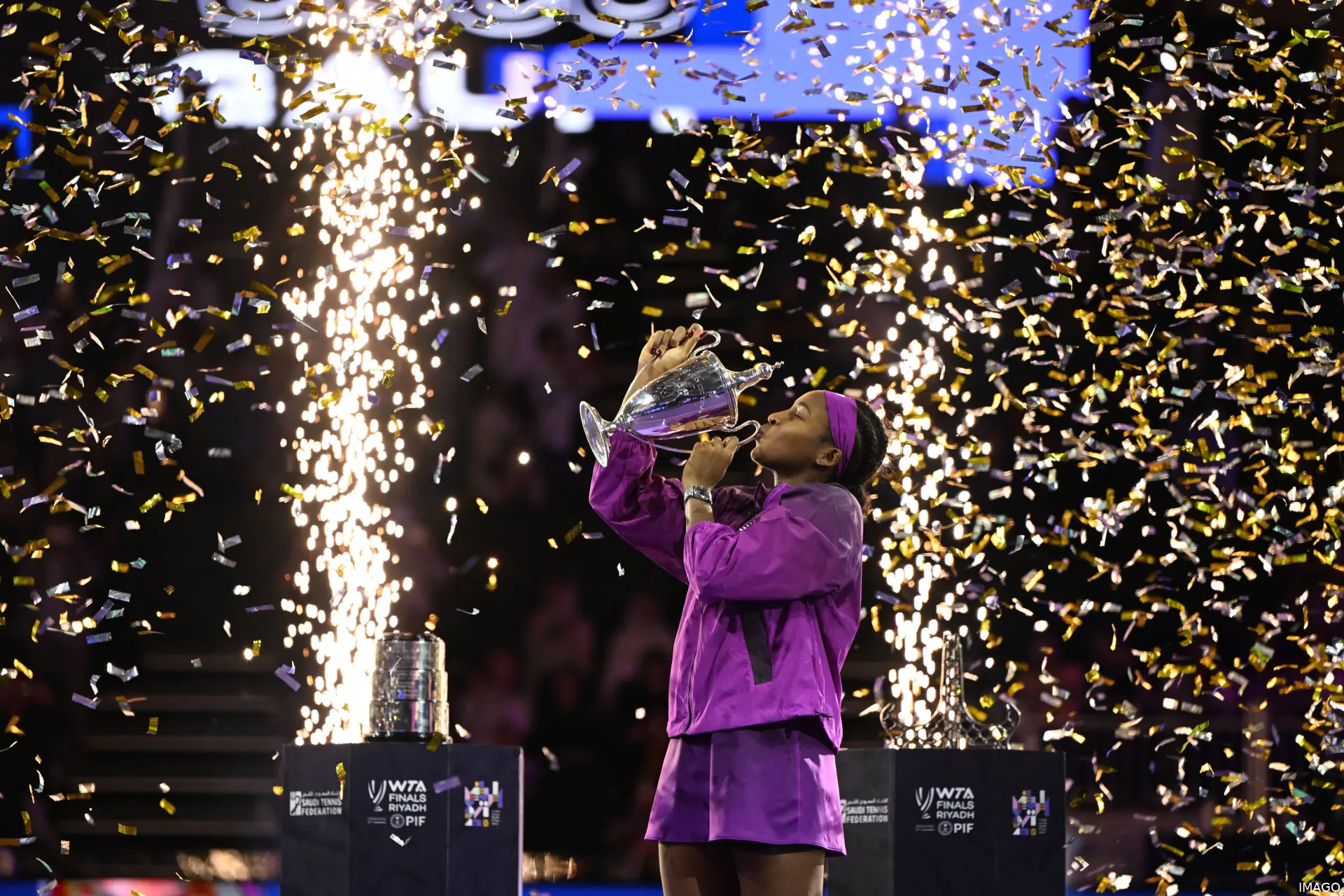
Last year’s champion walked away with more than five million dollars, one of the richest payouts in women’s sports history. Prize money at the WTA Finals reached levels that would have seemed unimaginable only a few years ago.
Players understandably grew accustomed to that reality. They now need to prepare for a different one. Unless another major commercial partner quickly steps forward, prize money is almost certainly going to decline.

Elena Rybakina defeated Aryna Sabalenka in the 2025 WTA Finals final
That isn’t a reason to regret this decision. It’s simply economic reality. If Saudi Arabia was willing to spend at levels few others could match, replacing that investment won’t happen overnight.
The players may be the first to feel it. So will the tour. Just as importantly, the WTA once again finds itself searching for a permanent home for its most important event.
Is Indian Wells the long-term answer?
Indian Wells appears to be an excellent short-term solution. Few venues in tennis are more respected. The facilities are exceptional. The tournament already attracts massive crowds. Players routinely describe it as one of their favorite stops on the calendar. If the Finals needed a temporary landing spot, it would be difficult to imagine a better choice.
But nobody seriously believes this is necessarily the long-term answer. Indian Wells already hosts one of the sport’s biggest tournaments every March. Adding the season-ending championships this November works as an emergency solution, not necessarily as a permanent strategy.
The revolving door that has seen the Finals move from Shenzhen to Guadalajara, to Fort Worth, to Cancún, to Riyadh, and now to California has become one of the tour’s defining weaknesses.
Flagship championships are supposed to build tradition. Tradition requires stability. That’s now the REAL test facing the WTA. Leaving Saudi Arabia may prove to be the easy decision. Finding a financially sustainable partner that aligns with the values the organization wants to project will be much harder.

Can the tour secure a sponsor capable of restoring prize money to elite levels? Can it identify a permanent host city that players, fans, broadcasters, and sponsors can all rally around? Can it do so without creating another controversy that overshadows the tennis itself? Those questions matter far more than where the Finals will be played this November.
None of this means the Saudi partnership accomplished nothing. It clearly generated significant investment and exposure. Reasonable people can disagree about whether those benefits justified the costs. But organizations reveal themselves by the choices they make when values and money pull in opposite directions.
This time, the WTA chose to walk away from the larger check. For an organization I have often criticized, that’s a decision worth applauding. Now it needs to prove it wasn’t simply walking away from one partnership. It was walking toward a better future.

Aron SolomonGuest Author
A Pulitzer Prize-nominated journalist for his groundbreaking op-ed in The Independent exposing the NFL’s “race-norming” policies, Aron Solomon, JD, is a globally recognized thought leader in law, media, and strategy.
As Chief Strategy Officer for AMPLIFY, he leverages his deep expertise to shape the future of legal marketing. Aron has taught entrepreneurship at McGill University and the University of Pennsylvania and was honored as a Fastcase 50 recipient, recognizing him among the world’s top legal innovators. A prolific commentator on law, business, and culture, his insights regularly appear in Newsweek, The Hill, Crunchbase News, and Literary Hub.
He has also been featured in The New York Times, Fast Company, Fortune, Forbes, CBS News, CNBC, USA Today, ESPN, TechCrunch, BuzzFeed, Venture Beat and countless other leading global media outlets. We are proud to have Aron on board at TennisUpToDate, where his deep tennis expertise enriches the site with sharp, original columns that connect the sport to wider cultural debates.
claps 0visitors 0
Just In


Popular News
Latest Comments
- A healthy Qinwen may be hard to stop next season. She was already scaring her opponents before her medical leave(s). Unfortunately, Zheng insisted on singing again. On the positive side -- Mirra did not sing!! ;~}
 mandoist11-10-2026
 - Where is it written that athletes, entertainers... People in general... are mandated to keep looking at -- or even using [anti]Social Media? Public & private figures consistently complain and reveal their concerns about negativity and violence thrown at them -- yet they insist on participating. Avoid it, don't use it, don't read it. It's okay to occasionally look up at the World instead beating your eyes & thumbs to death on The Inventions out there.mandoist11-10-2026
- great articlestennisseserver07-10-2026
- Medvedev was leading Djokovic 7-5, 3-5 when an attempted return..' NO you ignorants, Djokovic was leading .weiss05-10-2026
- No more bullshit "Wildcards" to these two. Qualify like everyone else -- there will be cameras there, too. Time to scream... WTF ????!!!!mandoist29-09-2026
- Let's not BS the general public -- Sabalenka started showing cracks in her game last season. Her losses and near-losses started at about the same time she began being distracted by Fame (constant Selfies, making TV commercials, magazine shoots, endless Social Media nonsense, etc., etc.) One would think even Saba could recognize the parallels with others who failed before her -- Raducanu, Giorgi, Bouchard to name a few.mandoist25-09-2026
- Gross!! Hey Raducanu, Giorgi, and Bouchard -- reserve a seat at your Social Media Selfie table for Saba + Naomi. They're heading in your direction soon enough.mandoist24-09-2026
- And then these same players will complain about how lengthy their season’s were and need more time-off. I’m all for more tennis but the amount of tennis we get now is actually kind of crazy! We all need a break, especially the players.DaveyWavey23-09-2026
- You should do a comparison article for "different kinds of justice" the courts decide for tennis players. I can think of at least three players who received very small bans of a few months, however Tara Moore has been fighting for her literal survival the past few years. It seems odd considering she is not a "name" player, unlike the other cases.DaveyWavey22-09-2026
- PRIZE MONEY & POINTS Winner - $185,500 Finalist - $114,500 Semi-Finalist - $66,003 Quarter-Finalist - $35,000 Round of 16 - $18,045 Round of 32 - $13,005 Winner - 500 Finalist - 325 Semi-Finalist - 195 Quarter-Finalist - 108 Round of 16 - 60 Round of 32 - 1DaveyWavey20-09-2026

Loading